









Gjør som tusenvis av andre bokelskere
Abonner på vårt nyhetsbrev og få rabatter og inspirasjon til din neste leseopplevelse.
Ved å abonnere godtar du vår personvernerklæring.Du kan når som helst melde deg av våre nyhetsbrev.

An edited collection of essays exploring the work and legacy of the academic and theatre-maker Clive Barker. Together, the essays trace the development of his work from his early years as an actor with Joan Littlewood's company, Theatre Workshop, via his career as an academic and teacher, through the publication of his seminal book, Theatre Games (Methuen Drama). The book looks beyond Barker's death in 2005 at the enduring influence of his work upon contemporary theatre training and theatre-making.Each writer featured in the collection responds to a specific aspect of Barker's work, focusing primarily on his early and formative career experiences with Theatre Workshop and his hugely influential development of Theatre Games. The collection as a whole thereby seeks to situate Clive Barker's work and influence in an international and multi-disciplinary context, by examining not only his origins as an actor, director, teacher and academic, but also the broad influence he has had on generations of theatre-makers.
Building on previous holistic readings of the Book of Isaiah, this collection approaches Isaiah through the concept of unity. Contributors outline research that point to new directions in the unity movement and, in the process, bring it under a critical gaze, considering the perennial challenges to unity reading and thus problematizing the very concept of unity.Divided into four parts, the book provides methodological reflections on reading Isaiah as a unity, and examines historical and redactional readings, literary readings and contextual or reader-orientated readings. Topics include how the figure of Jacob functions as a unifying motif in the final form of the book, Isaiah 1 as an example of the relevance of local structure for global coherence and how woman as a root metaphor of Zion not only bears revelatory significance but also serves as a theological linchpin for a more holistic reading of the book. Overall, the book highlights the continued promise of holistic readings for diverse methods and varied approaches to the Book of Isaiah.
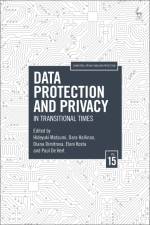
This book offers conceptual analyses, highlights issues, proposes solutions, and discusses practices regarding privacy and data protection in transitional times. It is one of the results of the 15th annual International Conference on Computers, Privacy and Data Protection (CPDP), which was held in Brussels in May 2022.We are in a time of transition. Artificial Intelligence is making significant breakthroughs in how humans use data and information, and is changing our lives in virtually all aspects. The pandemic has pushed society to adopt changes in how, when, why, and the media through which, we interact. A new generation of European digital regulations - such as the AI Act, Digital Services Act, Digital Markets Act, Data Governance Act, and Data Act - is on the horizon. This raises difficult questions as to which rights we should have, the degree to which these rights should be balanced against other poignant social interests, and how these rights should be enforced in light of the fluidity and uncertainty of circumstances.The book covers a range of topics, including: data protection risks in European retail banks; data protection, privacy legislation, and litigation in China; synthetic data generation as a privacy-preserving technique for the training of machine learning models; effectiveness of privacy consent dialogues; legal analysis of the role of individuals in data protection law; and the role of data subject rights in the platform economy.This interdisciplinary book has been written at a time when the scale and impact of data processing on society - on individuals as well as on social systems - is becoming ever more important. It discusses open issues as well as daring and prospective approaches and is an insightful resource for readers with an interest in computers, privacy and data protection.
Winner of the 2009 Edgar Award for Best Novel, Blue Heaven is a thrilling read from New York Times bestseller C.J. Box, creator of the characters of hit TV shows Joe Pickett and Big Sky.They were running away from home, now they're running for their lives.If twelve-year-old Annie hadn't been angry with her mother, she would never have taken her younger brother William on a secret fishing trip deep into the North Idaho woods and they would never have witnessed the execution nor looked straight into the eyes of the four executioners.Now they're running for their lives.They can't go home: the killers know exactly who they are. And where they live. They can't turn to the law: the killers are four respected Los Angeles policemen. There's nowhere for William and Annie to hide. And no one they can trust.Until they meet Jess Rawlins.Rawlins, an old-school rancher, knows something is wrong with the law in Blue Heaven. But he is only one against four men who will stop at nothing to silence their witnesses...Reviews for Blue Heaven'Crackles with electric tension and action.' Denver Post'Hard to put down.' Toronto Sun'A terrific suspense novel... You'll be hooked.' Toronto Globe and Mail'Box delivers surprises until the final page.' Billings Gazette
Today, concerns about the financial stability of Social Security, trends in disability, health care costs, and the supply of caregivers are all driven by the coming explosion in the number of people over the age of 65. Aging in America focuses on the economic and demographic portrait of the senior population and can provide a context for analysis of broader population issues. It provides a wide range of characteristics of the older population including: age composition, race and Hispanic origin, educational attainment, living arrangements, veteran status, employment and income, health insurance, disability and housing characteristics.Extracting comparative information from the Census Bureau's databases can be difficult and time-consuming. Aging in America provides comparative data on a variety of topics in a single, easy-to-use volume. Some of the benefits of Aging in America include:It provides a cross-section of socio-economic characteristics focused on the aging population for commonly researched geographic areas: states, counties, cities, metropolitan and micropolitan areas, and congressional districtsThe tables are structured to allow easy comparisons across geographic areas and easy profiling of characteristics
This book explores critical issues about how courts engage with questions of fact in public law adjudication. Although the topic of judicial review - the mechanism through which individuals can challenge governmental action - continues to generate sustained interest amongst constitutional and administrative lawyers, there has been little attention given to questions of fact. This is so despite such determinations of fact often being hugely important to the outcomes and impacts of public law adjudication. The book brings together scholars from across the common law world to identify and explore contested issues, common challenges, and gaps in understanding. The various chapters consider where facts arise in constitutional and administrative law proceedings, the role of the courts, and the types of evidence that might assist courts in determining legal issues that are underpinned by complex and contested social or policy questions. The book also considers whether the existing laws and practices surrounding evidence are sufficient, and how other disciplines might assist the courts. The book reconnects the key practical issues surrounding evidence and facts with the lively academic debate on judicial review in the common law world; it therefore contributes to an emerging area of scholarly debate and also has practical implications for the conduct of litigation and government policy-making.
What is the impact of precariousness on the quality of life and human agency? Precariousness has become a defining experience for many in contemporary society, as an inescapable condition and state of being. Living with Precariousness explores the effects and affects of precariousness through critical dialogue with the vulnerabilities and uncertainties that are evident in current social, economic and political environments worldwide. A spectrum of timely international case studies explore precarious existences - at individual, collective and structural levels, and as manifested through space and the body. These range from the plight of asylum seekers, to the 'tiny house movement' as a response to a national housing crisis; from the global impacts of climate change, to the daily challenges of living with a chronic illness. This multidisciplinary book illustrates the pervasiveness of precarity, but furthermore shows how those entangled connections with other human and non-human agents that put us at risk are also the connections which make living with (and through) precariousness endurable.
Wil Rogan argues that, contrary to 20th century interpretation, the Fourth Gospel did not replace purity with faith in Jesus; instead, like other early Jewish writings, it employs conceptions and practices of purification as a way to make sense of life before God in the world. He suggests that the gospel uses biblical traditions of purity associated with divine revelation and Israel's restoration, in order to narrate how God's people are prepared for the coming of Jesus and enabled by him to have life with God.After evaluating different theories of purity for the interpretation of the Fourth Gospel, Rogan explores John the Baptist as an agent of ritual purification, Jesus as the agent of moral purification, and the disciples of Jesus as ones who are (or are not) made morally pure by Jesus. While purity is not one of the Fourth Gospel's primary focuses, Rogan stresses that the concept figures into some of its most significant claims about Christology, the doctrine of salvation, and ethics; purity is one of the ways that the gospel guards continuity with the past while placing surprising conditions on participating in Israel's future.
This volume defines and analyses how scripture is used within the apocalyptic genre of writing. By focusing on the Book of Revelation and the re-use of scripture, a wide body of scholars seek to illuminate the relationship between the author's theology and his interpretations of scripture, through a close examination of key passages and themes. Subsequently the contributors aim to establish greater clarity about the hermeneutical methods and axioms employed in Revelation and other apocalyptic texts, and about the extent to which these are characteristic or constituent of the genre. These overarching aims are addressed through four different analyses. Beginning with a re-evaluation of central methodological questions around the use of the scriptures in apocalyptic literature, this volume then explores the influence of the Old Testament on aspects of the theology of the Book of Revelation, and considers how these scriptural themes are received in later Christian tradition. This is followed by a series of exegetical chapters, investigating key specific examples of intertextuality in Revelation. Finally, the volume examines the re-use of scripture in other early Jewish and early Christian apocalyptic writings (including Paul's letters, 1 Enoch and the Qumran Songs of the Sabbath Sacrifice), so that conclusions can be drawn about the methods of exegesis practised within apocalyptic more broadly.
With Christmas around the corner it's all go at Renweneth Farm to make sure the Farmhouse Bakery can open just in time for the festive period. This time will Jess learn how to accept a helping hand, especially when it's coming from dreamy contractor Riley?
A deliciously moreish collection of the 100 finest pieces of writing on food, glorious food. \n\nIn this big, beautiful anthology, award-winning writers Kate Young and Ella Risbridger present you with their ultimate fantasy dinner party. Here you'll find authors, cooks and poets from Alice B. Toklas, Dostoevsky and D.H. Lawrence to Rachel Roddy, Nigella Lawson and Laurie Colwin discussing eggs, bread, fridge raid suppers, wedding feasts and much, much more. \n\n"}" data-sheets-userformat="{"2":11005,"3":{"1":0},"5":{"1":[{"1":2,"2":0,"5":{"1":2,"2":0}},{"1":0,"2":0,"3":3},{"1":1,"2":0,"4":1}]},"6":{"1":[{"1":2,"2":0,"5":{"1":2,"2":0}},{"1":0,"2":0,"3":3},{"1":1,"2":0,"4":1}]},"7":{"1":[{"1":2,"2":0,"5":{"1":2,"2":0}},{"1":0,"2":0,"3":3},{"1":1,"2":0,"4":1}]},"8":{"1":[{"1":2,"2":0,"5":{"1":2,"2":0}},{"1":0,"2":0,"3":3},{"1":1,"2":0,"4":1}]},"9":0,"10":0,"12":0,"14":{"1":2,"2":0},"16":10}" style="font-size: 10pt; font-family: Arial;">A deliciously moreish collection of the 100 finest pieces of writing on food, glorious food.In this big, beautiful anthology, award-winning writers Kate Young and Ella Risbridger present you with their ultimate fantasy dinner party. Here you'll find authors, cooks and poets from Alice B. Toklas, Dostoevsky and D.H. Lawrence to Rachel Roddy, Nigella Lawson and Laurie Colwin discussing eggs, bread, fridge raid suppers, wedding feasts and much, much more.
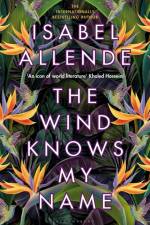
The Wind Knows My Name is a captivating novel penned by the renowned author Isabel Allende. Published in 2023 by Bloomsbury Publishing PLC, this book is a must-read for all literature enthusiasts. The story takes you on an unforgettable journey, demonstrating Allende's extraordinary storytelling skills. As you delve into the pages, you will find yourself immersed in a world of intrigue, emotion, and vivid imagery. The Wind Knows My Name is a testament to Allende's prowess in the genre, making it a stellar addition to your book collection. Don't miss out on this masterpiece from Bloomsbury Publishing PLC, a publisher known for delivering quality literature to readers worldwide.
Abonner på vårt nyhetsbrev og få rabatter og inspirasjon til din neste leseopplevelse.
Ved å abonnere godtar du vår personvernerklæring.