




Gjør som tusenvis av andre bokelskere
Abonner på vårt nyhetsbrev og få rabatter og inspirasjon til din neste leseopplevelse.
Ved å abonnere godtar du vår personvernerklæring.Du kan når som helst melde deg av våre nyhetsbrev.

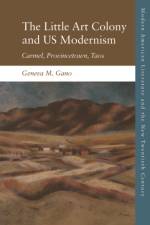
Explores the little art communities and their aesthetic products in the early twentieth century This book is first to historicise and theorise the significance of the early twentieth-century little art colony as a uniquely modern social formation within a global network of modernist activity and production. Alongside a historical overview of the emergence of three critical sites of modernist activity - the little art colonies of Carmel, Provincetown and Taos - the book offers new critical readings of major authors associated with those places: Robinson Jeffers, Eugene O'Neill and D. H. Lawrence. Geneva M. Gano tracks the radical thought and aesthetic innovation that emerged from these villages, revealing a surprisingly dynamic circulation of persons, objects and ideas between the country and the city and producing modernisms that were cosmopolitan in character yet also site-specific. Geneva M. Gano is Associate Professor of English and Jesse H. and Mary Gibbs Jones Professor of Southwestern Studies at Texas State University.
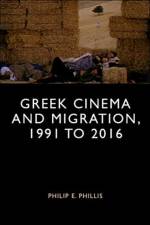
'A welcome addition to the literature on cinema and migration, Phillis' monograph examines the ways in which the cinema of a small European country with a long history of emigration has responded to the post-1990s phenomenon of becoming a host country for immigrants. The book focuses mainly on migration from Albania that dominated social discourse and cinematic representation in the 1990s and 2000s, but also throws light to cinematic responses to the mid-2010s "refugee crisis". A timely contribution to pressing global debates examined from a small country perspective.' Lydia Papadimitriou, Liverpool John Moores University Greek Cinema and Migration provides a response to urgent calls to comprehend the cultural impact of immigration in Greece, and to determine the capacity of contemporary Greek cinema to challenge the logic of Fortress Europe. Placing contemporary Greek cinema within the context of European film production and transnational cinema, the book explores the fascination of Greek filmmakers with migration, mobility, borders and identity, between 1991 and 2016. With case studies of films such as The Suspended Step of the Stork (1991), The Way to the West (2003), Man at Sea (2011) and many more, this groundbreaking book provides an in-depth understanding of contemporary Greek cinema and its direct correlation to the country's ongoing struggles to implement European modernity. Philip E. Phillis has taught at Glasgow University and Glasgow Caledonian University, and is currently a lecturer in Film and Media Studies at Sciènces Po College in the city of Le Havre, France. Cover image: Ephemeral Town, Yorgos Zafiris, 2000 (c) Greek Film Centre - Notos Film Productions Cover design: [EUP logo] edinburghuniversitypress.com ISBN 978-1-4744-3703-5 Barcode
Abonner på vårt nyhetsbrev og få rabatter og inspirasjon til din neste leseopplevelse.
Ved å abonnere godtar du vår personvernerklæring.