














Gjør som tusenvis av andre bokelskere
Abonner på vårt nyhetsbrev og få rabatter og inspirasjon til din neste leseopplevelse.
Ved å abonnere godtar du vår personvernerklæring.Du kan når som helst melde deg av våre nyhetsbrev.

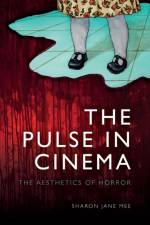
'In this book, Sharon Jane Mee gives a bold new account of the power of cinema. Movies both enthrall us and unsettle us. The Pulse in Cinema works through this double allure, and offers us a profound meditation on what aesthetic experience might mean in the twenty-first century.' Steven Shaviro, DeRoy Professor of English, Wayne State University When we think of the pulse in cinema, we may think of the heartbeat of the spectator as they respond to affective or moving scenes in the film, or how fast-paced and shocking images exacerbate this physiological response. Conceptually extending film spectatorship, The Pulse in Cinema contends that cinema is an energetic arrangement of affective and intense forces, where the image and the spectator are specific components. Analysing body horror films such as The Tingler (1959), Dawn of the Dead (1978) and The Beyond (1981), this book builds on Lyotard's concept of the dispositif, Deleuze's work on sensation and Bataille's economic theory to conceptualise a pulse in cinema. A concept of the pulse is an evolution in our understanding of the aesthetics and economy of cinema. Sharon Jane Mee is Adjunct Lecturer in Film Studies at the University of New South Wales, Australia. Cover image: Bill Hunt (c) billhuntstudio.com Cover design: [EUP logo] edinburghuniversitypress.com ISBN 978-1-4744-7584-6 Barcode
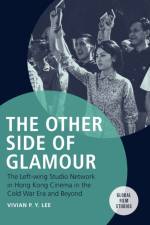
Since its inception more than a century ago, Hong Kong cinema has been a pre-eminent form of local entertainment and a site of ideological contentions propelled by colonial, national and international politics at different historical junctures. The Other Side of Glamour is a study of the historical development of the left-wing film establishment in Hong Kong. The interplay between the macro-politics of the Cold War and the micro-politics of a regionalised/localised ideological warfare lends itself to a critical mapping of the general contours of the 'cultural Cold War' between the KMT and the CCP as it materialised in the so-called 'left-right divide' in the filmmaking world. Using the major studios as the main axis of analysis, this study traces the footprints of the other collaborating cultural agents which made up the left-wing film network in Hong Kong. It argues that the left-wing's institutional character and corporate strategies in the making of a 'popular left-wing cinema' are indispensable to an understanding of their nuanced legacy in Hong Kong cinema today. Vivian P. Y. Lee teaches Hong Kong cinema and heritage studies at the City University of Hong Kong.
This book marks a critical intervention in the medical humanities that takes issue with its understanding of empathy as something that one has.
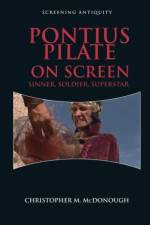
Who is Pontius Pilate? Who do the movies say that he is? What is truth? Pontius Pilate On Screen deals with one of history's most controversial characters. From Monty Python's Life of Brian to Mel Gibson's Passion of the Christ, Pontius Pilate is a figure of evidently endless fascination to filmmakers. The Roman prefect is depicted at times as the hapless victim of machinations beyond his control and at other times as the heartless villain of the piece. If in films about the Passion Jesus represents eternal truth, Pilate symbolises the values of the present - whether it is the lingering trauma of the Holocaust, the ongoing struggle over Civil Rights or the polarised politics of the current day - as filmmakers endeavour again and again to portray in Pontius Pilate a compelling counter-figure to Jesus himself. This book considers portrayals of Pontius Pilate in film from the silent era to the twenty-first century. It discusses over 25 films in detail, including Cecil B. DeMille's King of Kings (1927), Norman Jewison's Jesus Christ Superstar (1973), Martin Scorsese's Last Temptation of Christ (1988), Mel Gibson's The Passion of the Christ (2004) and Sony's Risen (2016). Based on extensive archival research and original interviews with actors, screenwriters and producers, it offers an extended discussion of the history, tradition and reception of Pontius Pilate. Christopher M. McDonough holds the Alderson-Tillinghast Chair in the Humanities at the University of the South in Sewanee, Tennessee.
Analyses the cinematic and social significance of the star phenomenon in Southeast Asia.
Abonner på vårt nyhetsbrev og få rabatter og inspirasjon til din neste leseopplevelse.
Ved å abonnere godtar du vår personvernerklæring.