













Gjør som tusenvis av andre bokelskere
Abonner på vårt nyhetsbrev og få rabatter og inspirasjon til din neste leseopplevelse.
Ved å abonnere godtar du vår personvernerklæring.Du kan når som helst melde deg av våre nyhetsbrev.

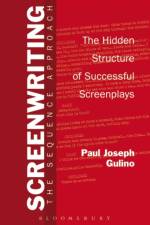
This title, written by Paul Gulino, provides a practical and fascinating guide for aspiring screenwriters.
Thirty-one songs including Chelsea Morning Both Sides Now Big Yellow Taxi Woodstock Free Man in Paris Raised on Robbery Chinese Cafe and more.
Contains three companion sets of trading cards - Heroes of the Blues, Early Jazz Greats, and Pioneers of Country Music - in book form. This work provides the biography of each musician, along with a full colour original illustration.
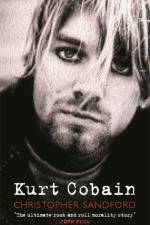
The classic biography which explores the shocking drama of Kurt Cobain's troubled life
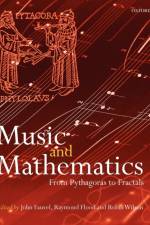
From Ancient Greek times, music has been seen as a mathematical art, and this relationship has fascinated generations. This new in paperback edition of diverse, comprehensive and fully-illustrated papers, authored by leading scholars, links the two fields in a lucid manner that is suitable for students of each subject as well as the general reader.
An illustrated record of Wilkie's tableware designs 1958 - 1978.
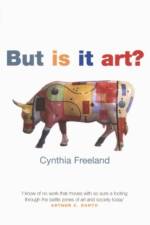
Cynthia Freeland explains why innovation and controversy are valued in the arts, weaving together philosophy, art theory, and many engrossing examples. She discusses blood, beauty, culture, money, sex, web sites, and research on the brain's role in perceiving art. This clear, lively book will engage the public, introductory students, and teachers in the arts.
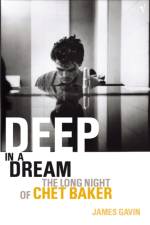
From his emergence in the 1950s - when an uncannily beautiful young man from Oklahoma appeared in the West Coast and became, seemingly overnight, the prince of 'cool' jazz - until his violent, drug-related death in Amsterdam in 1988, Chet Baker lived a life that has become an American myth.
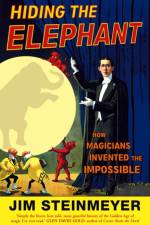
Presents a story of the Golden Age of magic and of the world's legendary magicians: the personalities who patented the first ghost and competed fiendishly in the race to make things materialize, levitate and disappear. This book is the masterwork of a man who has dedicated his life to magic, who knows the tricks inside out, and still believes.
The publication of Feel: Robbie Williams by Chris Heath in September 2004 caused shockwaves of controversy and delight. Written by Chris Heath, who spent nearly two years working with Robbie on this book, every word is imbued with Robbie's humour, charisma, talent, memories and complexity.
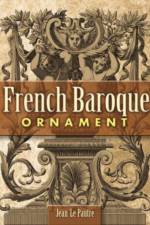
Culled from a rare 19th-century source, these 124 black-and-white illustrations capture the lavish devices and grand sweep of European Baroque design. This collection is populated by elaborate architectural ornaments, decorative motifs, and border elements.
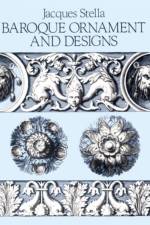
Baroque art and architecture--extravagant in concept, exuberant in spirit, elaborate in detail--flourished in seventeenth-century Europe, and through the ages has continued to stir us with its vitality and dynamism and its mood of barely suppressed passion. In the architecture of St. Peter's in Rome, St. Paul's in London, and Santa Maria della Salute in Venice as well as in the works of Michelangelo, Bernini, and Rubens, the Baroque spirit lives today. Now graphic artists can add Baroque flair to almost any graphic project with this magnificent collection of royalty-free motifs.The seventeenth-century French artist Jacques Stella (1596-1657) embodies the Baroque sensibility. Early in his career, Stella spent seven years in Florence, working for Medici Prince Cosimo II and enjoying the acquaintance and advice of the master engraver Jacques Callot. He spent another ten years in Rome, where he came under the artistic influence of his friend Nicolas Poussin. On his return to France, championed by Cardinal Richelieu, he became court painter to Louis XIII, and founded a career that makes him esteemed as one of the major French artists of the seventeenth century. This book presents engravings executed by Stella's niece after drawings of Classical motifs probably made by Stella during his years in Italy. These engravings, first published in Paris in 1658, comprise a magnificent sourcebook of ready-to-use Baroque design, filled with highly embellished individual ornaments, decorative motifs, and a dazzling array of border elements.Included are lush florals and foliates, fruits, leaves, birds, shells, acorns, and more--as individual ornaments and rosettes, as repeating motifs in a frieze, and in other useful arrangements. Now this sturdy, inexpensive edition makes them available to a wide audience for convenient reproduction as well as for study, inspiration, and enjoyment.Dover (1987) selection of plates from Divers Ornements d'Architectures, Recueillis et Dessegnes Apres l'Antique par Mr. Stella, Peintre Ordinaire du Roy et Chevalier de Son Ordre de St. Michel, originally published in Paris, 1658.
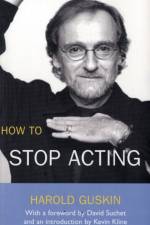
Drawing on examples from his clients' work and his own, Harold Guskin presents acting as a constantly evolving exploration rather than as a progression toward a fixed goal. He also offers sound and original advice on adapting to the particular demands of television and film.
A house is a site, the bounds and focus of a community. It is also an artifact, a material extension of its occupants' lives. This book takes the Japanese house in both senses, as site and as artifact, and explores the spaces, commodities, and conceptions of community associated with it in the modern era.
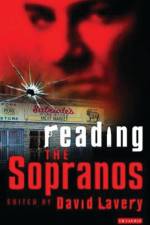
Explores how "The Sopranos" has rewritten the rules of television drama and changed attitudes about television itself. This book presents different perspectives on psychotherapy and dreams; racism and the Italian-American community; Carmela and post-feminism; "The Sopranos" as an HBO brand; racism; and more.
Released in 1995, "La Haine" is the black and white chronicle of 24 hours in the life of a mixed-race young male trio from a run-down Parisian suburb. This book provides an understanding of the context of the film's making, of the film's narrative tension, stylistic sophistication and ideological ambiguity and of its extraordinary success.
"One of the clandestine classics of our century."--The New York TimesThis is the legendary collage masterpieces of Max Ernst (b. 1891), one of the leading figures of the surrealistic movement and among the most original artists of the 20th century. From old catalog and pulp novel illustrations, Ernst produced this series of 182 bizarre and darkly humorous collage scenes of classic dreams and erotic fantasies which seem mysteriously to lure the unconscious into view: Stern, proper-looking women sprout giant sets of wings, serpents appear in the drawing -room and bed chamber, a baron has the head of a lion, a parlor floor turns to water on which some people can apparently walk while others drown.Une Semaine De Bonté is divided into seven parts, one for each day of the week, with each section illustrating one of Ernst's "seven deadly elements." "Oedipus," "The Court of the Dragon," and "Three Visible Poems" are among the startling episodes of Ernst's week. The Dada and surrealist epigraphs which introduce each section appear in this edition in both French and English.Une Semaine De Bonté first appeared in 1934 in a series of five pamphlets of fewer than 1,000 copies each, and has never been reprinted before this present edition. Previously available only to a few libraries and collectors, this is a major source and great treat for anyone interested in the surrealists and their work, in collage, visual illusion, dream visions, and the interpretations of dreams.
But Miles regularly changed styles, leaving his inimitable impact on many forms of jazz, whether he created them or simply developed the work of others, from modal jazz to be-bop, his seminal quintet and his big-band work, to the jazz funk experiments of later years.
Offers patternmaking techniques for an array of menswear garments, as well as the accompanying theories and concepts, and includes information on sizing, lining and fabrics. This book can serve both as an introduction to the pattern-drafting skills necessary for menswear, and as a treatment of patternmaking techniques.
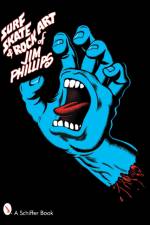
Thousands of artistic graphic illustrations, from motorcycles to health food and including rock posters, surf, and skateboard art, jump off these pages. Bold and dynamic "bad boy" and "hippie" themes in bright and startling colors command your attention to the incredible detail included. Jim Phillips delights in original imagery to convey his unique reflections of the popular world. Since 1962, he has published award-winning graphic designs for cartoons, skateboards, t-shirts, stickers, rock posters, and ad art. The works assembled for this book, from collections world-wide, represent over fifty years of creativity and document the powerful youth movement in America.
This volume offers a foundation course for use by students and teachers. You start at the beginning and advance to the point where you can harmonize and play satisfactory piano accompaniments to familiar tunes.
What do we mean when we call a work of art beautiful? How do perceptions of beauty change with the passage of time? This title explores these questions, showing the vital relationship between our changing notions of beauty and specific works of art. It charts the story of western art, from eighteenth-century Germany to the late 20th century.
Julian Cope's highly acclaimed autobiography and its long-awaited sequel in one extraordinary volume.
Punk has been romanticised and embalmed by the media. A youth revolt that became a worldwide fashion statement, punk's idols were the Sex Pistols and Johnny Rotten was its sneering antichrist. Rotten is a history of punk: angry, witty, poignant and crackling with energy. Malcolm McLaren, Sid Vicious, the 1970s, the Pistols' story are all here, in one of the best books ever written about youth culture, by one of its most notorious figures.
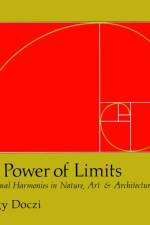
One of the delights of life is the discovery and rediscovery of patterns of order and beauty in nature-designs revealed by slicing through a head of cabbage or an orange, the forms of shells and butterfly wings. These images are awesome not just for their beauty alone, but because they suggest an order underlying their growth, a harmony existing in nature. What does it mean that such an order exists; how far does it extend? The Power of Limits was inspired by those simple discoveries of harmony. The author went on to investigate and measure hundreds of patterns-ancient and modern, minute and vast. His discovery, vividly illustrated here, is that certain proportions occur over and over again in all these forms. Patterns are also repeated in how things grow and are made-by the dynamic union of opposites-as demonstrated by the spirals that move in opposite directions in the growth of a plant. The joining of unity and diversity in the discipline of proportional limitations creates forms that are beautiful to us because they embody the principles of the cosmic order of which we are a part; conversely, the limitlessness of that order is revealed by the strictness of its forms. The author shows how we, as humans, are included in the universal harmony of form, and suggests that the union of complementary opposites may be a way to extend that harmony to the psychological and social realms as well.
Abonner på vårt nyhetsbrev og få rabatter og inspirasjon til din neste leseopplevelse.
Ved å abonnere godtar du vår personvernerklæring.