










Gjør som tusenvis av andre bokelskere
Abonner på vårt nyhetsbrev og få rabatter og inspirasjon til din neste leseopplevelse.
Ved å abonnere godtar du vår personvernerklæring.Du kan når som helst melde deg av våre nyhetsbrev.

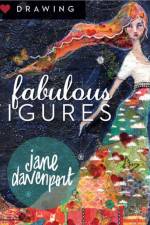
Aspiring artists who feel intimidated at drawing figures will love Davenport's easy technique, which involves using equal-size hearts to build the body's structure.
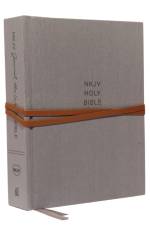
The extra-wide lined margins make this NKJV Bible ideal for note taking or journaling as the reader experiences deeper engagement with God's Word.
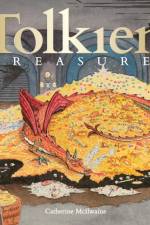
This lavishly illustrated book showcases the highlights of the Tolkien archives held at the Bodleian Library. This stunning book is a perfect introduction to Tolkien's creative imagination, giving a unique insight into the life of this extraordinary writer, artist and scholar.
The result of five years of practice-based creative research focused on Nicole Garneau's UPRISING project, Performing Revolutionary presents a number of methods for the creation of politically charged interactive public events in the style of a how-to guide.
A richly illustrated, expansive mid-career survey of the stand-out American artist's pioneering and influential work
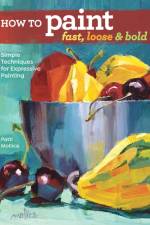
Every artist strives to achieve the kind of painting that commands attention from across the room and delights the eye up close. In this book, artist and workshop teacher Patti Mollica walks you through surprisingly simple and efficient strategies for achieving that kind of powerful composition, whatever your subject.
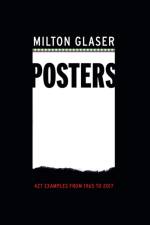
500 posters spanning 50 years from America's greatest designer
Now collected in a single volume for the first time, journalist Allan Jones selects his favorite columns from Uncut magazine's 'Stop me if you've heard this one before' feature. It covers the highs and lows (mostly lows) of being a music journalist in the 1970s and 1980s.
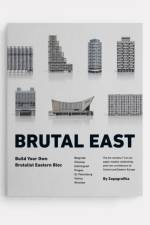
Brutal East playfully explores and reconstructs some of the most controversial Brutalist edifices built behind the Iron Curtain between 1960 and the1980s. Includes information on the building and easy-to-follow instructions.
A new, up-to-date edition of the popular and comprehensive encyclopedia of oil painting by professional and award-winning artist, Jeremy Galton.
A new, up-to-date edition of the popular and comprehensive encyclopedia to pastels by professional artist Judy Martin.
An essential masterpiece of jazz history by the renowned photographer and music historian, with a new foreword by Richard Williams.
In one of the first systematic studies of style in Mexican filmmaking, a preeminent film scholar explores the creation of a Golden Age cinema that was uniquely Mexican in its themes, styles, and ideology.
A lush new volume devoted to the best works by beloved American Impressionist and portraitist John Singer Sargent, whose dazzling use of light and colour depicts modern subjects with arresting intimacy.
The book features works from the Golda and Meyer Marks Cobra Collection, the largest CoBrA art collection in America. The NSU Art Museum Fort Lauderdale collection of Cobra art includes more than 1,600 works and is the largest museum collection in the United States, thanks in large part to Golda and Meyer Marks donating their collection from 1978 until their deaths in 1998 and 1991, respectively. Cobra art was born as an art collective in 1948 in reaction to the devastation of World War II and named for its artists' home cities (Copenhagen, Brussels, Amsterdam). Cobra art is raw, vital, spontaneous, and filled with dynamic abstract and semi-abstract forms. Its artists worked together and often collaboratively before going their separate ways in 1951, to achieve a new means of expression that challenged traditions and the constraints on artistic expression they had experienced during World War II. The movement greatly influenced the development of European modern art as well as contemporary art in America and Europe. The study of the Cobra art movement has led to a greater understanding of how acts of resistance and political movements continue to influence current events. This monograph of the museum's Cobra collection includes text by renowned experts in the field, 150 illustrations and detailed entries on 29 artists.
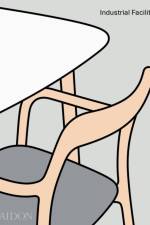
The first monograph on the complete works of award-winning design studio Industrial Facility
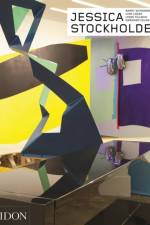
The definitive book on a creative force who continues to influence sculpture and installation art
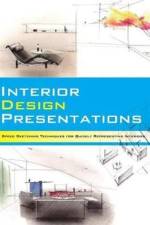
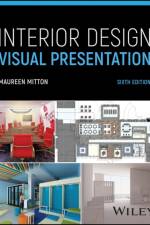
It is necessary to understand your client's requests precisely and to have your client agree with the arrangement of the house and any ideas for interior design. It is easier to accomplish this goal if you can quickly sketch out the arrangement and key elements of the interior design, rather than just giving your clients a verbal explanation. With "sketching while using simplified, minimal lines" as the theme, Interior Design Presentations covers basic techniques--from 10 second sketching, to 3 minute sketching, to 5 minute sketching--effective use of light and shadow, speed coloring techniques, and techniques applied for sketching, etc., as well as the application of these techniques.
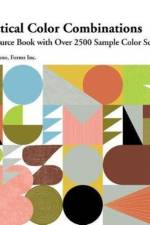
This handy practical color combination book is an easy-to-use, one-stop resource for choosing color schemes and combinations for a variety of uses. From designing packages for sweets or cosmetics, to developing merchandise and using color as a marketing communication tool; from picking colors for graphics/fashion/textiles or looking for color scheme ideas for your arts and crafts, this book is an essential tool for designers, decorators, marketers and advertisers, as well as people interested in color and crafts.
A newly revealed collection of Japanese art featuring yokai, the monsters of Japanese folklore
A newly updated and comprehensive guide to all aspects of visual designFrom doing a quick sketch to producing a fully rendered model, the ability to create visual representations of designs is a critical skill for every designer. Interior Design Visual Presentation, Fifth Edition offers thorough coverage of interior design communication used throughout the design process, complete with a broad range of real-world examples.This fully updated handbook presents a full range of styles and techniques used for interior design visual communication, from hand drawing to 3D computer modeling. Its accessible, how-to approach guides you through a variety of methods for executing creative and successful design graphics, models, and presentations. Recognizing the ongoing proliferation of digital tools for visual representation, this edition provides the latest information on software used in presentation such as Photoshop, and SketchUp, and covers the integration of Revit, and AutoCAD generated content into design presentations.* Covers all aspects of visual design and presentation for interior designers* Includes color illustrations that feature a wide range of project types including residential, healthcare and public projects, designed to highlight step-by-step instructions* Provides a discussion of incorporation of 3D digital models into presentations including use in virtual reality, and expanded information on scale models including a discussion of 3D printing* Includes a companion website for instructors, featuring PowerPoint lecture slides and an instructor's manualFrom traditional to cutting-edge techniques, Interior Design Visual Presentation, Fifth Edition gives students and professionals alike the tools to give life to their design vision.
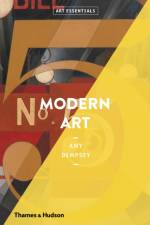
Amy Dempsey unravels the all-too-often daunting language of modern art by mapping the styles, schools and movements that help us understand modern and contemporary art, from Impressionism in the 19th century to Destination Art in the 21st. Using a practical and easy-to-navigate structure, Dempsey's lucid writing and carefully selected artworks define sixty-eight essential groupings in western modern art. Each feature presents a succinct explanation, characteristic works and a relevant list of key artists, attributes, media and collections. A reference section provides an indispensable glossary of modern art terms and an index of artists.
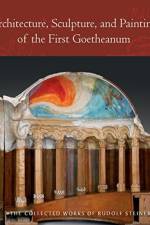
9 lectures in various cities, April 1915-June 1920 (CW 288)"As rigidified in the aesthetic formulas of the École des Beaux-Arts and nineteenth-century academic architecture, these proportions, orders, and geometrical types were no longer suited to a living architectural expression, and modernism was obliged to abandon them. One attempt to recapture this connection was made by Le Corbusier with the use of his 'Modular' figures based on human bodily proportion as units of architectural measurement. Another effort was made from the organic functionalist side by Steiner, who proposed that in the architectural art everything 'points to, and proceeds from, the human form.' His architectural approach tried to find a renewed way to attune his buildings holistically to their human users by employing patterns of the life forces or formative forces within the human constitution." -- David J. Adams (introduction)The planning, construction, and execution of the functional work of art that was the First Goetheanum was an endeavor that occupied Rudolf Steiner for the better part of seven years. Every detail, from the seemingly small--such as the shape and feel of the door handles--to the grand motifs of the paintings on the ceilings of the cupolas and the building's intended sculptural centerpiece, was lovingly designed to meet and inspire the individual human beings who would some day encounter it, not with didactic symbolism, but with the transparent reality of the spiritual foundation of humanity and the world, and the open possibility to both know this spiritual foundation and to work with it practically and artistically for the good of all.The lectures in this volume--accompanied by reproductions of more than a hundred slides--were heard by various audiences as the building neared completion and before it was destroyed by fire. The text is complemented with a foreword by the esteemed architect Douglas J. Cardinal, as well as an important and revelatory Introductory essay by David Adams: "The Form-Function Relationship in Architecture and Nature: Organic and Inorganic Functionalism."This volume of The Collected Works of Rudolf Steiner is essential reading for anyone who wants to gain a deeper understanding of the artistic motivation of Rudolf Steiner as an artist and architect, while also clearing up many of the misunderstandings that the building and its sculptural and painted components have inevitably given rise to, both then and now. This book is a translation from the German edition Architektur, Plastik und Malerei des ersten Goetheanum: Neun Vorträge, gehalten an verschiedenen Orten zwischen dem 10. April 1915 und dem 12. Juni 1920, herausgegeben aufgrund von stenographischen, teilweise von Rudolf Steiner korrigierten Nachschriften (GA 288).
Abonner på vårt nyhetsbrev og få rabatter og inspirasjon til din neste leseopplevelse.
Ved å abonnere godtar du vår personvernerklæring.