






Gjør som tusenvis av andre bokelskere
Abonner på vårt nyhetsbrev og få rabatter og inspirasjon til din neste leseopplevelse.
Ved å abonnere godtar du vår personvernerklæring.Du kan når som helst melde deg av våre nyhetsbrev.

A stunning book, collecting the artwork from Pink Floyd's The Wall and presenting it as it has never been seen before.
Inspired Artist: Block Print for Beginners teaches beginners how to design and carve their own lino blocks and create a variety of unique, customizable art prints.
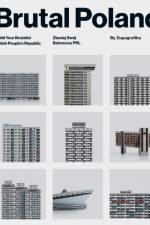
Explore the modernist and brutalist architecture erected in the Polish People s Republic and build some of its most striking edifices, from the massive housing estates of Warsaw to the brutal Hotel Forum in Krakow. Explore and build some of the most striking brutalist edifices erected in the former Polish People''s Republic. Brutal Poland by Zupagrafika includes 9 press-out models to assemble and chapters with photographs and texts providing a valuable insight into the featured buildings and their history.
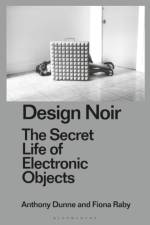
The first book to be published on the work of their partnership (in 2001), Design Noir is the essential primary source for understanding the theoretical and conceptual underpinnings for Dunne & Raby's work. Consisting of three elements - a ?manifesto' on the possibilities of designing with and for the ?secret life' of electronic objects; notes for an embryonic network of critical designers and, most famously, the presentation of the Placebo Project - a prototype for a critical design poetics enacted around electronic furniture-objects - Design Noir offers an in-depth exploration of one of the most seminal design projects of the last two decades, one that arguably initiated speculating through design in its contemporary forms. By detailing the logic and character of the objects that were constructed; the involvement of users with these objects over-time, and in the creation of a new kinds of spatially and temporally distributed moments of critique and engagement with things, Design Noir presents the case-study of the Placebo projectas a far more complex and subtler project than is often thought. As a bold and in many ways unprecedented experiment in design writing and book designing, Design Noir is itself an instance of the speculative propositional design it expounds.
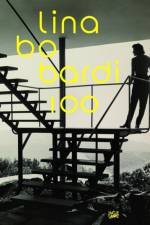
The Italio-Brazilian architect Lina Bo Bardi (1914-1992) forged a unique path with her bold designs. Spanning architecture, stage sets, fashion, and furniture, her work drew inspiration from the International Style, which she translated into her own visual language. Fundamental to her work was her thoughtful engagement with her adopted country of Brazil, its culture, society, and politics, and she productively and provocatively voiced her sometimes radical views through designs, exhibitions, and writings. On the occasion of Lina Bo Bardi's one hundredth birthday, this richly illustrated volume presents an overview of her oeuvre and highlights iconic buildings, such as her own home, the so-called Casa de Vidro, the Museo de Arte de São Paulo, and the cultural center SESC Pompéia.
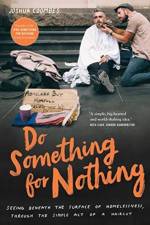
Based on the grassroots movement and Netflix film hosted by Morgan Freeman, this is a beautiful, moving and inspiring collection of photographs capturing the stories behind those living on the streets across the globe.
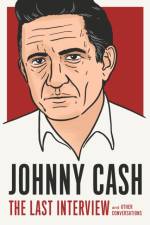
Johnny Cash seemed like the stuff of legend when he was alive, and even more so as he achieved something close to sainthood in death. The interviews collected here bring us closer to the actual man: brilliant, falliable, introspective, and longing for redemption.Mythmaker, philosopher, sinner, and saint, Johnny Cash is perhaps the quintessential American icon. Though often rebellious and unruly, he rarely spoke without intention, sincerity, and a bit of poetry. The interviews here spotlight that inimitable rhetorical style, and the fascinating diversity of subjects that made him as relatable as he was mysterious. From a hopped up early interview with Pete Seeger, to a meditation on sobriety, to the last interview in which he stares calmly into the face of death, this collection brings together decades of insight as deeply profound as the unforgettable baritone of The Man in Black himself.
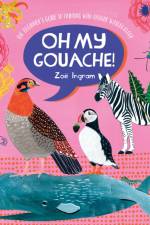
A comprehensive guide to painting in goauche, a medium that creates opaque effects making it more vibrant and graphic than traditional watercolors. Zoe Ingram shows you how to get the most from gouache, with a run down on materials and techniques. Step-by-step exercises and projects give you hands-on practice to build your confidence with gouache.
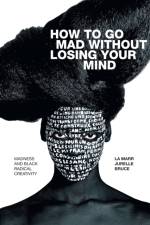
La Marr Jurelle Bruce ponders the presence of "madness" in black literature, music, and performance since the early twentieth century, showing how artist ranging from Kendrick Lamar and Lauryn Hill to Nina Simone and Dave Chappelle activate madness as content, form, aesthetic, strategy, philosophy, and energy in an enduring black radical tradition.
A ground-breaking investigation of how new technological developments have influenced the creative possibilities of composers of computer music in the last 50 years.
A provocative case for historical ambiguity in architecture by one of the field's leading theoristsConceptions of modernity in architecture are often expressed in the idea of the zeitgeist, or "e;spirit of the age,"e; an attitude toward architectural form that is embedded in a belief in progressive time. Lateness explores how architecture can work against these linear currents in startling and compelling ways. In this incisive book, internationally renowned architect Peter Eisenman, with Elisa Iturbe, proposes a different perspective on form and time in architecture, one that circumvents the temporal constraints on style that require it to be "e;of the times"e;-lateness. He focuses on three twentieth-century architects who exhibited the qualities of lateness in their designs: Adolf Loos, Aldo Rossi, and John Hejduk. Drawing on the critical theory of Theodor Adorno and his study of Beethoven's final works, Eisenman shows how the architecture of these canonical figures was temporally out of sync with conventions and expectations, and how lateness can serve as a form of release from the restraints of the moment.Bringing together architecture, music, and philosophy, and drawing on illuminating examples from the Renaissance and Baroque periods, Lateness demonstrates how today's architecture can use the concept of lateness to break free of stylistic limitations, expand architecture's critical capacity, and provide a new mode of analysis.
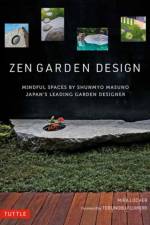
Zen Buddhist priest Shunmyo Masuno understands that today's busy world leaves little time or space for self-reflection, but that a gardeneven in the most urban of spacescan provide some respite. In his words, "e;The garden is a special spiritual place where the mind dwells."e; With this in mind, Masuno has designed scores of spectacular Japanese gardens and landscapes with the aim of helping people achieve a balanced life in the 21st century.This book explores Masuno's design process and ideas, which are integral to his daily Zen training and teachings. It features 15 unique gardens and contemplative landscapes completed in six countries over as many yearsall thoughtfully described and documented in full-color photos and drawings. Readers will also find insights on Masuno's philosophy of garden design and a conversation between the designer and famed architect Terunobu Fujimori.Zen Garden Design provides an in-depth examination of Masuno's gardens and landscapesnot just as beautiful spaces, but as places for meditation and contemplation.
Abonner på vårt nyhetsbrev og få rabatter og inspirasjon til din neste leseopplevelse.
Ved å abonnere godtar du vår personvernerklæring.