


Gjør som tusenvis av andre bokelskere
Abonner på vårt nyhetsbrev og få rabatter og inspirasjon til din neste leseopplevelse.
Ved å abonnere godtar du vår personvernerklæring.Du kan når som helst melde deg av våre nyhetsbrev.

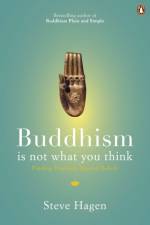
What is Buddhism? In Buddhism is Not What You Think Steve Hagen, bestselling author of Buddhism Plain and Simple and a Zen priest, cuts through the many misconceptions surrounding Buddhism, and shows us its true purpose. Drawing on down-to-earth examples from everyday life, this practical and straightforward guide penetrates the most essential and enduring questions at the heart of the Buddha's teachings: How can we see the world in each moment, rather than merely as what we think, hope, or fear it is? How can we base our actions on reality? How can we live lives that are wise, compassionate, open and honest? What can it bring to our lives? This book offers a profound and clear path to a life of joy and freedom.
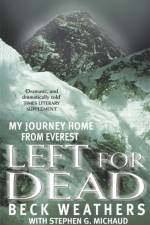
Anyone who has read Jon Krakauer's famous account of the 1996 Everest disaster, INTO THIN AIR, will remember the story of Beck Weathers: the gregarious Texan climber who went snow-blind in the Death Zone below the summit and who spent a night out in the open during a blizzard that took the lives of a dozen colleagues and friends.Even as he staggered back into Camp 4 the next morning, Beck's condition was such that the other survivors assumed he would not make it back down the mountain. He was effectively left for dead, but drawing upon reserves of determination and courage he didn't know he had - as well as the extraordinary selflessness and bravery of a Nepalese helicopter pilot he'd never met - he finally made it to safety. Only then could a new battle begin: to rebuild his life with a family he'd taken for granted for too long.Heartstoppingly exciting and ultimately very moving, LEFT FOR DEAD is a terrific read.
Problems block and slow down your progress; heres how to overcome themsimply, efficiently and effectively. This book offers straightforward, empowering science-based solutions to problems, big and small, at work or in life. It takes a never before seen approach to problem solving, powerfully combining lessons from cognitive science, established problem-solving theory and vast practical experience. It includes a radical new approach to analysing problems: The Problem Matrix. This will transform your approach to problems, challenge your thinking and help you develop new, positive, solution-focussed mindsets for the long-term.
This revision guide book covers the major areas of Statistical Analysis covered in Undergraduate Psychology. The focus is on the practical application of statistics to assignments and assessments that you may encounter. To ensure that you are able to apply statistics, particular attention is given to the key concepts you need to understand in order to be able to use statistics correctly; the process you need to follow in order to choose the correct statistic; and what you need to do to present and interpret your statistics correctly. The coverage of the individual tests focus on pragmatic issues, such as when the test is appropriate, how to format data correctly and what to do when you don't get the data you expect. You are directed to further readings for the mathematical underpinnings of the statistical tests. Examples and case studies are used throughout, so you can see the application of statistics to problems that are similar to those you are likely to encounter. Features focused on critical thinking, practical applications and key research will offer additional pointers for you in your revision process/exam preparation.A companion website provides supporting resources for self testing, exam practice, answers to questions in the book, and links to further resources.
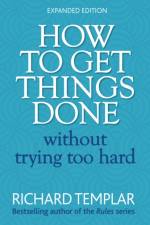
In this clever book, bestselling author Richard Templar delivers a collection of principles, tactics and techniques that will make sure things always get done, without you ever having to break a sweat or stay up into the small hours to do it.These pithy, self-contained ideas are so straightforward that you can even read the book itself without trying too hard
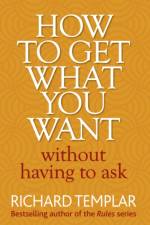
Why is it that some people always seem to get what they want? Whether it's a pay rise, a new job, everybody rearranging a date to suit them, or simply that they get their own way every time? It's nothing to do with luck, and everything to do with knowing exactly how to go about it. In this clever book, bestselling author Richard Templar delivers a collection of principles, tactics and techniques that will make sure things always go your way, without you even having to ask. You'll discover the secrets of being the kind of person who gets what they want, and the secrets of making it easy for people to say yes to you (sometimes without even realising they are doing it). And for those rare occasions where you really do have to ask, you'll find priceless advice on exactly what to say and how to say it, so that you'll definitely never have to ask twice.
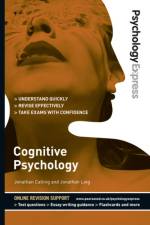
This revision guide provides concise coverage of the central topics within cognitive psychology, designed to help you focus on assessment and exams. The guide is organised to cater for QAA and BPS recommendations for course content. Sample questions, assessment advice and exam tips drive the organisation within chapters so you are able to grasp and marshal your thoughts towards revision of the main topics. Features focused on critical thinking, practical applications and key research offer additional pointers for you in your revision process and exam preparation.A companion website provides supporting resources for self testing, exam practice, answers to questions in the book, and links to further resources.
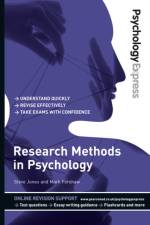
This revision guide provides concise coverage of the central topics within Research Methods in Psychology, presented within a framework designed to help you focus on assessment and exams. The text encapsulates all the subject matter listed in the BPS Qualifying Examination syllabus for the area. The structure of the book represents a logical, linear progress through your typical learning in relation to Research Methods in Psychology. The two authors bring their clear, accessible style to bear on this, making the normally dry subject matter seem more lively and engaging. The chapter on writing reports is deliberately left to the end since this is the natural culmination of your research process.Sample questions, assessment advice and exam tips drive the organisation within chapters so you are able to grasp and marshal your thoughts towards revision of the main topics. Features focused on critical thinking, practical applications and key research will offer additional pointers for you in your revision process and exam preparation.A companion website provides supporting resources for self testing, exam practice, answers to questions in the book, and links to further resources.
Guy Kawasaki is an entrepreneur's entrepreneur who gives reliable and entertaining advice on getting a business off the ground. His bestseller The Art of the Start is the essential reference book for starting any new enterprise.The Art of Enchantment is an update of Dale Carnegie's How to Win Friends and Influence People, in which Kawasaki asserts that the fundamental goal of influence is not to get your own way, but to bring about a change of heart in other people by working with and through them.Covering subjects like How To Make An Enchanting Product, How To Overcome Resistance, and How To Enchant Your Boss, this is another classic in the making from one of the most respected voices in business.
Arguably our brain's greatest sense is the ability to understand the minds of others - our sixth sense. In Mindwise, renowned psychologist Nicholas Epley shows that this incredible capacity for inferring what others are thinking and feeling is, however sophisticated, still prone to critical errors. We often misread social situations, misjudge others' characters, or guess the wrong motives for their actions. Drawing on the latest in psychological research, Epley suggests that only by learning more about our sixth sense will we have the humility to overcome these errors and understand others as they actually are instead of as we imagine them to be.
Now the subject of a film by Richard Linklater, Eric Schlosser's explosive bestseller Fast Food Nation: What the All-American Meal is Doing to the World tells the story of our love affair with fast food. Britain eats more fast food than any other country in Europe. It looks good, tastes good, and it's cheap. But the real cost never appears on the menu. Eric Schlosser visits the lab that re-creates the smell of strawberries; examines the safety records of abattoirs; reveals why the fries really taste so good and what lurks between the sesame buns - and shows how fast food is transforming not only our diets but our world. 'Fast Food Nation has lifted the polystyrene lid on the global fast food industry ... and sparked a storm' Observer 'Has wiped that smirk off the Happy Meal ... Thanks to this man, you'll never eat a burger again' Evening Standard 'Startling ... Junk food, we learn, is just that ... left this reader vowing never to set foot in one of those outlets again' Daily Mail 'This book tells you more than you really want to know when you're chomping on that hamburger ... Have a nice day? Listen - you should live so long' The Times Eric Schlosser is a correspondent for the Atlantic Monthly. His first book, Fast Food Nation, was a major international bestseller. His work has appeared in the Atlantic Monthly, Rolling Stone and the Guardian. He has received a number of journalistic honours, including a National Magazine Award for an Atlantic Review article on the drug trade, which was later adapted into the book Reefer Madness.
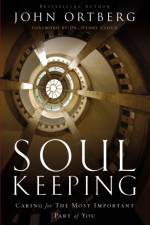
The soul is NOT "e;a theological and abstract subject."e;The soul is the coolest, eeriest, most mysterious, evocative, crucial, sacred, eternal, life-directing, fragile, indestructible, controversial, expensive dimension of your existence.Jesus said it's worth more than the world.You'd be an idiot not to prize it above all else.Shouldn't you get pretty clear on exactly what it is?Shouldn't you know what it runs on?Wouldn't it be worth knowing how to care for it?Two things are for sure. One is: you have a soul. The other is: if you don't look after this one you won't be issued a replacement.Bestselling author John Ortberg writes another classic that will help readers discover their soul and take their relationship with God to the next level.
As a vegetarian you already know how important it is to maintain a healthy, balanced diet. But being pregnant aswell can make it seem even harder to eat and drink in a way that will keep you healthy, your baby safe and provide the ideal fuel for growth and development. What to Eat When Youre Pregnant and Vegetarian is your no-nonsense companion. This handy, compact book is the definitive healthy-eating guide for vegetarians who are expecting and provides expert guidance on what foods are safe and what you should steer clear of.
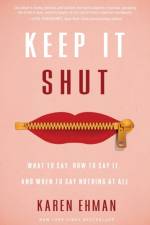
Kind, encouraging, and humorous, Karen Ehman helps us learn the essential practice of using our words more effectively--alleviating heartache and regret, reducing relational tension and conflict, lessening our stress levels, and growing our relationship with God.From Bible times to modern times women have struggled with their words. What to say and how to say it. What not to say. When it is best to remain silent. And what to do when you've said something you wish you could now take back. In this book a woman whose mouth has gotten her into loads of trouble shares the hows (and how-not-tos) of dealing with the tongue.Beyond just a "e;how not to gossip"e; book, this book explores what the Bible says about the many ways we are to use our words and the times when we are to remain silent. Karen will cover using our speech to interact with friends, co-workers, family, and strangers as well as in the many places we use our words in private, in public, online, and in prayer. Even the words we say silently to ourselves. She will address unsolicited opinion-slinging, speaking the truth in love, not saying words just to people-please, and dealing with our verbal anger.Christian women struggle with their mouths. Even though we know that Scripture has much to say about how we are--and are not--to use our words, this is still an immense issue, causing heartache and strain not only in family relationships, but also in friendships, work, and church settings. Also available: Keep It Shut small group video study and study guide.
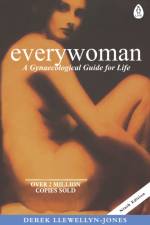
The definitive voice in women's health and gynaecological study with over TWO MILLION COPIES sold worldwide.'Everywoman deals sensitively and thoroughly with every physical and psychological aspect of internal female development' VOGUEEverywoman is the essential manual to women's health. This book will provide you with the knowledge to ask questions and make empowered decisions about your own wellbeing.A leading pioneer in gynaecology, Derek Llewellyn-Jones' balanced and clear-cut advice provides medical guidance and a comprehensive exploration of women's sexuality.Everywoman will educate you on: Adolescence and sexual development Birth control and family planning Pregnancy and labour Postpartum care Newly revised with up-to-date information, Everywoman is a gynaecological guide for life for the twenty-first century women.
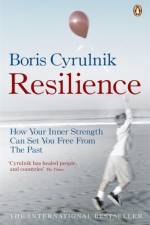
Many of us experience pain in our childhoods, and young people face trauma all over the world. How is it possible to recover? Do those abused always go on to hurt others? This incredible bestseller has overturned the way we view trauma, by showing how the extraordinary power of resilience can heal damaged lives. Renowned psychoanalyst Boris Cyrulnik has dealt with many young victims of distress and he relates stories of children who have been abused, orphaned, fought in wars and escaped genocide, yet who have not only survived, but grown in the face of adversity. By the way we deal with our memories and emotions, he shows, we can reshape our lives and transform pain into something stronger - just as a grain of sand in an oyster becomes a pearl. Resilience is not just about resisting; it is about learning to live. This life-changing book points the way towards hope and happiness.
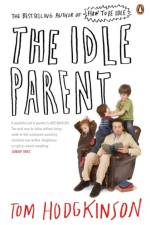
The Idle Parent is Tom Hodgkinson's radical parenting remedy against stifled, mollycoddled children.Modern life is wrecking childhood. Why can't we just leave our kids alone?If you've ever wondered why so many of today's children are unhappy, spoilt, stressed and selfish, then the answers and the remedy are to be found in The Idle Parent. Tom Hodgkinson wants us to leave our kids be, to give them the space and time to grow into self-reliant, confident, inquisitive, happy and free people. Full of practical tips of what to do and (more importantly) what not to do, Tom will not only help your kids be happier, but also help you, their parents, live happier and more fulfilled lives. 'Wise, practical, funny, personal, it will make you a much better parent' Oliver James'An inspiring book, genuinely subversive. Time to put away "e;silly adult things"e; and embrace childhood in all its messy glory' London Lite'A recipe for bright, happy people with need of neither television nor shrink. Who could ask for more?' Evening Standard'An original, thought-provoking book' Toby Young, Mail on SundayTom Hodgkinson is the founder and editor of The Idler and the author of How to be Idle, How to be Free, The Idle Parent and Brave Old World. In spring 2011 he founded The Idler Academy in London, a bookshop, coffeehouse and cultural centre which hosts literary events and offers courses in academic and practical subjects - from Latin to embroidery. Its motto is 'Liberty through Education'. Find out more at www.idler.co.uk.
The Stuff of Thought is an exhilarating work of non-fiction. Surprising, thought-provoking and incredibly enjoyable, there is no other book like it - Steven Pinker will revolutionise the way you think about language. He analyses what words actually mean and how we use them, and he reveals what this can tell us about ourselves. He shows how we use space and motion as metaphors for more abstract ideas, and uncovers the deeper structures of human thought that have been shaped by evolutionary history. He also explores the emotional impact of language, from names to swear words, and shows us the full power that it can have over us. And, with this book, he also shows just how stimulating and entertaining language can be.
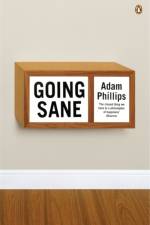
Volumes have been dedicated to madness, but sanity is rarely mentioned. We can define the mad, but how do we classify the sane? In Going Sane, psychoanalyst and writer Adam Phillips delves deep into history, philosophy, literature and his own experiences to address questions that we rarely ask about ourselves, taking us on an engrossing journey in which we learn many things - including some of what it takes to be happy in the modern world.
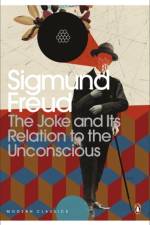
Building on the crucial insight that jokes use many of the same mechanisms he had already discovered in dreams, Freud developed one of the richest and most comprehensive theories of humour that has ever been produced.Jokes, he argues, provide immense pleasure by allowing us to express many of our deepest sexual, aggressive and cynical thoughts and feelings which would otherwise remain repressed. In elaborating this central thesis, he brings together a dazzling set of puns, anecdotes, snappyone-liners, spoonerisms and beloved stories of Jewish beggars and marriage-brokers. Many remain highly amusing, while others throw a vivid light on the lost world of early twentieth-century Vienna.
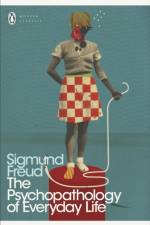
This collection of writings is famous for giving us the phrase 'Freudian slip'. It also builds up a strong social history of Vienna and the middle-class social milieu of Freud and his patients. Through a series of case histories, some no longer than a few lines long, Freud explores how it is that normal people make slips of speech, writing, reading and remembering in their everyday life, and reveals what it is that they betray about the existence of a sub-text or subliminal motive to our conscious actions. As he explains, most of these slips tend of be of a relatively anodyne nature, but some are a little more sinister, particularly those where pride or thwarted love are concerned...
In 1818, when he was in his mid-thirties, Stendhal met and fell passionately in love with the beautiful Mathilde Dembowski. She, however, was quick to make it clear that she did not return his affections, and in his despair he turned to the written word to exorcise his love and explain his feelings. The result is an intensely personal dissection of the process of falling - and being - in love: a unique blend of poetry, anecdote, philosophy, psychology and social observation. Bringing together the conflicting sides of his nature, the deeply emotional and the coolly analytical, Stendhal created a work that is both acutely personal and universally applicable.
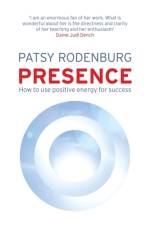
Everyone has known the feeling of being present. Babies and toddlers live there almost constantly. Great performers work in this state. Great athletes win in it. Great teachers teach in it. Every great communicator speaks from this place. It is when fully present that we do our best work and make our deepest impression on others. In her years as an acting coach, Patsy Rodenburg has discovered the secrets to that elusive quality actors call 'it'. There are three basic ways human energy moves between people and you can be in any one of the 'three circles' in any situation. In the first, your focus is purely inward, in the third, all your energy is moving outward. In the second you are focused, you give energy out and you receive it. You communicate spontaneously and listen well, you are generous and people are generous in return. And by working on your breath, posture, voice, language, listening skills, focus, courage and trust you can access the second circle on a daily basis. Your work, relationships, spirituality and passions will all benefit.
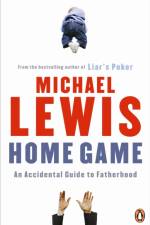
Here, with his remorseless eye for the truth, the bestselling author of Liar's Poker turns his sights on his own domestic world. The result is a wickedly enjoyable cautionary tale.Lewis reveals his own unique take on fatherhood, dealing with the big issues and challenges of new-found paternity: from discovering your three-year-old loves to swear to the ethics of taking your offspring gambling at the races, from the carnage of clothing and feeding to the inevitable tantrums - of both parent and child - and the gradual realization that, despite everything, he's becoming hooked.Home Game is probably the most brazenly honest and entertaining book about parenting ever written.
Choosing a romantic partner is one of contemporary life's biggest adventures. But other aspects of modern living - being globally more mobile, a fall in religious belief, social liberalization and more job opportunities (but longer working hours) - mean meeting a mate has rarely been so challenging, and rarely so important.In How to Choose a Partner, Susan Quilliam guides us through the process of finding the right partner for us as individuals. The real challenge is that we grow. Drawing upon rich cultural material, psychology and her background in relationship therapy, Susan presents partner choice as a self-development journey, driving us to learn more about ourselves, about other people, about life and the way we want to live.
Having the drive, ambition and inspiration to start a new business takes a particular mindset - no wonder we regard successful entrepreneurs as modern-day magic-makers. But what if that spirit and drive were applied outside the world of business startups? An entrepreneur seeks to build something from nothing; to take an inspired idea and make it a reality. How to Think Like an Entrepreneur explores what it takes to be a successful entrepreneur - the ability to disrupt the status quo, use design thinking to generate fresh perspectives, build resilience and leap forward from failure - and ultimately lead us to the heart of great entrepreneurial thinking; an understanding of our deepest human needs. By harnessing the passion, verve and creative thinking of an entrepreneur, you can improve your business and your life and relationships beyond it.
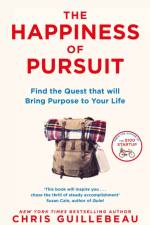
A New York Times BestsellerNew York Times bestselling author of The $100 Startup helps you find purpose in work and life by committing to a life-changing quest. The Happiness of Pursuit helps you find real life fulfilment by undertaking a quest that is big and ambitious, surpassing the limits of routine-filled lives. Chris has undertaken a successful quest of his own, having visited nearly every country in the world by age 35, but your own quest needn't involve travel at all. What's needed is commitment and progressive accomplishment, losing oneself in a task - whether it be a physical journey, an artistic enterprise or a philanthropic feat. Chris has surveyed thousands who've undertaken such quests and identified: * How they went about it * The common mistakes * What happened when they hit the wall * How their lives changed when the quest was overThe Happiness of Pursuit offers inspirational and practical advice to help you bridge the gap between 'impossible dream' and 'everyday reality'. Discover how your own quest can give you the self knowledge to find and live a more fulfilling life.
Society has a deep fear of ageing. Old age is increasingly viewed as a biomedical problem, something to be avoided at all costs and then vanished away by medicine. Anne Karpf urges us to change our narrative. Exploring how our outlook on ageing is historically determined and culturally defined, she draws upon case studies, old and new, to suggest how ageing can be an actively enriching time of immense growth. She argues that if we can recognize growing older as an inevitable part of the human condition, then the great challenge of ageing turns out to be none other than the challenge of living. One in the new series of books from The School of Life, launched January 2014: How to Age by Anne Karpf How to Develop Emotional Health by Oliver James How to Be Alone by Sara Maitland How to Deal with Adversity by Christopher Hamilton How to Think About Exercise by Damon Young How to Connect with Nature by Tristan Gooley
Happiness is a loaded term that means different things to different people. To some, it might mean life satisfaction, to others, a fleeting moment of joy. Rather than seeking to be happy, Oliver James encourages us to cultivate our emotional health. Outlining the five elements of good emotional health - insightfulness, a strong sense of self, fluid relationships, authenticity and playfulness in our approach to life - he offers strategies for optimizing each characteristic to live more fulfilling lives. Helping us to understand the impact our emotional baggage has on our daily interactions, he reveals how to overcome unhelpful patterns and become more self-aware - revitalizing our approach to life. One in the new series of books from The School of Life, launched January 2014: How to Age by Anne Karpf How to Develop Emotional Health by Oliver James How to Be Alone by Sara Maitland How to Deal with Adversity by Christopher Hamilton How to Think About Exercise by Damon Young How to Connect with Nature by Tristan Gooley
Abonner på vårt nyhetsbrev og få rabatter og inspirasjon til din neste leseopplevelse.
Ved å abonnere godtar du vår personvernerklæring.