








Gjør som tusenvis av andre bokelskere
Abonner på vårt nyhetsbrev og få rabatter og inspirasjon til din neste leseopplevelse.
Ved å abonnere godtar du vår personvernerklæring.Du kan når som helst melde deg av våre nyhetsbrev.

This book explains how mass killing is driven by elite politics within authoritarian regimes.
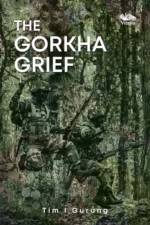
Through the pages of this book-woven with the tears of long-suffering Nepalis worldwide-Tim I Gurung intends to show you how the vast depths of the Gorkha Grief came to be.
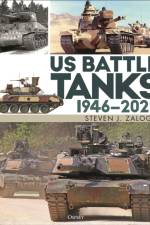
A comprehensive and detailed illustrated examination of the development and combat performance of US battle tanks from the end of World War II through to the present day. This is the second of two volumes examining the development of US Army and USMC battle tanks, and covers many of the designs prepared for World War II but never put into serial production. It then details armored warfare in the Korean War " and the US Army's attempts to come to grips with the nuclear battlefield of the Cold War more generally.It then covers the introduction of the famous Patton tank series, as well as short-lived attempts to develop more radical tanks such as the T95 and the failure of the MBT-70 tank program. Finally, the US it introduces the M1 Abrams, which has proved to be the best US tank design of the post-World War II period and is still in service today. The role of this tank in the 1990-91 Gulf War is covered, along with the USMC use of older types such as the M60A1. The story of US tanks is brought right up to the present day with the introduction of the M10 Booker Mobile Protected Firepower vehicle in 2023.Packed with dozens of intricate color profiles and isometric views, vivid battlescene artworks, technical illustrations, and superbly clear period photographs, this work provides a wide-ranging and essential reference work on the tanks and machines at the cutting edge of armored warfare.
A gripping tale of naval warfare, dynastic rivalry, and technical innovation, by the author of Ghenghis Khan and the Making of the Modern World.
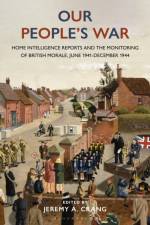
How did the British people feel during the final years of the Second World War? What did they really think about rationing, evacuations, and the US and Soviet Union joining the Allies? How did the tide of feeling change as the war turned against the Axis Powers and the focus moved to creating a post-war world?During the war, the morale of the British people was monitored by Home Intelligence, part of the Ministry of Information, that kept watch on the behaviour and opinions of the public. Leading historian Jeremy Crang brings together extensive extracts from the Home Intelligence Reports from June 1941 to December 1944. The collection provides an original and gripping account of life on the home front in the final years of the Second World War.The book offers unique insights into public reactions to key British military events but also the continuing stresses and strains of life on the home front such as strikes, food rationing and fuel economy. It strips away some of the nostalgia that had grown up around the British home front and enables readers to explore for themselves a fascinating and many-sided record of the 'People's War.'The collection is a truly exceptional history of the last years of the war. It is indispensable in understanding both the unity and the diversity of wartime Britain, as well as public aspirations for a better post-war 'tomorrow'.
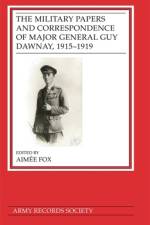
Covers service as a staff officer in four theatres of war, including the April landings and August offensive at Gallipoli in 1915 and the Third Battle of Gaza in 1917.
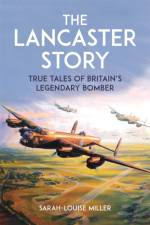
A dramatic and vividly rendered account of the most successful RAF bomber of the Second World War the Avro Lancaster and the lives of the men and women who flew, designed, constructed and maintained it.
Extensive in scope and drawing on newly available evidence from multinational archives, this book reconsiders Sino-Indian border issues during the middle Cold War using multiple established analytical frameworks. It demonstrates how key countries perceived and engaged with the border conflict by aiding the two main participants morally and materially. Before, during, and after the 1962 Sino-Indian border war, multinational political actors pursued their foreign policy goals (e.g., trade, security, and prestige) concerning the frontier, and often tried to destabilize spheres of influence and bolster alliances. Therefore, this contest signified a variation of the Anglo-Russian Great Game in Asia during the nineteenth century, and the theater of operations encompassed not only the border itself, but also the Himalayan kingdoms, Tibet, and Burma. A reevaluation of the border conflict between India and China is necessary given current, ongoing clashes at their still unresolved border as well as the fact that these two countries now possess enhanced technology and weapons.
This book explores the profound impact the Battle of Lyndanise in 1219 (on the site of Tallinn today) had on both Denmark and Estonia from the thirteenth century to the present day.
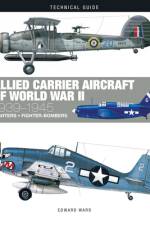
Organized chronologically by type and nationality, this book includes fighters, fighter-bombers, torpedo bombers, dive-bombers, reconnaissance aircraft, floatplanes and flying boats. All the best-known types are featured, such as the Grumman F4F Wildcat, Douglas TBD Devastator, and Douglas SBD Dauntless that fought at the battle of Midway in 1942. The entries are accompanied by exhaustive captions and specifications. The guide is illustrated with profile artworks, three-views, and special cutaway artworks of the more famous aircraft in service. Allied Carrier Aircraft of World War II is an essential reference for modelers and enthusiasts of military aircraft of the Second World War.
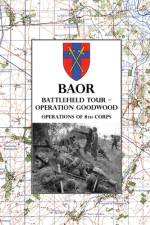
This publication is a facsimile reprint of the issued study papers for the British Army battlefield tour of Operation Goodwood of 1947. Used on its own, the book presents a description of the planning of the operation, events before and during the action (from 18 to 21 July 1944) and also the detailed Order of Battle of 8th Corps. Also included are the operation instructions for 8 Corps and 11 Armoured Division. The artillery plan is given in detail together with the air plan and other important items. The maps are reproduced in colour and bound as per the original.Goodwood was launched at a time of high frustration in the higher command of the Allies, and this contributed to the controversy surrounding the operation. The Allied bridgehead in Normandy was not expanding at the pace they wanted; the lodgement was about 20% of the planned size, which led to congestion, and there was some fear of a stalemate. Allied commanders were not able to exploit their potentially decisive advantages in mobility during June and early July 1944. They were looking for a decisive breakthrough of the German defensive front.This British offensive took place between 18 and 20 July 1944 as part of the larger battle for Caen in Normandy, France. The objective of the operation was a limited attack to the south, from the Orne bridgehead, to capture the rest of Caen and the Bourguébus Ridge beyond. While Goodwood failed in its primary aim, it forced the Germans to keep powerful formations opposite the British and Canadians on the eastern flank of the Normandy beachhead and Operation Cobra, the first US Army attack which began on 25 July, caused the weaker German defences opposite to collapse.
The Art of War by Sun Tzu is a timeless masterpiece on military strategy and tactics. Packed with wisdom, it offers profound insights into warfare, leadership, and conflict resolution. A must-read for anyone seeking to understand the dynamics of power and to achieve success in any competitive arena.
How does one engage in the study of strategy? Strategy: Context and Adaptation from Archidamus to Airpower argues that strategy is not just concerned with amassing knowledge; it is also about recognizing our imperfect understanding of the environment and respecting the complex nature of adaptation to the unforeseen or unexpected. In essence, the strongest strategists are those who commit to an education that cultivates a more holistic and adaptive way of thinking. With that thought in mind, the contributors to Strategy, each a current or former professor at the School of Advanced Air and Space Studies, widely considered the Department of Defense's premier school of strategy, offer ways of thinking strategically about a variety of subject matters, from classical history to cyber power. Practitioners in the profession of arms, perhaps more than any other profession, must employ critical thinking where the application of power on land, at sea, in the air, and in space and cyberspace are concerned. Strategy examines various sub-disciplines regarding the use of power, and illuminates different approaches to thinking which have implications beyond the implementation of force.
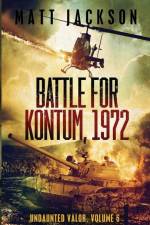
...Ben Het has tanks in the wire!"Hawk Claw is engaging," the pilot reports firing the first TOW missile ever from a helicopter in combat.Fire Base Delta had already been over run and Fire Base Charlie was fighting for its life. How much would fall before the North Vietnamese army was knocking on the doors of the key city of Kontum?This was the third phase of the North Vietnamese Easter Offensive Campaign of 1972. Standing across the country between them and the fall of Saigon was a poorly led South Vietnamese Army, brave South Vietnamese soldiers, and US Advisors. How much ground would be lost before they could stop the flow of men and tanks coming across the borders?This is their story as related to the author by those who were there.Follow Major Steinhauer as he withdraws with the fleeing South Vietnamese soldiers from the long-forgotten battlefields of Ben Het, Dak To and Pleng Klung. Ride with the crews that were the first to engage enemy forces with the aerial TOW weapon system in combat. Comprehend the bravery of the South Vietnamese soldier when properly led, and the defeated cowardice of the South Vietnamese senior officers. Examine how an American civilian was serving in the capacity of a two-star general commanding all the forces opposed to the North Vietnamese invasion in the Kontum region. Serve with the civilian volunteer nurses that remained in the besieged city of Kontum to care for the wounded during the battle.The events are all true, as are most of the characters who are still alive, who retold their tales of what it was like to be under siege for so many days against overwhelming odds.The courage, dedication, and loyalty of US advisors towards their South Vietnamese counterparts as well as the bravery of the South Vietnamese soldiers when properly led will astound you. The determination of Army Aviators to curtail the enemy and save the advisors is nothing short of miraculous.Get your copy of this sixth volume, Battle of Kontum, 1972 in the Undaunted Valor series.
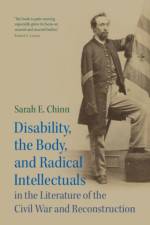
"The book is a study of the ways that white radicals deployed the physical and literary image of amputation during the Civil War and Reconstruction to argue for full Black citizenship and against a national reconciliation that reimposed white supremacy. It gives readers a new way to think about the Civil War and Reconstruction"--
This book presents the U.S. Army Asymmetric Warfare Group (AWG) as an example of successful change by the Army in wartime. It argues that creating the AWG required senior leaders to create a vision differing from the Army's self-conceptualization, change bureaucratic processes to turn the vision into an actual unit, and then place the new unit in the hands of uniquely qualified leaders to build and sustain it. In doing this, it considers the forces influencing change within the Army and argues the two most significant are its self-conceptualization and institutional bureaucracy.The work explores three major subject areas that provide historical context. The first is the Army's institutional history from the early 1950s through 2001. This period begins with the Army seeking to validate its place in America's national security strategy and ends with the Army trying to chart a path into the post-Cold War future. The Army's history is largely one of asymmetric warfare. The work thus examines several campaigns that offered lessons for subsequent wars. Some lessons the Army took to heart, others it ignored. As the AWG was a direct outgrowth of the failures and frustrations the Army experienced in Afghanistan and Iraq, the book examines these campaigns and identifies the specific problems that led senior Army leaders to create the AWG.Finally, the work chronicles the AWG's creation in 2006, growth, and re-assignment from the Army staff to a fully-fledged organization subordinate to the U.S. Army Training and Doctrine Command in 2011 to its deactivation. This action resulted not from the unit's failure to adapt to a post-insurgency Army focusing on modernization. Rather, it resulted from the Army failing to realize that while the AWG was a product of counterinsurgency, it provided the capability to support the Army during a period of great strategic and institutional uncertainty.
------------------------------------------------------------------------------------------------------------------------------------------------------------------------------- Zweiter Weltkrieg ErlebnisberichtSchlacht um OstpreuÃenEndkampf - Ostfront 1945 -------------------------------------------------------------------------------------------------------------------------------------------------------------------------------- Ihre Vorteile im Ãberblick: nur 9,99 ! Greifen Sie zu! Nur solange der Vorrat reicht!Bestseller, welchen Sie nur auf Amazon erhalten!auch als Kindle Version erhältlichfairer Preisextrem schneller Versand & Geld-Zurück-Garantie da es sich hier um einen Amazon Prime Artikel handelt.-------------------------------------------------------------------------------------------------------------------------------------------------------------------------------- Seit 1942 wurden groÃe Teile Deutschlands und Berlin fast pausenlos von sich immer weiter intensivierenden Luftangriffen heimgesucht. Städte brannten und die Zivilbevölkerung lebte in ständiger Furcht und Anspannung vor dem alliierten Bombenterror. Doch während in vielen Teilen Deutschlands der Krieg allgegenwärtig war, bildete OstpreuÃen bis zum Sommer 1944 eine scheinbare Oase des Friedens. In diesem Landstrich, geprägt von seiner reichen Geschichte und Kultur, schien das Leben seinen gewohnten Gang zu gehen, weit weg von den Schrecken, die den Rest des Landes erschütterten. Am 12. Januar 1945 startete die Rote Armee eine GroÃoffensive mit einer überwältigenden Stärke von 1,7 Millionen Soldaten, begleitet von tausenden von Panzern, Artilleriegeschützen und Flugzeugen. Was folgte, waren Tage und Wochen von unvorstellbaren Grausamkeiten, in denen das Land unter der Wucht und Brutalität der bolschewistischen Horden litt. Auf die Zivilbevölkerung warteten Massenvergewaltigungen, bestialische Folterungen, wahllose ErschieÃungen und im besten Fall die Vertreibung. Schreie, Hilferufe und Schüsse hallten dieser Tage durch die eisige Landschaft der östlichsten Provinz Deutschlands, die in einer Apokalypse des Chaos und der Verwüstung versank. Dieser Band erzählt die Geschichte eines Bataillons im Angesicht der verzweifelten militärischen Lage in OstpreuÃen, dessen Kommandeur, Hauptmann Ziehlke, in einen tiefgreifenden moralischen Konflikt gerät. Während er den unmissverständlichen Befehl hat, den Anschluss zur Truppe zu gewinnen und seinen militärischen Auftrag zu erfüllen, sieht er sich gleichzeitig mit der moralischen Verpflichtung konfrontiert, einen Flüchtlingstreck vor den unvorstellbaren Gräueltaten der Roten Armee zu bewahren. Es ist ein Ringen zwischen Pflichterfüllung und Menschlichkeit, zwischen dem Befehl und der Verantwortung als Offizier, gegenüber der Zivilbevölkerung... --------------------------------------------------------------------------------------------------------------------------------------------------------------------------------
Con más de 40 años de este hechos, es prohibido olvidar, en una guerra nunca hay ni buenos ni malos, solo patriotas que hacen todo lo posible por defender sus seres queridos. Adentrece a las verdades que todavia incomodan.
In the annals of history, few events are as awe-inspiring, fearsome, and transformative as the Mongol invasions. Spearheaded by indomitable leaders whose names echo with the weight of empires-Genghis Khan, Kublai Khan, and their legendary generals-this was a campaign that redefined the very notions of war, empire, and power. The Mongols erupted from the steppes of Central Asia like a force of nature, unleashing the most extraordinary military juggernaut the world had ever seen. Mounted on their agile horses and armed with revolutionary tactics, they constituted an army that would topple nations, decimate once-impregnable fortresses, and forever alter the geopolitical landscape.Yet, while their conquests spelled glory and cultural exchange for the victors, they also bore witness to chilling acts of brutality and mercilessness. Cities that dared to resist were razed to the ground; their inhabitants subjected to horrors that haunt the collective memory of civilizations. The Mongol invasions were a double-edged sword-a tale of unparalleled military genius and unspeakable human cost, woven together in a rich tapestry of triumph and tragedy.As we journey through this thrilling saga, brace yourselves for a roller coaster of emotions, from the exhilaration of grand victories to the gut-wrenching sorrow of devastating defeats. Ahead, we shall delve into the intricate details of this complex narrative, forever imprinted on the pages of time.
How We Served, is an anecdotal history of a century of military and homefront service around the globe during times of peace and war. Told by the men and women who so served, or their loved ones, their service is memorialized to varying degrees, from longer first hand reflections, to shorter summations raising a hand to be counted as having been there. All are included, for all served, and that service deserves our remembrance, and our thanks.
How We Served, is an anecdotal history of a century of military and homefront service around the globe during times of peace and war. Told by the men and women who so served, or their loved ones, their service is memorialized to varying degrees, from longer first hand reflections, to shorter summations raising a hand to be counted as having been there. All are included, for all served, and that service deserves our remembrance, and our thanks.
How We Served, is an anecdotal history of a century of military and homefront service around the globe during times of peace and war. Told by the men and women who so served, or their loved ones, their service is memorialized to varying degrees, from longer first hand reflections, to shorter summations raising a hand to be counted as having been there. All are included, for all served, and that service deserves our remembrance, and our thanks.
En 1866, le shogun demande à la France l'envoi d'une mission militaire pour la formation de son armée alors en pleine modernisation. Quinze officiers et sous-officiers français partent à l'autre bout du monde pour enseigner les tactiques occidentales à leurs homologues japonais. Cependant, la guerre civile (dite "guerre de Boshin") éclate moins d'un an après leur arrivée et les Français se retrouvent ainsi plongés dans le conflit qui oppose les forces fidèles au shogun qu'ils ont contribué à former et celles fidèles au jeune empereur Meiji. L'ouvrage traite dans un premier temps du travail de la mission militaire française au Japon, puis, du début de la guerre civile et de l'activité diplomatique des officiers français, et enfin de l'engagement armé de certains éléments de la mission militaire, tels le capitaine Jules Brunet.
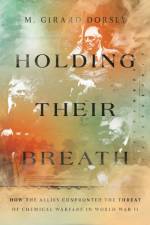
Holding Their Breath uncovers just how close Britain, the United States, and Canada came to crossing the red line that restrained chemical weapon use during World War II. Unlike in World War I, belligerents did not release poison gas regularly during the Second World War. Yet, the looming threat of chemical warfare significantly affected the actions and attitudes of these three nations as they prepared their populations for war, mediated their diplomatic and military alliances, and attempted to defend their national identities and sovereignty.The story of chemical weapons and World War II begins in the interwar period as politicians and citizens alike advocated to ban, to resist, and eventually to prepare for gas use in the next war. M. Girard Dorsey reveals, through extensive research in multinational archives and historical literature, that although poison gas was rarely released on the battlefield in World War II, experts as well as lay people dedicated significant time and energy to the weapon's potential use; they did not view chemical warfare as obsolete or taboo. Poison gas was an influential weapon in World War II, even if not deployed in a traditional way, and arms control, for various reasons, worked. Thus, what did not happen is just as important as what did. Holding Their Breath provides insight into these potentialities by untangling World War II diplomacy and chemical weapons use in a new way.
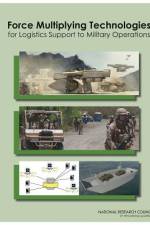
"This study was supported by Contract/Grant No. W911NF-13-D-0002-0001 between the National Academy of Sciences and the U.S. Army."--Title page verso.
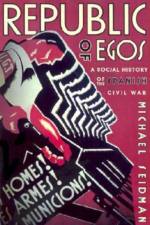
Most histories of the Spanish Civil War (1936-1939) have examined major leaders or well-established political and social groups to explore class, gender, and ideological struggles. The war in Spain was marked by momentous conflicts between democracy and dictatorship, Communism and fascism, anarchism and authoritarianism, and Catholicism and anticlericalism that still provoke our fascination. In Republic of Egos, Michael Seidman focuses instead on the personal and individual experiences of the common men and women who were actors in a struggle that defined a generation and helped to shape our world. By examining the roles of anonymous individuals, families, and small groups who fought for their own interests and survival--and not necessarily for an abstract or revolutionary cause--Seidman reveals a powerful but rarely considered pressure on the outcome of history. He shows how price controls and inflation in the Republican zone encouraged peasant hoarding, black marketing, and unrest among urban workers. Soldiers of the Republican Army responded to material shortages by looting, deserting, and fraternizing with the enemy. Seidman's focus on average, seemingly nonpolitical individuals provides a new vision of both the experience and outcome of the war.
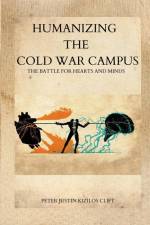
On September 9, 2002, the MIT program in Science, Technology, and Society (STS)held the first in a week-long series of events marking the inaugural anniversary of 9/11.The goal was to stimulate "personal reflection and remembrance" of the tragedy and itsaftermath among members of the MIT administration, faculty, students, and staff. Inher welcoming address to those assembled in Killian Hall for a colloquium titled, "MITin a Dangerous World," historian and director of the STS program Rosalind Williamsshared her hope that, by "the end of this week, MIT's motto of 'Mind and Hand' willsomewhat be modified to remind us all that it's mind, hand, and heart that have to worktogether."3 The point of the colloquium, she explained, was to broadly consider MIT'ssocial and moral responsibilities in a new era of global conflict.
Abonner på vårt nyhetsbrev og få rabatter og inspirasjon til din neste leseopplevelse.
Ved å abonnere godtar du vår personvernerklæring.