











Gjør som tusenvis av andre bokelskere
Abonner på vårt nyhetsbrev og få rabatter og inspirasjon til din neste leseopplevelse.
Ved å abonnere godtar du vår personvernerklæring.Du kan når som helst melde deg av våre nyhetsbrev.

El duque de Wellington creÃa que era difÃcil entender a los españoles porque España es el único paÃs donde dos y dos no son cuatro.Asà ha sido a lo largo de su historia, a veces gloriosa, a veces oscura."Los anarquistas españoles a las puertas del poder", no es un libro más sobre la guerra civil. Describe la guerra de clases en España que jalona el perÃodo que va desde la Constitución liberal de 1812, hasta el retorno del absolutismo en 1823, las guerras carlistas y las guerras coloniales, los intentos revolucionarios y los golpes de Estado hasta la guerra civil de 1936-1939.La Segunda República Española llegó casi por casualidad en 1931, llevando al poder a la izquierda republicana y a los socialistas. Estos últimos, no soportando perder las elecciones de 1933, desencadenaron en 1934 una insurrección sin quererlo verdaderamente, provocando una reacción terrible. Las derechas, perdiendo a su vez las elecciones en 1936, se alinearon detrás del golpe de Estado de los generales en julio de 1936.Ãste, debÃa prevenir una revolución supuestamente comunista sin comunistas. Su medio fracaso provocó a la vez una guerra civil y una revolución libertaria, que amedrantó a las burguesÃas occidentales y asustó a los dirigentes anarquistas que no supieron, o no quisieron, estar a la altura de las circunstancias.VÃctima de problemas internacionales, asfixiado por la no intervención, bombardeado y ametrallado por la Legión Cóndor y el Cuerpo Expedicionario Italiano, con unos dirigentes incapaces de hacer frente a la situación y negándose a recurrir a medidas revolucionarias, el pueblo republicano sucumbió. Este libro, analiza, contrasta y refleja numerosas fuentes de conocidos autores sobre la guerra civil. Se incluyen datos e informes oficiales de las diversas potencias extranjeras que estuvieron, directa o indirectamente, implicadas en el conflicto, tanto en el ámbito polÃtico como militar. Datos que son, todavÃa hoy, bastante desconocidos en España dado que muchos de estos no han sido traducidos al castellano, motivo por el que numerosos autores al desconocerlos no los han podido tener en cuenta. En muchos casos desmienten "verdades oficiales", tanto de los dirigentes republicanos como de los responsables polÃticos y sindicales, e incluso de historiadores. El autor, al no ser español pero que conoce perfectamente a los españoles, hace sus observaciones de una manera crÃtica y desapasionada, aunque son evidentes sus simpatÃas en el conflicto. Un libro sobre la Guerra Civil, que aclara muchas de las cosas que se tenÃan como verdad. Juan J. ALCALDE
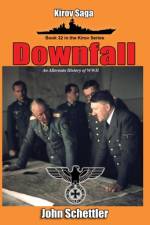
About Downfall: An all new Volume #32 for the Kirov Series. This book replaces the original #32, Field of Glory, which was moved to Book #1 in the Keyholder's Series. It features a special operation staged by the Germans to try and eliminate Ivan Volkov's Orenburg Federation from the war after he betrays Hitler and signs a peace treaty with Sergei Kirov. Can Germany's miracle worker make Volkov disappear? An outraged Hitler sends the very best of his legions to punish Volkov, including Steiner's 1st SS Panzerkorps augmented by 5th SS Wiking Division, and then a Wehrmacht Korps composed of the three most elite divisions in the regular Army, Grossdeutschland, Brandenburg Division, and the new Panzer Lehr. Their mission is to first take the oil fields at Grozny that eluded German capture in the 1942 Operation Edelweiss, and then press on to either Astrakhan or Baku. Volkov's tentative treaty with the Soviets receives a series of hard jolts when the Russians cross into the neutral zone under General Rokossovsky, and also cross the Volga. Like a hard pressed chess player against a Grandmaster of the art of maneuver warfare, Volkov matches wits against Manstein and castles to find the one place on the map where the elite German Panzer Divisions might not harm him. Then in an encore battle after their failure at Kursk, Manstein stages an alternate and expanded version of Operation Habicht-Panther to try and bag all the Soviet forces in the Izyum pocket and along the lower Donetz. East Front Action from start to finish in a volume presenting two battles that were not covered in the main series. Will Ivan Volkov meet his downfall at the hands of Germany's best?
Anything, Anywhere, Anytime is the story of the US Air Force tactical airlift mission from it's beginnings in the dark days of World War II through the Vietnam War. Although airlift is often ignored by historians and the general public, some of the most heroic missions in US Air Force history were performed by tactical airlifters. One writer has described tactical airlifters as willing to deliver toothpicks to hell. That is an appropriate description. This edition is in a smaller format.
Tercera monografÃa de la serie "Aviones en Colores" de Aviation Art & History, que cuenta la historia de los Lockheed Martin F-16AM/BM y F-16C/D Block 50 de la Fuerza Aérea de Chile (FACh). En veinticuatro páginas se publica un resumen operativo de cada una de las partidas de F-16 adquiridas por la FACh, con detalles de su origen y despliegue operacional. Esta monografÃa se enfoca principalmente en los esquemas de pintura usados por los F-16 chilenos, detallando cada variación utilizada por estos aviones, incluyendo vistas laterales, inferiores y superiores, asà como la incorporación de tablas de colores Federal Standard.
They are your friends, family, and fellow Americans - but how well do you know the National Guard? Step into the pages of history with "Uniquely American," a captivating book written by Leslie Wolf, a 30-year veteran of the National Guard. In this informative tribute, Leslie's deep-rooted passion for the National Guard shines through as she takes you on an in-depth exploration of this military institution's evolution over time. With a profound desire to share her insider knowledge and extensive research, Wolf delves into both the triumphs and the errors committed throughout the National Guard's rich history. This meticulously crafted book offers a comprehensive look at how various necessary but widespread grass roots militia forces transformed into the organized reserve force that benefits us today. Prepare to be captivated as Wolf recounts pivotal moments in American history, including head-to-head conflicts between governors and the president during the Civil Rights movement, or the fallout when protests become civil disturbances such as the Kent State and the Watts Riots. With unwavering honesty, Wolf shines a light on the mistakes made by political forces that set progress back, and the laws and policies that set the National Guard apart as an essential piece of our nation's security. Through her vivid storytelling, you'll gain a deeper understanding of the challenges faced by the National Guard and its unwavering commitment to protect and serve - even as tensions between state versus federal government, and full-time versus part-time service threatened to undermine the most important purposes of the United States military engine. The National Guard is more than just an institution; it is America's link to the political climate of the world. As you immerse yourself in "Uniquely American," you'll come to appreciate how its members are not just soldiers in uniform, but neighbors, family, and friends within our communities. Join Leslie Wolf on this extraordinary journey through time, as she weaves experience, research and historical narratives to create an emotional resonance that will leave you feeling inspired and connected to the National Guard. Uniquely American is a must-have for history enthusiasts, military buffs, and anyone who seeks a deeper understanding of this uniquely American institution.
WWII Fighter Aircraft - AlliesDetailed Coloring Book - Great gift idea for folks interested in World War Two. This adult coloring book is an introduction to the fighter aircraft used by the Allies during World War II. The war began with most Allied countries at a severe disadvantage with inventories of dated biplanes and under-powered (and under-gunned) relics. While the Axis countries flew state-of-the-art fighters under the command of experienced pilots with proven tactics. This was overcome as the Allied nations quickly designed and built modern fighter planes and trained many thousands of pilots. The fact that the Allies had an abundance of fuel and a huge industrial infrastructure capable of being mobilized quickly to support the war effort made the result a forgone conclusion. Some of the fighters shown here had very little opportunity to mount an effective defense due to the speedy surprise attacks, but they made up for it in the end. I included a few fighters that did not see combat against the Axis but played a key role in the training of the Allied pilots that went on to fly against the Axis during the war. We are printing the drawings face only so you can go ahead and use felt tip markers. There is also a short description of the aircraft on the reverse side of the page. I recommend you research the colors as many of these aircraft had quite glorious paint jobs. Please let me know if you have any comments or suggestions for future coloring books on our website at USGOVPUB.COM.
Este libro narra una apasionante historia sobre las hazañas de los aviadores soviéticos que lucharon en los cielos de Stalingrado, Rostov, Ucrania, Prusia Oriental y BerlÃn. Su autor, dos veces Héroe de la Unión Soviética, Vladimir Dmitrievich Lavrinenkov, fue un hombre de gran coraje y tuvo un destino brillante e inusual.En agosto de 1944, siendo ya un piloto de caza experimentado con un palmerés de más de 25 aviones enemigos derribados, embistió un Focke-Wulf Fw-189 y tuvo que saltar en paracaÃdas sobre territorio ocupado por el enemigo.Tras ser capturado e interrogado, se las ingenió para escapar saltando de un tren en marcha cuando era trasladado a BerlÃn. Escapando de sus captores, encontró un destacamento partisano y se unió a él. Estuvo luchando en los bosques dos meses y los partisanos lo ayudaron a regresar a su unidad. Terminó la guerra en BerlÃn.El proceso de convertirse en un joven piloto de combate, su camino hacia la maestrÃa, se muestra maravillosamente en el libro. El lugar principal lo ocupa la historia de los camaradas de armas del piloto, con quienes pasó toda la guerra, primero como piloto ordinario, luego como comandante de escuadrón y, finalmente, como comandante del Noveno Regimiento de Cazas de la Guardia (9°GvIAP).Se incluye un trabajo de investigación y un análisis de sus victorias, añadiendo información sobre los diversos tipos de aviones que pilotó durante la contienda.
Referring to John Deere nowadays inevitably brings to mind the company that gave its name to the imposing tractors and other agricultural machines that we encounter on our roads or in our fields. Indeed, the leaping deer, famous emblem of the Deere & Company, whose headquarters is located in Moline, Illinois in the United States, now adorns agricultural equipment (tractors, combine harvesters, etc...) but also forestry and public works equipment in more than 28 countries around the world. The John Deere Company is proud to be one of the oldest American companies, founded in 1868 by John Deere in the small state of Vermont. Afterwards, the brand spread and reached Europe from 1956. What is less known is that during World War II, one of the most precious goods exported across the Atlantic by the company was highly skilled manpower. Thus was born, in August 1942, the 608th Ordnance Base Armament Maintenance Battalion, more commonly known as the John Deere Battalion. Ordnance being the branch in the US Army that supplies, tests, maintains, and repairs all vehicles and armaments. This book pays tribute to the men who worked, sometimes at the risk of their lives, for our freedom.
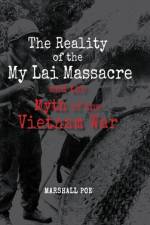
Since the Vietnam War, the United States has been involved in several major military conflicts. Critics of US military intervention have consistently looked back to the Vietnam War for "lessons." Perhaps the most common and forceful "lesson" is that the military cannot be trusted to fight these wars" ethically." In making this argument, critics consistently point to the My Lai Massacre (March 16, 1968) as evidence that the US military is prone to committing atrocities or that the realities of the conflict make fighting it "ethically" impossible. This book addresses such criticism by offering a detailed analysis of the My Lai Massacre and the way it has come to be understood in the US.First, using a fine-grained analysis of 18,000 pages of perpetrator testimony and 5,000 pages of official documents, this study presents the most detailed reconstruction of the massacre itself available. Using this account, author Marshall Poe shows that standard histories of the massacre once incomplete and misleading. Second, using detailed survey of the American press, governmental records, and academic treatments of My Lai over the period 1968 to the present, Poe analyzes the origins and history of the commonplace that there were "many My Lais." Furthermore, Poe argues that this commonplace came to serve the interests of both liberal and conservative critics of the Vietnam War.The Reality of the My Lai Massacre And the Myth of the Vietnam War is an important resource for those studying American history and military history.
Leifer's assessment posts a warning sign for those who see no reason to worry about the stability of East Asia. He warns that "the ARF is embryonic, one-dimensional approach" to the major changes taking place in the security environment of the vital East Asian region.
A fourth-generation soldier tells the story of his father's tank battalion, the "Spearhead," that selflessly led the charge on the front lines from Normandy into Germany--against impossible odds, technologically superior weaponry, and a fanatical enemy on its home turf--and the heroes whose sacrifice won World War II.At twenty-eight, Sam Hogan is one of the youngest lieutenant colonels in the US Army. The West Point graduate from Texas stands in the commander's hatch of his Sherman tank, behind him a steel wedge of seventeen other Shermans of his tank battalion. Two weeks after the now-infamous D-Day landings, Sam is preparing to give the order to advance into the German defenses that enclose the Normandy beachheads. Ahead of Sam lies seemingly impossible odds for survival: technologically superior Nazi tanks, camouflaged anti-tank guns, and infantry armed with new anti-tank rockets. But Sam has prepared for this moment for the past seven years. With a guttural call to move out accompanied by diesel fumes and the squeak of tank treads, Sam and his men begin their long journey to liberate Europe--a journey from which many of them would not return.So begins the story of Sam Hogan and his colorful band of tanker heroes of the Third Armored Division--the "Spearhead"--as they battle on the front lines of some of the war's toughest fights, from Normandy to the Elbe to the Battle of the Bulge. The soldiers of Task Force Hogan come from all walks of life. There are cooks, tankers, infantrymen, salty old sergeants, and wet-behind-the-ears lieutenants. In common, they have a sense of duty to each other and their country, and the struggle against the most sinister enemy modern history has ever produced.In Task Force Hogan, the story of Sam and his band of heroes comes to life through the writing of his son, Will Hogan--aided by never-before-seen letters, military dispatches, journal entries, and interviews with surviving family of the Task Force. These were the soldiers at the tip of the spear, brave enough to lead the charge and fight against insurmountable odds, and often paying the ultimate price, while liberating French villages and concentration camps as they rolled towards Germany to ultimately win the war. In the pages of this book, Will Hogan finally gives these unsung soldiers the voice and memorial that they all deserve.
The Imperial Japanese Navy deployed almost all of its combat power to challenge the Battle of Leyte Gulf. This was an operation where Japan's last carrier task force was used as a decoy to attack the American military's transport units. In this naval battle, Japan lost almost all of its main warships. As a result, the Japanese military leadership shifted towards defending the homeland. The American forces, which defeated the Japanese fleet, began their campaign to capture Iwo Jima as a relay point for attacks on the Japanese mainland. However, when the U.S. Marine Corps began its landing, the supporting and transport ships escorted by the U.S. Fifth Fleet came under attack. The assailants were the Japanese Combined Fleet, comprising ships that the Americans believed they had sunk.This work imagines a scenario where Japan did not lose to the American forces, where an alternative Japan from another world comes to the rescue of Japan on the brink of defeat, presenting a fictional war chronicle. Part I is about the Battle of Iwo Jima.
Loading black powder, also known as gunpowder, is a topic that encompasses a rich history and a deep understanding of firearms, ammunition, and pyrotechnics. This extensive guide will cover various aspects of black powder loading, from its historical origins to modern applications, safety considerations, and advanced techniques.In this comprehensive guide, we will explore the fascinating world of black powder loading. Whether you are a seasoned enthusiast, a historical reenactor, or simply curious about the science and art of black powder, this guide aims to provide you with a thorough understanding of the subject. Safety will be paramount throughout, emphasizing the responsible use of black powder in all its forms.
"Indomitable Spirit: Women Soldiers and Military Leaders" is an exhilarating compilation that embarks on an exploration of the courage, tenacity, and resolve of women in the armed forces. This Special Report, meticulously crafted by Freddie Russell Ingram, delves into the compelling journeys of these unyielding individuals who have forged their paths in a historically male-dominated field.Your journey through this report begins by diving into the early years of women's participation in military, "Breaking Barriers: The Early Years of Women in the Military", progressing to the various pivotal moments in history where women took up the mantle, in the section titled "Redefining The Battlefield: Women in the World Wars". Each chapter accentuates a different aspect of women's contributions, providing a comprehensive understanding of their roles and impacts.Understand the breakthroughs and barriers in "Pathway to Power: A Historical Journey of Women Soldiers". Connect with poignant narratives in "In Their Own Words: Personal Accounts of Women Military Leaders".Contemplate on the changes brought about by these extraordinary women in "Legacy and Impact: How Women Leaders are Changing Today's Military".This report empowers, enlightens, and enriches readers, providing a priceless context for military history. Explore this uncharted landscape and appreciate the resilience and spirit of these exceptional women who have bravely embraced the call of duty. Being more than a collection of facts and figures, it's a homage to the valor and spirit of these often-unsung heroes, making for a read that is as gripping as it's enlightening. Immersive, inspiring, and thought-provoking, this tour de force of unyielding resolve and grit awaits you on the pages of "Indomitable Spirit: Women Soldiers and Military Leaders".
Ao contrário do senso comum, o perÃodo compreendido entre o final da Primeira e o inÃcio da Segunda Guerra Mundial (1918 a 1939) foi marcado por grandes e terrÃveis acontecimentos: foram 12 guerras, 4 revoltas, 4 ocupações/anexações, 2 incidentes (que levaram a conflitos armados) e 2 invasões. Além disso, houve o final da Revolução Russa (iniciada em 1917), a reconstrução da Europa, a Revolução Turca (1919), a Grande Depressão (1929), Holodomor (1932), o Grande Expurgo (1936) e a Guerra Civil Espanhola (1936).
A Primeira Guerra Mundial foi um dos motivos da Segunda Guerra Mundial. De forma bastante resumida, este livro conta como ocorreram os principais eventos, ano a ano, do primeiro conflito mecanizado da história da humanidade.
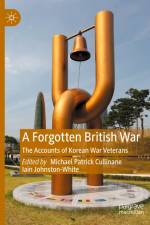
This book presents oral histories from the last surviving UK veterans of the Korean War. With the help of the UK National Army Museum and the British Korean Society, this book collects nearly twenty testimonials of UK veterans of the Korean War. Many only teenagers when mobilized, these veterans attempt to put words to the violence and trauma they experienced. They recall the landscape and people of Korea, the political backdrop, and touching moments in unlikely situations. Like other oral histories of war, their stories recount friendship, hardship, the loss of innocence, and the perseverance of humanity in the face of cruelty. The testimonies were taken by academics and students from the University of Roehampton, and supported by the National Army Museum and the British Korean Society. Through their memories we learn a great deal about the conflict in macro and micro scales.
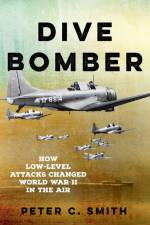
Details on planes like the German Stuka, the American Dauntless, the Japanese Aichi D3A1 "Val," the Soviet PE-2, and numerous others. Riveting accounts of aerial combat. Includes maps, diagrams, tables, and photos.
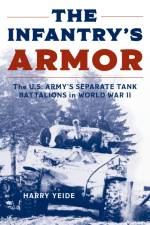
Tanks, amphibian tanks, and amphibian tractors in action in all theaters, from Africa and Europe to the Pacific. How the battalions fought the war, often in the tankers' own words. Crystal-clear maps.
Brutally honest, confronting memoir of a National Serviceman's deployment to Vietnam as an infantry soldier. Captivating, extensive military detail and personal revelations.
"On the 28th of November we moved out to LeHavre, France. There we spent two miserable weeks in weather that was cold and raining most of the time. The first night we had no shelter at all. Then pup tents and later moving on inland to barns and deserted houses. About the 14th of December we arrived at Rouen, France, and set up a big tent camp of our own where we were supposed to work. But then suddenly came the Belgium Bulge, and we broke camp on a few hours' notice and moved by boxcar and truck to the cold and snows of Belgium, going into the line in the vicinity of Liege. "Antwerp was, at that time, a British-controlled port, but a drive by the Germans south from their positions in Holland about 25 miles away was threatening, timed with the drive in eastern Belgium. When we moved in, there were few soldiers around, for the British were up on their line. There were snipers about, so for about a month we were constantly armed. The stores were open, and it seemed a bit odd to be in town on business and carrying a carbine or a rifle with a bullet in the chamber. "By mid-January, the German boast that she would either make Antwerp a city without a port or a port without a city was rapidly being fulfilled. There were several types of buzz bombs but the most common was a jet-propelled job like a torpedo with wings and its own motor. They roared through the sky until suddenly the fuel gave out and then plunged earthward. Sometimes coming down suddenly, sometimes gliding and veering off to one side or the other. Naturally, these were quite inaccurate and ineffective from a military viewpoint but were quite deadly in the destruction of property and life wherever they hit. "Quite a number landed within a few blocks of me, but only three were close enough that I felt the concussion, was knocked down by the force of one, and showered with glass by the other two. I escaped without a scratch. The worst one came one afternoon when one skimmed over the building where I worked. I heard it shut off and dove for a corner. An instant later came the explosion. Wood and debris filled the air and doors and windows were ripped away, casings and all, by the concussion and then by air rushing into the vacuum. It hit a short distance from my side of the building, plowing into the nearby motor pool building and striking a gasoline truck. There was an unusual number of boys in there at the time, attending a mechanics class. "I got a good break early in March and went to Paris on a pass. After my returning, the buzz bombing gradually tapered off." These are letters written home during World War II by an ordinary soldier, a man who sailed to Europe in 1944 as a private first class in the army and returned home in 1946 as a master sergeant, the highest rank for an enlisted man. For most of his time overseas, stationed at an RAF base where planes took off carrying paratroopers into Holland and bringing home the wounded from France, and in the heavily bombed port city of Antwerp, Belgium, he could not divulge details, but he wrote daily to his wife, keeping her spirits up and asking questions about her activities and offering husbandly advice. When the war in Europe ended in May, 1945, he was able to tell her what he had really been doing. These are the letters his wife saved in boxes for more than three quarters of a century.
This story was never intended to be written. The intent of the Airline Regulatory Economics Series is to compile a history of U.S. Federal Government activities in owning, operating, developing, promoting and economically-regulating U.S. air carriers. In contemplating a starting point for the story of the Post Office-operated air mail program, the author intended to start Volume I of the Airline Regulatory Economics Series with the inaugural day of air mail flights on May 15, 1918, and proceed forward from there. But the author inevitably found himself proceeding backwards from May 15, 1918, rather than forward. The backstory of the start of the U.S. air mail program is a compelling saga in and of itself because of these Seven QuestionsWhy did air mail begin in 1918, some fifteen years after the heavier-than-air powered flying machine became a reality?Why did air mail start in the middle of America's war-fighting involvement in World War I?Why did the Post Office start flight operations with Army airplanes flown by Army pilots?With all its resources and appropriation funding, why didn't the Post Office just embark on purchasing as many airplanes as they would need?If airplanes were not available to the Post Office, why not?Why wasn't the inaugural air mail flight in May 1918 operated by a Post Office Department contractor, which was the case for steamship mail transportation commencing in the early 1800's; and for railroad mail transport later in the 1800's?Why did air mail start with flights between Washington and New York?Random Convergence provides answers to these important questions, plus others. While researching this backstory, the author also discovered the critical importance of the parallel development of U.S. military aviation to U.S. air mail: Despite funding by Congress, air mail wasn't going anywhere without the availability of War Department aircraft. The history of early development of U.S. military aviation is vital to answering these questions as well Random Convergence describes the evolution of these different stories - individually the product of somewhat random events - and how their histories - singularly and more importantly, how they intersected with each other at times - ultimately converged to produce the start of air mail service in the U.S. It turns out to be quite a saga - and it begins with Random Convergence - This is Book Two of Two
This story was never intended to be written. The intent of the Airline Regulatory Economics Series is to compile a history of U.S. Federal Government activities in owning, operating, developing, promoting and economically-regulating U.S. air carriers. In contemplating a starting point for the story of the Post Office-operated air mail program, the author intended to start Volume I of the Airline Regulatory Economics Series with the inaugural day of air mail flights on May 15, 1918, and proceed forward from there. But the author inevitably found himself proceeding backwards from May 15, 1918, rather than forward. The backstory of the start of the U.S. air mail program is a compelling saga in and of itself because of these Seven QuestionsWhy did air mail begin in 1918, some fifteen years after the heavier-than-air powered flying machine became a reality?Why did air mail start in the middle of America's war-fighting involvement in World War I?Why did the Post Office start flight operations with Army airplanes flown by Army pilots?With all its resources and appropriation funding, why didn't the Post Office just embark on purchasing as many airplanes as they would need?If airplanes were not available to the Post Office, why not?Why wasn't the inaugural air mail flight in May 1918 operated by a Post Office Department contractor, which was the case for steamship mail transportation commencing in the early 1800's; and for railroad mail transport later in the 1800's?Why did air mail start with flights between Washington and New York?Random Convergence provides answers to these important questions, plus others. While researching this backstory, the author also discovered the critical importance of the parallel development of U.S. military aviation to U.S. air mail: Despite funding by Congress, air mail wasn't going anywhere without the availability of War Department aircraft. The history of early development of U.S. military aviation is vital to answering these questions as well Random Convergence describes the evolution of these different stories - individually the product of somewhat random events - and how their histories - singularly and more importantly, how they intersected with each other at times - ultimately converged to produce the start of air mail service in the U.S. It turns out to be quite a saga - and it begins with Random Convergence - This is Book One of Two
Die Menschheit hat in ihrer Geschichte viele Kriege gekämpft. Manche um Macht. Manche um Prestige. Andere wurden um Geld und Einfluss geführt, und manche wiederum aus, zumindest aus unserer heutigen Sicht, absurden Gründen.Das Britisches Empire war in seiner Blütezeit besonders bekannt und berüchtigt für seine Kriege auf der ganzen Welt. Dieses Buch soll einen solchen Fall, einen solchen Krieg behandeln. In diesem Krieg wollte GroÃbritannien seine kolonialen Interessen in Afrika "schützen", und nahm sich daher in der groÃen Tradition europäischer Mächte in Afrika das Recht heraus, in die lokale Politik eines schon bestehenden Volkes, bzw. eines schon bestehenden Staates einzugreifen, um ein Ergebnis zu erzwingen, welches für die Interessen der Europäer vorteilhaft war.Die Leidtragenden waren in diesem Falle das Sultanat von Sansibar, heute ein Teil der Vereinigten Republik von Tansania, welches im in diesem Buch beschriebenen Ereignis der britischen Kriegsmaschine zum Opfer fiel. Das Ergebnis war eine Festigung der Herrschaft der Briten auf Sansibar, sowie ein genereller Machtbeweis an andere, noch nicht unterworfene Völker Afrikas, dass sie ein ähnliches Schicksal wie die Sansibarer teilen würden.In diesem Buch werde ich den Britisch-Sansibarischen Krieg von 1896 behandeln, der allgemeinhin als der Kürzeste Krieg aller Zeiten angesehen wird. Gerade Mal 38 Minuten dauerte es, bis die WeiÃe Flagge gehisst wurde, und GroÃbritannien ihre Herrschaft über andere Völker erneut mit Blut gefestigt hatte.Der Britisch-Sansibarische Krieg ist ein Beispiel in einer langen Reihe an Konflikten zwischen Europäern und afrikanischen Völkern. Es ist ein Krieg, in dem eine europäische Macht sich aus Rassismus, Arroganz und einem vollkommen verkommenen Selbstverständnis das Recht genommen hat, einem anderen Volk das Recht auf Selbstbestimmung mit Waffengewalt zu nehmen.
This book focuses on the history of the Holocaust and Latin America. It is estimated that about 100,000 Jewish refugees immigrated to the region between 1933 and 1945. While the role of Latin America was crucial in the rescue of Jewish refugees from Nazism, the region has remained largely on the margins of Holocaust studies.
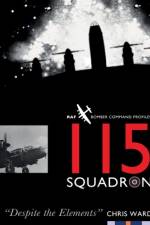
Formed on 1st December 1917, 115 Squadron did not see action until it arrived in France in September 1918, when it commenced bombing operations against German industrial targets for what remained of the Great War. Following its return to England, the squadron was disbanded in October 1919, and spent most of the inter-war years 'on the shelf'. Reformation took place on 15th June 1937 at Marham, with the squadron initially being equipped with the Fairey Hendon and then Handley Page Harrow bombers, until on 3rd April 1939 it re-equipped with the Vickers Wellington.As one of 3 Group's front-line bombing units, 115 Squadron spent the last few months of peace preparing for the impending conflict. After a low-key beginning the squadron then moved to the forefront of the Group's operations for the remainder of the war. The Wellington was phased out and 115 Squadron became the first in Bomber Command to take on charge the Hercules-powered Lancaster Mk.II. This was replaced in 1944 by the iconic Merlin-powered Mks I and III Lancasters. Operating successively from RAF stations at Marham, Mildenhall, East Wretham and Little Snoring, in November 1943 the squadron settled at Witchford, near Ely in Cambridgeshire, from where it saw out the remainder of the conflict. Its battle honours were forged in the heat of all Bomber Command's major campaigns over Occupied Europe, including The Ruhr, Berlin, Overlord, and the Oil and Transportation Plans.By the end of hostilities, 115 Squadron had participated in 678 bombing and mining raids, totalling 7,753 sorties. In doing so, the unit lost 208 aircraft on operations, the highest total in Bomber Command. 115 Squadron still serves today's Royal Air Force, one of the few that can trace their origin back to the Great War. Chris Ward's profile of this venerable unit covers the hardest days of its history, the Second World War, from which it emerged bloodied but unbowed.
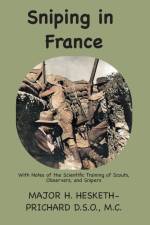
Major Hesketh Vernon Prichard, later Hesketh-Prichard DSO MC FRGS FZS was an India-born British explorer, adventurer, writer, big-game hunter, marksman, and cricketer who contributed to sniping practice within the British Army during the First World War. Concerned not only with improving the quality of marksmanship, the measures he introduced to counter the threat of German snipers were credited by a contemporary with saving the lives of over 3,500 Allied soldiers.Hesketh-Prichard eventually gained official support for his campaign, and in August 1915, he was given permission to proceed with formalized sniper training. By November of that year, his reputation was such that he was in high demand from many units. In December, he was ordered, on General Allenby's request, to the Third Army School of Instruction and was made a general staff officer with the rank of captain. On January 1, 1916, he was mentioned in dispatches.His friend George Gray, himself a champion shooter, told him that he had reduced sniping casualties from five a week per battalion to forty-four in three months in sixty battalions; by his reckoning, this meant that Hesketh-Prichard had saved over 3,500 lives. He was promoted to major in November 1916. By this time in the war, his contributions to sniping had been such that the former German superiority in the practice had now been reversed.
From bunkers and bases to aircraft and ships. There is a lot of interest for the military enthusiast to be found in Scandinavia. This books gives an introduction to the military of Sweden, Norway, and Denmark. From Napoleonic battlefields to secret Second World War bases up to modern times. The book present equipment and uniforms, tanks, planes, and ships as well as places to visit from museums to battlefield to former military bases.
A 2021 Daily Telegraph Book of the YearWinner of the Overseas Press Club of America's Cornelius Ryan Award ?Everyone should read the testimonies of the Chibok girls who survived the capture. We need to help with efforts to liberate all of them and become more responsible for women and girls' protection in conflicts.? ? Malala YousafzaiWhat happens after you click Tweet? The heart-stopping definitive account of the mission to rescue hundreds of Nigerian schoolgirls whose abduction ignited a global social media campaign and a dramatic worldwide intervention. In the spring of 2014, millions of Twitter users, including some of the world's most famous people, unwittingly helped turn a group of 276 schoolgirls abducted by a little-known Islamist sect into a central prize in the global War on Terror by retweeting a call for their release: #BringBackOurGirls. With just four words, their tweets launched an army of would-be liberators. Soldiers and drones, spies, mercenaries, and glory hunters descended into an obscure conflict that few understood, in a remote part of Nigeria that had barely begun to use the internet. When hostage talks and military intervention failed, the schoolgirls were forced to take survival into their own hands. As their days in captivity dragged into years, the young women learned to withstand hunger, disease, and torment, and became witnesses and victims of unspeakable brutality. Many of the girls were Christians who refused to take the one path offered them?converting to their captors' fundamentalist creed. In secret, they sang hymns, and kept a diary, relying on their faith and friendships to stay alive.Bring Back Our Girls unfolds across four continents, from the remote forests of northern Nigeria to the White House; from clandestine meetings in Khartoum safe houses to century-old luxury hotels on picturesque lakes in the Swiss Alps. A twenty-first century story that plumbs the promise and peril of an era whose politics are fueled by the power of hashtag advocacy, this urgent and engrossing work of investigative journalism reveals the unpredictable interconnectedness of our butterfly-wings world, where a few days of online activism can bring years of offline consequences for people continents away.
Abonner på vårt nyhetsbrev og få rabatter og inspirasjon til din neste leseopplevelse.
Ved å abonnere godtar du vår personvernerklæring.