




















Gjør som tusenvis av andre bokelskere
Abonner på vårt nyhetsbrev og få rabatter og inspirasjon til din neste leseopplevelse.
Ved å abonnere godtar du vår personvernerklæring.Du kan når som helst melde deg av våre nyhetsbrev.

This book would enable students, academics and practitioners to develop a thorough understanding on how to address service marketing issues and problems in a variety of settings in emerging economies. This book would also give them the background necessary to think through different elements of service marketing in emerging markets by comparing and contrasting with developed economies. This book will describe the component of service marketing, including service mix, service development, consumer behavior, customer assessment, service communication, role of electronic channel and channel management, service chain, pricing and similar topics. Chapters of the book will focus on creating, communicating and delivering customer value to emerging market consumers through several service marketing strategies, processes and programs in the context of markets dynamics, consumer diversity, and competitors. By way of illustrating various actual business situations, this book will help students, academics and practitioners to build necessary skills to take service marketing decisions in emerging economies. This book would be relevant for students of postgraduate programs of full time MBA, post graduate diploma in management, and executive post graduate programs and doctoral programs to develop a critical understanding of the business scenarios and service marketing strategies in emerging economies.
In this book, the authors analyze big data on global interdependence caused by the flows of commodities, money, and people, using a network science approach to obtain differing views of globalization and to clarify the facts on isolation of communities.Globalization reduces international economic inequality, i.e., it allows emerging countries to catch up while it increases relative poverty in some advanced countries. How should this trade-off between international and domestic inequalities be resolved? At the same time, the reduction of biocultural diversity caused by globalization needs to be avoided. What kind of change is required in local communities to conserve biocultural diversity? On the issue of commodity flow, research results of the supply-chain network, isolation in industry, and resource flows and stocks are presented in this book. For monetary flow, ownership networks, value-added networks, and profit shifting were studied; and regarding the flow of people, linkage of ethnic groups, immigrant assimilation, and refugees were examined. Based on the resulting view of globalization and isolation, the development of the isolation index using machine learning is discussed. Finally, recommendations for evidence-based policymaking in the United Nations are considered.
This book devises an alternative conceptual framework to understand digital transformation in the cultural heritage sector. It achieves this by placing a high importance on the role of technology in the strategic process of modeling and developing cultural services in the digital era. The focus is on how marketing activities and customer processes are being transformed by digital technologies to create better value, which can also be communicated to customers through an engaged and personalized approach. Much of the digital debate in cultural heritage is still in infancy. Some existing studies are anecdotal and often developed within the domain of established research streams, including studies with some technological aspects addressed partially and from an episodic or periodic perspective. Moreover, the critical changes that have emerged in the cultural management landscape are yet to be highlighted. This book fills that gap and provides a perspective on the cultural heritage sector, which uses the new social and technology landscape to describe the digital transformation in cultural heritage sectors. The authors highlight an inclusive perspective that addresses marketing strategy in the digital era as a proactive, technology-enabled process by which firms collaborate with customers to jointly create, communicate, deliver, and sustain experience and value co-creation.
This proceedings volume provides a multifaceted perspective on current challenges and opportunities that organizations face in their efforts to develop and grow in an ever more complex environment. Featuring selected contributions from the 2019 Griffiths School of Management Annual Conference (GSMAC) on Business, Entrepreneurship and Ethics, this book focuses on the role of creativity, technology and ethics in facilitating the transformation organizations need in order to be ready for the future and succeed.Growth and development have always been imperative for people, organizations, and societies and a relevant topic in the management sciences. Globalization, along with dramatic changes in social, cultural, and technological progress, are the main factors that determine the current conditions for development, putting forth a new set of challenges and opportunities that are putting pressure on organisations to adapt. Although technology and creativity seem to be themantra for success in this new context, issues around the ethics of these two factors also seem to be crucial to the sustainability of growth in organizations.Featuring contributions on topics such as academic marketing, technology in healthcare organizations, ethical issues in hospitality, artificial intelligence and data mining, this book provides research and tools for students, professors, practitioners and policy makers in the fields of business, management, public administration and sociology.
How can we design innovative food experiences that enhance food pleasure and consumer well-being? Through a wide variety of empirical, methodological, and theoretical contributions, which examine the art of designing innovative food experiences, this edited book explores the relationship between design thinking, food experience, and food well-being. While many aspects of food innovation are focused on products' features, in this book, design thinking follows an experiential perspective to create a new food innovation design logic that integrates two aspects: consumer food well-being and the experiential pleasure of food. It integrates a holistic perspective to understand how designing innovative food experiences, instead of food products, can promote healthy and pleasurable eating behaviors among consumers and help them achieve their food well-being. Invaluable for scholars, food industry professionals, design thinkers, students, and amateurs alike, this book will define the field of food innovation for years to come.
Get to know the activities, processes and people involved in wholesaling and its crucial role in the wider fashion industry. From working with fashion vendors and trend forecasting companies, to navigating trade shows, and working in different territories, Fashion Wholesaling is the ultimate guide to an often overlooked but rewarding career path.Clearly illustrated case studies and industry-focused exercises put the journey from apparel factory to retailer into a practical, real-world context for anyone looking for a way into the business of fashion.
A Joint Venture (in Internet Marketing) is defined as "mutually beneficial cooperation between website owners". Many times, Internet Marketing Joint Ventures are entered into between an individual who has developed a new or innovative product or service and an established Internet Marketer who has spent considerable time developin...
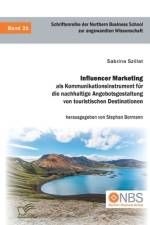
Die Marketingstrategien befinden sich im Wandel und somit mussen Unternehmen auch die Kommunikationsmethoden anpassen. Der Austausch uber die sozialen Medien hat enorm an Bedeutung zugenommen. Bewertungen und Erfahrungsberichte schaffen Vertrauen beim Konsumenten und haben einen hoheren Stellenwert eingenommen als die klassischen Kommunikationsmethoden. Die Masse vertraut eher den Meinungen von Bekannten, Freunden oder unabhangigen Experten. Diese Art von Marketing wird auch das Influencer Marketing genannt. Das Influencer Marketing ist eine Strategie, die darauf abzielt, dass Influencer als Meinungsmacher ihre Reichweite nutzen, um Einfluss auf ihre Community zu nehmen und gezielt Werbebotschaften auf den sozialen Netzwerken zu verbreiten. Diese Werbebotschaften steigern nicht nur den Bekanntheitsgrad eines Unternehmens, sondern auch die Abverkaufszahlen. Die Tourismusbranche steht vor der aktuellen Herausforderung, dass immer weniger Kunden Reisen ber das Reisebro buchen. Entscheidungen bezglich des nchsten Urlaubsziels werden vermehrt online getroffen. Gleichzeitig wchst das Bewusstsein fr nachhaltige Angebote im Tourismus. Es stellt sich nunmehr die Frage, wie das Influencer Marketing als strategisches Kommunikationsinstrument genutzt werden kann, um in der Tourismuswirtschaft gezielt seine Kunden anzusprechen und auf nachhaltige Angebote in Destinationen aufmerksam zu machen.
Der Markt fur Bio-Lebensmittel boomt. Die weltweite Wachstumsrate fur Bio-Produkte von knapp +90% innerhalb des letzten Jahrzehnts bringt dies zum Ausdruck. Trotzdem bleibt der Marktanteil dieser Produkte auch hierzulande mit etwa 5% auf einem relativ geringen Niveau. Diesem Phanomen widmet sich die vorliegende Studie, welche am Beispiel des fur den Bio-Markt sehr relevanten Segments der Lebensmittel Hintergrunde fur die weiterhin geringe Marktbedeutung herausarbeitet. Das Augenmerk richtet sich darauf, inwiefern die Konsumentenwahrnehmung der Preisfairness, der Produktqualitat sowie des -risikos von der Besonderheit des Produktes (Bio) beeinflusst werden. Ebenso interessiert eine Analyse des Einflusses des Preislevels und der Preisfarbe sowie der externen Einflussfaktoren des Preisbewusstseins und der Bio-Affinitat der Konsumenten auf die Zielvariablen. Die gewonnenen Erkenntnisse tragen zum besseren Verstandnis der Wirkungen von Bio-Hinweisen sowie der farblichen Anpassung der Preisfarbe bei. Die Studie liefert somit wertvolle Implikationen fur die Vermarktung und Bepreisung von Bio-Produkten.
Have leaders run out of moral authority? Are we losing sight of what good looks like? The overwhelming evidence in this book suggests so. Is the Big Tech parasite controlling our attention, short-circuiting the dopamine and serotonin we would glean from natural group relationships, and destroying the fabric of society, business and wellbeing?Business leaders have lost sight of what good looks like and are now as addicted to tech as their kids. Growth and development are more about obsessively and recklessly deploying technology - automating systems and reducing work - and less about people, relationships and contributing to society. Dope on a Rope to tech - that's what intelligent leaders have become. And they're so duped and terrified by wokeness and post-modernism that they are being blindsided. Tech is a convenient tool to silence the masses, bog people down in minutiae and quell conflict at individual and national levels. It is not 'the future'. We do not have to upskill our tech skills to stay ahead. We need to learn how we are being duped and upskill to get a better grip on how to stop the inevitable Big Tech rampage before it's too late. Enjoy.
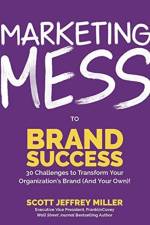
Marketing Managers Guide to Successful Brand MarketingScott Miller offers tangible insights and practical steps to make sure your product finds the right customer... Donald Miller, author ofMarketing Made Simple, and Building a StoryBrand.2021 OWL Award Shortlist in Sales & Marketing#1 Bestseller in Auctions & Small BusinessIn Scott Millersnewest Mess to Successguide, the FranklinCovey senior advisor and Wall Street Journal bestselling author reveals 30 career obstacles that you may encounter in your brand marketing, and how to transform them into company-wide gains.Every success story begins with a journey.Featuring thirty chapters with lessons such as A Name is Not a Lead and Hire People Smarter Than You,Marketing Mess to Brand Successshares a career worth of valuable lessons learned. Fast-track your career and success with the mentality of bruising hard, but healing fast. Whether youre starting a new company, a brand manager figuring out the best direct marketing strategy or brand positioning for a niche market, or trying to land your first job as a marketing manager, this book is designed to prepare you for many of the inevitable challenges you will encounter.Avoid marketing messes and square up to successes.Each chapter features real life lessons that teach you the importance of brand marketing in business development. By being focused and aligned with the right areas of an organization, you can ensure career relevance and company-wide gains.Learn how to:Navigate a nebulous digital marketing environmentMaximize time and investments with sales marketing strategiesBuild and model consistent brand standardsBecome an expert in brand marketing and take your company to the next levelIf you enjoyedManagement Mess to Leadership Success, or brand marketing books likeThis Is Marketing,Marketing Made Simple, orBuilding a StoryBrand, then you need to addMarketing Mess to Brand Successto your business bookshelf.
List building is all about connecting with your target audience by offering them high-quality information in exchange for their subscription, and in affiliate marketing, a targeted and responsive email list will be the critical element to your success.Once a subscriber is a confirmed member of your list, you can begin sendi...
Customer loyalty is the most critical element to retain within a business relationship. A lot of benefits can be derived from a well-established loyal customer base. Large sums of money are often allocated to advertising, mainly to gain a bigger market share of customers. However, with the availability of loyal customers, the expenditur...
Abonner på vårt nyhetsbrev og få rabatter og inspirasjon til din neste leseopplevelse.
Ved å abonnere godtar du vår personvernerklæring.