









Gjør som tusenvis av andre bokelskere
Abonner på vårt nyhetsbrev og få rabatter og inspirasjon til din neste leseopplevelse.
Ved å abonnere godtar du vår personvernerklæring.Du kan når som helst melde deg av våre nyhetsbrev.

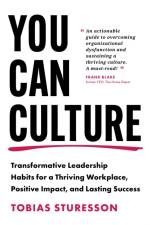
In the pursuit of performance and reputation, it's easy to overlook the actual health of your organizational culture. Before long, however, ominous symptoms often emerge--division, disengagement, silence, dysfunction, and destructive behavioral patterns--hindering you from delivering on your mission and strategy and eroding trust with your clients, team, and other crucial stakeholders.To make things worse, many leaders are perplexed by culture, and typical change efforts are unsustainable and ineffective, with a staggering 85 percent failure rate. But there is a better way. Having personally endured the devastating effects of growing up in a toxic cult, Tobias Sturesson committed his career to helping large purpose-driven organizations overcome their most daunting culture challenges. On his quest, he made a crucial discovery: that, just like our physical health, achieving a thriving culture requires a change of habits. A minor change to what you repeatedly do can have a significant impact on your team and organization.Drawing from his extensive experience and in-depth interviews with many renowned experts, researchers, and executives from well-known organizations, Tobias has identified the four most crucial and timeless culture-building leadership habits.You Can Culture is your meticulously researched guide to these habits, laid out in twelve actionable practices. Each practice is an invitation to growth and introspection, offering reflection questions, practical tools, and leadership actions. Suitable for managers and executives alike, You Can Culture empowers you to strengthen trust, transform your culture, be a values-based leader, and leave a lasting legacy of positive change.
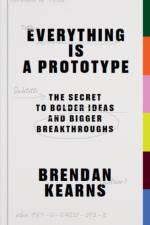
Whether you are daydreaming about starting something new, grappling with a creative dilemma, or trying to live and work more experimentally, "Everything is a Prototype" is a field guide for the unknown and uncertain. It dismantles deeply held beliefs about our own inventiveness and shares proven methods for finding your best ideas among the noise and ultimately determining if they are worth pursuing. From the soot-covered factory to the glittering heights of Silicon Valley, it addresses the societal dogma that being wrong indicates flawed ability or bad character. This book challenges the age-old stigma associated with errors and introduces a new framework for original thinking and a blueprint for using these essential elements in the creative process and innovation. It argues that making mistakes is not only normal but a secret of genius when done deliberately. It unpacks conventional wisdom on problem-solving across business, sport, coding, and popular culture, illustrating how experimentation is the critical ingredient for innovation and brilliance. Readers learn to become Prototypers, taking advantage of being wrong. Starting with permission and ending with resilience, it offers a toolkit for navigating fears and frustrations, inviting personal transformation to do it over and over again.
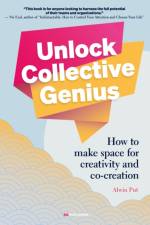
In today's fast-paced world, finding the "space" for genuine creativity and collaboration can be challenging. "Unlock Collective Genius" is a practical guide designed to help you foster meaningful and productive creative sessions. Whether you're a student, entrepreneur, or part of an organization, this approach to "making space" will revolutionize your collaboration methods. Every encounter is enhanced by deliberately creating an environment where people can truly listen, build on each other's ideas, and explore new possibilities with curiosity and enthusiasm. This book provides both a mindset and a skillset for creating such conditions, allowing for deeper connections, expansive thinking, and fearless co-creation."Unlock Collective Genius" is not just a one-time read; it's a lifestyle guide meant to inspire and support you continuously on your journey. By applying its principles, you can transform stagnant meetings into dynamic sessions that yield real results, fostering a culture of engagement and innovation in any group or organization.
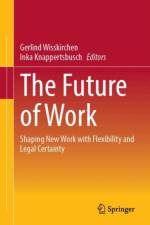
This book takes readers on a journey into the future of work. Following the influence of the COVID-19 pandemic, working conditions have become more flexible than ever before. The freedoms granted within this framework continue to be demanded by many employees. There are also numerous companies that have had predominantly positive experiences with this change and would like to continue with it. Against this backdrop, it is to be expected that the shift away from a traditional working environment ¿ due to the four influencing factors of demographic change, skills shortages, digitalisation and artificial intelligence ¿ will accelerate in the future. This book provides an overview of the various design options for New Work and highlights their respective advantages and disadvantages. It also analyses new trends and forecasts relating to the future of work. In addition, the relevant legal framework is presented in a concise and easy-to-understand manner. This book provides you with the tools you need to actively shape the future of work in your company in a legally compliant manner.The editorsDr. Inka Knappertsbusch is a lawyer specializing in employment law and employee data protection at the international commercial law firm CMS Germany. She advises companies primarily on restructuring and works agreements, in particular on issues related to IT and new work. Her work also focuses on data protection and artificial intelligence in employment relationships. She is the co-editor of the book "Arbeitswelt und KI 2030".Dr. Gerlind Wisskirchen is a partner and lawyer at the international commercial law firm CMS Germany and advises multinational corporations in particular on restructuring, national and international employment law and compliance issues. She is also an expert on the digitalisation of the world of work, with experience as a keynote speaker, author and lecturer and is the editor of the report "Artificial Intelligence and Robotics and Their Impact on the Workplace" for the Global Employment Institute.The translation was done with the help of artificial intelligence. A subsequent human revision was done primarily in terms of content.
Over the course of the last 70 years, asset managers¿from activist hedge funds to large passive index fund providers¿have come to own the substantial majority of corporate equities in the United States, and have wielded that ownership to fundamentally reshape the economy. For most of American history, investing was simple: you purchased shares and left the operation of the company to management. If you were dissatisfied with the firm's performance, you sold your shares. With the rise of asset managers, shareholders now attempt to directly change the companies in which they invest. The New Power Brokers chronicles the economic, legal and technological changes at the heart of this transformation in our public markets, and provides fresh perspectives on what those changes mean for corporations, investors and society as a whole. Sahand Moarefy is a corporate attorney and writer. His work has been featured in various publications, including Foreign Affairs, Lawfare, The Diplomat and American Affairs. Sahand splits his time between Los Angeles and New York City.
This book proposes a new model, GAIN (Generating, Appreciating, Internalizing, and Newness) that shifts negative thinking patterns many find themselves in today¿s society. Whether from extremely short-termed, thus unrealistic, expectations or general victim thinking, many people, particularly professionals, consider past experiences that don¿t lead to immediate and tangible benefits as a waste of time. They forego long-span self-reflection to acknowledge their progress in life. This book uses mindful practices to shift these negative thought patterns into constructive ones that reveal personal purpose and growth, and thus, positive self-leadership and development. Featuring practices and exercises to support the GAIN model, this book will help readers see every life experience as a gain rather than loss, even if it may take some time to see the benefits from it, if at all.
This book explores the application of complex variables to econometric modeling. Providing a thorough introduction to the theory of complex numbers, it extends these concepts to develop complex-valued models that enhance the accuracy and depth of economic forecasting and data analysis. From simple to multiple complex linear regression, the monograph discusses model formulation, estimation techniques, and correlation analysis, supported by examples in R.This comprehensive guide is a useful resource for students, researchers, and practitioners aiming to apply advanced mathematical techniques to tackle complex real-life problems, making it a useful tool for enhancing predictive analytics in business, economics, and finance.
This book presents observations, experiences, and practices that work or don't work in different areas of business analysis ¿ combining the lessons learned with how to avoid potential pitfalls.Four areas were identified that constitute the greatest project challenges and the most frequently occurring problems in the work of a business analyst: strategic analysis, business analysis process planning, requirements engineering, and solution implementation. These areas hence build the main chapters of this book. Each of them begins with a brief introduction explaining the essence of the respective area and presenting the most important information. They are further divided into sections describing specific topics, where tips and recommendations are presented. Most sections begin with a guiding thought - a quote provided by an expert or a short hint based on the author¿s 20 years of experience. At the end of each chapter, case studies and/or checklists are provided facilitating the planning and implementation of business analysis practice in a project.This book provides readers with suggestions, ideas, and conclusions regarding selected aspects of business analysis - in particular, discussing challenges and recommendations regarding the application of specific methods, practices in specific usage contexts. It will be most beneficial to professionals who already have a basic understanding of the fundamentals of business analysis and will be able to relate theoretical knowledge to practical examples of project applications. Readers who are just entering the field of business analysis will also benefit by gaining insights how to avoid basic mistakes or risks.
This guide complements traditional project management by focusing on the critical pre-project stage. It addresses a major challenge: only 12% of projects finish on time and within budget, often due to poor initial pre-project analysis. This leads to wasted resources. The content offers proven best practices for implementing ISO 56007 recommendations, enhancing project calibration, selection, and overall success rates.Liberating innovators from the constraints of traditional business plans, the guide suggests, along with ISO 56007, a "Concept/Opportunity Case" as an investor-friendly alternative. This template is rooted in the robust IpOp Decision Tree, an ISO 56007-recommended checklist of 11 fundamental questions to thoroughly address essential decision-makers' concerns. This rigorous method ensures reliable project selection and optimal resource allocation.The IpOp Model serves as a structured roadmap, enabling project managers and innovators to transform ideas into compelling projects. It provides clear guidance for making informed decisions, whether to pivot or abandon projects that aren¿t viable. By following ISO 56007 recommendations, the IpOp Model helps navigate uncertainties and manage critical project factors effectively.Ideal for decision-makers, project managers, executives, professionals, intrapreneurs, and entrepreneurs engaged in project management and innovation, this guide is an essential tool for any pre-project analysis and for turning innovative ideas into successful projects.
This book contains an Open Access chapter. Discover the transformative power of 'coopetition' in the dynamic world of tourist organisations, where inclusive development takes centre stage. Drawing on the work of a range of global contributors, the editors examine how dyadic behaviour is transforming the tourism sector.
Revisiting the fundamentals of innovation by considering the strengths and weaknesses of Design Thinking and the Lean Startup, expert David C. Roach focuses on innovation management and emphasizes the importance of managing the front-end of innovation, where critical decisions are made and concepts are shaped.
Scholars around the world examine a range of Industry 4.0 factors and their impact on improving the sustainability of global supply chains in Impact of Industry 4.0 on Supply Chain Sustainability. The findings are useful for researchers and practitioners in a range of fields and roles looking to create strong logistic networks.
Green Management brings together works by specialists from different disciplines and continents to reflect on the nexus between Green Management and its impact on businesses.
Providing a practical, evidence-based vision of how to enhance and enrich customer experience through tangibles, exterior and interior design and space within the service industry. In other words, looking through the space-scape and design-scape to improve service performance to better address customer needs and desires.
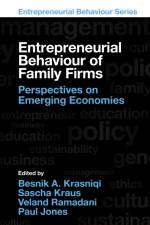
Offering perspectives on the entrepreneurial behaviour of family businesses in emerging economies, the chapters collected here present a systematic analysis focusing on gender, culture, policy, issues of succession, growth and economic impact.
This insightful work analyses how the tourism and hospitality industry may lower its carbon footprint and maintain its long-term viability by implementing energy-efficient and waste-reduction technology. The book will discuss how sustainable tourism may achieve its sustainable development objectives and contribute to a green global economy.
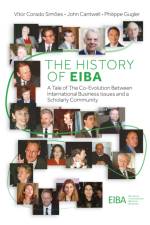
The European International Business Academy (EIBA) is a scholarly association that commemorates its 50th anniversary in 2024. Created in December 1974, it serves as a community network promoting research, international research collaboration, knowledge sharing, life-long learning, and the exchange of ideas among its members around the World.
In this edited collection the authors consider a number of diverse issues within the context of their implication for society and their effect on cultural issues. Given the instability of the world in the present time, both culturally and politically, all issues are explored from a variety of vital perspectives.
This edited collection builds on the ethical questions reminiscent of those raised by early fiction writing in relation to robotics, and AI's position within human endeavour. The chapters recognise the dangers as well as the applications which are appropriate and helpful.
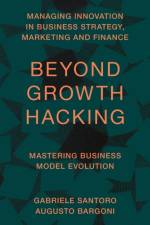
Combining the latest in growth hacking with enduring principles of business strategy, ensuring that businesses can achieve sustainable growth, Gabriele Santoro and Augusto Bargoni provide a timely resource designed to equip businesses with the knowledge and tools to adapt, thrive, and sustain growth amidst challenges.
Digital Transformation in Engineering Management presents real-world case studies that provide a unique perspective on current trends and challenges presented by digital transformation. It is an essential guide for practitioners and researchers seeking to understand the transformative potential of digitalisation.
The chapters here emerge against the backdrop of a rapidly evolving global landscape, where the informal sector plays a pivotal role in employment, income generation, and economic development, particularly in developing and emerging countries.
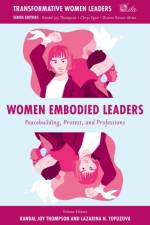
Why has embodied somatic leadership more recently become highlighted, and what conditions in the world have brought this approach to leadership under study and scrutiny? Women Embodied Leaders answers these questions, analyzing models of embodied somatic leadership, and how women use this leadership from a number of perspectives.
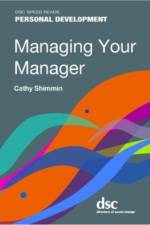
This book providesguidance on working effectively with your manager, including tips and techniques on where to focus your energy.
This shortguide will help you to understand what your decisions aremeant to achieve. It looks at the factors that influence the quality of thosedecisions and outlines the key actions to take in making the decision,implementing it and learning from it.
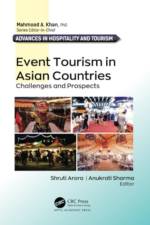
This volume offers a wide variety of research, experience, and examples of events in Asia, including business meetings and conferences; destination weddings; carnivals; food and art festivals; music festivals and concerts; cultural and traditional events; religious and spiritual gatherings; sports events; and more.
Explores the rapid changes in technology that have affected businesses and social environments that are offering new challenges and opportunities for small to mid-size enterprises (SMEs) and start-ups. It highlights how businesses in emerging economies are implementing the new technological innovations to compete in the global market.
Abonner på vårt nyhetsbrev og få rabatter og inspirasjon til din neste leseopplevelse.
Ved å abonnere godtar du vår personvernerklæring.