



























Gjør som tusenvis av andre bokelskere
Abonner på vårt nyhetsbrev og få rabatter og inspirasjon til din neste leseopplevelse.
Ved å abonnere godtar du vår personvernerklæring.Du kan når som helst melde deg av våre nyhetsbrev.

Michael Migendt explains the role of alternative investments in supporting the growth of a sustainable economy and recognizes levers that policy makers, managers and entrepreneurs could use for further accelerating green innovation through finance.
'Shaping Social Enterprise' helps researchers, policymakers, practitioners, and international development actors better understand various institutional paths of social enterprise development and where institutional strengths and weaknesses may be located.
This book examines the outlook for Latin American entrepreneurs in the new global environment. Using case studies from across the region, the book highlights liberalization measures nations are adopting to facilitate small and medium size enterprise (SME) creation and growth, and existing barriers that are threatening SME sector gains.
This book offers a novel perspective on starting-up new business ventures through examining the process by which they become part of the existing business environment.
The growth of entrepreneurship in South Korea has turned the country into an economic powerhouse. In this collection of essays, scholars highlight the favourable political and cultural values conductive to its development, including the characteristics of entrepreneurial family firms and the impact of new media and globalization.
The book offers a new way of thinking about the development challenges of oil-producing countries-the "resource curse" phenomenon-by looking at how policymakers approach the business environment for private firms and entrepreneurs. Quantitative analysis is combined with in-depth studies of places such as Iran, India, and Saudi Arabia.
The combined weight of American diplomacy and military power cannot end unrest and extremism in the Middle East and other troubled regions of the world, Steven Koltai argues. Could an alternative approach work? Koltai says yes: by investing in entrepreneurship, and reaping the benefits of the jobs created through entrepreneurial startups.
This is the 2nd edition of Technological Innovation. Profiting from technological innovation requires scientific and engineering expertise, and an understanding of how business and legal factors facilitate commercialization. This volume presents a multidisciplinary view of issues in technology commercialization and entrepreneurship.
Entrepreneurship and Cluster Dynamics focuses on the origin and development of clusters and specifically on the role played by the strategic entrepreneurship in these contexts. Although separately entrepreneurship and cluster studies have already attracted the attention of academics and practitioners; this book aims to go further and offer an integrated and interactive view of topics.
Contributors with expertise in higher education, sociology, comparative and international education, marketing, rankings, and educational philanthropy use novel theoretical frameworks and cases from Africa, Asia, Europe, Latin America, and the US to map the brandscape of higher education.
Matthew Boulton was an 18th-century designer, inventor, and industrialist, a consummate businessman, and co-founder of the influential Lunar Society. This book explains how Boulton, a Birmingham 'toy'-maker producing buttons, buckles and silverware, went into business with James Watt and exported Boulton & Watt steam engines all over the world.
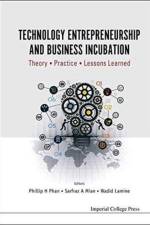
Technology Entrepreneurship and Business Incubation analyzes business incubators worldwide through a series of empirical and theoretical papers.
This book, written by international authors, focuses on how knowledge spillovers and strategic entrepreneurship are crucial to the process of creative destruction and construction. The book aims to provide insights into and discussion on how firms combine entrepreneurial action that creates new opportunities for industries, regions and economies. This book is the first of its kind to link knowledge management perspectives to strategic entrepreneurship in order to understand the co-creation process. Being interdisciplinary in nature, this book appeals to entrepreneurship and knowledge management scholars, students and practitioners.
This book features international authors discussing the role of entrepreneurship and innovation in the sports context. It focuses on topics such as the role of entrepreneurial marketing in sport, how technological innovation has changed the way sport is played and viewed, the globalization of sport as a product and service, the new types of sports that have emerged, athlete entrepreneurs and their related business endeavours and how sport influences innovation in other industries. This interdisciplinary book will be appealing to entrepreneurship, innovation and sport management scholars, students and practitioners.
The state and entrepreneurs are two players that have shaped both economic activity and economic history throughout the world since the Industrial Revolution. This book analyzes the history of economic development in Egypt to show the impact of the relationship between state and entrepreneurs on development performance since 1805.
This book articulates the diaspora institutional entrepreneur In-Between Advantage for economic, social, and political reforms in countries of origin. It develops and tests models of diaspora entrepreneurial characteristics and motivational influences, and strategic actions across the stages of reform.
This book draws together three overlapping relationships and knowledge domains. These are the cultural entrepreneurship/creative industries, the public and/or private philanthropic contributions that have funded artistic production and the preservation and presentation of place brands as a mechanism to revitalize local economies and communities.
This edited book focuses on growth and entrepreneurial development in rapidly developing countries in Asia-Pacific region. The book synthesizes the scholarly papers and ideas presented at the 3rd International Conference on Managing the Asian Century, Kuala Lumpur, Malaysia in 2015.
Mainland China businesses are going global, transforming the country from a manufacturing export platform into an overseas investment powerhouse.
Intersectionality and Ethnic Entrepreneurship brings together a group of eminent and up-and-coming young scholars who apply an intersectional perspective to the study of ethnic entrepreneurship. Against the traditional approachΓÇÖs emphasis on ethnicity and its primacy, which tends to conflate ethnicity with other social groupings (i.e., social class), considers their effect as an additive or secondary consequence only (i.e., gender), or ignores their influence altogether (i.e., race), the studies in this volume recognize that multiple dimensions of identity intermix to condition entrepreneurial outcomes. Starting with the premise that systems of oppression and privilege, specifically capitalism, patriarchy, and white supremacy, are endemic to the American social structure, the works in this volume recognize that these interlocking systems of inequality condition the life chances of entrepreneurs from diverse social locations differently, even among members of the same ethnic group. This book was originally published as a special issue of Ethnic and Racial Studies.
The Ultimate Start-Up Guide offers practical advice, insights, lessons, and best practices from the world of start-ups, including: Strategies for hiring and building your team, culture, and values; How to pitch your company, secure funding, and distribute equity; Best practices in launching your business; How venture capitalist investors think, evaluate new companies, and advise entrepreneurs; War stories and red flags from top VC partners and entrepreneurs.
This book explains how things get organized and how routines emerge in businesses and business life. The chapters explore historical episodes in a wide variety of settings, and encourage a view of firm operations and development that is much more realistic, and much more practically helpful, than the standard economic perspective.
This book comprehensively review key dimensions of the sustainable entrepreneurship phenomenon to establish an essential definition and up-to-date picture of the field. Sustainable Entrepreneurship is an important resource for entrepreneurs, policy makers as well as students in the fields of entrepreneurship, innovation and sustainability.
The informal economy represents a significant share of output and employment in many developing countries. Yet little is known about innovation within the informal economy. This pioneering study offers a conceptual model and rich empirical evidence to help researchers and policy-makers understand and support this hidden engine of development.
This book presents an in-depth analysis of the functional dynamics of Indian industrial clusters which have grown and stayed as hubs of business activity in India. It will be of particular interest to SME practitioners, economics, business management, economic geography, industrial sociology and students and researchers of industrial organization.
Abonner på vårt nyhetsbrev og få rabatter og inspirasjon til din neste leseopplevelse.
Ved å abonnere godtar du vår personvernerklæring.