Norges billigste bøker

Biodiversity of Armenia

Om Biodiversity of Armenia

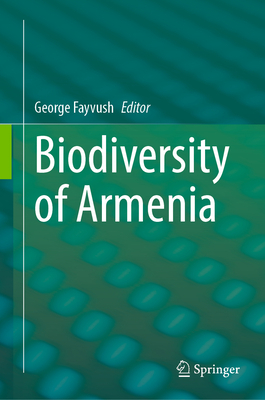
Armenia is a small landlocked mountainous country located in the Southern Caucasus. It is a typical mountainous country, having its lowest point of 375m above sea level and culminating at 4095m with an average altitude of 1850m, where the landscapes and ecosystems form a complex multi-functional system. In general, the ecosystems of Armenia are characterized by a number of peculiarities, which all together contribute to formation of rich and unique biodiversity. On the small territory of Armenia (less than 30 thousand km2) there are about 3800 species of vascular plants (about a half of the whole Caucasian flora), 428 species of soil and water algae, 399 species of mosses, 4207 species of fungi, 464 species of lichens, 549 species of vertebrates and about 17200 species of invertebrates. The biodiversity of Armenia is notable for high endemism: about 500 species of fauna (about 3% of the fauna) and 147 species of flora (3.8% of total flora) are considered endemics. Such a high level of endemism is typical only for some of the large islands. Due to the huge variety of climates (from dry subtropics to cold alpine) and soil conditions all the main Caucasian ecosystems (besides humid subtropics) are represented in Armenia - deserts and semi-deserts, steppes, meadow-steppes, forests and open woodlands, sub-alpine and alpine vegetation as well as intrazonal ecosystems. Therefore Armenia is a biodiversity hotspot both within the Caucasian ecoregion and around the globe. This book compiles, summarizes and analyzes data on flora, fauna and mycobiota of Armenia, with a special focus on the impact of forecasted climate change on biodiversity and ecosystems of the region.

Vis mer
  • Språk:
  • Engelsk
  • ISBN:
  • 9783031343315
  • Bindende:
  • Hardback
  • Sider:
  • 440
  • Utgitt:
  • 10. september 2023
  • Dimensjoner:
  • 156x234x25 mm.
  • Vekt:
  • 807 g.
  Gratis frakt
Leveringstid: 2-4 uker
Forventet levering: 13. mars 2026

Beskrivelse av Biodiversity of Armenia

Armenia is a small landlocked mountainous country located in the Southern Caucasus. It is a typical mountainous country, having its lowest point of 375m above sea level and culminating at 4095m with an average altitude of 1850m, where the landscapes and ecosystems form a complex multi-functional system. In general, the ecosystems of Armenia are characterized by a number of peculiarities, which all together contribute to formation of rich and unique biodiversity. On the small territory of Armenia (less than 30 thousand km2) there are about 3800 species of vascular plants (about a half of the whole Caucasian flora), 428 species of soil and water algae, 399 species of mosses, 4207 species of fungi, 464 species of lichens, 549 species of vertebrates and about 17200 species of invertebrates. The biodiversity of Armenia is notable for high endemism: about 500 species of fauna (about 3% of the fauna) and 147 species of flora (3.8% of total flora) are considered endemics. Such a high level of endemism is typical only for some of the large islands. Due to the huge variety of climates (from dry subtropics to cold alpine) and soil conditions all the main Caucasian ecosystems (besides humid subtropics) are represented in Armenia - deserts and semi-deserts, steppes, meadow-steppes, forests and open woodlands, sub-alpine and alpine vegetation as well as intrazonal ecosystems. Therefore Armenia is a biodiversity hotspot both within the Caucasian ecoregion and around the globe. This book compiles, summarizes and analyzes data on flora, fauna and mycobiota of Armenia, with a special focus on the impact of forecasted climate change on biodiversity and ecosystems of the region.

Brukervurderinger av Biodiversity of Armenia


Gjør som tusenvis av andre bokelskere

Abonner på vårt nyhetsbrev og få rabatter og inspirasjon til din neste leseopplevelse.
