Norges billigste bøker

Art and Identity in Spain, 1833–1956

Om Art and Identity in Spain, 1833–1956

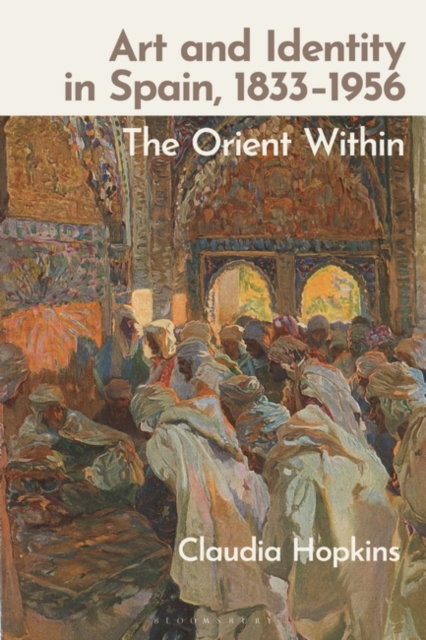
Richly illustrated with exotic images, ranging from Moorish palaces fantastically imagined by the Romantic painter Genaro Pérez Villaamil to paintings of everyday life in colonial Morocco by Mariano Bertuchi, this is the first history of Spanish Orientalist art in English. It shows how artists visualized Spain's Islamic past (711-1492) and their nearest "Orient" in Morocco for audiences at home and abroad. With the exception of Fortuny, the book introduces many unfamiliar figures, such as Francisco Iturrino, who travelled with Matisse to Morocco, producing novel visions of the exotic. The state-funded annual Pintores de Africa exhibitions, never examined before, provide a vital perspective on how art served Franco's colonial politics based on a "Hispano-Moroccan brotherhood". Hopkins reveals that Spanish Orientalism was inflected by diverse issues (such as national identity, gender anxieties, colonialism, aesthetics) and put to a wide range of uses. The familiar understanding of Western Orientalism in terms of distinct opposition (East/West) is challenged.

Vis mer
  • Språk:
  • Engelsk
  • ISBN:
  • 9781350428539
  • Bindende:
  • Hardback
  • Sider:
  • 320
  • Utgitt:
  • 5. september 2024
  • Dimensjoner:
  • 162x241x26 mm.
  • Vekt:
  • 862 g.
  Gratis frakt
Leveringstid: 2-4 uker
Forventet levering: 1. juni 2026

Beskrivelse av Art and Identity in Spain, 1833–1956

Richly illustrated with exotic images, ranging from Moorish palaces fantastically imagined by the Romantic painter Genaro Pérez Villaamil to paintings of everyday life in colonial Morocco by Mariano Bertuchi, this is the first history of Spanish Orientalist art in English. It shows how artists visualized Spain's Islamic past (711-1492) and their nearest "Orient" in Morocco for audiences at home and abroad. With the exception of Fortuny, the book introduces many unfamiliar figures, such as Francisco Iturrino, who travelled with Matisse to Morocco, producing novel visions of the exotic. The state-funded annual Pintores de Africa exhibitions, never examined before, provide a vital perspective on how art served Franco's colonial politics based on a "Hispano-Moroccan brotherhood". Hopkins reveals that Spanish Orientalism was inflected by diverse issues (such as national identity, gender anxieties, colonialism, aesthetics) and put to a wide range of uses. The familiar understanding of Western Orientalism in terms of distinct opposition (East/West) is challenged.

Brukervurderinger av Art and Identity in Spain, 1833–1956


Finn lignende bøker
Boken Art and Identity in Spain, 1833–1956 finnes i følgende kategorier:

Gjør som tusenvis av andre bokelskere

Abonner på vårt nyhetsbrev og få rabatter og inspirasjon til din neste leseopplevelse.
