Norges billigste bøker

Agents and Implications of Landscape Pattern

- Working Models for Landscape Ecology

Om Agents and Implications of Landscape Pattern

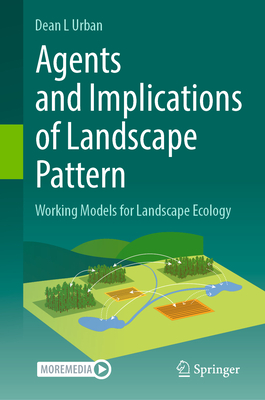
This is an ecology textbook focused on key principles that underpin research and management at the landscape scale. It covers (1) agents of pattern (the physical template, biotic processes, and disturbance regimes); (2) scale and pattern (why scale matters, how to 'scale' with data, and inferences using landscape pattern metrics); and (3) implications of pattern (for metapopulations, communities and biodiversity, and ecosystem processes). The last two chapters address emerging issues: urban landscapes, and adapting to climate change. This book stems from two graduate-level courses in Landscape Ecology taught at the Nicholas School of the Environment at Duke University. The subject has evolved over time, from a concepts-based overview of what landscape ecology is, to a more applied practicum on how one does landscape ecology. As landscape ecology has matured as a discipline, its perspectives on spatial heterogeneity and scale have begun to permeate intoa wide range of other fields including conservation biology, ecosystem management, and ecological restoration. Thus, this textbook will bring students from diverse backgrounds to a common level of understanding and will prepare them with the practical knowledge for a career in conservation and ecosystem management.

Vis mer
  • Språk:
  • Engelsk
  • ISBN:
  • 9783031402531
  • Bindende:
  • Hardback
  • Sider:
  • 337
  • Utgitt:
  • 12. oktober 2023
  • Dimensjoner:
  • 156x234x21 mm.
  • Vekt:
  • 662 g.
  Gratis frakt
Leveringstid: 2-4 uker
Forventet levering: 16. mars 2026

Beskrivelse av Agents and Implications of Landscape Pattern

This is an ecology textbook focused on key principles that underpin research and management at the landscape scale. It covers (1) agents of pattern (the physical template, biotic processes, and disturbance regimes); (2) scale and pattern (why scale matters, how to 'scale' with data, and inferences using landscape pattern metrics); and (3) implications of pattern (for metapopulations, communities and biodiversity, and ecosystem processes). The last two chapters address emerging issues: urban landscapes, and adapting to climate change. This book stems from two graduate-level courses in Landscape Ecology taught at the Nicholas School of the Environment at Duke University. The subject has evolved over time, from a concepts-based overview of what landscape ecology is, to a more applied practicum on how one does landscape ecology. As landscape ecology has matured as a discipline, its perspectives on spatial heterogeneity and scale have begun to permeate intoa wide range of other fields including conservation biology, ecosystem management, and ecological restoration. Thus, this textbook will bring students from diverse backgrounds to a common level of understanding and will prepare them with the practical knowledge for a career in conservation and ecosystem management.

Brukervurderinger av Agents and Implications of Landscape Pattern


Gjør som tusenvis av andre bokelskere

Abonner på vårt nyhetsbrev og få rabatter og inspirasjon til din neste leseopplevelse.
