






Gjør som tusenvis av andre bokelskere
Abonner på vårt nyhetsbrev og få rabatter og inspirasjon til din neste leseopplevelse.
Ved å abonnere godtar du vår personvernerklæring.Du kan når som helst melde deg av våre nyhetsbrev.

This year’s winner of the Yale Series of Younger Poets competition is Davis McCombs’s Ultima Thule, which was acclaimed as “a book of exploration, of searching regard.... a grave, attentive holding of a light” by the contest judge, the distinguished poet W. S. Merwin. The poems are set above and below the Cave Country of south central Kentucky, where McCombs lives and which is home to thousands of caves. The book is framed by two sonnet sequences, the first about a slave guide and explorer at Mammoth Cave in the mid-1800s and the second about McCombs’s experiences as a guide and park ranger there in the 1990s. Other poems deal with Mammoth Cave’s four- thousand-year human history and the thrills of crawling into tight, rarely visited passageways to see what lies beyond. Often the poems search for oblique angles into personal experience, and the caves and the landscape they create form a personal geology.
The study of electoral realignments is one of the most influential and intellectually stimulating enterprises undertaken by American political scientists. Realignment theory has been seen as a science able to predict changes, and generations of students, journalists, pundits, and political scientists have been trained to be on the lookout for “signs” of new electoral realignments. Now a major political scientist argues that the essential claims of realignment theory are wrong—that American elections, parties, and policymaking are not (and never were) reconfigured according to the realignment calendar.David Mayhew examines fifteen key empirical claims of realignment theory in detail and shows us why each in turn does not hold up under scrutiny. It is time, he insists, to open the field to new ideas. We might, for example, adopt a more nominalistic, skeptical way of thinking about American elections that highlights contingency, short-term election strategies, and valence issues. Or we might examine such broad topics as bellicosity in early American history, or racial questions in much of our electoral history. But we must move on from an old orthodoxy and failed model of illumination.
In The Informant, historian Gary May reveals the untold story of the murder of civil rights worker Viola Liuzzo, shot to death by members of the violent Birmingham Ku Klux Klan at the end of Martin Luther King’s historic Voting Rights March in 1965. The case drew national attention and was solved almost instantly, because one of the Klansman present during the shooting was Gary Thomas Rowe, an undercover FBI informant. At the time, Rowe’s information and subsequent testimony were heralded as a triumph of law enforcement. But as Gary May reveals in this provocative and powerful book, Rowe’s history of collaboration with both the Klan and the FBI was far more complex.Based on previously unexamined FBI and Justice Department Records, The Informant demonstrates that in their ongoing efforts to protect Rowe’s cover, the FBI knowingly became an accessory to some of the most grotesque crimes of the Civil Rights era--including a vicious attack on the Freedom Riders and perhaps even the bombing of the Sixteenth Street Baptist Church.A tale of a renegade informant and an intelligence system ill-prepared to deal with threats from within, The Informant offers a dramatic and cautionary tale about what can happen when secret police power goes unchecked.
Only in 1995 did the United States government officially reveal the existence of the super-secret Venona Project. For nearly fifty years American intelligence agents had been decoding thousands of Soviet messages, uncovering an enormous range of espionage activities carried out against the United States during World War II by its own allies. So sensitive was the project in its early years that even President Truman was not informed of its existence. This extraordinary book is the first to examine the Venona messagesdocuments of unparalleled importance for our understanding of the history and politics of the Stalin era and the early Cold War years.Hidden away in a former girls school in the late 1940s, Venona Project cryptanalysts, linguists, and mathematicians attempted to decode more than twenty-five thousand intercepted Soviet intelligence telegrams. When they cracked the unbreakable Soviet code, a breakthrough leading eventually to the decryption of nearly three thousand of the messages, analysts uncovered information of powerful significance: the first indication of Julius Rosenbergs espionage efforts; references to the espionage activities of Alger Hiss; startling proof of Soviet infiltration of the Manhattan Project to build the atomic bomb; evidence that spies had reached the highest levels of the U.S. State and Treasury Departments; indications that more than three hundred Americans had assisted in the Soviet theft of American industrial, scientific, military, and diplomatic secrets; and confirmation that the Communist party of the United States was consciously and willingly involved in Soviet espionage against America. Drawing not only on the Venona papers but also on newly opened Russian and U. S. archives, John Earl Haynes and Harvey Klehr provide in this book the clearest, most rigorously documented analysis ever written on Soviet espionage and the Americans who abetted it in the early Cold War years.
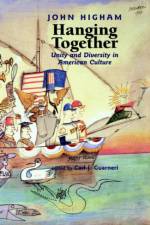
This book presents three decades of writings by one of Americas most distinguished historians. John Higham, renowned for his influential works on immigration, ethnicity, political symbolism, and the writing of history, here traces the changing contours of American culture since its beginnings, focusing on the ways that an extraordinarily mobile society has allowed divergent ethnic, class, and ideological groups to hang together as Americans.The book includes classic essays by Higham and more recent writings, some of which have been substantially revised for this publication. Topics range widely from the evolution of American national symbols and the fate of our national character to new perspectives on the New Deal, on other major turning points, and on changes in race relations after major American wars. Yet they are unified by an underlying theme: that a heterogeneous society and an inclusive national culture need each other.
In the aftermath of debate about the death of literary theory, Austin E. Quigley asks whether theory has failed us or we have failed literary theory. Theory can thrive, he argues, only if we understand how it can be strategically deployed to reveal what it does not presuppose. This involves the repositioning of theoretical inquiry relative to historical and critical inquiry and the repositioning of theories relative to each other.What follows is a thought-provoking reexamination of the controversial claims of pluralism in literary studies. The book explores the related roles of literary history, criticism, and theory by tracing the fascinating history of linguistics as an intellectual problem in the twentieth century. Quigley’s approach clarifies the pluralistic nature of literary inquiry, the viability and life cycles of theories, the controversial status of canonicity, and the polemical nature of the culture wars by positioning them all in the context of recurring debates about language that have their earliest exemplifications in classical times.
Jay Hopler's Green Squall is the winner of the 2005 Yale Series of Younger Poets competition. As Louise Glck observes in her foreword, Green Squall begins and ends in the garden; however, Hoplers gardens are not of the seasonal variety evoked by poets of the English lyrichis gardens flourish at lower, fiercer latitudes and in altogether different mindscapes. There is a darkness in Hoplers work as deep and brutal as any in American poetry. Though his verbal extravagance and formal invention bring to mind Wallace Stevenss tropical extrapolations, there lies beneath Green Squalls lush tropical surfaces a terrifying world in which nightmare and celebration are indistinguishable, and hope is synonymous with despair.
Repeatedly in the twentieth century, the United States has been involved in confrontations with other countries, each with the potential for widespread international and domestic upheaval, even disaster. In this book Michael Hunt focuses on seven such crises, presenting for each an illuminating introduction and a rich collection of original documents. His epilogue considers the nature of international crises and the U.S. record in dealing with them.The case studies include:the American entry into World War I the Japanese-American rivalry that led to Pearl Harborthe origins of the U.S.-Soviet Cold Warthe collision between China and the United States during the Korean Warthe confrontation over Soviet missiles in CubaLyndon Johnsons commitment to war in Vietnamand the American entanglement in the Iranian revolutionThe studies allow the reader to see U.S. foreign policymaking firsthand and to understand it as something that is shaped by interactions with other nations and leaders as well as by American values, attitudes, and needs. To provide an international perspective, both the narrative and the documents give as much attention to foreign policymakers as to their American counterparts, emphasizing the invariably dynamic, often confused, and sometimes chaotic interaction between the two sides.
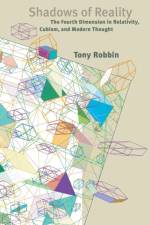
In this insightful book, which is a revisionist math history as well as a revisionist art history, Tony Robbin, well known for his innovative computer visualizations of hyperspace, investigates different models of the fourth dimension and how these are applied in art and physics. Robbin explores the distinction between the slicing, or Flatland, model and the projection, or shadow, model. He compares the history of these two models and their uses and misuses in popular discussions. Robbin breaks new ground with his original argument that Picasso used the projection model to invent cubism, and that Minkowski had four-dimensional projective geometry in mind when he structured special relativity. The discussion is brought to the present with an exposition of the projection model in the most creative ideas about space in contemporary mathematics such as twisters, quasicrystals, and quantum topology. Robbin clarifies these esoteric concepts with understandable drawings and diagrams.Robbin proposes that the powerful role of projective geometry in the development of current mathematical ideas has been long overlooked and that our attachment to the slicing model is essentially a conceptual block that hinders progress in understanding contemporary models of spacetime. He offers a fascinating review of how projective ideas are the source of some of today’s most exciting developments in art, math, physics, and computer visualization.
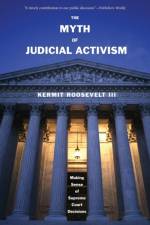
This carefully considered book is a welcome addition to the debate over judicial activism. Constitutional scholar Kermit Roosevelt III offers an elegantly simple way to resolve the heated discord between conservatives, who argue that the Constitution is immutable, and progressives, who insist that it is a living document that must be reinterpreted in new cultural contexts so that its meaning evolves. Roosevelt uses plain language and compelling examples to explain how the Constitution can be both a constant and an organic document.Recent years have witnessed an increasing drumbeat of complaints about judicial behavior, focusing particularly on Supreme Court decisions that critics charge are reflections of the Justices political preferences rather than enforcement of the Constitution. The author takes a balanced look at these controversial decisions through a compelling new lens of constitutional interpretation. He clarifies the task of the Supreme Court in constitutional cases, then sets out a model to describe how the Court creates doctrine to implement the meaning of the Constitution. Finally, Roosevelt uses this model to show which decisions can be justified as legitimate and which cannot.
Popularly known during his lifetime as “The World’s Greatest Living Composer,” Igor Stravinsky (1882–1971) not only wrote some of the twentieth century’s most influential music, he also assumed the role of cultural icon. This book reveals Stravinsky’s two sides—the public persona, preoccupied with his own image and place in history, and the private composer, whose views and beliefs were often purposely suppressed. Charles M. Joseph draws a richer and more human portrait of Stravinsky than anyone has done before, using an array of unpublished materials and unreleased film trims from the composer’s huge archive at the Paul Sacher Institute in Switzerland.Focusing on Stravinsky’s place in the culture of the twentieth century, Joseph situates the composer among the giants of his age. He discusses Stravinsky’s first American commission, his complicated relationship with his son, his professional relationships with celebrities ranging from T. S. Eliot to Orson Welles, his flirtations with Hollywood and television, and his love-hate attitude toward the critics and the media. In a close look at Stravinsky’s efforts to mold a public image, Joseph explores the complex dance between the composer and his artistic collaborator, Robert Craft, who orchestrated controversial efforts to protect Stravinsky and edit materials about him, both during the composer’s lifetime and after his death.
Abonner på vårt nyhetsbrev og få rabatter og inspirasjon til din neste leseopplevelse.
Ved å abonnere godtar du vår personvernerklæring.