





Gjør som tusenvis av andre bokelskere
Abonner på vårt nyhetsbrev og få rabatter og inspirasjon til din neste leseopplevelse.
Ved å abonnere godtar du vår personvernerklæring.Du kan når som helst melde deg av våre nyhetsbrev.

Why are nongovernmental organizations (NGOs) so successful in today’s world? How do they empower themselves? This insightful book provides important new perspectives on the strategic thinking of NGOs, the way they identify themselves, and how they behave. Raymond L. Bryant develops a novel theoretical perspective around the concept of moral capital and assesses that concept through in-depth case studies of NGOs in the Philippines.The book’s focus is on perceptions of NGOs as moral and altruistic and how such perceptions can translate into social power. Bryant examines the ambiguous qualities of NGO strategizing, the ways in which the quest for moral capital is bedeviled by the need to compromise with political and economic elites, and the possibilities for NGOs to achieve political goals as moral leaders.
This is the first complete English translation of On the Purity of the Art of Logic, a handbook of logic written in Latin by English philosopher Walter Burley (c.1275–1344/5). The work circulated in the Middle Ages in two versions, a shorter and a longer one, both translated here by Paul Vincent Spade. The translations are based on the only complete edition of Burley’s treatises, corrected by Spade on the basis of one of the surviving manuscripts. The book also includes an extensive introduction, explanatory notes, a table of corresponding passages between the two versions, a select annotated bibliography, and three indexes.A contemporary of John Duns Scotus and William of Ockham, Burley was active at the universities of both Paris and Oxford. He became one of the most important figures in the transformation of medieval logic and semantics that took place in the early fourteenth century. Burley used new tools and techniques of logical and semantical analysis, yet in many cases he used them in defense of traditional views, such as a realist metaphysical theory of “universals.” On the Purity of the Art of Logic shows both these sides of Burley—the innovator and the conservative—as well as some of the ways in which his views corresponded or clashed with those of William of Ockham.
Waiting for Godot has been acclaimed as the greatest play of the twentieth century. It is also the most elusive: two lifelong friends sing, dance, laugh, weep, and question their fate on a road that descends from and goes nowhere. Throughout, they repeat their intention “Let’s go,” but this is inevitably followed by the direction “(They do not move.).” This is Beckett’s poetic construct of the human condition.Lois Gordon, author of The World of Samuel Beckett, has written a fascinating and illuminating introduction to Beckett’s great work for general readers, students, and specialists. Critically sophisticated and historically informed, it approaches the play scene by scene, exploring the text linguistically, philosophically, critically, and biographically. Gordon argues that the play portrays more than the rational mind’s search for self and worldly definition. It also dramatizes Beckett’s insights into human nature, into the emotional life that frequently invades rationality and liberates, victimizes, or paralyzes the individual. Gordon shows that Beckett portrays humanity in conflict with mysterious forces both within and outside the self, that he is an artist of the psychic distress born of relativism.
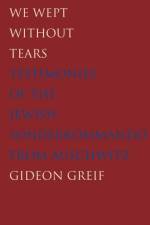
The Sonderkommando of Auschwitz-Birkenau consisted primarily of Jewish prisoners forced by the Germans to facilitate the mass extermination. Though never involved in the killing itself, they were compelled to be members of staff of the Nazi death-factory. This book, translated for the first time into English from its original Hebrew, consists of interviews with the very few survivingmen who witnessed at first hand the unparalleled horror of the Auschwitz-Birkenau death camp. Some of these men had never spoken of their experiences before.Over a period of years, Gideon Greif interviewed intensively all Sonderkommando survivors living in Israel. They describe not only the details of the German-Nazi killing program but also the moral and human challenges they faced. The book provides direct testimony about the Final Solution of the Jewish Problem, but it is also a unique document on the boundless cruelty and deceit practiced by the Germans. It documents the helplessness and powerlessness of the one-and-a-half million people, 90 percent of them Jews, who were brutally murdered in the gas chambers of Auschwitz-Birkenau.
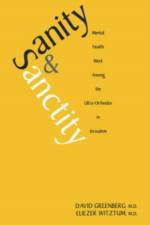
Ultra-orthodox Jews in Jerusalem are isolated from the secular community that surrounds them not only physically but by their dress, behaviors, and beliefs. Their relationship with secular society is characterized by social, religious, and political tensions. The differences between the ultra-orthodox and secular often pose special difficulties for psychiatrists who attempt to deal with their needs.In this book, two Western-trained psychiatrists discuss their mental health work with this community over the past two decades. With humor and affection they elaborate on some of the factors that make it difficult to treat or even to diagnose the ultra-orthodox, present fascinating case studies, and relate their observations of this religious community to the management of mental health services for other fundamentalist, anti-secular groups.
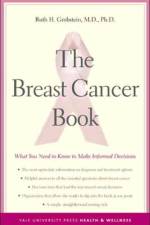
A diagnosis of breast cancer is among the most frightening moments in a person’s life—so frightening that even to formulate questions for the doctor may seem impossible. This helpful book is written as a guide for women and men facing breast cancer and for their caring families and friends. It is also written for women who have not been diagnosed with breast cancer but are concerned that they may be.Drawing on her many years of experience with breast cancer patients, Dr. Ruth H. Grobstein provides exactly the information they want and need in order to make the best health decisions. Her jargon-free book deals with general issues of interest to all women—mammography, hormone replacement therapy, risk factors for breast cancer, and more—as well as the numerous issues that patients diagnosed with breast cancer confront. Her book will be an indispensable companion, providing reliable information for patients on the journey through a sometimes confusing and impersonal medical system.
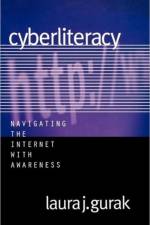
The Internet has changed our social spaces, our political and social realities, our use of language, and the way we communicate, all with breathtaking speed. Almost everyone who deals with the Internet and the new world of cyberspace communication at times feels bewildered, dismayed, or even infuriated. In this clear and helpful book, computer communications scholar Laura J. Gurak takes a close look at the critical issues of online communication and discusses how to become literate in the new mass medium of our era.In cyberspace, Gurak shows us, literacy means much more than knowing how to read. Cyberliteracy means being able to sort fact from fiction, to detect extremism from reasonable debate, and to identify gender bias, commercialism, imitation, parody, and other aspects of written language that are problematic in online communication. Active reading skills are essential in cyberspace, where hoaxes abound, advertising masquerades as product information, privacy is often compromised, and web pages and e-mail messages distort the truth. Gurak analyzes the new language of the Internet, explaining how to prepare for its discourse and protect oneself from its hazards. This book will appeal to anyone with an interest in the impact of the Internet on the practices of reading and writing and on our culture in general.
Emerson and Thoreau are the most celebrated odd couple of nineteenth-century American literature. Appearing to play the roles of benign mentor and eager disciple, they can also be seen as bitter rivals: America’s foremost literary statesman, protective of his reputation, and an ambitious and sometimes refractory protégé. The truth, Joel Porte maintains, is that Emerson and Thoreau were complementary literary geniuses, mutually inspiring and inspired.In this book of essays, Porte focuses on Emerson and Thoreau as writers. He traces their individual achievements and their points of intersection, arguing that both men, starting from a shared belief in the importance of “self-culture,” produced a body of writing that helped move a decidedly provincial New England readership into the broader arena of international culture. It is a book that will appeal to all readers interested in the writings of Emerson and Thoreau.
The teachings of political theorist Leo Strauss (18991973) have recently received new attention, as political observers have become aware of the influence Strausss students have had in shaping conservative agendas of the Bush administrationincluding the war on Iraq. This provocative book examines Strausss ideas and the ways in which they have been appropriated, or misappropriated, by senior policymakers.Anne Norton, a political theorist trained by some of Strausss most famous students, is well equipped to write on Strauss and Straussians. She tells three interwoven narratives: the story of Leo Strauss, a Jewish German-born migr, who carried European philosophy into a new world; the story of the philosophic lineage that came from Leo Strauss; and the story of how America has been made a moral battleground by the likes of Paul Wolfowitz, Leon Kass, Carnes Lord, and Irving KristolStraussian conservatives committed to an American imperialism they believe will usher in a new world order.
East Germany, its economy, and its society were in decline long before the country’s political collapse in the late 1980s. The clues were there in the natural landscape, Arvid Nelson argues in this groundbreaking book, but policy analysts were blind to them. Had they noted the record of the leadership’s values and goals manifest in the landscape, they wouldn’t have hailed East Germany as a Marxist-Leninist success story. Nelson sets East German history within the context of the landscape history of two centuries to underscore how forest and ecosystem change offered a reliable barometer to the health and stability of the political system that governed them.Cold War Ecology records how East German leaders’ indifference to human rights and their disregard for the landscape affected the rural economy, forests, and population. This lesson from history suggests new ways of thinking about the health of ecosystems and landscapes, Nelson shows, and he proposes assessing the stability of modern political systems based on the environment’s system qualities rather than on political leaders’ goals and beliefs.
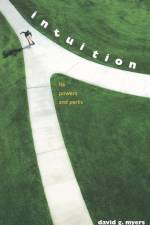
How reliable is our intuition? How much should we depend on gut-level instinct rather than rational analysis when we play the stock market, choose a mate, hire an employee, or assess our own abilities? In this engaging and accessible book, David G. Myers shows us that while intuition can provide us with useful—and often amazing—insights, it can also dangerously mislead us.Drawing on recent psychological research, Myers discusses the powers and perils of intuition when:• judges and jurors determine who is telling the truth;• mental health workers predict whether someone is at risk for suicide or crime;• coaches, players, and fans decide who has the hot hand or the hot bat;• personnel directors hire new employees;• psychics claim to be clairvoyant or to have premonitions;• and much more.
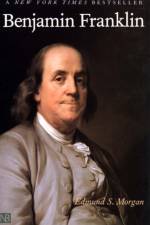
The best short biography of Franklin ever written.Gordon S. WoodBenjamin Franklin is perhaps the most remarkable figure in American history: the greatest statesman of his age, he played a pivotal role in the formation of the American republic. He was also a pioneering scientist, a bestselling author, the countrys first postmaster general, a printer, a bon vivant, a diplomat, a ladies man, and a moralistand the most prominent celebrity of the eighteenth century.Franklin was, however, a man of vast contradictions, as Edmund Morgan demonstrates in this brilliant biography. A reluctant revolutionary, Franklin had desperately wished to preserve the British Empire, and he mourned the break even as he led the fight for American independence. Despite his passion for science, Franklin viewed his groundbreaking experiments as secondary to his civic duties. And although he helped to draft both the Declaration of Independence and the American Constitution, he had personally hoped that the new American government would take a different shape. Unraveling the enigma of Franklins character, Morgan shows that he was the rare individual who consistently placed the public interest before his own desires.Written by one of our greatest historians, Benjamin Franklin offers a provocative portrait of Americas most extraordinary patriot.
On a winter night in 1743, a local magistrate was stabbed to death in the churchyard of Rye by an angry butcher. Why did this gruesome crime happen? What does it reveal about the political, economic, and cultural patterns that existed in this small English port town?To answer these questions, this fascinating book takes us back to the mid-sixteenth century, when religious and social tensions began to fragment the quiet town of Rye and led to witch hunts, riots, and violent political confrontations. Paul Monod examines events over the course of the next two centuries, tracing the town’s transition as it moved from narrowly focused Reformation norms to the more expansive ideas of the emerging commercial society. In the process, relations among the town’s inhabitants were fundamentally altered. The history of Rye mirrored that of the whole nation, and it gives us an intriguing new perspective on England in the early modern period.
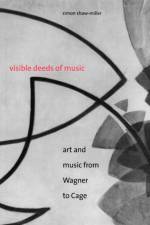
This thoughtful and provocative book explores the relationship between music and the visual arts in the late nineteenth and twentieth centuries, focusing on the modernist period. Reassessing the work of composers and artists such as Richard Wagner, Pablo Picasso, Paul Klee, Josef Matthias Hauer, and John Cage, Simon Shaw-Miller argues that despite modernisms advocacy of media purity and separation, the boundaries between art and music were permeable at this time, as they have been throughout history.Shaw-Miller begins by discussing the place of Wagners music and ideas at the time of the birth of modernism, presenting Wagners aesthetic of the Gesamtkunstwerk as an alternative paradigm for modernist art. He goes on to analyze Picassos use of musical subjects in his cubist works and Klees adoption of music and the issue of temporality in his paintings and drawings. He concludes with the radical aesthetic of Cage, the silencing of sound, and the promotion of intermediality in the work of Fluxus artists. Through these fascinating examples, Shaw-Miller raises questions about both art and music history that will be of interest to students of both disciplines.
Abonner på vårt nyhetsbrev og få rabatter og inspirasjon til din neste leseopplevelse.
Ved å abonnere godtar du vår personvernerklæring.