






Gjør som tusenvis av andre bokelskere
Abonner på vårt nyhetsbrev og få rabatter og inspirasjon til din neste leseopplevelse.
Ved å abonnere godtar du vår personvernerklæring.Du kan når som helst melde deg av våre nyhetsbrev.

Jonathan Edwards, widely considered America’s most important Christian thinker, was first and foremost a preacher and pastor who guided souls and interpreted religious experiences. His primary tool in achieving these goals was the sermon, out of which grew many of his famous treatises. This selection of Edwards’ sermons recognizes their crucial role in his life and art.The fifteen sermons, four of which have never been published before, reflect a life dedicated to experiencing and understanding spiritual truth. Chosen to represent a typical cycle of Edwards’ preaching, the sermons address a wide range of occasions, situations, and states, corporate as well as personal. The book also contains an introduction that discusses Edwards’ contribution to the sermon as a literary form, places his sermons within their social and cultural contexts, and considers his theological aims as a way of familiarizing the reader with the "e;order of salvation"e; as Edwards conceived of it. Together, the sermons and the editors’ introduction offer a rounded picture of Edwards the preacher, the sermon writer, and the pastoral theologian.
During the early decades of the twentieth century, agricultural practice in America was transformed from a pre-industrial to an industrial activity. In this book Deborah Fitzgerald argues that farms became modernized in the 1920s because they adopted not only new machinery but also the financial, cultural, and ideological apparatus of industrialism.Fitzgerald examines how bankers and emerging professionals in engineering and economics pushed for systematic, businesslike farming. She discusses how factory practices served as a template for the creation across the country of industrial or corporate farms. She looks at how farming was affected by this revolution and concludes by following several agricultural enthusiasts to the Soviet Union, where the lessons of industrial farming were studied.
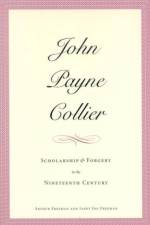
John Payne Collier (1789–1883), one of the most controversial figures in the history of literary scholarship, pursued a double career. A prolific and highly influential writer on the drama, poetry, and popular prose of Shakespeare’s age, Collier was at the same time the promulgator of a great body of forgeries and false evidence, seriously affecting the text and biography of Shakespeare and many others. This monumental two-volume work for the first time addresses the whole of Collier’s activity, systematically sorting out his genuine achievements from his impostures.Arthur and Janet Freeman reassess the scholar-forger’s long life, milieu, and relations with a large circle of associates and rivals while presenting a chronological bibliography of his extensive publications, all fully annotated with regard to their creditability. The authors also survey the broader history of literary forgery in Great Britain and consider why so talented a man not only yielded to its temptations but also persisted in it throughout his life.
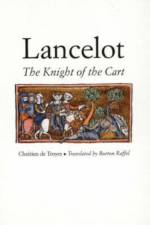
In this outstanding new translation of Lancelot, Burton Raffel brings to English language readers the fourth of Chrtiens five surviving romantic Arthurian poems. This poem was the first to introduce Lancelot as an important figure in the King Arthur legend.
The world first took notice of a religious group called Falun Gong on April 25, 1999, when more than 10,000 of its followers protested before the Chinese Communist headquarters in Beijing. Falun Gong investigates events in the wake of the demonstration: Beijing’s condemnation of the group as a Western, anti-Chinese force and doomsday cult, the sect’s continued defiance, and the nationwide campaign that resulted in the incarceration and torture of many Falun Gong faithful.Maria Hsia Chang discusses the Falun Gong’s beliefs, including their ideas on cosmology, humanity’s origin, karma, reincarnation, UFOs, and the coming apocalypse. She balances an account of the Chinese government’s case against the sect with an evaluation of the credibility of those accusations. Describing China’s long history of secret societies that initiated powerful uprisings and sometimes overthrew dynasties, she explains the Chinese government’s brutal treatment of the sect. And she concludes with a chronicle of the ongoing persecution of religious groups in China—of which Falun Gong is only one of many—and the social conditions that breed the popular discontent and alienation that spawn religious millenarianism.
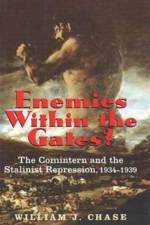
The vast and complex tragedy of Stalins purges, culminating in the Great Terror, made victims of millions of Russians between 1932 and 1939. This gripping book assembles and translates into English for the first time an astonishing array of formerly top secret Soviet documents from that period. Exposing to daylight the hidden inner workings of the Communist Party and the dark inhumanity of the purge process, these documents immeasurably deepen our understanding of an agonizing episode of Soviet history.From dossiers on the liquidated Soviet elite to police reports of peasant unrest to private letters from victims and purgers to secret transcripts of Central Committee meetings, the nearly two hundred documents presented here confirm Stalins role as executor of the terror. Yet the top party elite, or nomenklatura, were also key to the unfolding of a terror that proceeded with fits and starts, moves and countermoves, and steps toward and away from the abyss. From 1932 to early 1937 Stalin and the nomenklatura agreed on the need to destroy all dissidents, to stage show trials, to carry out mass arrests, purges, and shootings, and to prevent any resistance to these cleansings. Eventually deep insecurities that magnified any opposition and iron discipline within the party led the nomenklatura to support Stalin in purging their own colleagues, and in 1937 and 1938 they serially voted one another into prison.
Abonner på vårt nyhetsbrev og få rabatter og inspirasjon til din neste leseopplevelse.
Ved å abonnere godtar du vår personvernerklæring.