









Gjør som tusenvis av andre bokelskere
Abonner på vårt nyhetsbrev og få rabatter og inspirasjon til din neste leseopplevelse.
Ved å abonnere godtar du vår personvernerklæring.Du kan når som helst melde deg av våre nyhetsbrev.

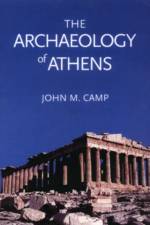
The monuments of ancient Athens and Attica give eloquent testimony to the enduring legacy of Greek civilization. In this book, a leading authority on the archaeology of this area presents a survey of the monumentsfirst chronologically and then site by sitecreating the definitive work on the subject.John M. Camp begins with a comprehensive narrative history of the monuments from the earliest times to the sixth century A.D. Drawing on literary and epigraphic evidence, including Plutarchs biographies, Pausaniass guidebook, and thousands of inscriptions, he discusses who built a given structure, when, and why. Camp presents dozens of passages in translation, allowing the reader easy access to the variety and richness of the ancient sources. In effect, this main part of the book provides an engrossing history of ancient Athens as recorded in its archaeological remains. The second section of the book offers in-depth discussions of individual sites in their physical context, including accounts of excavations in the modern era. Written in a clear and engaging style and lavishly illustrated, Camps archaeological tour of Athens is certain to appeal not only to scholars and students but also to visitors to the area.
George Kateb has been one of the most respected and influential political theorists of the last quarter century. His work stands apart from that of many of his contemporaries and resists easy summary. In these essays Kateb often admonishes himself, in Socratic fashion, to keep political argument as far as possible negative: to be willing to assert what we are not, and what we will not do, and to build modestly from there some account of what we are and what we ought to do.Drawing attention to the non-rational character of many motives that drive people to construct and maintain a political order, he urges greater vigilance in political life and cautions against mistakes not usually acknowledged as such. Patriotism is one such mistake, too often resulting in terrible brutality and injustices. He asks us to consider how commitments to ideals of religion, nation, race, ethnicity, manliness, and courage find themselves in the service of immoral ends, and he exhorts us to remember the dignity of the individual.The book is divided into three sections. In the first, Kateb discusses the expansion of state power (including such topics as surveillance) and the justifications for war recently made by American policy makers. The second section offers essays in moral psychology, and the third comprises fresh interpretations of major thinkers in the tradition of political thought, from Socrates to Arendt.
In this first book-length study of positive law, James Bernard Murphy rewrites central chapters in the history of jurisprudence by uncovering a fundamental continuity among four great legal philosophers: Plato, Thomas Aquinas, Thomas Hobbes, and John Austin. In their theories of positive law, Murphy argues, these thinkers represent successive chapters in a single fascinating story. That story revolves around a fundamental ambiguity: is law positive because it is deliberately imposed (as opposed to customary law) or because it lacks moral necessity (as opposed to natural law)? These two senses of positive law are not coextensive yet the discourse of positive law oscillates unstably between them. What, then, is the relation between being deliberately imposed and lacking moral necessity? Murphy demonstrates how the discourse of positive law incorporates both normative and descriptive dimensions of law, and he discusses the relation of positive law not only to jurisprudence but also to the philosophy of language, ethics, theories of social order, and biblical law.
A perceptive literary critic, a world-famous writer of witty and playful verses for children, a leading authority on children’s linguistic creativity, and a highly skilled translator, Kornei Chukovsky was a complete man of letters. As benefactor to many writers including Alexander Solzhenitsyn and Joseph Brodsky, he stood for several decades at the center of the Russian literary milieu. It is no exaggeration to claim that Chukovsky knew everyone involved in shaping the course of twentieth-century Russian literature. His voluminous diary, here translated into English for the first time, begins in prerevolutionary Russia and spans nearly the entire Soviet era. It is the candid commentary of a brilliant observer who documents fifty years of Soviet literary activity and the personal predicament of the writer under a totalitarian regime.From descriptions of friendship with such major literary figures as Anna Akhmatova and Isaac Babel to accounts of the struggle with obtuse and hostile censorship, from the heartbreaking story of the death of the daughter who had inspired so many stories to candid political statements, the extraordinary diary of Kornei Chukovsky is a unique account of the twentieth-century Russian experience.
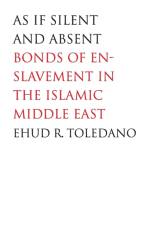
This groundbreaking book reconceptualizes slavery through the voices of enslaved persons themselves, voices that have remained silent in the narratives of conventional history. Focusing in particular on the Islamic Middle East from the late eighteenth to the early twentieth century, Ehud R. Toledano examines how bonded persons experienced enslavement in Ottoman societies. He draws on court records and a variety of other unexamined primary sources to uncover important new information about the Africans and Circassians who were forcibly removed from their own societies and transplanted to Middle East cultures that were alien to them. Toledano also considers the experiences of these enslaved people within the context of the global history of slavery.The book looks at the bonds of slavery from an original perspective, moving away from the traditional master/slave domination paradigm toward the point of view of the enslaved and their responses to their plight. With keen and original insights, Toledano suggests new ways of thinking about enslavement.
At the beginning of the twenty-first century, China is poised to become a major global power. And though much has been written of Chinas rise, a crucial aspect of this transformation has gone largely unnoticed: the way that China is using soft power to appeal to its neighbors and to distant countries alike.This book is the first to examine the significance of Chinas recentrelianceon soft powerdiplomacy, trade incentives, cultural and educational exchange opportunities, and other techniquesto project a benign national image,position itselfas a model of social and economic success, and develop stronger international alliances. Drawing on years of experience tracking Chinas policies in Southeast Asia, Latin America, and Africa, Joshua Kurlantzick reveals how China has wooed the world with a "e;charm offensive"e; that has largely escaped the attention of American policy makers.Beijings new diplomacy has altered the political landscape in Southeast Asia and far beyond, changing the dynamics of Chinas relationships with other countries. China also has worked to take advantage of American policy mistakes, Kurlantzick contends. In a provocative conclusion, he considers a future in which China may be the first nation since the Soviet Union to rival the United Statesin international influence.
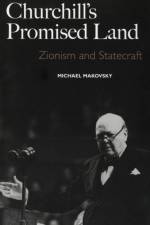
This book is the first to explore fully the role that Zionism played in the political thought of Winston Churchill. Michael Makovsky traces the development of Churchills positions toward Zionism from the period leading up to the First World War through his final years as prime minister in the 1950s. Setting Churchills attitudes toward Zionism within the context of his overall worldview as well as within the context of twentieth-century British diplomacy, Makovsky offers a unique contribution to our understanding of Churchill.Moving chronologically, the book looks at Churchills career within the context of several major themes: his own worldview and political strategies, his understanding of British imperial interests, the moral impact of the Holocaust, his commitment to ideals of civilization, and his historical sentimentalism. While Churchill was largely sympathetic to the Jews and to the Zionist impulse, he was not without inconsistencies in his views and policies over the years. Makovskys book illuminates key aspects of Middle Eastern history; Zionist history; and British political, imperial, and diplomatic history; and further helps us understand one of the pivotal figures of the twentieth century.
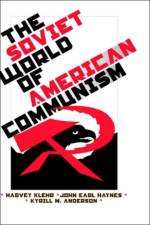
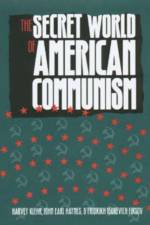
For the first time, the hidden world of American communism can be examined with the help of documents from the recently opened archives of the former Soviet Union. By interweaving narrative and documents, the authors of this book present a convincing new picture of the Communist Party of the United States of America (CPUSA), one of the most controversial organizations in American public life. Heated debates about whether the Communist Party harbored spies or engaged in espionage have surrounded the party from its inception. This authoritative book provides proof that the CPUSA was involved in various subversive activities. At the same time, it discloses fascinating details about the workings of the party and about the ordinary Americans and CPUSA leaders who participated in its clandestine activities.The documents presented range from letters by Americans wishing to do international covert work for the Soviet Union to top secret memos between the head of Soviet foreign intelligence, the Comintern, and the CPUSA. They confirm that--the Soviet Union heavily subsidized the CPUSA and that some prominent Americans laundered money for the Comintern;--the CPUSA maintained a covert espionage apparatus in the United States with direct ties to Soviet intelligence;--the testimony of former Communists concerning underground Communist activity in the United States can be substantiated;--American Communists working in government agencies stole documents and passed them to the CPUSA, which sent them on to Moscow;--the CPUSA played a role in atomic espionage;and much more.An engrossing narrative places the documents in their historical context and explains key figures, organizations, and events. Together the narrative and documents provide a revealing picture of American communism and convey the contradictory passions that drew so many Americans into the Communist movement and eventually tore that movement apart.
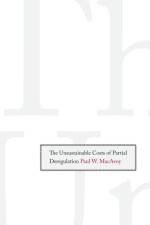
Three decades ago, federal policymakersRepublicans and Democratsembarked on a general strategy of deregulation. In the electricity, gas delivery, and telecommunications industries, the strategy called for restructuring to separate production from transmission and distribution, followed by elimination of price controls. The expected results were lower prices and increased quality, reliability, and scope of services. Paul W. MacAvoy, an economist with forty years of experience in the regulatory field, here assesses the results and concludes that deregulation has failed to achieve any of these goals in any of these industries.MacAvoy shows that we now have only partial deregulation, a mixture of oligopoly structure with direct price control. He explores why this system leads to volatile and high prices, reduced investment, and low profitability, and what policy actions can be implemented to address these problems.
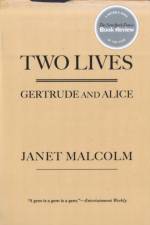
"e;How had the pair of elderly Jewish lesbians survived the Nazis? Janet Malcolm asks at the beginning of this extraordinary work of literary biography and investigative journalism. The pair, of course, is Gertrude Stein, the modernist master whose charm was as conspicuous as her fatness and thin, plain, tense, sour Alice B. Toklas, the worker bee who ministered to Steins needs throughout their forty-year expatriate marriage. As Malcolm pursues the truth of the couples charmed life in a village in Vichy France, her subject becomes the larger question of biographical truth. The instability of human knowledge is one of our few certainties, she writes.The portrait of the legendary couple that emerges from this work is unexpectedly charged. The two world wars Stein and Toklas lived through together are paralleled by the private war that went on between them. This war, as Malcolm learned, sometimes flared into bitter combat.Two Lives is also a work of literary criticism. Even the most hermetic of [Steins] writings are works of submerged autobiography, Malcolm writes. The key of 'I' will not unlock the door to their meaningyou need a crowbar for thatbut will sometimes admit you to a kind of anteroom of suggestion. Whether unpacking the accessible Autobiography of Alice B. Toklas, in which Stein solves the koan of autobiography, or wrestling with The Making of Americans, a masterwork of magisterial disorder, Malcolm is stunningly perceptive.Praise for the author:[Janet Malcolm] is among the most intellectually provocative of authors . . .able to turn epiphanies of perception into explosions of insight.David Lehman, Boston GlobeNot since Virginia Woolf has anyone thought so trenchantly about the strange art of biography.Christopher Benfey
This vivid portrait of Bart Giamatti encompasses his entire eventful life but focuses especially on his years at Yale University (1966–1986) and his brief career as a major league baseball executive (1986–1989). As scholar, teacher, and then university president, Giamatti was an admired and respected figure on campus. He forged his academic career during turbulent decades, and his tenure in baseball was no less contentious, for as commissioner of baseball he oversaw the banishment of Cincinnati’s Pete Rose from the game for gambling. The book draws on Giamatti’s numerous writings and speeches to illuminate the character and complexities of the man and to understand the values that motivated his leadership.Bart Giamatti was a cultural conservative and institutional moderate at a time when such values were out of favor and under attack. At Yale, as a baseball executive, and indeed in all things, Giamatti championed the related values of freedom and order. Robert P. Moncreiff places Giamatti in the context of major events at Yale, recounts in detail the legal context in which the Pete Rose affair unfolded, and arrives at a nuanced understanding of this memorable man’s life.
This engaging and readable book provides an introduction to consciousness that does justice both to the science and to the philosophy of consciousness, that is, the mechanics of the mind and the experience of awareness. The book opens with a general discussion of the brain and of consciousness itself. Then, exploring the areas of brain science most likely to illuminate the basis of awareness, Zeman focuses on the science of sleep and waking and on the science of vision. He describes healthy states and disordersepilepsy, narcolepsy, blindsight and hallucinations after strokethat provide insights into the capacity for consciousness and into its contents. And he tracks the evolution of the brain, the human species, and human culture and surveys the main current scientific theories of awareness, pioneering attempts to explain how the brain gives rise to experience.Zeman concludes by examining philosophical arguments about the nature of consciousness. A practicing neurologist, he animates his text with examples from the behavioral and neurological disorders of his patients and from the expanding mental worlds of young children, including his own. His book is an accessible and enlightening explanation of why we are conscious.
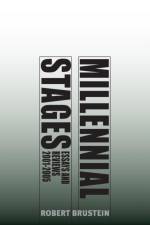
A major figure in the world of theater as critic, playwright, scholar, teacher, director, actor, and producer, Robert Brustein offers a unique perspective on the American stage and its artists. In this wise, witty, and wide-ranging collection of recent writings, Brustein examines crucial issues relating to theater in the post-9/11 years, analyzing specific plays, emerging and established performers, and theatrical production throughout the world. Brustein relates our theater to our society in a manner that reminds us why the performing arts matter.Millennial Stages records Brusteins thinking on the important issues roiling the national soul at the start of the twenty-first century. His opening section explores the connections between theater and society, theater and politics, and theater and religion, and it is followed by reviews of such landmark productions as The Producers and Spamalot, Long Days Journey into Night and King Lear. In his final section, Brustein reflects on people and places of importance in the world of theater today, including Marlon Brando and Arthur Miller and Australia and South Africa.
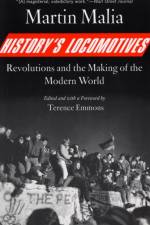
This masterful comparative history traces the Wests revolutionary tradition and its culmination in the Communist revolutions of the twentieth century. Unique in breadth and scope, Historys Locomotives offers a new interpretation of the origins and history of socialism as well as the meanings of the Russian Revolution, the rise of the Soviet regime, and the ultimate collapse of the Soviet Union.Historys Locomotives isthe masterwork of an esteemed historian in whom a fine sense of historical particularity never interfered with the ability to see the large picture.Martin Malia explores religious conflicts in fifteenth- and sixteenth-century Europe, the revolutions in England, American, and France, and the twentieth-century Russian explosions into revolution. He concludes that twentieth-century revolutions have deep roots in European history and that revolutionary thought and action underwent a process of radicalization from one great revolution to the next. Malia offers an original view of the phenomenon of revolution and a fascinating assessment of its power as a driving force in history.
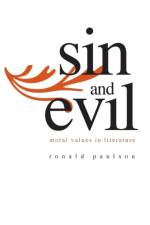
The confusion of sin and evil, or religious and moral transgression, is the subject of Ronald Paulsons latest book. He calls attention to the important distinction between sin and Evil (with a capital E) that in our times is largely ignored, and to the further confusion caused by the term moral values. Ranging widely through the history of Western literature, Paulson focuses particularly on American and English works of the eighteenth through twentieth centuries to discover how questions of evil and sinand evil and sinful behaviorhave been discussed and represented.The breadth of Paulsons discussion is enormous, taking the reader from Greek and Roman tragedy, to Christian satire in the work of Swift and Hogarth, to Hawthornes and Melvilles novels, and finally to twentieth-century studies of good and evil by such authors as James, Conrad, Faulkner, Greene, Heller, Vonnegut, and OBrien. Where does evil come from? What are moral values? If evil is a cultural construct, what does that imply? Paulsons literary tour of sin and evil over the past two hundred years provides not only a historical perspective but also new ways of thinking about important issues that characterize our own era of violence, intolerance, and war.
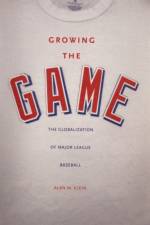
Baseball fans are well aware that the game has become increasingly international. Major league rosters include players from no fewer than fourteen countries, and more than one-fourth of all players are foreign born. Here, Alan Klein offers the first full-length study of a sport in the process of globalizing. Looking at the international activities of big-market and small-market baseball teams, as well as the Commissioner’s Office, he examines the ways in which Major League Baseball operates on a world stage that reaches from the Dominican Republic to South Africa to Japan.The origins of baseball’s efforts to globalize are complex, stemming as much from decreasing opportunities at home as from promise abroad. The book chronicles attempts to develop the game outside the United States, the strategies that teams such as the Los Angeles Dodgers and the Kansas City Royals have devised to recruit international talent, and the ways baseball has been growing in other countries. The author concludes with an assessment of the obstacles that may inhibit or promote baseball’s progress toward globalization, offering thoughtful proposals to ensure the health and growth of the game in the United States and abroad.
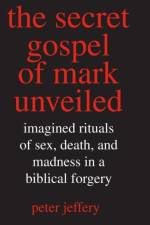
In 1958, Bible scholar Morton Smith announced the discovery of a sensational manuscripta second-century letter written by St. Clement of Alexandria, who quotes an unknown, longer version of the Gospel of Mark. When Smith published the letter in 1973, he set off a firestorm of controversy that has raged ever since. Is the text authentic, or a hoax? Is Smiths interpretation correct? Did Jesus really practice magic, or homosexuality? And if the letter is a forgery . . . why?Through close examination of the discovered manuscripts text, Peter Jeffery unravels the answers to the mystery and tells the tragic tale of an estranged Episcopalian priest who forged an ancient gospel and fooled many of the best biblical scholars of his time. Jeffery shows convincingly that Smiths Secret Gospel is steeped in anachronisms and that its construction was influenced by Oscar WildesSalom, twentieth-century misunderstandings of early Christian liturgy, and Smiths personal struggles with Christian sexual morality.
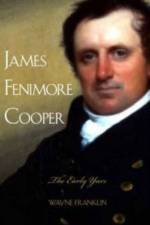
James Fenimore Cooper (1789–1851) invented the key forms of American fiction—the Western, the sea tale, the Revolutionary War romance. Furthermore, Cooper turned novel writing from a polite diversion into a paying career. He influenced Herman Melville, Richard Henry Dana, Jr., Francis Parkman, and even Mark Twain—who felt the need to flagellate Cooper for his “literary offenses.” His novels mark the starting point for any history of our environmental conscience. Far from complicit in the cleansings of Native Americans that characterized the era, Cooper’s fictions traced native losses to their economic sources.Perhaps no other American writer stands in greater need of a major reevaluation than Cooper. This is the first treatment of Cooper’s life to be based on full access to his family papers. Cooper’s life, as Franklin relates it, is the story of how, in literature and countless other endeavors, Americans in his period sought to solidify their political and cultural economic independence from Britain and, as the Revolutionary generation died, stipulate what the maturing republic was to become. The first of two volumes, James Fenimore Cooper: The Early Years covers Cooper’s life from his boyhood up to 1826, when, at the age of thirty-six, he left with his wife and five children for Europe.
Abonner på vårt nyhetsbrev og få rabatter og inspirasjon til din neste leseopplevelse.
Ved å abonnere godtar du vår personvernerklæring.