











Gjør som tusenvis av andre bokelskere
Abonner på vårt nyhetsbrev og få rabatter og inspirasjon til din neste leseopplevelse.
Ved å abonnere godtar du vår personvernerklæring.Du kan når som helst melde deg av våre nyhetsbrev.

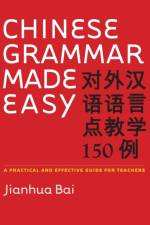
Chinese Grammar Made Easy presents instructors with innovative and classroom-tested techniques for teaching Chinese grammar. Its communicative, meaning-based approach helps teachers to engage students by bringing grammar into a practical, real-life context.As a reference for daily teaching, this book discusses 150 of the most fundamental and frequently used grammar points that students need to learn in order to communicate successfully. Each grammar point is accompanied by various learning activities to engage students and provide structured practice.Based on research conducted by a team of 25 experienced language teachers, Chinese Grammar Made Easy also offers: Clear and concise explanations of grammar concepts, Step-by-step teaching instructions, A range of exercises to reinforce each grammar point.By providing pedagogical strategies, this book allows teachers to reflect on the effectiveness of their grammar instruction and to implement methods which fit the needs and interests of language learners.
British theatre of the past fifty years has been brilliant, varied, and controversial, encompassing invigorating indigenous drama, politically didactic writing, the formation of such institutions as the National Theatre, the exporting of musicals worldwide from the West End, and much more. This entertaining and authoritative book is the first comprehensive account of British theatre in this period.Dominic Shellard moves chronologically through the half-century, discussing important plays, performers, directors, playwrights, critics, censors, and agents as well as the social, political, and financial developments that influenced the theatre world. Drawing on previously unseen material (such as the Kenneth Tynan archives), first-hand testimony, and detailed research, Shellard tackles several long-held assumptions about drama of the period. He questions the dominance of Look Back in Anger in the 1950s, arguing that much of the theatre of the ten years prior to its premire in 1956 was vibrant and worthwhile. He suggests that theatre criticism, theatre producers, and such institutions as the National Theatre and the Royal Shakespeare Company have played key roles in the evolution of recent drama. And he takes a fresh look at the work of Terence Rattigan, Harold Pinter, Joe Orton, Alan Ayckbourn, Timberlake Wertenbaker, and other significant playwrights of the modern era.The book will be a valuable resource not only for students of theatre history but also for any theatre enthusiast.
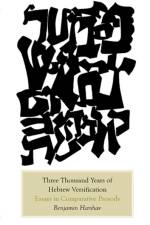
In this unparalleled study of the forms of Hebrew poetry, preeminent authority Benjamin Harshav examines Hebrew verse during three millennia of changing historical and cultural contexts. He takes us around the world of the Jewish Diaspora, comparing the changes in Hebrew verse as it came into contact with the Canaanite, Greek, Arabic, Italian, German, Russian, Yiddish, and English poetic forms. Harshav explores the types and constraints of free rhythms, the meanings of sound patterns, the historical and linguistic frameworks that produced the first accentual iambs in English, German, Russian, and Hebrew, and the discovery of these iambs in a Yiddish romance written in Venice in 1508/09. In each chapter, the author presents an innovative analytical theory on a particular poetic domain, drawing on his close study of thousands of Hebrew poems.
Edward I-one of the outstanding monarchs of the English Middle Ages-pioneered legal and parliamentary change in England, conquered Wales, and came close to conquering Scotland. A major player in European diplomacy and war, he acted as peacemaker during the 1280s but became involved in a bitter war with Philip IV a decade later. This book is the definitive account of a remarkable king and his long and significant reign. Widely praised when it was first published in 1988, it is now reissued with a new introduction and updated bibliographic guide. Praise for the earlier edition:"e;A masterly achievement. . . . A work of enduring value and one certain to remain the standard life for many years."e;-Times Literary Supplement "e;A fine book: learned, judicious, carefully thought out and skillfully presented. It is as near comprehensive as any single volume could be."e;-History Today "e;To have died more revered than any other English monarch was an outstanding achievement; and it is worthily commemorated by this outstanding addition to the . . . corpus of royal biographies."e;-Times Education Supplement
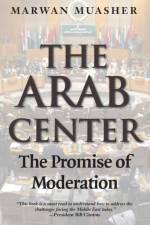
Marwan Muasher, a prominent Jordanian diplomat, has been instrumental in shaping Middle East peace efforts for nearly twenty years. He served as Jordans first ambassador to Israel and was also ambassador to the United States, spokesperson at peace talks in Madrid and Washington, minister of foreign affairs, and deputy prime minister in charge of reform. Here he recounts the behind-the-scenes details of diplomatic ventures over the past two decades, including such recent undertakings as the Arab Peace Initiative and the Middle East Road Map.Muashers insights into internal Arab politics and the successes and failures of the Arab Center are uniquely informed and deeply felt. He assesses how the middle road approach to reform is faring and explains why current tactics used by the West to deal with Islamic groups are doomed to failure. He examines why the Arab Center has made so little progress and which Arab, Israeli, and American policies need rethinking. Part memoir and part analysis, this book reveals the human side of the Arab-Israeli conflict. It is essential reading for all who share the hope that moderate, pragmatic Arab voices will be heard in todays vitriolic debates over how to achieve an enduring peace in the Middle East.
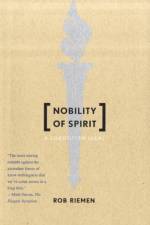
In the pages of this slim, powerful book Rob Riemen argues with passion that nobility of spirit is the quintessence of a civilized world. It is, as Thomas Mann believed, the sole corrective for human history. Without nobility of spirit, culture vanishes. Yet in the early twenty-first century, a time when human dignity and freedom are imperiled, the concept of nobility of spirit is scarcely considered.Riemen insists that if we hope to move beyond the war on terror and create a life-affirming culture, we must address timeless but neglected questions: What is a good society? Why art? Why culture? What is the responsibility of intellectuals? Why anti-Americanism? Why nihilism? Why the cult of death of fundamentalists? In a series of three essays, the author identifies nobility of spirit in the life and work of Baruch Spinoza and of Thomas Mann; explores the quest for the good society in our own time; and addresses the pursuit of truth and freedom that engaged figures as disparate as Socrates and Leone Ginzburg, a Jewish Italian intellectual murdered by Nazis.The forces now aligned against humanistic values are manifold, observes George Steiner in the foreword to the book. In this imaginative and compelling volume, Riemen addresses these forces and speaks to every reader who believes in the power of classical ideas to restore Western civilizations highest values.
Inspired by the process of creating a library for his fifteenth-century home near the Loire, in France, Alberto Manguel, the acclaimed writer on books and reading, has taken up the subject of libraries. Libraries, he says, have always seemed to me pleasantly mad places, and for as long as I can remember Ive been seduced by their labyrinthine logic. In this personal, deliberately unsystematic, and wide-ranging book, he offers a captivating meditation on the meaning of libraries.Manguel, a guide of irrepressible enthusiasm, conducts a unique library tour that extends from his childhood bookshelves to the complete libraries of the Internet, from Ancient Egypt and Greece to the Arab world, from China and Rome to Google. He ponders the doomed library of Alexandria as well as the personal libraries of Charles Dickens, Jorge Luis Borges, and others. He recounts stories of people who have struggled against tyranny to preserve freedom of thoughtthe Polish librarian who smuggled books to safety as the Nazis began their destruction of Jewish libraries; the Afghani bookseller who kept his store open through decades of unrest. Oral memory libraries kept alive by prisoners, libraries of banned books, the imaginary library of Count Dracula, the library of books never writtenManguel illuminates the mysteries of libraries as no other writer could. With scores of wonderful images throughout, The Library at Night is a fascinating voyage through Manguels mind, memory, and vast knowledge of books and civilizations.
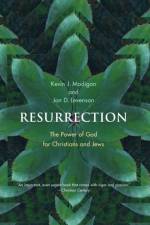
This book, written for religious and nonreligious people alike in clear and accessible language, explores a teaching central to both Jewish and Christian traditions: the teaching that at the end of time God will cause the dead to live again. Although this expectation, known as the resurrection of the dead, is widely understood to have been a part of Christianity from its beginnings nearly two thousand years ago, many people are surprised to learn that the Jews believed in resurrection long before the emergence of Christianity. In this sensitively written and historically accurate book, religious scholars Kevin J. Madigan and Jon D. Levenson aim to clarify confusion and dispel misconceptions about Judaism, Jesus, and Christian origins.Madigan and Levenson tell the fascinating but little-known story of the origins of the belief in resurrection, investigating why some Christians and some Jews opposed the idea in ancient times while others believed it was essential to their faith. The authors also discuss how the two religious traditions relate their respective practices in the here and now to the new life they believe will follow resurrection. Making the rich insights of contemporary scholars of antiquity available to a wide readership, Madigan and Levenson offer a new understanding of Jewish-Christian relations and of the profound connections that tie the faiths together.
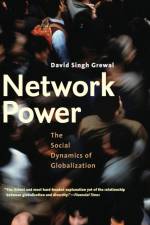
For all the attention globalization has received in recent years, little consensus has emerged concerning how best to understand it. For some, it is the happy product of free and rational choices; for others, it is the unfortunate outcome of impersonal forces beyond our control. It is in turn celebrated for the opportunities it affords and criticized for the inequalities in wealth and power it generates. David Singh Grewal’s remarkable and ambitious book draws on several centuries of political and social thought to show how globalization is best understood in terms of a power inherent in social relations, which he calls network power. Using this framework, he demonstrates how our standards of social coordination both gain in value the more they are used and undermine the viability of alternative forms of cooperation. A wide range of examples are discussed, from the spread of English and the gold standard to the success of Microsoft and the operation of the World Trade Organization, to illustrate how global standards arise and falter. The idea of network power supplies a coherent set of terms and concepts—applicable to individuals, businesses, and countries alike—through which we can describe the processes of globalization as both free and forced. The result is a sophisticated and novel account of how globalization, and politics, work.
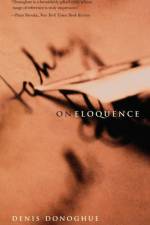
On Eloquence questions the common assumption that eloquence is merely a subset of rhetoric, a means toward a rhetorical end. Denis Donoghue, an eminent and prolific critic of the English language, holds that this assumption is erroneous. While rhetoric is the use of language to persuade people to do one thing rather than another, Donoghue maintains that eloquence is gratuitous, ideally autonomous, in speech and writing an upsurge of creative vitality for its own sake. He offers many instances of eloquence in words, and suggests the forms our appreciation of them should take.Donoghue argues persuasively that eloquence matters, that we should indeed care about it. Because we should care about any instances of freedom, independence, creative force, sprezzatura, he says, especially when we liveperhaps this is increasingly the casein a culture of the same, featuring official attitudes, stereotypes of the officially enforced values, sedated language, a politics of pacification. A noteworthy addition to Donoghues long-term project to reclaim a disinterested appreciation of literature as literature, this volume is a wise and pleasurable meditation on eloquence, its unique ability to move or give pleasure, and its intrinsic value.
Arthritis is a major cause of joint pain, but there are myriad others. This is the first book to provide everyday readers with a comprehensive guide to musculoskeletal disease and pain, from degenerative arthritis in the elderly to common sports injuries in young athletes.Dr. Joseph A. Abboud and Dr. Soo Kim Abboud, offer clear, medically based information on the most common diseases to affect the musculoskeletal system. They explain each major joint in detail and draw on their extensive experience with patients to offer sound advice on treatment and prevention options. They also discuss the pros and cons of alternative medicine techniques, and they assess which of the newest technologies really work. With one hundred illustrations, specific instructions for beneficial exercises, and a helpful glossary, this manual is just what the doctor ordered for weekend warriors and anyone else who is contending with joint pain.A separate chapter devoted to each major joint:BackHipKneeFoot and ankleShoulderElbowHand and wrist
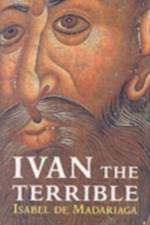
Ivan IV, the Terrible (15331584), is one of the key figures in Russian history, yet he has remained among the most neglected. Notorious for pioneering a policy of unrestrained terrorand for killing his own sonhe has been credited with establishing autocracy in Russia. This is the first attempt to write a biography of Ivan from birth to death, to study his policies, his marriages, his atrocities, and his disordered personality, and to link them as a coherent whole.Isabel de Madariaga situates Ivan within the background of Russian political developments in the sixteenth century. And, with revealing comparisons with English, Spanish, and other European courts, she sets him within the international context of his time. The biography includes a new account of the role of astrology and magic at Ivans court and provides fresh insights into his foreign policy. Facing up to problems of authenticity (much of Ivans archive was destroyed by fire in 1626) and controversies which have paralyzed western scholarship, de Madariaga seeks to present Russia as viewed from the Kremlin rather than from abroad and to comprehend the full tragedy of Ivans reign.
Abonner på vårt nyhetsbrev og få rabatter og inspirasjon til din neste leseopplevelse.
Ved å abonnere godtar du vår personvernerklæring.