




Gjør som tusenvis av andre bokelskere
Abonner på vårt nyhetsbrev og få rabatter og inspirasjon til din neste leseopplevelse.
Ved å abonnere godtar du vår personvernerklæring.Du kan når som helst melde deg av våre nyhetsbrev.

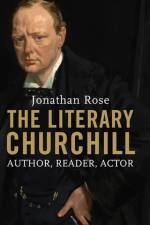
This strikingly original book introduces a Winston Churchill we have not known before. Award-winning author Jonathan Rose explores in tandem Churchill's careers as statesman and author, revealing the profound influence of literature and theater on Churchill's personal, carefully composed grand story and on the decisions he made throughout his political life. A Rose provides in this expansive literary biography an analysis of Churchill's writings and their reception (he won the Nobel Prize for Literature in 1953 and was a best-selling author), and a chronicle of his dealings with publishers, editors, literary agents, and censors. The book also identifies an array of authors who shaped Churchill's own writings and politics: George Bernard Shaw, H. G. Wells, Margaret Mitchell, George Orwell, Oscar Wilde, and many more. Rose investigates the effect of Churchill's passion for theater on his approach to reportage, memoirs, and historical works. Perhaps most remarkably, Rose reveals the unmistakable influence of Churchill's reading on every important episode of his public life, including his championship of social reform, plans for the Gallipoli invasion, command during the Blitz, crusade for Zionism, and efforts to prevent a nuclear arms race. In a fascinating conclusion, Rose traces the significance of Churchill's writings to later generations of politicians, among them President John F. Kennedy as he struggled to extricate the U.S. from the Cuban Missile Crisis.
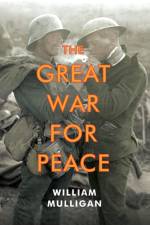
"e;The war to end all wars"e; rings out a bitter mockery of the First World War, often viewed as the seminal catastrophe of the twentieth century, the crucible from which Soviet, Fascist, and Nazi dictatorships emerged. Today's conventional wisdom is that the Great War attuned the world to large-scale slaughter, that post-war efforts directed by the Treaty at Versailles were botched, that unbridled new nationalisms made the Second World War inevitable. This provocative book refutes such interpretations, arguing instead that the first two decades of the twentieth century-and the First World War in particular-played an essential part in the construction of a peaceful new order on a global scale. Historian William Mulligan takes an entirely fresh look at the aspirations of statesmen, soldiers, intellectuals, and civilians who participated in the war and at the new ideas about peace that were forged. While the hope for ultimate peace may have legitimized and even intensified the violence of the war, it also broadened conventional ideas about international politics and led to the emergence of such institutions as the League of Nations and the International Labour Organization. The experience of the First World War reinforced humanitarian concerns in political life and focused attention on building a better and more peaceful world order, Mulligan shows. Such issues resonate still in the political and diplomatic debates of today.
Austerity is at the center of political debates today. Its defenders praise it as a panacea that will prepare the ground for future growth and stability. Critics insist it will precipitate a vicious cycle of economic decline, possibly leading to political collapse. But the notion that abstinence from consumption brings benefits to states, societies, or individuals is hardly new. This book puts the debates of our own day in perspective by exploring the long history of austerity—a popular idea that lives on despite a track record of dismal failure. Florian Schui shows that arguments in favor of austerity were—and are today—mainly based on moral and political considerations, rather than on economic analysis. Unexpectedly, it is the critics of austerity who have framed their arguments in the language of economics. Schui finds that austerity has failed intellectually and in economic terms every time it has been attempted. He examines thinkers who have influenced our ideas about abstinence from Aristotle through such modern economic thinkers as Smith, Marx, Veblen, Weber, Hayek, and Keynes, as well as the motives behind specific twentieth-century austerity efforts. The persistence of the concept cannot be explained from an economic perspective, Schui concludes, but only from the persuasive appeal of the moral and political ideas linked to it.
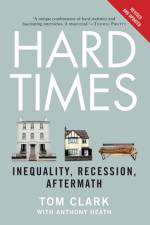
2008 was a watershed year for global finance. The banking system was eventually pulled back from the brink, but the world was saddled with the worst slump since the 1930s Depression, and millions were left unemployed. While numerous books have addressed the financial crisis, very little has been written about its social consequences. Journalist Tom Clark draws on the research of a transatlantic team led by Professors Anthony Heath and Robert D. Putnam to determine the great recession's toll on individuals, families, and community bonds in the United States and the United Kingdom. The ubiquitous metaphor of the crisis has been an all-encompassing "e;financial storm,"e; but Clark argues that the data tracks the narrow path of a tornado-destroying some neighborhoods while leaving others largely untouched. In our vastly unequal societies, disproportionate suffering is being meted out to the poor-and the book's new analysis suggests that the scars left by unemployment and poverty will linger long after the economy recovers. Politicians on both sides of the Atlantic have shown more interest in exploiting the divisions of opinion ushered in by the slump than in grappling with these problems. But this hard-hitting analysis provides a wake-up call that all should heed.
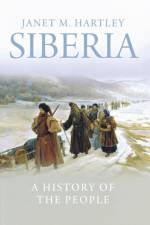
Larger in area than the United States and Europe combined, Siberia is a land of extremes, not merely in terms of climate and expanse, but in the many kinds of lives its population has led over the course of four centuries. Janet M. Hartley explores the history of this vast Russian wasteland-whose very name is a common euphemism for remote bleakness and exile-through the lives of the people who settled there, either willingly, desperately, or as prisoners condemned to exile or forced labor in mines or the gulag. From the Cossack adventurers' first incursions into "e;Sibir"e; in the late sixteenth century to the exiled criminals and political prisoners of the Soviet era to present-day impoverished Russians and entrepreneurs seeking opportunities in the oil-rich north, Hartley's comprehensive history offers a vibrant, profoundly human account of Siberia's development. One of the world's most inhospitable regions is humanized through personal narratives and colorful case studies as ordinary-and extraordinary-everyday life in "e;the nothingness"e; is presented in rich and fascinating detail.
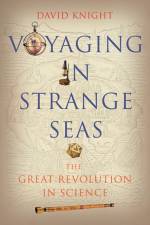
In 1492 Columbus set out across the Atlantic; in 1776 American colonists declared their independence. Between these two events old authorities collapsed-Luther's Reformation divided churches, and various discoveries revealed the ignorance of the ancient Greeks and Romans. A new, empirical worldview had arrived, focusing now on observation, experiment, and mathematical reasoning. A This engaging book takes us along on the great voyage of discovery that ushered in the modern age. David Knight, a distinguished historian of science, locates the Scientific Revolution in the great era of global oceanic voyages, which became both a spur to and a metaphor for scientific discovery. He introduces the well-known heroes of the story (Galileo, Newton, Linnaeus) as well as lesser-recognized officers of scientific societies, printers and booksellers who turned scientific discovery into public knowledge, and editors who invented the scientific journal. Knight looks at a striking array of topics, from better maps to more accurate clocks, from a boom in printing to medical advancements. He portrays science and religion as engaged with each other rather than in constant conflict; in fact, science was often perceived as a way to uncover and celebrate God's mysteries and laws. Populated with interesting characters, enriched with fascinating anecdotes, and built upon an acute understanding of the era, this book tells a story as thrilling as any in human history.
Rarely does an American or European child grow up without an introduction to Hans Christian Andersen’s "e;The Ugly Duckling,"e; "e;The Princess and the Pea,"e; or "e;Thumbelina."e; Andersen began publishing his fairy tales in 1835, and they brought him almost immediate acclaim among Danish and German readers, followed quickly by the French, Swedes, Swiss, Norwegians, British, and Americans. Ultimately he wrote more than 150 tales. And yet, Paul Binding contends in this incisive book, Andersen cannot be confined to the category of writings for children. His work stands at the very heart of mainstream European literature. The author considers the entire scope of Andersen’s prose, from his juvenilia to his very last story. He shows that Andersen’s numerous novels, travelogues, autobiographies, and even his fairy tales (notably addressed not to children but to adults) earned a vast audience because they distilled the satisfactions, tensions, hopes, and fears of Europeans as their continent emerged from the Napoleonic Wars. The book sheds new light on Andersen as an intellectual, his rise to international stardom, and his connections with other eminent European writers. It also pays tribute to Andersen’s enlightened values—values that ensure the continuing appeal of his works.
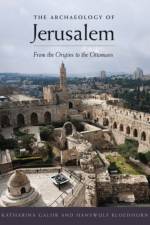
In this sweeping and lavishly illustrated history, Katharina Galor and Hanswulf Bloedhorn survey nearly four thousand years of human settlement and building activity in Jerusalem, from prehistoric times through the Ottoman period. The study is structured chronologically, exploring the city’s material culture, including fortifications and water systems as well as key sacred, civic, and domestic architecture. Distinctive finds such as paintings, mosaics, pottery, and coins highlight each period. Their book provides a unique perspective on the emergence and development of Judaism, Christianity, and Islam, and the relationship among the three religions and their cultures into the modern period.
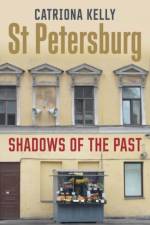
Fragile, gritty, and vital to an extraordinary degree, St. Petersburg is one of the world's most alluring cities-a place in which the past is at once ubiquitous and inescapably controversial. Yet outsiders are far more familiar with the city's pre-1917 and Second World War history than with its recent past. In this beautifully illustrated and highly original book, Catriona Kelly shows how creative engagement with the past has always been fundamental to St. Petersburg's residents. Weaving together oral history, personal observation, literary and artistic texts, journalism, and archival materials, she traces the at times paradoxical feelings of anxiety and pride that were inspired by living in the city, both when it was socialist Leningrad, and now. Ranging from rubbish dumps to promenades, from the city's glamorous center to its grimy outskirts, this ambitious book offers a compelling and always unexpected panorama of an extraordinary and elusive place.
This book was inspired by the author's discovery of an extraordinary cache of letters from a soldier who was killed on the Western Front during the First World War. The soldier was his grandfather, and the letters had been tucked away, unread and unmentioned for many decades. Intrigued by the heartbreak and history of these family letters, Fletcher sought out the correspondence of other British soldiers who had volunteered for the fight against Germany. This resulting volume offers a vivid account of the physical and emotional experiences of seventeen British soldiers whose letters survive. Drawn from different regiments, social backgrounds, and areas of England and Scotland, they include twelve officers and five ordinary "e;Tommies."e; The book explores the training, journey to France, fear, shellshock, and life in the trenches as well as the leisure, love, and home leave the soldiers dreamed of. Fletcher discusses the psychological responses of 17- and 18-year-old men facing appalling realities and considers the particular pressures on those who survived their fallen comrades. While acknowledging the horror and futility the soldiers of the Great War experienced, the author shows another side to the story, focusing new attention on the loyal comradeship, robust humor, and strong morale that uplifted the men at the Front and created a powerful bond among them.
One of Britain’s best-known and most loved poets, Wilfred Owen (1893–1918) was killed at age 25 on one of the last days of the First World War, having acted heroically as soldier and officer despite his famous misgivings about the war's rationale and conduct. He left behind a body of poetry that sensitively captured the pity, rage, valor, and futility of the conflict.In this new biography Guy Cuthbertson provides a fresh account of Owen's life and formative influences: the lower-middle-class childhood that he tried to escape; the places he lived in, from Birkenhead to Bordeaux; his class anxieties and his religious doubts; his sexuality and friendships; his close relationship with his mother and his childlike personality. Cuthbertson chronicles a great poet's growth to poetic maturity, illuminates the social strata of the extraordinary Edwardian era, and adds rich context to how Owen's enduring verse can be understood.
In this fascinating book Monica Rico explores the myth of the American West in the nineteenth century as a place for men to assert their masculinity by "e;roughing it"e; in the wilderness and reveals how this myth played out in a transatlantic context. Rico uncovers the networks of elite men-British and American-who circulated between the West and the metropoles of London and New York.Each chapter tells the story of an individual who, by traveling these transatlantic paths, sought to resolve anxieties about class, gender, and empire in an era of profound economic and social transformation. All of the men Rico discusses-from the well known, including Theodore Roosevelt and Buffalo Bill Cody, to the comparatively obscure, such as English cattle rancher Moreton Frewen-envisioned the American West as a global space into which redemptive narratives of heroic upper-class masculinity could be written.
Abonner på vårt nyhetsbrev og få rabatter og inspirasjon til din neste leseopplevelse.
Ved å abonnere godtar du vår personvernerklæring.