








Gjør som tusenvis av andre bokelskere
Abonner på vårt nyhetsbrev og få rabatter og inspirasjon til din neste leseopplevelse.
Ved å abonnere godtar du vår personvernerklæring.Du kan når som helst melde deg av våre nyhetsbrev.

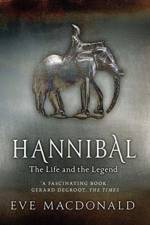
Hannibal lived a life of incredible feats of daring and survival, massive military engagements, and ultimate defeat. A citizen of Carthage and military commander in Punic Spain, he famously marched his war elephants and huge army over the Alps into Rome's own heartland to fight the Second Punic War. Yet the Romans were the ultimate victors. They eventually captured and destroyed Carthage, and thus it was they who wrote the legend of Hannibal: a brilliant and worthy enemy whose defeat represented military glory for Rome. In this groundbreaking biography Eve MacDonald expands the memory of Hannibal beyond his military feats and tactics. She considers him in the wider context of the society and vibrant culture of Carthage which shaped him and his family, employing archaeological findings and documentary sources not only from Rome but also the wider Mediterranean world of the third century B.C. MacDonald also analyzes Hannibal's legend over the millennia, exploring how statuary, Jacobean tragedy, opera, nineteenth-century fiction, and other depictions illuminate the character of one of the most fascinating military personalities in all of history.
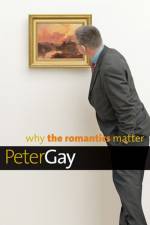
With his usual wit and elan, esteemed historian Peter Gay enters the contentious, long-standing debates over the romantic period. Here, in this concise and inviting volume, he reformulates the definition of romanticism and provides a fresh account of the immense achievements of romantic writers and artists in all media. Gay's scope is wide, his insights sharp. He takes on the recurring questions about how to interpret romantic figures and their works. Who qualifies to be a romantic? What ties together romantic figures who practice in different countries, employ different media, even live in different centuries? How is modernism indebted to romanticism, if at all? Guiding readers through the history of the romantic movement across Britain, France, Germany, and Switzerland, Gay argues that the best way to conceptualize romanticism is to accept its complicated nature and acknowledge that there is no "e;single basket"e; to contain it. Gay conceives of romantics in "e;families,"e; whose individual members share fundamental values but retain unique qualities. He concludes by demonstrating that romanticism extends well into the twentieth century, where its deep and lasting impact may be measured in the work of writers such as T. S. Eliot and Virginia Woolf.
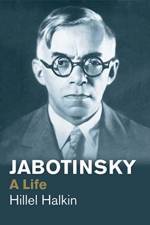
Vladimir Jabotinsky (1880-1940) was a man of huge paradoxes and contradictions and has been the most misunderstood of all Zionist politicians--a first-rate novelist, a celebrated Russian journalist, and the founder of the branch of Zionism now headed by Benjamin Netanyahu. This biography, the first in English in nearly two decades, undertakes to answer central questions about Jabotinsky as a writer, a political thinker, and a leader. Hillel Halkin sets aside the stereotypes to which Jabotinsky has been reduced by his would-be followers and detractors alike. Halkin explains the importance of Odessa, Jabotinsky's native city, in molding his character and outlook; discusses his novels and short stories, showing the sometimes hidden connections between them and Jabotinsky's political thought, and studies a political career that ended in tragic failure. Halkin also addresses Jabotinsky's position, unique among the great figures of Zionist history, as both a territorial maximalist and a principled believer in democracy. The author inquires why Jabotinsky was often accused of fascist tendencies though he abhorred authoritarian and totalitarian politics, and investigates the many opposed aspects of his personality and conduct while asking whether or not they had an ultimate coherence. Few figures in twentieth-century Jewish life were quite so admired and loathed, and Halkin's splendid, subtle book explores him with empathy and lucidity.
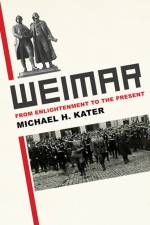
Historian Michael H. Kater chronicles the rise and fall of one of Germany's most iconic cities in this fascinating and surprisingly provocative history of Weimar. Weimar was a center of the arts during the Enlightenment and hence the cradle of German culture in modern times. Goethe and Schiller made their reputations here, as did Franz Liszt and the young Richard Strauss. In the early twentieth century, the Bauhaus school was founded in Weimar. But from the 1880s on, the city also nurtured a powerful right-wing reactionary movement, and fifty years later, a repressive National Socialist regime dimmed Weimar's creative lights, transforming the onetime artists' utopia into the capital of its first Nazified province and constructing the Buchenwald death camp on its doorstep. Kater's richly detailed volume offers the first complete history of Weimar in any language, from its meteoric eighteenth-century rise up from obscurity through its glory days of unbridled creative expression to its dark descent back into artistic insignificance under Nazi rule and, later, Soviet occupation and beyond.
The number of women murdered and mutilated by Jack the Ripper is impossible to know, although most researchers now agree on five individuals. These five canonical cases have been examined at length in Ripper literature, but other contemporary murders and attacks bearing strong resemblance to the gruesome Ripper slayings have received scant attention. These unsolved cases are the focus of this intriguing book. The volume devotes separate chapters to a dozen female victims who were attacked during the years of Jack the Ripper’s murder spree. Their terrible stories—a few survived to bear witness, but most died of their wounds—illuminate key aspects of the Ripper case and the period: the gangs of London’s Whitechapel district, Victorian prostitutes, the public panic inspired by the crimes and fueled by journalists, medical practices of the day, police procedures and competency, and the probable existence of other serial killers. The book also considers crimes initially attributed to Jack the Ripper in other parts of Britain and the world, notably New York, Jamaica, and Nicaragua. In a final chapter, the drive to find the identity of the Ripper is examined, looking at contemporary and later suspects as well as several important theories, revealing the lengths to which some have gone to claim success in identifying Jack the Ripper.
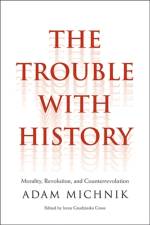
Renowned Eastern European author Adam Michnik was jailed for more than six years by the communist regime in Poland for his dissident activities. He was an outspoken voice for democracy in the world divided by the Iron Curtain and has remained so to the present day. In this thoughtful and provocative work, the man the Financial Times named "e;one of the 20 most influential journalists in the world"e; strips fundamentalism of its religious component and examines it purely as a secular political phenomenon. Comparing modern-day Poland with postrevolutionary France, Michnik offers a stinging critique of the ideological "e;virus of fundamentalism"e; often shared by emerging democracies: the belief that, by using techniques of intimidating public opinion, a state governed by "e;sinless individuals"e; armed with a doctrine of the only correct means of organizing human relations can build a world without sin. Michnik employs deep historical analysis and keen political observation in his insightful five-point philosophical meditation on morality in public life, ingeniously expounding on history, religion, moral thought, and the present political climate in his native country and throughout Europe.
Walpurgis Night, by acclaimed Russian writer Venedikt Erofeev, is considered a classic in the playwright’s homeland. Erofeev’s dark and funny five-act satire of Soviet repression has been called the comic high-water mark of the Brezhnev era. Walpurgis Night dramatizes the outrageous trials of Lev Isakovich Gurevich, an alcoholic half-Jewish dissident poet confined by the state to a hospital for the insane. In “Ward 3”—a microcosm of repressive Soviet society—Gurevich deploys his brilliant wit and ingenuity to bedevil his jailers, defend his fellow inmates, protest his incarceration, and generally create mayhem, which ultimately leads to a tragedy of Shakespearean proportions.
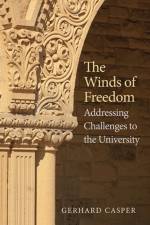
As president of Stanford University, Gerhard Casper established a reputation as a tireless, forward-thinking advocate for higher education. His speeches, renowned for their intelligence, humanity, wit, and courage, confront head-on the most pressing concerns facing our nation’s universities. From affirmative action and multiculturalism to free speech, politics, public service, and government regulation, Casper addresses the controversial issues currently debated on college campuses and in our highest courts. With insight and candor, each chapter explores the context of these challenges to higher education and provides Casper’s stirring orations delivered in response. In addressing these vital concerns, Casper outlines the freedoms that a university must encourage and defend in the ongoing pursuit of knowledge.
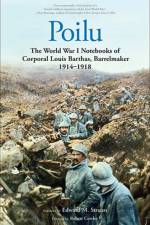
Along with millions of other Frenchmen, Louis Barthas, a thirty-five-year-old barrelmaker from a small wine-growing town, was conscripted to fight the Germans in the opening days of World War I. Corporal Barthas spent the next four years in near-ceaseless combat, wherever the French army fought its fiercest battles: Artois, Flanders, Champagne, Verdun, the Somme, the Argonne. Barthas’ riveting wartime narrative, first published in France in 1978, presents the vivid, immediate experiences of a frontline soldier. This excellent new translation brings Barthas’ wartime writings to English-language readers for the first time. His notebooks and letters represent the quintessential memoir of a “poilu,” or “hairy one,” as the untidy, unshaven French infantryman of the fighting trenches was familiarly known. Upon Barthas’ return home in 1919, he painstakingly transcribed his day-to-day writings into nineteen notebooks, preserving not only his own story but also the larger story of the unnumbered soldiers who never returned. Recounting bloody battles and endless exhaustion, the deaths of comrades, the infuriating incompetence and tyranny of his own officers, Barthas also describes spontaneous acts of camaraderie between French poilus and their German foes in trenches just a few paces apart. An eloquent witness and keen observer, Barthas takes his readers directly into the heart of the Great War.
Shakespeare's plays abound with kings and leaders who crave a public stage and seize every opportunity to make their lives a performance: Antony, Cleopatra, Richard III, Othello, and many others. Such self-dramatizing characters appear in the work of other playwrights of the era as well, Marlowe's Edward II and Tamburlaine among them. But Elizabethan playwrights were not alone in realizing that a sense of theater was essential to the exercise of power. Real rulers knew it, too, and none better than Queen Elizabeth. In this fascinating study of political stagecraft in the Elizabethan era, Garry Wills explores a period of vast cultural and political change during which the power of make-believe to make power real was not just a theory but an essential truth. Wills examines English culture as Catholic Christianity's rituals were being overturned and a Protestant queen took the throne. New iconographies of power were necessary for the new Renaissance liturgy to displace the medieval church-state. The author illuminates the extensive imaginative constructions that went into Elizabeth's reign and the explosion of great Tudor and Stuart drama that provided the imaginative power to support her long and successful rule.
In Can Xue’s extraordinary book, we encounter a full assemblage of husbands, wives, and lovers. Entwined in complicated, often tortuous relationships, these characters step into each other’s fantasies, carrying on conversations that are “forever guessing games.” Their journeys reveal the deepest realms of human desire, figured in Can Xue’s vision of snakes and wasps, crows, cats, mice, earthquakes, and landslides. In dive bars and twisted city streets, on deserts and snowcapped mountains, the author creates an extreme world where every character “is driving death away with a singular performance.” Who is the last lover? The novel is bursting with vividly drawn characters. Among them are Joe, sales manager of a clothing company in an unnamed Western country, and his wife, Maria, who conducts mystical experiments with the household’s cats and rosebushes. Joe’s customer Reagan is having an affair with Ida, a worker at his rubber plantation, while clothing-store owner Vincent runs away from his wife in pursuit of a woman in black who disappears over and over again. By the novel’s end, we have accompanied these characters on a long march, a naive, helpless, and forsaken search for love, because there are just some things that can’t be stopped—or helped.
For about three thousand years comedy has applied a welcome humanist perspective to the world’s religious beliefs and practices. From the ancient Greek comedies of Aristophanes, the famous poem by Lucretius, and dialogues of Cicero to early modern and Enlightenment essays and philosophical texts, together with the inherent skepticism about life after death in tragicomedies by Plautus, Shakespeare, Molière, and nineteenth-century novels by such as Dickens and Hugo, the literary critic and historian Alexander Welsh analyzes the prevalence of openness of mind and relieving good humor in Western thought. The Humanist Comedy concludes with close examination of a postmodern novel by the Nobel Prize winner José Saramago.
In this scholarly yet intensely personal history, author Edina Becirevic explores the widespread ethnic cleansing that occurred in Bosnia and Herzegovina from 1992 through 1995, war crimes and crimes against humanity committed by Serbs against Bosnian Muslims that fully meet the criteria for genocide established after World War II by the Genocide Convention of 1948. An in-depth study of the devastating and dehumanizing effects of genocide on individual destinies and the mechanisms of its denial in Bosnia and Herzegovina, Becirevic's essential history contextualizes the East Bosnian program of atrocities with respect to broader scholarly debates about the nature of genocide.
During the twentieth century, 80 percent of all famine victims worldwide died in China and the Soviet Union. In this rigorous and thoughtful study, Felix Wemheuer analyzes the historical and political roots of these socialist-era famines, in which overambitious industrial programs endorsed by Stalin and Mao Zedong created greater disasters than those suffered under prerevolutionary regimes. Focusing on famine as a political tool, Wemheuer systematically exposes how conflicts about food among peasants, urban populations, and the socialist state resulted in the starvation death of millions. A major contribution to Chinese and Soviet history, this provocative analysis examines the long-term effects of the great famines on the relationship between the state and its citizens and argues that the lessons governments learned from the catastrophes enabled them to overcome famine in their later decades of rule.
In this bold and timely work, law professor Jeffrey Shulman argues that the United States Constitution does not protect a fundamental right to parent. Based on a rigorous reconsideration of the historical record, Shulman challenges the notion, held by academics and the general public alike, that parental rights have a long-standing legal pedigree. What is deeply rooted in our legal tradition and social conscience, Shulman demonstrates, is the idea that the state entrusts parents with custody of the child, and it does so only as long as parents meet their fiduciary duty to serve the developmental needs of the child. Shulman's illuminating account of American legal history is of more than academic interest. If once again we treat parenting as a delegated responsibility-as a sacred trust, not a sacred right-we will not all reach the same legal prescriptions, but we might be more willing to consider how time-honored principles of family law can effectively accommodate the evolving interests of parent, child, and state.
In this lively and provocative book, Michael Coogan guides readers into the ancient past to examine the iconic Ten Commandments, also known as the Decalogue. How, among all the laws reportedly given on Mount Sinai, did the Ten Commandments become the Ten Commandments? When did that happen? There are several versions of the Decalogue in the Old Testament, so how have different groups determined which is the most authoritative? Why were different versions created? Coogan discusses the meanings the Ten Commandments had for audiences in biblical times and observes that the form of the ten proscriptions and prohibitions was not fixed—as one would expect since they were purported to have come directly from God—nor were the Commandments always strictly observed. In later times as well, Jews and especially Christians ignored and even rejected some of the prohibitions, although the New Testament clearly acknowledges the special status of the Ten Commandments. Today it is plain that some of the values enshrined in the Decalogue are no longer defensible, such as the ownership of slaves and the labeling of women as men’s property. Yet in line with biblical precedents, the author concludes that while a literal observance of the Ten Commandments is misguided, some of their underlying ideals remain valid in a modern context.
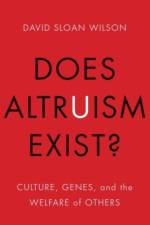
David Sloan Wilson, one of the world's leading evolutionists, addresses a question that has puzzled philosophers, psychologists, and evolutionary biologists for centuries: Does altruism exist naturally among the Earth's creatures? The key to understanding the existence of altruism, Wilson argues, is by understanding the role it plays in the social organization of groups. Groups that function like organisms indubitably exist, and organisms evolved from groups. Evolutionists largely agree on how functionally organized groups evolve, ending decades of controversy, but the resolution casts altruism in a new light: altruism exists but shouldn't necessarily occupy center stage in our understanding of social behavior. After laying a general theoretical foundation, Wilson surveys altruism and group-level functional organization in our own species-in religion, in economics, and in the rest of everyday life. He shows that altruism is not categorically good and can have pathological consequences. Finally, he shows how a social theory that goes beyond altruism by focusing on group function can help to improve the human condition in a practical sense. Does Altruism Exist? puts old controversies to rest and will become the center of debate for decades to come.
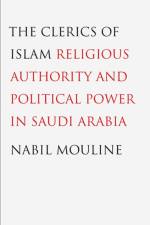
Followers of Muhammad b. 'Abd al-Wahhab, often considered to be Islam's Martin Luther, shaped the political and religious identity of the Saudi state while also enabling the significant worldwide expansion of Salafist Islam. Studies of the movement he inspired, however, have often been limited by scholars' insufficient access to key sources within Saudi Arabia. Nabil Mouline was granted rare interviews and admittance to important Saudi archives in preparation for this groundbreaking book, the first in-depth study of the Wahhabi religious movement from its founding to the modern day. Gleaning information from both written and oral sources and employing a multidisciplinary approach that combines history, sociology, and Islamic studies, Mouline presents a new reading of this movement that transcends the usual resort to polemics.
In 1845, Atlanta was the last stop at the end of a railroad line, the home of just twelve families and three general stores. By the 1860s, it was a thriving Confederate city, second only to Richmond in importance. A Changing Wind is the first history to explore the experiences of Atlanta's civilians during the young city's rapid growth, the devastation of the Civil War, and the Reconstruction era when Atlanta emerged as a "e;New South"e; city. A Changing Wind vividly brings to life the stories of Atlanta's diverse citizens-white and black, free and enslaved, well-to-do and everyday people. A rich and compelling account of residents' changing loyalties to the Union and the Confederacy, the book highlights the unequal economic and social impacts of the war, General Sherman's siege, and the stunning rebirth of the city in postwar years. The final chapter of the book focuses on Atlanta's historical memory of the Civil War and how racial divisions have led to separate commemorations of the war's meaning.
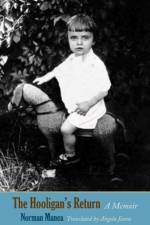
At the center of The Hooligan's Return is the author himself, always an outcast, on a bleak lifelong journey through Nazism and communism to exile in America. But while Norman Manea's book is in many ways a memoir, it is also a deeply imaginative work, traversing time and place, life and literature, dream and reality, past and present. Autobiographical events merge with historic elements, always connecting the individual with the collective destiny. Manea speaks of the bloodiest time of the twentieth century and of the emergence afterward of a global, competitive, and sometimes cynical modern society. Both a harrowing memoir and an ambitious epic project, The Hooligan's Return achieves a subtle internal harmony as anxiety evolves into a delicate irony and a burlesque fantasy. Beautifully written and brilliantly conceived, this is the work of a writer with an acute understanding of the vast human potential for both evil and kindness, obedience and integrity.
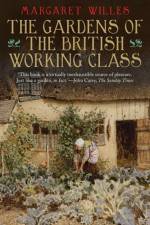
This magnificently illustrated people’s history celebrates the extraordinary feats of cultivation by the working class in Britain, even if the land they toiled, planted, and loved was not their own. Spanning more than four centuries, from the earliest records of the laboring classes in the country to today, Margaret Willes's research unearths lush gardens nurtured outside rough workers’ cottages and horticultural miracles performed in blackened yards, and reveals the ingenious, sometimes devious, methods employed by determined, obsessive, and eccentric workers to make their drab surroundings bloom. She also explores the stories of the great philanthropic industrialists who provided gardens for their workforces, the fashionable rich stealing the gardening ideas of the poor, alehouse syndicates and fierce rivalries between vegetable growers, flower-fanciers cultivating exotic blooms on their city windowsills, and the rich lore handed down from gardener to gardener through generations. This is a sumptuous record of the myriad ways in which the popular cultivation of plants, vegetables, and flowers has played—and continues to play—an integral role in everyday British life.
How to live in a supposedly faithless world threatened by religious fundamentalism? Terry Eagleton, formidable thinker and renowned cultural critic, investigates in this thought-provoking book the contradictions, difficulties, and significance of the modern search for a replacement for God. Engaging with a phenomenally wide range of ideas, issues, and thinkers from the Enlightenment to today, Eagleton discusses the state of religion before and after 9/11, the ironies surrounding Western capitalism’s part in spawning not only secularism but also fundamentalism, and the unsatisfactory surrogates for the Almighty invented in the post-Enlightenment era. The author reflects on the unique capacities of religion, the possibilities of culture and art as modern paths to salvation, the so-called war on terror’s impact on atheism, and a host of other topics of concern to those who envision a future in which just and compassionate communities thrive. Lucid, stylish, and entertaining in his usual manner, Eagleton presents a brilliant survey of modern thought that also serves as a timely, urgently needed intervention into our perilous political present.
Abonner på vårt nyhetsbrev og få rabatter og inspirasjon til din neste leseopplevelse.
Ved å abonnere godtar du vår personvernerklæring.