

Gjør som tusenvis av andre bokelskere
Abonner på vårt nyhetsbrev og få rabatter og inspirasjon til din neste leseopplevelse.
Ved å abonnere godtar du vår personvernerklæring.Du kan når som helst melde deg av våre nyhetsbrev.

What do Wagner's operas really mean? How much room do they leave for different perspectives? In this study, focusing on Wagner's music, dramas and prose writings, James Treadwell lays open the rich possibilities for interpretation offered across the full range of Wagner's art.
This anthology of writings in French by 20th-century women comprises poems, short stories, essays, memoirs and novels (some complete and others excerpts). It considers relationships and how violence breaks them apart, and how identity is influenced by race, language, nationality and sexuality.
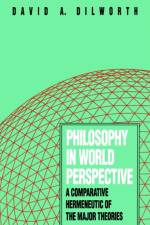
This places the major texts of Western and Oriental philosophy and religion, both ancient and modern, onto one comparative framework. The study reveals affinities between thinkers who lived centuries and continents apart and produces insights by putting philosophical texts into a single purview.
When and why did large-scale exhibitions of Old Master paintings begin, and how have they evolved through the centuries? In this work, art historian Francis Haskell explores the beginning, history and significance of these international art exhibitions.
Dr. Bernard examines recent research findings on the present nature of the marriage commitment and predicts a less restrictive role for women in future marriages.
Discusses the major poems of the great Roman poet, Horace, discusses the themes of his work, and looks at the influence of the world in which he lived.
This anthology gathers 21 contemporary critical writings on the prose and poetry of Anglo-Saxon England. The contributors focus on texts most commonly read in introductory Old English courses while also engaging with larger issues of Anglo-Saxon history, culture and scholarship.
Does an emergent democracy have an obligation to prosecute its former dictators for crimes against humanity - for what Ardent and Kant called "radical evil"? In this study, an analysis is provided of developments in Argentina during the 1980s, when a military dictatorship gave way to democracy.
Abonner på vårt nyhetsbrev og få rabatter og inspirasjon til din neste leseopplevelse.
Ved å abonnere godtar du vår personvernerklæring.