










Gjør som tusenvis av andre bokelskere
Abonner på vårt nyhetsbrev og få rabatter og inspirasjon til din neste leseopplevelse.
Ved å abonnere godtar du vår personvernerklæring.Du kan når som helst melde deg av våre nyhetsbrev.

Published on the occasion of the exhibition of the same name held at the Cleveland Museum of Art, 18th November 2018-21st January 2019.
This focused volume presents a deep exploration and new interpretations of the winter paintings of Pieter Bruegel the Elder (ca. 1525-1569). By applying new methodological approaches and interdisciplinary research to these masterpieces of Flemish Renaissance art, including Winter Landscape with Skaters and Bird Trap (1565) and The Census at Bethlehem (1566), both at the Royal Museums of Fine Arts of Belgium, the book offers an enhanced understanding of the painter's relationship to his time and the extent to which his winter landscapes were meant to reflect real-life situations. After tracing how these paintings have been understood over time, the essays propose new insights into such issues as whether Bruegel depicts the plight of the local populace during winter and whether The Census at Bethlehem challenges or reaffirms central power structures. Abundantly illustrated, Bruegel's Winter Scenes is both a thorough examination and a celebration of these widely admired images. Distributed for Mercatorfonds.
"Published by the Clark Art Institute on the occasion of the exhibition Jennifer Steinkamp: Blind Eye, presented at the Clark Art Institute from June 30 to October 8, 2018."
Anne Teresa De Keersmaeker (b. 1960) founded her dance company, Rosas, in 1983. Her work is grounded on a rigorous exploration of the relationship between dance and music, and over the years she has engaged the musical structures and scores of different periods and genres, from early music to contemporary expressions of classical and popular music. Her choreographic practice draws from geometric principles, nature, and social structures to offer unique perspectives on the articulation of the body in space and time.The minimalism of De Keersmaeker's earliest pieces gave way over the years to ingenious constructions for large ensembles. Then in 2007, the choreography underwent a fundamental change with the emergence of a new kind of minimalism, a paring down to essential principles of sparseness; the spatial constraints of geometric patterns; an unwavering commitment to elementary gestures, notably walking, breathing, and speaking; and a close adherence to a score, musical or otherwise, for the choreographic writing.Photographers Anne Van Aerschot and Herman Sorgeloos were privileged witnesses to this process, and their images, gathered here for the first time, offer an exceptionally acute look at Rosas's work over the last decade. Distributed for Mercatorfonds
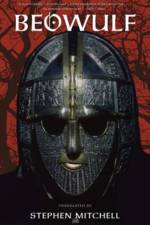
A widely celebrated translator's vivid, accessible, and elegantly concise rendering of an ancient English masterpiece
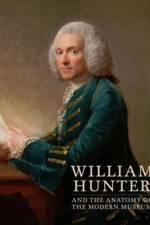
"This publication accompanies the exhibitions William Hunter and the Anatomy of the Modern Museum co-organized by The Hunterian Museum, Glasgow, on view 27 September 2018-6 January, 2019, and the Yale Center for British Art, New Haven, on view 14 February-20 May 2019."
As a pioneering printmaker, Rembrandt van Rijn (1606-1669) stood apart from his contemporaries thanks to his innovative approach to composition and his skillful rendering of space and light. He worked with the medium as a vehicle for artistic expression and experimentation, causing many to proclaim him the greatest etcher of all time. Moreover, the dissemination of the artist's prints outside of the Dutch Republic during his lifetime contributed greatly to establishing Rembrandt's reputation throughout Europe. This sumptuously illustrated volume draws on new scholarship on Rembrandt's etchings. Authors Jaco Rutgers and Timothy J. Standring examine the artist's prints from many angles, revealing how he intentionally varied the states of his etchings, printed them on exotic papers, and retouched prints by hand to create rarities for a clientele that valued unique impressions.
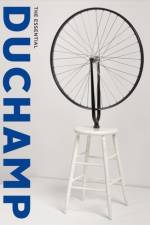
This richly illustrated publication explores the full career of the hugely influential and endlessly fascinating French-American artist Marcel Duchamp (1887-1968). A pioneer whose creative output was predicated on a fundamental questioning of what art is, Duchamp is well known despite remaining mysterious as an artist, owing to his elusive persona and the unconventional nature of his work. Focusing on the world-renowned Duchamp collection at the Philadelphia Museum of Art, The Essential Duchamp tells the artist's story through four key periods. The book begins with his early paintings and engagement with the avant-garde, then charts his abandonment of painting and invention of the readymade. This is followed by the creation of his alter ego Rrose Selavy and the optical experiments of the interwar years, and, finally, by the making of Etant donnes (1946-66), the project that occupied the artist in the final two decades of his life. Shorter accompanying texts include explanations of key terms Duchamp used for his innovative ideas-readymade, precision optics, pictorial nominalism, and infrathin-as well as interviews and statements by the artist about his own art and ideas.
The updated, fifth edition of the widely used introductory Spanish textbook designed specifically for health care professionals
"This catalogue is published in conjunction with the exhibition Agents of Faith: Votive Objects in Time and Place, held at the Bard Graduate Center Gallery from September 14, 2018 through January 6, 2019"--Colophon.
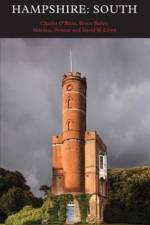
This volume, a companion to Hampshire: Winchester and the North, covers the county's southern half, from the woodland and heath of the New Forest to the cities along the Solent, and from remote Saxon churches to Modernist seaside villas. The original text has been fully revised to include new research and 130 specially commissioned color photographs. The guide explores major ecclesiastical monuments at Romsey, the Bishop of Winchester's palace at Bishops Waltham, and the remains of the great post-Dissolution houses at Beaulieu and Titchfield. At Southampton is one of England's best preserved medieval town walls, while at Portsmouth the structures of the 18th- and 19th-century Royal Navy dockyard are among the most important of their kind. Amid all this beauty are traces of conflict, from the Roman fort at Portchester, to the coastal castles of Henry VIII's rule, to the relics of the Normandy invasions of 1944.
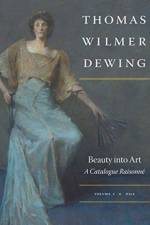
Best known for his interiors and landscapes featuring beautiful women in artful poses and subtly related color harmonies, Thomas Wilmer Dewing (1851-1938) lived and worked at the forefront of developments in modern American art. His paintings, which navigate a course between the bravura of John Singer Sargent and the attenuated aestheticism of James McNeill Whistler, convey a sensuous beauty that remains uniquely his and that represents an exceptional phase in American painting. Featuring a comprehensive biography and engaging, narrative commentaries, this elegant, 2-volume catalogue raisonné is an essential and much-needed reference. Included here are more than 550 works of art as well as previously unpublished photographs from the artist's own albums; each work is accompanied by a full provenance, exhibition histories, and literature--both published and archival.
Volume 2 of this exceptional catalogue raisonné project compiles the unique works on paper that Edward Ruscha (b. 1937) made between 1977 and 1997, the artist's midcareer period, during which he achieved international renown. More than 1,000 works are documented, among them hundreds that have rarely, or never, been exhibited or published. Highlights include Ruscha's inimitable word and phrase works, made in organic materials, pastel, or acrylic; compositions featuring signature images (windows, ships, silhouetted objects and figures, and film closing credits); and drawings and studies related to important public commissions for the Miami-Dade Public Library, the Denver Central Library, and the Getty Center. Each work is catalogued with a beautiful color reproduction, collection details, full chronological provenance, exhibition history, and bibliographic references. Essays by Lisa Turvey and Gwen Allen complete the volume, providing critical frameworks and historical context for the art within. Distributed for Gagosian Gallery
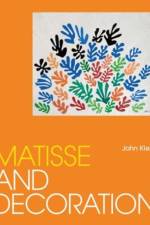
A brand new look at the extremely beautiful, if underappreciated, later works of one of the most inventive artists of the 20th century
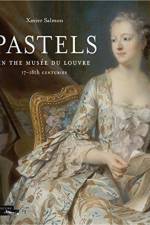
The Musâee du Louvre boasts an exceptional collection of 17th- and 18th-century European pastels. Due to their fragility, there have been scant opportunities to view and learn from these spectacular artworks. This in-depth examination of the collection, reproduced here for the first time in color, delves into their history and how they were created. Produced primarily during the reigns of Louis XV and Louis XVI, the works--whose beautiful delicacy has been likened to the powder covering the wings of a butterfly--offer insights into society during the period of the Enlightenment. Featured artists include Rosalba Carriera, Maurice Quentin de La Tour, Jean-Baptiste Perronneau, Jean tienne Liotard, Jean-Marc Nattier, and lisabeth Louise Vigee Le Brun, as well as lesser-known masters such as Marie-Suzanne Giroust, Ad la de Labille-Guirard, Joseph Bose, and Joseph Ducreux. Exhibition: Musâee du Louvre, Paris, France (07.06.-10.09.2018).
"Exhibition dates, National Gallery of Art, Washington, September 9-December 30, 2018"--Colophon.
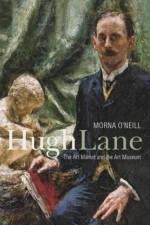
"This book charts a geography of the art market and the art museum in the early 20th century through the legacy of one influential dealer. Born in Ireland, Hugh Lane (1875-1915) established himself in London in the 1890s. With little formal education or training, he orchestrated high-profile sales of paintings by the likes of Holbein, Titian, and Velâazquez and described his life's work as 'selling pictures by old painters to buy pictures by living painters', a practice he called 'Good busines'. Lane assembled a collection of modern art for the Johannesburg Art Gallery, amassed a collection of Dutch and Flemish paintings for Cape Town, and gave his own collection of modern art to the National Gallery in London. He also donated paintings to the National Gallery of Ireland, where he was named director in 1914. Each chapter in this revelatory study focuses on an important city in Lane's practice as a dealer to understand the interrelationship of event and place."--Publisher's description.
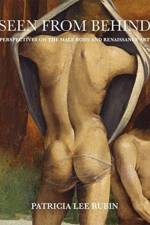
Renaissance bodies, dressed and undressed, have not lacked attention in art historical literature, but scholarship on the male body has generally concentrated on phallic-oriented masculinity and been connected to issues of patriarchy and power. This original book examines the range of meaning that has been attached to the male backside in Renaissance art and culture, the transformation of the base connotation of the image to high art, and the question of homoerotic impulses or implications of admiring male figures from behind. Representations of the male body's behind have often been associated with things obscene, carnivalesque, comical, or villainous. Presenting serious scholarship with a deft hand, 'Seen from Behind' expands our understanding of the motif of the male buttocks in Renaissance art, revealing both continuities and changes in the ways the images convey meaning and have been given meaning.
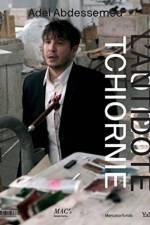
The book presents a series of new works produced by Adel Abdessemed for the MAC's/Museum of Contemporary Arts in Grand-Hornu. The Algerian-born French artist Adel Abdessemed (b. 1971) works in a wide variety of media including animation, installation, performance, sculpture, and video; through his art he addresses contemporary themes and he reflects the bleak picture of the present day. His works, unsettling in their simultaneous beauty and raw reality, have made Abdessemed one of the most visible international artists of our time. This volume is composed of two distinct parts, each showcasing and examining one of two series of brand new, site-specific works created by Abdessemed for the Museum of Contemporary Arts in Grand-Hornu and the Musée d'Art Contemporain in Lyon. Distributed for Mercatorfonds Exhibition Schedule: MAC's, Grand Hornu (03/04/18-06/03/18)Musée d'Art Contemporain, Lyon (03/09/18-07/08/18)
Abonner på vårt nyhetsbrev og få rabatter og inspirasjon til din neste leseopplevelse.
Ved å abonnere godtar du vår personvernerklæring.