








Gjør som tusenvis av andre bokelskere
Abonner på vårt nyhetsbrev og få rabatter og inspirasjon til din neste leseopplevelse.
Ved å abonnere godtar du vår personvernerklæring.Du kan når som helst melde deg av våre nyhetsbrev.

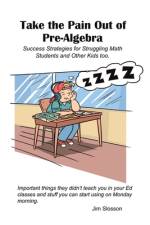
The information about the book is not available as of this time.
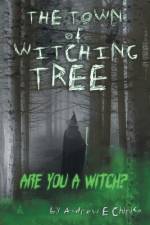
"A true compulsion", people whispered to one another as they sauntered by the cottage. Simple childhood memories of summers at the lake have been spun into this delightful tall tale that promises to engage the imagination of all who read it. Join Tess Tanabit as her oddity turns to good in this fanciful tale.
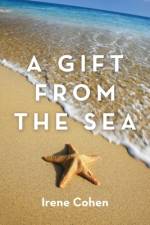
Old age is a time of losses- permanent, cumulative and irreversible. These losses include our loss of work in retirement, the eclipse of our past, our biological decline, dependency resulting from such decline, the foreshortening of our future, the abandonment of belief in our own improvement and our society's progress, and, of course, our death. This book views these losses as part of an elegy of old age. Elegy is a poetic or prose mourning of loss. Sadness and other emotions result. With elegiac understanding we detach ourselves from these losses to seek and find consolation. This book is concerned with achieving intellectual detachment through meditative reflection with the help of reading and appreciating the classics. The final stage of the old age elegy- consolation can be found, at least in part, within the classics-"the garlands of repose". The classics are broadly defined by Matthew Arnold as:"the best that [has} been thought and said: { or found in the fine arts}. To benefit from the classis requires a life-long liberal education. This education begins with an introduction to the classics in youth, makes use of them during our adult lives, and supplies their conclusion for old age meditation. Such significant works enable us to place the losses we suffer within an intellectual framework of perennial ideas. It is by means of such an intellectual framework that we secure consolation in old age. Classic works familiarize us deeply with the losses and emotions we endure-suggest substitutes for the goods of the life we have lost in old age, offer opportunities of catharsis for the sadness we experience and help us transform ourselves in old age. Classics help us see old age and its losses as part of a complete life which hold a unique value of its own, while remaining part of larger nature processes, history and intellectual traditions.
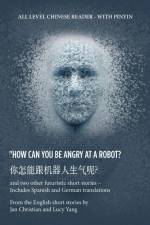
How Can You Be Angry at a Robot?Our technological world is moving forward at a great pace. New discoveries are happening every day that are making our lives easier, while presenting us with challenges too. These challenges include robots living with us in our own homes, new discoveries that may invade our privacy, and extra-terrestrials possibly working with us instead of attacking us!Here are three stories that help us develop our ability to discuss these things in three languages. The Chinese characters are not presented according to HSK levels, but to make it easier, each story is presented in three formats: sentence by sentence translation, completely in pinyin, or completely in hanzi characters. Finally, each story is presented completely in English, Spanish and German. The student, therefore, can approach his study according to his or her level and goals.This is especially effective for students looking to become translators. Translators must keep in mind that the direction of the translation is from English to Chinese and that his will affect the translation.
Abonner på vårt nyhetsbrev og få rabatter og inspirasjon til din neste leseopplevelse.
Ved å abonnere godtar du vår personvernerklæring.