


















Gjør som tusenvis av andre bokelskere
Abonner på vårt nyhetsbrev og få rabatter og inspirasjon til din neste leseopplevelse.
Ved å abonnere godtar du vår personvernerklæring.Du kan når som helst melde deg av våre nyhetsbrev.

Life is beautiful. Yet despite its beauty and wonders, there are moments when you really have to struggle to survive. So what do you do When Life Throws You a Curve? Maretta Patrick shares a touching tale. Sarah had the perfect childhood. Her days are spent playing with her siblings in the yard, or helping her mother with the chores. As a child, she is showered with her mother's tenderness and her father's care. Her life changes when she marries a month before her high school graduation. She is in love. But hers is not the perfect marriage. Her life as an adult in the real world appears to be very different from her ideal childhood. As she braves this new world with its complications, she faces medical issues and deals with an untimely death of a loved one. All these circumstances lead her to finding herself and finding God. Heart-wrenching, yet inspiring, this is a true story of a woman who sees beauty in life's sweet or bitter moments as she turns to God, and discovers exactly what to do When Life Throws You a Curve.
This book speaks of the physical and mental hardships that Debbie went through in this time in her life. But, also explains how God had Debbie in his hands the whole time. Wondering why this happened to her, God assured he:, sometimes when I know people trust me and I know I can trust them to teach others to trust me (God)! God works many miracles everyday in the small and large things of our daily lives
Revolutionary, new holiday book identifies Santa Claus Mr. Erik Raichle's new book will change the way we think of Santa Claus because he knows who Santa is and why every living thing on this good earth loves and needs him. In the spirit of Frank Church and Henry Livingston, Mr. Raichle unwraps, page by page, the secrets behind the Santa Claus myth and reveals a personage more powerful than the myth. Never, in the history of holiday literature, has there been a book of this caliber. It will revolutionize the season.
The book will be divided into two major parts, each with a number of shorter chapters. Part I will tell the story of Shughla's journey and how Sana Orphanage came into existence, in chronological order. Each chapter will tell about a particular step on the way, an incident or a milestone that was significant. Part II will tell the stories of some of the individual children at Sana. Some chapters will be extremely brief, while others will be longer. Not all of the children's stories can be told, as there are over fifty children now at the orphanage; but a sampling of various stories will be included, to give the reader an idea of the kinds of things these children have been forced to deal with in their short lives.
This epic drama opens in Boulder, Colorado, at the home of Oxford-educated Robert Dalton, an internationally known chemistry professor. His houseguest is Jozef Bardowski, head of the analytical laboratory of Warsaw's Nuclear Energy Institute. Knowing that Dalton, accompanied by his Polish-born wife Helena, will shortly embark upon a year's sabbatical at the University of Vienna, Bardowski expresses his fears that someone is introducing mind-altering drugs into Poland's natural gas to subdue the Polish people. In order to present the matter to the United Nations, he asks Dalton to analyze gas samples to be smuggled from Warsaw into the Austrian capital. Dalton agrees, unaware that by doing so he will subject both himself and Helena to acts of terror, including an attempt on his own life. It was a challenging undertaking to attempt to combine in one narrative the heady subject of Poland's most recent drive to free herself from oppression and the levity engendered by Robert Dalton, et al. I really did my best to show that the Polish cause is far from humorous but that humanity in general is. With the story's conclusion, I tried to see to it that each of the principles got what he or she deserved. I trust you will not be disappointed. It was my Polish friend Jozef who some years ago said to me: "e;No, life is not fair. Many times we lose when we should have won. But always remember this: Once you've lost the ability to laugh at whatever life deals you, then, then you've lost everything."e;I believe this philosophy typifies the warm, good-hearted, fun-loving, courageous people who reside in that wonderful country known to them as the Land of the White Eagle. Sylvia Tascher
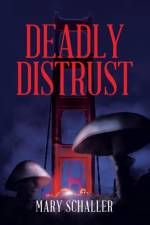
Two nursing students take an apartment in a Victorian house in San Francisco. One of these women gets into some steamy affairs with professional men and drugs. Sadly, she ends up dead. Poison was the cause of death, and it could have been an accident or murder. The poison comes from a mushroom called Amanita ocreata. Several suspects could have profited by her death. The big question is who knew about the poison and who also has a motive. The police finds the case complicated by the world of transvestites, gays, drugs, and another death.
Abonner på vårt nyhetsbrev og få rabatter og inspirasjon til din neste leseopplevelse.
Ved å abonnere godtar du vår personvernerklæring.