






Gjør som tusenvis av andre bokelskere
Abonner på vårt nyhetsbrev og få rabatter og inspirasjon til din neste leseopplevelse.
Ved å abonnere godtar du vår personvernerklæring.Du kan når som helst melde deg av våre nyhetsbrev.

A story about a mother''s unconditional love for her child. A mother''s love will never change, from the time their child is born until they have left home and become an adult. The love will never stop.
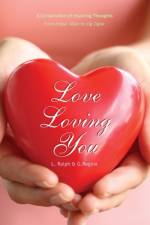
A Compilation of Inspiring Thoughts from Edgar Allan to Zig Ziglar. This book is a beautiful melody of quotes to remind us how important we are as individuals. To remind us, to love ourselves.An absolute inspiration of the heart. Open to any page and receive a powerful message of love.Keep it close to youand open it often
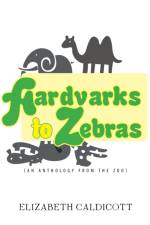
Elizabeth lives in the coastal town of Goolwain South Australia. She retired from teachinga few years ago. She is married, with a son, a daughter andsix Grandchildren, Aaron, Corey, Hayley,Nicholas, Patrick and Tayla. This book grew from poems she wrote for her grandchildrenliving interstate. Her collection of poems grew in response to requests from hergrandchildren to write poems for their friends, and from herown friends asking for poems for their grandchildren. Elizabeth's interests include gardening, quilting, reading, traveland photography so many of the photos and ideas for this bookhave drawn on her own experiences.
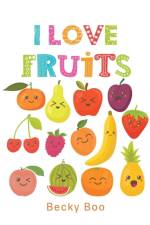
It is an early stage 1 beginners reader with repetitive words for recognition.The book describes different fruits.Comparisons: It tells young kids about different comparisons and explains vocabulary of comparison (e.g., bigbigger, goodbetter).At the Beach: It explains different things kids do on the beach and helps them recognise the repetitive words, I like playing . . .At the end of the book, the child should be able to read, like playing, and identify different words. This book helps build vocabulary.
Entablatures eponymous novelist undertakes an exploration of the conceptual implications held by the word palimpsest, using the gift of self-consciousness to place his origin within a presence he identifies as the inner thinker, the latter derivative from Rne Descartess famous dictum: Cogito ergo sum [I think, therefore I am]. Palimpsest postulates a practice whereby ancient manuscripts were reused by superimposing later writing over earlier work, which was not completely erased. Therefore, traces of the earlier writing become visible, intermixing with later text, an image the eponymous novelist utilises to startling effect in Entablature.Crises unsettle the novelist. The year is 2017, the centenary of the infamous 1917 Bolshevik Revolution, a traumatic memory colouring his meditations and social interactions, coupled with uncertainty surrounding the future of his romantic relationship with a corporate lawyer. Law is a pivotal point of contention, and the conflicting controversies between human, spiritual, and the laws of physics are interblended, creating subtext on the palimpsest of existence for the dramatis personae. Determinism and free will are cross-hatched in the weave of existence when the novelist has a chance encounter with his deceased sisters exbest friend, a social diarist.The novelist undertakes the creation of a new book, an epistolary novella, Hygeia, the text of which is included in full within Entablature. But is it the visible trace of an earlier embodiment visible through the text of his current existence? Enhancing the originality of this existential format are quoted samples from one of the novelists earlier books, Russian BrideRose Slavy, the latter name created by the iconic artist Marcel Duchamp.
Abonner på vårt nyhetsbrev og få rabatter og inspirasjon til din neste leseopplevelse.
Ved å abonnere godtar du vår personvernerklæring.