







Gjør som tusenvis av andre bokelskere
Abonner på vårt nyhetsbrev og få rabatter og inspirasjon til din neste leseopplevelse.
Ved å abonnere godtar du vår personvernerklæring.Du kan når som helst melde deg av våre nyhetsbrev.

Synopsis:In recent decades few Christian themes have attracted as much attention as that of eschatology, or Christian hope. Resurrection, Apocalypse, and the Kingdom of Christ explores the meaning of this theme for Thomas F. Torrance, one of the twentieth-century''s leading theologians. This study, the first of its kind, brings Torrance''s eschatology to light through an exploration of the whole range of his corpus, including sermons, lectures, and correspondence. It also demonstrates that his eschatology is molded by momentous historical events such as World War II, the spread of communism, and the ecumenical movement. Out of all this, we realize that eschatology is a central component of Torrance''s theology--so much so that it conditions his thinking on other Christian doctrines. Endorsements:"This treatment of Torrance''s eschatology, as it took shape during his formative years as a pastor, army chaplain, lecturer, and budding ecumenical theologian, lucidly reveals a dynamic corpus of thought animated both by Scripture and by the great events of his time. There is no comparable synthesis available for those who are just discovering Torrance, or indeed for those who recall, as I do, their excitement upon first hearing or reading him on the subject.. MacLean''s book will send its readers . . . to Torrance much better equipped for a fruitful engagement with him."--Douglas FarrowProfessor of Christian Thought, McGill University"Stanley MacLean adds a welcome volume to the burgeoning corpus of theological literature on Thomas F. Torrance. Occasioned by great events of the twentieth century and grounded in the ''one extended event'' of Jesus Christ, Torrance''s eschatology is practical, pastoral, and ecumenical. MacLean carefully searches out ad hoc sources of Torrance''s apocalyptic eschatology and articulates its elements with deft theological and historical sensitivity."--Richard R. ToppingProfessor of Studies in the Reformed Tradition, Vancouver School of TheologyAuthor of Revelation, Scripture and Church (2007)"Thomas F. Torrance is now receiving his due as one of the outstanding theologians of the twentieth century. Stanley Stephen MacLean represents a new era of Torrance scholarship, appreciative yet critical, using unpublished resources and placing him in his historical context. MacLean presents Torrance''s eschatology as Christ centered and ecclesial based, unique among most eschatologies. Those with interest in both Torrance and eschatology will be very grateful for this fine work."--Christian D. KettlerPresident of the Thomas F. Torrance Theological Fellowship,Professor of Theology and Philosophy, Friends UniversityAuthor of The God Who Rejoices (2010)Author Biography:Stanley S. MacLean (PhD McGill University) is an Assistant Professor of Christian Studies at Keimyung University, Daegu, South Korea.
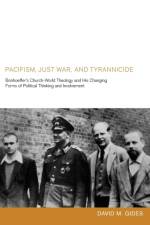
Synopsis:Dietrich Bonhoeffer''s perplexing and controversial shift from admitted pacifism to tyrannicide has been the source of scholarly and popular inspiration and criticism. How could an admitted Christian pacifist be involved in a plot to assassinate a political figure? Is there a way to understand and explain this phenomenon comprehensive enough to encompass all relevant data? One that takes into account the nuances of Bonhoeffer''s theology and all of the elements of his complex historical and personal contexts? This study attempts to offer an explanation by linking Bonhoeffer''s political thinking and action with his understanding of the church-world relationship and by evaluating the changes in that thought-action dyad as his life progressed. What emerges is a portrait of a bold and visionary thinker and political agent whose church-world theology, while discontinuous, is consistent enough to be authentic and yet flexible enough to meet the extraordinary challenges presented by Nazism and its intrusion into the churches. Gides suggests that it is actually Bonhoeffer''s malleable church-world thinking that ultimately distinguishes him from his theological and ecclesial contemporaries and even from the mass of German church persons and citizenry; it allowed him to confront evil by reaching beyond the constraints of traditional Lutheran thinking.Endorsements:"David Gides''s nuanced interpretation of Dietrich Bonhoeffer''s theology and practice is an important contribution to scholarship on this key figure . . . His analysis of Bonhoeffer is also a provocative case study of the relationship between theological principles and the hard realities of violence and war. Contemporary theologians and social ethicists attempting to shape a Christian response to war and oppression would benefit from reflecting on Gides''s able presentation of Bonhoeffer''s own struggle."--Daniel Speed ThompsonAssociate Professor of Theology, St. Mary''s University, San Antonio, TexasAuthor, The Language of Dissent: Edward Schillebeeckx on the Crisis of Authority in the Catholic Church"This combative book . . . offers a direct challenge to the wider world of Bonhoeffer scholarship. . . . Gides argues strongly against what he claims is an uncritical use by Bonhoeffer scholars of memorable quotations out of their original context to establish a questionable continuity in his church-world theology. Gides highlights . . . discontinuities he perceives between an earlier immersion in a two-sphered reality and Bonhoeffer''s later affirmation of the reconciled reality of God''s incarnate interventions in the human world. . . . Bonhoeffer''s ethical consistency, rather than a developmental continuity, conferred validity to his exemplary achievements."--Geffrey B. KellyProfessor of Systematic Theology, La Salle University, Philadelphia, PennsylvaniaAuthor Biography:David M. Gides holds a doctorate in historical theology from Fordham University. He is a member of the International Bonhoeffer Society. He is now an independent scholar living near Indianapolis, Indiana.
Synopsis:Although the book of Psalms is a collection of ancient hymns and poems originally written in Hebrew, it continues to be a source of fascination and inspiration. The psalms live on because they reflect a profound belief in a God who was involved with people and with human affairs-a God who had done wonderful things in the past, for which he should be praised and held in awe; a God to whom complaints could be addressed because of apparent inactivity on behalf of those loyal to him in the present; a God who, despite the distresses and difficulties of those who called upon him, could be trusted to ensure justice in the future. The Psalter contains some very human responses to a God who was sometimes very real to those who addressed him and who sometimes seemed deaf to their cries. Adrian Curtis invites his readers to enter into the world of the Psalms and to find there, sometimes surprisingly, experiences and emotions that resonate with their own.Author Biography:Adrian Curtis is Honorary Research Fellow in the Department for Religions and Theology at the University of Manchester.
Synopsis:Hermeneutics is the work of Hermes, the Greek demigod, a messenger from the gods and from the dead. Simon Perry sets out to explore the contemporary face of Hermes through a reading of Jesus'' parable of the rich man and Lazarus (Luke 16:19-31). This parable has one distinguishing feature that marks it out from other ancient stories following the same basic storyline: that a visitor from the dead is not granted leave to return with a message to the land of the living. In order for Scripture to be heard, Hermes is not necessary.Where does this leave the role of hermeneutics? Perry looks to philosophers, ethicists, and theologians for an answer.Endorsements:"In this thought-provoking analysis, Simon Perry submits the work of biblical interpreters such as Bultmann, Fish, and Derrida to critical scrutiny, and finds them all wanting. The underlying problem, he suggests, is that they all rely on technology-i.e., they make use of scripture, rather than allowing themselves to be transformed by it. Since the great transformative event is the resurrection, Dr. Perry explores other approaches which begin from the reader''s readiness to be transformed by the God encountered in scripture . . . demonstrating just how fruitful it can be to abandon one''s presuppositions regarding the ''meaning'' of the text, in order to allow it to confront us and to transform us."-Morna HookerLady Margaret''s Professor of Divinity EmeritaUniversity of Cambridge"Exploding biblical hermeneutics from within, Simon Perry shows us why reading Scripture is best understood as an engagement with a God who claims lives entire. Rigorously engaging the whole sweep of modern hermeneutical philosophy, this book shows how serious biblical theology must finally transmute into theology proper, and of the highest order."-Brian R. BrockLecturer in Moral and Practical TheologyKing''s College, University of Aberdeen"Simon Perry offers a sustained and strong account of the difference that the resurrection of Jesus Christ makes to theological hermeneutics. Biblical interpretation and the practice of discipleship, the world of the text and the real world of human striving and suffering, are inextricably linked in Perry''s vision of the interpretative task. Elegantly structured and demanding both intellectually and existentially, Perry''s work offers a new voice into the conversation about biblical interpretation today."-Sean F. WinterProfessor of New TestamentUnited Faculty of Theology, Uniting Church Theological CollegeMCD University of DivinityAuthor Biography:Simon Perry is chaplain of Robinson College, Cambridge. He is a former soldier, a single parent, and author of All Who Came Before (2011).
Synopsis:The Mystical Presence (1846), John Williamson Nevin''s magnum opus, was an attempt to combat the sectarianism and subjectivism of nineteenth-century American religion by recovering the robust sacramental and incarnational theology of the Protestant Reformation, enriched with the categories of German idealism. In it, he makes the historical case for the spiritual real presence as the authentic Reformed doctrine of the Eucharist, and explains the theological and philosophical context that render the doctrine intelligible. The 1850 article "The Doctrine of the Reformed Church on the Lord''s Supper" represents his response to his arch critic, Charles Hodge of Princeton Seminary, providing what is still considered a definitive historical treatment of Reformed eucharistic theology. Both texts demonstrate Nevin''s immense erudition and theological creativity, contributing to our understanding not only of Reformed theology, but also of the unique milieu of nineteenth-century American religion. The present critical edition carefully preserves the original text, while providing extensive introductions, annotations, and bibliography to orient the modern reader and facilitate further scholarship. The Mercersburg Theology Study Series is an attempt to make available for the first time-in attractive, readable, and scholarly modern editions-the key writings of the nineteenth-century movement known as the Mercersburg Theology. An ambitious multi-year project, this aims to make an important contribution to the academic community and to the broader reading public, who may at last be properly introduced to this unique blend of American and European, Reformed and Catholic theology. Endorsements:"No single book on sacramental thought from nineteenth-century America has attracted more attention in the past half century than The Mystical Presence . . . This new edition by Linden J. DeBie and W. Bradford Littlejohn clarifies [Nevin''s] importance by placing his work in its American context, showing his engagement with European theologians, and locating him in his own theological tradition . . . Nevin''s work will continue to make a mark, and this new edition brings to bear the latest scholarship."-E. Brooks HolifieldEmory University"Karl Barth''s commentary on Romans was not the first bomb to fall on the playground of theologians. John Williamson Nevin''s The Mystical Presence had a similar effect on the nineteenth-century American church. His appeal for a return to the sacramental views of the sixteenth-century Reformed confessions was a voice in the wilderness in an era of decidedly low-church sympathies. This wonderful new edition clearly reveals the relevance of Nevin''s controversial book in both his day and ours."-Keith A. MathisonReformation Bible CollegeAuthor:John Williamson Nevin (1803-1886) was a leading nineteenth-century American theologian. Originally trained in the Presbyterian Church, he took up a teaching post at Mercersburg Seminary of the German Reformed Church in 1841, and spent the rest of his life teaching and writing in that denomination, though his controversial work brought him fame (and infamy) well beyond its borders. Editor:Linden J. DeBie has taught at Seton Hall University and New Brunswick Theological Seminary. He is the author of Speculative Theology and Common-Sense Religion: Mercersburg and the Conservative Roots of American Religion (Pickwick, 2008). General Editor:W. Bradford Littlejohn is currently completing a PhD in Theological from the University of Edinburgh. He is the author of The Mercersburg Theology and the Quest for Reformed Catholicity (Pickwick, 2009).
Synopsis:In his teaching and his writing, Paul L. Holmer (1916-2004), Professor of Philosophy at the University of Minnesota (1946-1960) and Noah Porter Professor of Philosophical Theology at Yale Divinity School (1960-1987), made many important contributions to recent American theology. One of the most insightful American students of Kierkegaard of his generation, Holmer perceived early on Wittgenstein''s importance for theology, and employed both thinkers to inspire his own fresh consideration of perennial issues in philosophical theology: understanding, belief, faith, the emotions, and the importance of the virtues. While best known for his essays in The Grammar of Faith (1978), Holmer penned numerous other interesting and original essays, some published but many unpublished, which circulated widely in typescript during his tenure at Yale. Following his death, the Holmer family in 2005 donated his papers to the Yale Divinity School Library; in reviewing Holmer''s papers, the editors have chosen a selection of his most seminal essays, beyond those in The Grammar of Faith, demonstrating the breadth and range of his contributions.In this, the second volume of The Paul L. Holmer Papers, the editors present pieces that illuminate four significant areas of Holmer''s contributions: essays on Kierkegaard; essays on Wittgenstein; Theology, Understanding, and Faith; and Emotions, Passions, and Virtues. Taken together, these essays invite in-depth exploration of the thought of this important American philosophical theologian.This is the second volume of The Paul L. Holmer Papers, which includes also volume 1, On Kierkegaard and Truth: Selected Essays, and volume 3, Communicating the Faith Indirectly: Selected Sermons, Addresses, and Prayers.Endorsement:"Disciplined by a careful, undogmatic appropriation of Wittgenstein''s later achievements, Paul Holmer may just be the best balanced and most plainspoken expositor of Kierkegaard''s ethical-religious thought in the English language to date. Holmer was an outstanding teacher, and this collection is a treasure for those privileged to hear his lectures and for those who did not."-Robert L. PerkinsProfessor Emeritus of PhilosophyStetson University, DeLand, Florida"This collection of previously published and unpublished essays by Paul L. Holmer on a wide range of topics demonstrates his incisive thought and writing on some of the perplexing ''knots of understanding'' in philosophy and theology, which he sought to untie with exceptional acuity and conceptual clarity by way of Kierkegaard, Wittgenstein, and his own pioneering efforts in the rehabilitation of virtue ethics in our time."-Sylvia WalshScholar in ResidenceStetson UniversityEditor Biography:David J. Gouwens is Professor of Theology at Brite Divinity School. He is the author of Kierkegaard''s Dialectic of the Imagination (1989) and Kierkegaard as Religious Thinker (1996).Lee C. Barrett III is Stager Professor of Theology at Lancaster Theological Seminary. He is the author of The Heidelberg Catechism (2007), Foundations of Modern Theology: Kierkegaard (2009), and co-editor of Kierkegaard and the Bible (2010).
This book suggests a fresh hearing of the Gospel in the traditions of the Old Testament. Israel's affirmation of faith is many-sided. One of the dimensions which has been largely neglected in our use of Scripture are those traditions which affirm the world, celebrate culture, and affirm human responsibility and capability. Such affirmations from the Bible sound strange to our ears, but they are no less scriptural and no less Gospel. This stress and the literature which express it are, of course, not all of Scripture but they are an important element. I have argued here that for our moment in cultural history, these elements in Scripture provide our best opportunity to make contact between biblical faith and the culture in which we do our 'faithing.' To that end I have tried to penetrate the teaching and intention of the wisdom traditions, especially as they are embodied in the book of Proverbs. The study of the wisdom traditions of the Old Testament is only beginning and there are many unresolved questions. But we knowenough to suggest some directions for theological reflection. On the basis of the wisdom traditions I have tried to pay attention to the cultural world in which they had meaning, for that world was not unlike our own. --from the Foreword Contents 1. Religious Despisers of Culture 2. The Trusted Creature 3. Theology Fit for a King 4. Tempted to Commodities 5. The Meaning and Maturity for Current Theology 6. The Wise Man as a Model for Ministry 7. Uneasy Reflections from a Son of Neoorthodoxy
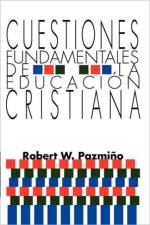
Para evitar la cautividad cultural, los fundamentos de la educacion cristiana deben ser repensados por cada generacion. De no hacerlo, dice el autor, los educadores cristianos corren el riesgo de perpetuar ideas y practicas anticuadas, ajenas al evangelio.Al explorar con criterio los diversos fundamentos que han predominado y predominan en el pensamiento evangelico, continua el autor, los educadores pueden enfrentar mejor las necesidades de hoy y los retos del futuro. En Cuestiones fundamentales de la educacion cristiana, el autor mismo se entrega a este proceso de evaluacion critica, con importantes resultados.El autor llama a los educadores evangelicos a reafirmar las verdades biblicas, que constituyen la autoridad esencial para nuestra teoria y practica, y a incorporar las verdades de otras disciplinas, proceso que tiene que estar sujeto a la continua autoridad de la Palabra de Dios.
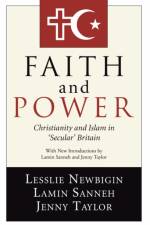
"The issue . . . in the multicultural millennium is not so much the ''Islamization'' of a once-Christian culture as the emergence, with state collusion, of discrete territories where vastly different norms prevail, shut off and resentful, a breeding ground for ferment and a target for hostility."In the aftermath of the London suicide bombings, this unusual book seems more prophetic than ever. Begun six years before 9/11, it examined the roots of political Islam and its offshoots in Britain. In describing the indifference of policy makers and government officials to religion, it warned of extremism taking root among disaffected young Muslims--and offered a vision of hope tempered with realism that might have helped avert tragedy had it been more widely heeded.The book''s timely republication offers another chance to understand the roots of our present crisis--and a way out of it. Lamin Sanneh, himself a former Muslim, explores the history of Islam''s always controversial accommodations with the West. Jenny Taylor''s debut contribution engages critically at the grassroots level, looking in detail at Islam in Britain, its mission and tactics, and the State''s inadequate response to them. "Neglect would appear to have been government policy." Lesslie Newbigin describes the loss of a sense of direction in the West as bankrupt secular ideologies confront fundamentalism with politically correct platitudes or coercive legislation that is destroying the West''s historic freedoms. All three authors call for a radical Christian critique to replace the false and evidently failed policies of neutrality of the State.
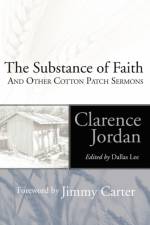
To read 'The Substance of Faith' is once again to experience Clarence Jordan at his best: the flashing wit that could illuminate even as it entertained, the blazing concern that knew how to lay its burden on the heart of even the casual listener, the biting irony that pierced sham and pretense, the depth of spirit that saw fresh meaning in the most familiar passage of Scripture. Within the pages of this book, you'll discover the basic themes of Clarence Jordan's life: Incarnational Evangelism," the God Movement," and his prophetic insight into the enemies of authentic faith, such as Mammon. Dallas Lee has brought all this together from what Clarence Jordan said in pulpit, classroom, and lecture hall.
A commitment to historical-grammatical hermeneutics often has been confused with a commitment to literal language. Time, in our modern conception, has been construed as a measurement of temporal units, and the numbers assigned to them, as merely counting those units. However, a study is needed to explore whether this is the Genesis author's use of time, and whether numerical values utilized suggest something other than tracking simple measurements. This book attempts to offer an answer to this question by analyzing the ancient Near Eastern and literary context of the Book of Genesis in terms of its use of temporal language in determining its value within the narrative. It is the contention of this book that both of these concepts have been misunderstood to such an extent that these misperceptions often obstruct interpreters from understanding the sociological and theological intent of the author to convey a theology of God, man, creation, and chaos that addresses concerns of both the ancient and the modern reader.
Jurgen Moltmann is now regarded as one of the most influential theologians since Karl Barth. However, evangelical engagement with Moltmann has been hesitant and deficient. This book fills the gap. Ten respected evangelical theologians engage with Moltmann's theology in a mature, dynamic, and critical manner, seeking to appropriate from it in a discerning manner. The contributors include Sung Wook Chung, Kurt Anders Richardson, Veli-Matti Karkainen, Stephen N. Williams, and Timothy Bradshaw. This book is an excellent demonstration of intellectual confidence and respectability of robust evangelical theology.
This first volume of Sermons by Jonathan Edwards on the Matthean Parables contains a previously unpublished series by Edwards on Jesus' Parable of the Wise and Foolish Virgins, as found in Matthew 25. Edwards preached these sermons in 1737-38, in the lull between the Connecticut Valley Revival of 1734-35 and the Great Awakening, which started in Massachusetts in late 1740. Not only does this series have significance for its place in the Protestant evangelical awakening of the eighteenth century, but it is also an important index of Edwards' developing thought on the nature of sainthood and related topics of theoretical and practical Christianity, particularly in the context of widespread spiritual renewal. To assist the reader, preceding the series are two introductions that describe Edwards' preaching style and method and provide an historical context for the series itself. Prepared from the original manuscripts by the staff of the Jonathan Edwards Center at Yale University, this series represents a significant addition to the available Edwards corpus that will be of interest to scholars, religious leaders, and general readers.
""Christianity, as faith centered in Jesus as the Christ came to be called, got a foothold in the world, and for a vital and vocal minority changed the world, because it proclaimed a message that awakened men and women to possibilities for human life that they had either lost or never entertained. That message the first Christian evangelists (and Jesus himself, according to the record) called euangellion--good news, gospel. For its first two or three hundred years, Christianity was largely dependent for its existence upon the new zest for life that was awakened in persons who heard and were, as they felt, transformed, by that gospel; and at various and sundry points in subsequent history the Christian movement has found itself revitalized by the spirit of that same 'good news' in ways that spoke to the specifics of their times and places.""The lesson of history is clear: the challenge to all serious Christians and Christian bodies today is not whether we can devise yet more novel and promotionally impressive means for the transmission of 'the Christian religion' (let alone this or that denomination); it is whether we are able to hear and to proclaim . . . gospel! We do not need statisticians and sociologists to inform us that religion--and specifically our religion, as the dominant expression of the spiritual impulse of homo sapiens in our geographic context--is in decline. We do not need the sages of the new atheism to announce in learned tomes (and on buses!) that 'God probably does not exist.' The 'sea of faith' has been ebbing for a very long time."" --from the Introduction
How do we live distinctively in communities embedded in the world around us? The Not-Very-Persecuted Church provides church leaders, pastors, and Christians interested in community development with principles for evaluating culture in light of mission. Since we are called to live in community, the processes that build group identity can help us understand how to live together well. Paul addressed some of the problems that can occur in not-very-persecuted groups in the first four chapters of 1 Corinthians, and he shows us the way suffering forms identity in that context. With discussion questions and stories from personal interviews, this book offers both fascinating glimpses into the world of the first century and practical applications for Christians today.
Is church discipline really necessary? One sixteenth-century Anabaptist reformer certainly thought so. A contemporary of Luther and Zwingli, Balthasar Hubmaier believed that church discipline was so important that he included the doctrine in every major area of his theology. Not only did church discipline appear in his doctrine of humanity, salvation, and the church, as a theoretical construct, but he also included practical instructions regarding its implementation in the life of the church. In this book Goncharenko examines Hubmaier's teaching on discipline and considers its relevance to the church today.
This book is about leadership, a scholarly and pastoral response to the urgent demand for the renewal of the contemporary Christian church. It challenges readers to articulate the identity and vision of the church in new ways, and encourages them to revitalize their ministry with fresh insight and passion from women's perspectives. The eight essays written by female scholars in relation to various areas of theological study and the nine pastoral responses to the essays written by ministers from seven different denominations, based on their experiences of actual ministerial settings, provide new paradigms of church leadership--theologically profound, practically relevant, and historically timely. This volume, a product of a collaborative process between academia and church, promises to be a most useful resource to renew the leadership of the church and its vocational commitment to the transformation of the church and society.
The question of religious pluralism is the most significant yet thorniest of issues in theology today, and John Hick (1922-2012) has long been recognized as its most important scholar. However, while much has been written analyzing the philosophical basis of Hick's pluralism, very little attention has been devoted to the theological foundations of his argument. Filling this gap, this book examines Hick's theological attempts to systematically deconstruct the church's traditional incarnational Christology. Special attention is given to evaluating Hick's foundational theses "that Jesus himself did not teach what was to become the orthodox Christian understanding of him" and "that the dogma of Jesus' two natures . . . has proved to be incapable of being explicated in any satisfactory way." By elucidating the ways in which Hick's arguments fail, David Nah demonstrates that Hick was unwarranted in breaking away from the church's incarnational Christology that has been at the core of Christianity for almost two thousand years.
Baptists worldwide recently celebrated 400 years of history and witness. This volume is a collection of papers presented at the "Beyond 400" conference held in Perth, Western Australia, as part of these celebrations. Contributors have written from a broad range of perspectives reflecting biblically and theologically on the thinking and practice of Baptists in the past and present. These reflections form a basis for exploring how Baptists can function more effectively in our contemporary world situation and imagine themselves in the future. Chapters range from providing historical perspectives to biblical and theological reflections on issues that have been critical to Baptist belief and ministry. They examine the core values that, historically, have distinguished Baptists within the broader context of the church and explore how these values might both underpin and play out in Baptist churches today. Contributions reflect a firm belief among both the presenters and attendees at the "Beyond 400" conference that Baptists not only have a future but also offer a necessary voice to our world. This voice is firmly based on the issues that first precipitated the Baptist movement some 400 years ago, and the continuing relevance of these issues as they are reimagined for our contemporary situation.
River of God is an introduction to world missions aimed at undergraduate students. However, the readers will soon discover that the book is rich in its content far beyond the editors' original plan. It serves as a reader for people with various levels of missiological interest and competence and deals with cutting-edge issues in missions. This book introduces a new paradigm, Kingdom Missiology, which builds on shalom in the Old Testament and as Jesus applied to the Kingdom of God in the New Testament.The first half of the book looks at Kingdom Missiology from the biblical, historical, and cultural dimensions. The second half of the book describes helpful strategies in the implementation of this paradigm. The importance of urban ministry is woven throughout the book.
The Politics of Discipleship and Discipleship in Politics is a work of dialog and cooperation at every level. At the core of this volume are lectures by Jurgen Moltmann, originally delivered at two Mennonite seminaries at the height of the Cold War. Theologians at those seminaries then responded to each of Moltmann's lectures, and those are included as well. Added to this collection are: a new essay by Moltmann on peacemaking and dragonslaying, a new foreword by Willard Swartley, and a new preface by Moltmann. In this post-9/11 world, this dialog has fresh relevance.
Every generation has sought to make teaching and learning more inclusive and equitable, but pesky questions always remain, such as, how can teaching and learning be conducted in ways that satisfies and respects everyone? What are the parameters of an inclusive pedagogy? Who defines its principles? How should these principles be taught and by whom? And by what authority shall they be grounded? These types of thorny questions occupy the essence of educators and the authors of this book. This book is about teachers, educators, and topics related to inclusion. Teachers and educators have a lot to know, therefore the topics are broad and relevant to the times. What should teachers know about special needs, religion and spirituality, Aboriginality, the environment, tolerance, and school choice? Although teachers have knowledge of their subject matter, knowledge alone is not sufficient. They must know and understand how people learn. A teacher must also care deeply about who they teach. And this ""teacher knowledge"" grows and changes over time as teachers become more experienced, informed, skilled, and wiser. At the same time no teacher preparation will be sufficient because there will always be discussions that were never had and knowledge that was never shared. Time has its costs and there is only so much a formal education can prepare someone. This book helps to satisfy a cavity in learning for teachers and educators in general.""Different perspectives in education are necessary, not to reach some common synthesis, but to make our different ''faith'' commitments apparent, especially to those who imagine they represent Reason, pure and simple. This book makes the issues clearer than we''ve seen them before.""--C. John Sommerville, Emeritus, University of FloridaMatthew Etherington is an Associate Professor of Education at Trinity Western University, Langley, British Columbia. He is the director of the Institute of Indigenous Issues and Perspectives.
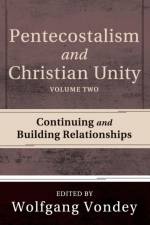
Description:This book is the follow-up volume to Pentecostalism and Christian Unity: Ecumenical Documents and Critical Assessments. The first volume documented the history and ecumenical engagement of Pentecostals during the twentieth century. This new collection traces the ecumenical developments, narratives, and conversations during the first decade of the twenty-first century. The ecumenical community and Pentecostals have consistently lamented the absence of a comprehensive gathering of resources for both groups. This particular volume provides two significant assets in this regard: (1) documentation of new and emerging conversations that have not yet produced official reports, and (2) official reports from continuing conversations. The book begins with an overview of a century of Pentecostal participation in Christian unity. Part One contains ecumenical narratives on the Joint Consultative Group of Pentecostals and the World Council of Churches, Lutherans and Pentecostals, the Global Christian Forum, and Christian Churches Together in the USA. Part Two contains the extensive reports from the official dialogue of Pentecostals with the Roman Catholic Church, the World Alliance of Reformed Churches, and the Oneness-Trinitarian Pentecostal dialogue. This collection presents an invaluable resource for teachers, scholars, and pastors interested in engaging the global Christian arena from the worldwide and ecumenical perspectives of Pentecostalism.Endorsements:"Wolfgang Vondey''s latest collection of twenty-first-century reports, the fruit of a variety of ecumenical dialogues with pentecostal participation, should go far toward informing Pentecostals of the facts. They should also alleviate pentecostal fears concerning the theological agenda of the ecumenical movement and those Pentecostals who have been called to work in it."--Cecil M. Robeck, Jr., Professor of Church History and Ecumenics, Fuller Theological Seminary"The second volume of Pentecostalism and Christian Unity, like the first, is a gift to the whole church. Here again Wolfgang Vondey gathers documents from ecumenical dialogues involving Pentecostals. . . . These two volumes are a vital resource for understanding not only Pentecostalism, but also the church itself. These volumes document and herald the much-sought entry of Pentecostalism into the ecumenical movement. May they have the impact--within Pentecostalism and beyond it--they so richly deserve."--Barry Ensign-George, Associate for Theology, Presbyterian Church (USA)About the Contributor(s):Wolfgang Vondey is Associate Professor of Systematic Theology at the Regent University School of Divinity and Director of the Regent Center for Renewal Studies. He is the author of Pentecostalism: A Guide for the Perplexed (2013) and Beyond Pentecostalism: The Crisis of Global Christianity and the Renewal of the Theological Agenda (2010).
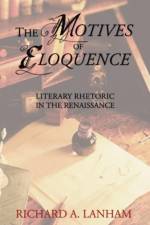
We have in 'The Motives of Eloquence a significant contribution to theory, criticism, and history that graces us with the eloquence of its own motives....For comparatists of all interests and persuasions. - William J. Kennedy, 'Comparative Literature' This is a stunning book....The central thesis of 'The Motives of Eloquence' is subtle, complicated, imaginative, and bold. - Anne Barton, 'Shakespeare Quarterly In this brilliant tour de force Lanham speaks with sound and fury -- signifying everything. Though exacting and difficult, the book is well worth the effort it demands, and it succeeds admirably in providing a viable and provocative approach to reinterpreting Western literature. - William C. Johnson, 'Sixteenth Century Journal' The book offers bold and often controversial insights. Its readers will find themselves bringing significantly altered premises to much of their subsequent reading in the field. - Newsletter of the National Endowment for the Humanities A celebration of rhetoric and a challenge to all who consign consideration of style to the periphery of attention....Lanham's book represents a good place to begin, both for the student of literature and for the student of religion who wishes to review Western history in the light of its rhetorical motifs. - Thomas E. Helm, 'Journal of Religion'
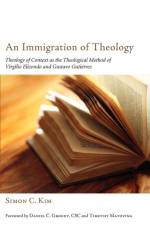
The theological reflections of Virgilio Elizondo and Gustavo Gutierrez are examples of the ecclesial fruitfulness of the second half of the twentieth century. Following the directives of Pope John XXIII and the Second Vatican Council, Elizondo and Gutierrez present the Gospel message in relevant terms to their own people by engaging the world as the Church of the poor. Inspired by this moment in Church history, while at the same time recognizing the plight of their people in their poor and marginal existence, Elizondo and Gutierrez discovered a new way of doing theology by asking a specific set of questions based on their local context. By investigating where God is present in the border crossers of the southwestern United States and the poorest of the poor in Latin America, both theologians have uncovered a hermeneutical lens in rereading Scripture and deepening our understanding of ecclesial tradition.Elizondo's mestizaje and Gutierrez's preferential option for the poor arose out of a theology of context, a theological method that takes seriously the contextual circumstances of their locale. By utilizing the common loci theologici of Scripture and tradition in conjunction with context and their own experience, Elizondo and Gutierrez illustrate through their theologies how every group must embrace their own unique theological reflection.
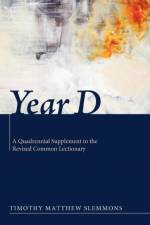
Although one often hears of the need to preach "the whole counsel of God," few resources have seriously and specifically attempted to assist the preacher and planner of worship to do just that--until now. Year D makes the case for the need and promise of supplementing the Revised Common Lectionary with a fourth year of lections and arranges many previously excluded biblical texts in an orderly, one-year preaching plan. It fills a need widely voiced by preachers that the lectionary effectively limits and censors the functional canon of Scripture. Destined to serve as a staple source of significant revitalization in mainline preaching and worship, Year D banks on the agency of Word and Spirit to renew the church as few practical proposals have done in the last twenty years, lending new focus and impetus for exploring the Bible's forgotten riches. A timely and urgently needed "return to the sources," Year D represents a fresh appropriation of neglected and marginalized texts for preaching, worship, education, and devotion, and thus constitutes a substantive, scriptural attempt to address what Walter Brueggemann has called "the current preaching emergency."
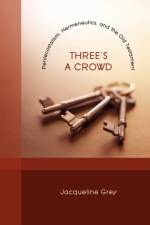
Three's a Crowd brings together the three dialogue partners of Pentecostalism, hermeneutics, and the Old Testament. Previous attempts by Pentecostal academics to define a distinctive Pentecostal hermeneutic have focused on issues and application to the New Testament, consequently estranging the Old Testament from the conversation. This book engages the hermeneutical practices of Pentecostal and Charismatic groups in reading the Old Testament in ways that are representative, while critical, of their movement's ideological bases and visions. While the issue of understanding and developing a viable Pentecostal hermeneutic has continued to be debated within the academic journals of the community for over a decade, most discussion has focused on the prescription of ideals rather than on the actual practice of the contemporary community. By examining the reading practices of the Pentecostal and Charismatic community, this book suggests a unique and rounded reading method that maintains the strengths of Pentecostal reading practices while addressing their inherent weaknesses. In this way, the voices of the three dialogue partners emerge in a mutual fellowship that engages both the needs of the Pentecostal community and informs the wider ecumenical dialogue.
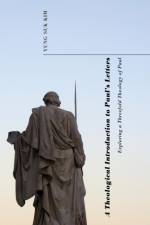
In this study Kim explores a new way of reading Paul's letters and understanding his theology with a focus on three aspects of Paul's gospel: ""the righteousness of God,"" ""faith of Christ,"" and ""the body of Christ."" Kim argues that Paul's thought can be best understood by reading these genitives as the subjective or attributive genitives, rather than as the objective genitives. The subjective or attributive reading places an emphasis on the subject's participation: God's participatory righteousness, Christ's faithful obedience to God, and the believer's living of Christ's body. Using this approach, Kim investigates the root of Paul's theology in a wide array of texts and contexts: in the Hebrew Bible, Second Temple Judaism, the Greco-Roman world, and Paul's canonical letters. In doing so, Kim synthesizes Paul's theology and ethics seamlessly, balancing the roles of God, Christ, and believers in Paul's gospel.For the website:Study/Discussion Questions and Sample Syllabus available at http://youaregood.com/threefoldtheology.htm
Abonner på vårt nyhetsbrev og få rabatter og inspirasjon til din neste leseopplevelse.
Ved å abonnere godtar du vår personvernerklæring.