






Gjør som tusenvis av andre bokelskere
Abonner på vårt nyhetsbrev og få rabatter og inspirasjon til din neste leseopplevelse.
Ved å abonnere godtar du vår personvernerklæring.Du kan når som helst melde deg av våre nyhetsbrev.

With increasing awareness of the permanence of religious pluralism and increasing acceptance of other religions as valid ways to God, some theologians have argued that Christianity needs to abandon its traditional, biblical claim that Jesus is the unique, normative, decisive and final self-revelation of God and the salvation of the world. Braaten's response is an unequivocal reassertion of the exclusive claim of the gospel. To do so, he surveys the range of current options and dives into questions of the uniqueness of Christ, the absoluteness of Christianity, and the universality of salvation. Working with concepts of justification, eschatology, and Trinity, Braaten affirms that the gospel relativizes other religions. The gospel, however, also relativizes Christianity. Thus Christianity's strong claims for Christ need to be tempered by acknowledging that Christians do not know beforehand the final outcome of God's unfolding plan for the world. Although not all will agree, this book is an important call to Christian conscience from a theologian who sees Christian theology teetering on the brink of confusion.
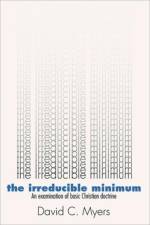
'The Irreducible Minimum' is a careful examination of the eleven essential doctrines, including the doctrine of the Bible, Dispensationalism, Theology Proper and Trinitarianism, Christology, Holy Spirit, Angels, Sin, Salvation, the Church, and the doctrine of last things, from a pre-tribulational, pre-millennial viewpoint.
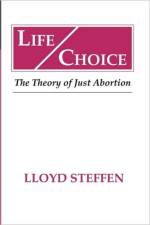
Is abortion murder or is abortion a choice? An issue which has divided America both politically and religiously, the abortion debate has built opposing walls that make compromise seem impossible. Lloyd Steffen uses compassionate insight and wisdom in analyzing both sides of the abortion debate, and offers a unique platform by which all are invited to reason together.
Bruner has been both thorough and fair, and has written a book that combines scholarly research with constructive commentary on the life and mission of the contemporary Church.
The book has many fine features..... Dr. Balke has done thorough research on his subject and presented its results in an excellent combination of chronological review and systematic analysis. The principal significance of this book, however, is that it vindicates and in a sense rehabilitates John Calvin over against the Anabaptists, and does so without perpetuating the unfair criticism of the Anabaptists which was prevalent for a long time. The treatment is fair, balanced, and firm, and of genuine historical value. John H. Kromminga, President, Calvin Theological Seminary
In the course of his ministry Dr. Wallace has found that the miracle stories of the Synoptic Gospels raise and answer the urgent questions about the Church's policy and future that face us today.
An exegetical classic by a well respected scholar. Long out of print, it deserves the same attention as Westcott's work in Johannine literature.
The Second Book of Kings narrates the decline and fall of the kingdoms of Israel and Judah, each of which had been set up by God with hope and promise. Kings II begins at a particularly low point in history. Ahaziah of Israel enters bitter conflict with God, and even Elijah, the great and trusted prophet, proves foolish and weak when called on to witness to the truth. As chapter follows chapter, the hope that a king after God's own heart might one day rule in earthly splendor and peace in Zion begins to vanish. Jerusalem is destroyed; the captivity begins. Dr. Wallace shows how the God of hope and love presides triumphantly over every development, however perverse and foolish, as the way is prepared for the coming of the true and suffering King of Israel to his eternal throne.
The family today is confronted with pressures that pull it in many directions, resulting in much misunderstanding and poor communication. This book illustrates how these problems are not unique to our time. As Dr. Wallace guides readers through Genesis 24-36, the similarities between problems then and now become evident. Wallace discusses how family relationships - husband and wife, parents and children, brothers an sisters - were experienced in the beginning and the role faith played in their wholesome development.
The life of Abraham was characterized by failures, successes, and triumphs over his enemies . However, by trusting the promise of God, he overcame his difficulties on his way to spiritual maturity. Although Abraham's journey began centuries ago, many of his trials are like those experienced by people today - deceit, lust, broken promises, doubt, lack of patience. Dr. Wallace discusses Genesis 12-23 in easy-to-read chapters suitable for devotional reading and for sermon preparation. Recommended for Bible teachers, pastors, and lay people, who also will be interested in his companion book, Isaac and Jacob.
Can any intelligent man or woman believe in miracles today? Can one believe in Jesus without believing the miracle stories? And if Jesus performed miracles during his life on earth, can't we also expect miracles today? In this book Colin Brown, author of the highly acclaimed 'Miracles and the Critical Mind', returns to the subject of Jesus' miracles, this time writing for the general reader. Drawing on the world of scholarship, but avoiding a detailed philosophical discussion, Brown clearly lays out the arguments for the reader who is not a trained philosopher or theologian. All who have questions about the meaning of miracles and their role in Christian faith today will find here a fresh look at this subject that has puzzled people for centuries.
Husband and wife John and Nancy McKenna express in this collection of poetry the person they are as man and woman, husband and wife, giving voice to the gift of God to them. Being of a time that is deeply wounded, their language echoes its rage and folly, yet points their readers to freedom from destructive power. Each poem is accompanied by a Bible verse to help the reader hear.
Using the latest evidence from various fields of study, two Christian scholars present a strong biblical, rational and even scientific case for the belief in life after death.
The household was the basic unit of the early church; it also constituted the basic unit of political economy until the Industrial Revolution. This richly detailed work uses the notion of house as a unifying theme, establishing the identity and concerns of the early Christian churches. What emphases did Matthew's gospel have for that audience - which Crosby establishes was urban-based and prosperous - and what does it mean to First World Christians today? Through an in-depth exploration of Matthew's gospel and its socioeconomic milieu, 'House of Disciples' shows how the world of the early church continues to challenge Christians nineteen hundred years later. It makes a unique contribution to both New Testament scholarship and the practice of a contemporary spirituality.
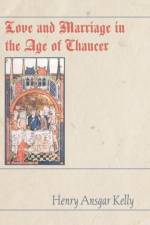
Spicing erudition with wit, Professor Kelly takes a new look at medieval attitudes toward love, sexuality, and marriage, and he corrects a number of long-standing misconceptions embodied in the concept of courtly love. Through a close examination of canon law, the common practice of clandestine marriage, writings on mysticism, and medieval poetry - particularly Gower's 'Confessio amantis' and Chaucer's romances and their sources - he concludes that medieval lovers favored matrimony and did not consider sexual passion incompatible with virtue. His evidence contradicts the theory, closely associated with C.S. Lewis, that extramarital love was preferred in the Middle Ages, and that the sexual pleasures celebrated by poets were necessarily regarded as immoral by society at large. By placing religious and cultural conventions in their proper context, Professor Kelly shows that the hopes and fears of medieval lovers were much the same as those of lovers of all other ages.
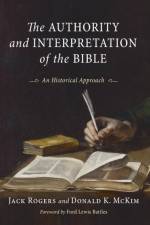
This book is a detailed and comprehensive study of attitudes toward biblical authority and interpretation held from the beginnings of the Christian era to the present day. In clear and readable fashion, the authors examine the writings of early church fathers, the medieval exegetes, and the leaders of the Protestant Reformation to locate the source of, and refute, the position of inerrancy.
In this volume, the study of the history of the doctrine of the Holy Spirit is carried on from the sub-apostolic writers to the end of the patristic period, which is generally held to terminate with Gregory the Great in the West and John of Damascus in the East. This is an early classic study in doctrinal development by one of the foremost exegetes of the late 19th/early 20th century.
Bury the Dead is a collection of personal encounters with death: stories of Alzheimer's, AIDS, cancer, hospice, suicide, murder, systemic violence, genocide, and war. In this book a teenager tenderly washes her mother's body, a community organizer cries outrage over his blood-soaked comrade, a father builds a coffin for his infant son, martyrs are honored by a former political prisoner, a young scholar's experiences in Palestine shape her reading of the Exodus narrative, and a community of gardeners plant trees at urban-core murder sites. Drawing from sources such as the peace movement, the Catholic Worker, and Occupy, these stories make connections between medicine delivery, labor picket lines, and PICC-lines; between jazz funeral secondlines and the front lines of countless struggles. Part pastoral theology, part movement history, this book powerfully demonstrates that resisting the power of death is at the heart of Christian discipleship, and that in a culture that fears death, we will only find resurrection in facing it.
Camps and retreats are an essential part of every youth ministry. But could your camping ministry use a new perspective, a fresh sense of creativity, and practical ideas that will help your kids see that God is relevant to their lives today? In 'The Youth Specialties Handbook for Great Camps and Retreats', veteran youth minister and camp director Chap Clark opens his comprehensive tool kit of camp and retreat concepts and ideas as he shows you how to build an effective, exciting camping program from the ground up.First, Clark calls for a rethinking of camping ministry that puts the needs of kids first. He then offers seasoned advice on how to use the basic tools of camping ministry - group-building activities, music, speaking, small groups, and more - in relevant new ways. He covers topics such as developing a camping strategy, how to train your camp staff, taking a fresh look at music, and the strengths and dangers of humor.You'll find everything you need in 'The Youth Specialties Handbook for Great Camps and Retreats' - how to plan a budget, how to deal with problem kids, how to work with property managers, and much more. Clark also includes complete plans for specialized camps such as discipleship camping, service retreats, outreach camping, planning retreats, and recreation retreats.
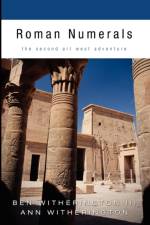
In this second novel of the series, Art West seeks out the meaning of the mysterious symbolic number 666 while exploring sites in Egypt and Turkey. He discovers an inscription in southern Egypt at the Philae Temple in Aswan, which reads, ""He is many men and no man, towering like the sphinx, dead and alive, but who knows what he thinks? Back from the Styx; 666."" Who is this sphinx-like man? Could he be relevant to the twenty-first century? These questions lead Art to investigate possible connections between the Coptic Gospels and Coptic Orthodox beliefs. In the middle of such investigations Art is involved in a harrowing prisoner exchange in Israel at the hands of Hamas, and he discovers the origins of Christians wearing crosses. He also tangles with the notorious terrorist El Tigre.Set in the context of Middle East tensions between Muslims, Christians, and Jews, this fast-paced thriller explores the meaning of eschatological or ""end times"" language for the earliest Christians, who, while trying to spread the kingdom of God, faced the rising tide of the kingdom of Caesar and his emperor cult. Along the way West learns some apocalyptic secrets destined to change his life forever.
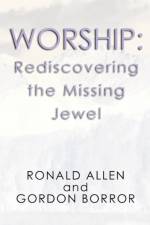
What makes for a successful worship service? In this book, the authors consider variables that make a worship service successful or unsuccessful. They explore how moods, settings and procedures can effect the worship experience, despite the purpose for worship's true aim: a heartfelt celebration of God and His worthiness.
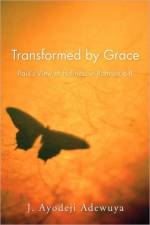
This study contends that the single thread that runs through Romans 6-8 is that of sanctification, which is explained in terms of a life that is transformed by the grace of God. The author argues that a proper understanding of Romans 7 requires that one situate it firmly in the context of the life of freedom from sin in Chapter 6, as well as a life of freedom by the Holy Spirit in Chapter 8. In terms of its contemporary relevance, Paul's view of holiness in Romans 6-8 is grounded in relationship with God, involving separation, commitment, and ethical purity. It is a call to the Roman Christians, and by implication, believers in our present day, to live an alternative lifestyle, to be a model of God's holiness, in order to make him known to the wider society. This conclusion is tested in the Pauline corpus by examining various passages. A picture of Paul's view of holiness that is consonant with the message of Romans 6-8 emerges from this study. For Paul, holiness must not be reduced to theological propositions but is to be understood as a quality to be demonstrated in the lives of those who are called by the name of the Lord.
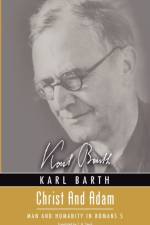
In this essay, Barth discusses the relationship between Christ and Adam as understood by Paul. Moving beyond traditional exegetical and theological scholarship done on Romans 5, Barth offers an entirely new interpretation of the conception of humanity presented in Paul's view of the Christ-Adam relationship. A valid contribution to the interpretation of Romans 5, 'Christ and Adam' is also an example of Barth's exegetical method and provides insight into his broader theological project.
Abonner på vårt nyhetsbrev og få rabatter og inspirasjon til din neste leseopplevelse.
Ved å abonnere godtar du vår personvernerklæring.