







Gjør som tusenvis av andre bokelskere
Abonner på vårt nyhetsbrev og få rabatter og inspirasjon til din neste leseopplevelse.
Ved å abonnere godtar du vår personvernerklæring.Du kan når som helst melde deg av våre nyhetsbrev.

Anyone who wishes to benefit from a well organized, topical overview of the Book of Isaiah will appreciate the clarity with which the framework of the prophet's message is expressed. Historical questions, literary construction and authorship are discussed in detail.
An ideal historical theology, or even an introduction to it, says Geoffrey Bromiley, lies beyond the limits of human possibility. And he does not intend this volume to be an all-inclusive theological study about everybody and everything. Rather, this work is composed for beginners, for inquirers, for those who know nothing or very little of the history of theology, but who want to know something, or something more.
Originally published by the University of Minnesota Press in 1980.
The story of twentieth century theology remains incomplete, writes author Sell, if due attention is not paid to the Christian ecumenical bodies and their theological work. He has therefore compiled this theological history of the World Alliance of Churches - the first detailed analysis of the theological contribution of any major Christian world communions.
With the current interest in the charismatic movement, questions about the Holy Spirit are again in the forefront of Christian discussion. These questions range from the role of the Holy Spirit in the Trinity, to the relation of the Spirit to prayer, prophecy, and the sacraments, to the place of the gifts of the Spirit in Christian living. C. F. D. Moule examines these various questions in an attempt to lead the reader into an understanding of the Spirit of God in Christian doctrine and experience.
In Signs of the Spirit the author analyzes church renewal from a historical perspective, focusing especially on the Montanist, Pietist, Methodist, and Moravian movements. Professor Snyder then synthesizes the lessons of church renewal in history and applies them in such a way that inspires a renewal strategy for the local church today.
"Modupe Oduyoye knows the rules of biblical criticism set down by the scholars of Europe and North America, and he draws upon them to good effect. Yet when he chooses to read the Hebrew Bible through the eyes of African creation myth and with the tongue of the Hamitic language group, the effect is extraordinary. Without attempting to solve the complex riddle of all that Jerusalem of old had to do with Ethiopia and East Africa, Oduyoye persuasively shows that the exquisite sensitivity of African religion to the realm of the spirit is a living witness to a biblical consciousness much richer and more pluralistic than we had realized. We ignore to our impoverishment and even our peril, Oduyoye believes, this biblical sense of human participation in the divine vitality and of spiritual kinship among the creatures."--W. Sibley Towner, Professor of Biblical Interpretation, Union Theological Seminary"Modupe Oduyoye presents a fascinating study in the area of biblical interpretation in drawing upon biblical and West African languages. This is a work that ought to stimulate thought and make African theologians more receptive to the call to take a fresh look at the Bible against the background of African life and thought."--Kwesi A. Dickson, Professor of Old Testament Studies, Director of the Institute of African Studies, University of Ghana"There is much in Modupe Oduyoye''s book that is explosive of our Western biblical theological ethnocentricity. This book is another heralding of the West African school, which will have our skills but use them according to ground rules they are working out, a school that will take its place with the Mexican, the Tamil, and many others. As the tide recedes from the West, it is good to hear the surge and thunder of the African shore."--Noel A. King, Professor of History and Comparative Religion, University of California at Santa CruzModupe Oduyoye is a Nigerian exegete and philologist. He was William Paton Fellow at the Selly Oak Colleges, Birmingham, 1981-82. He presently serves as the Literature Secretary of the Christian Council of Nigeria and as Manager of the Daystar Press in Ibadan.
"Lynn Miller is an admired friend with whom I share a passion for stewardship. His deep biblical insights and his ability to share them with both lightheartedness and profundity give him a unique ability to cause people to think in new ways about life stewardship. Lynn asks the right questions and his message is one that needs to be heard--for the sake of a culture brainwashed by the gospel of materialism."--Richard Towner, Vice President, Willow Creek Association, Barrington, IL"You never quite know where you will find Lynn Miller, but, wherever he is, Lynn notices relationships. The connective tissue between people, possessions, faith, finances, Scripture, culture, labor, and leisure captures his attention, and he mines these connections for meaning and promise. It is evident that the truth of God''s ''enough'' clearly shapes Lynn''s daily life as well as his teaching and writing."--Ed Taylor, Executive Director, Ecumenical Stewardship Center, Indianapolis, INLynn Miller served as stewardship theologian for MMA, Goshen, Indiana, until his retirement in 2006. He is a graduate of Wilmington (Ohio) College and Associated Mennonite Biblical Seminary, Elkhart, Indiana. Lynn is a popular conference and congregational speaker. He has been a pioneer in the study of firstfruits theology and its application to a life of faith. Author of the books Firstfruits Living and Just in Time: Stories of God''s Extravagance, Lynn and his wife, Linda Jean (Pine) Miller, now live their lives seeking--and finding--ways to give themselves away in service to God.
Ecclesiastes is a rather wonderful and very ancient book of Wisdom. It should not be read as a cynical and depressing account of life--rather, it's a way of putting life in perspective. The continual refrain that all is vanity under the sun, does not mean that life here on earth has no value even though death wins out in the end. On the contrary, the writer insists that here and now really does matter. Live in the present, he says, enjoy the actual life you have, it's the only one you've got. Life is meant to be lived in its time, as given from the hand of God. But you only get it once--no rehearsals! This is a wonderful and very contemporary word of Wisdom!
Have the 'fires' of modern criticism melted away Christianity's claim to truth? Seminal thinkers such as Feuerbach, Marx, Nietzsche and Freud argued that religious belief is nothing more than an illusion, triggered by our own psychological and social needs. Jung claimed that traditional Christianity was a gross distortion of the divine. Paul Avis does not deny the reality of those human factors which shape our beliefs, but he argues that it is possible to take seriously both human distortions of religious truth and also the reality of the transcendent God. These in-depth studies of the most unsparing critics of Christianity point to the possibility of a faith chastened and refined in the fires of criticism.
This sophisticated work of Greek grammar and philology is a follow-up to Abbott's monumental work: Johannine Vocabulary. These volumes are part of his six-volume series, Diatessarica. CONTENTS Introduction Book I: Forms and Combinations of Words Cases Pronouns Tense Book II: Arrangement, Variation, and Repetition of Words Arrangement and Variation Repetition Connexion of Sentences Appendix I: Twofold Meanings and Events Appendix II: Readings of Codex Vaticanus not Adopted by Westcott and Hort
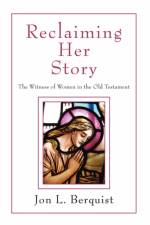
Their stories are as varied as the women who lived them--provocative, poignant, often painful. But they are not readily accessible to us. The voices are muted. The shapes and textures are blurred and easily distorted.Can the stories of Old Testament women of faith be reheard and reclaimed in an empowering way by women and men today? With remarkable sensitivity and a keen awareness of his own unavoidable male biases, Jon Berquist casts new light on Eve and Sarah, Lot's wife and Jephthah's daughter, Ruth and Esther, and others. This timely volume serves as a valuable resource for rediscovering the multiple witness of biblical women that has all too often gone unnoticed in the church's faith and life.
At least we can distinguish the principal phases of the religious movement which caused imperial society to pass from incredulity to certain forms of belief in immortality, forms at first somewhat crude but afterwards loftier, and we can see where the movement led. The change was a capital one and transformed for the ancients the whole conception of life. The axis about which morality revolved had to be shifted when ethics no long sought, as in earlier Greek philosophy, to realise the sovereign good on this earth but looked for it after death. -from the Introduction Contents Preface Historical Introduction 1. After Life in the Tomb 2. The Nether World 3. Celestial Immortality 4. The Winning of Immortality 5. Untimely Death 6. The Journey to the Beyond 7. The Sufferings of Hell and Metempsychosis 8. The Felicity of the Blessed
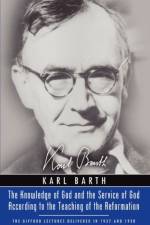
These lectures on that teaching [of the Reformed church on natural theology] will not take the form of an independent outline, but will be connected with a 'document' of the Reformation. Further, taking into account the specifically Scottish character of the Gifford foundation, this document will be a document of the 'Scottish' Reformation. . . . I am letting John Knox and his friend speak in their 'Confessio Scotica' of 1560. This is not to take the form of an historical analysis of the Scottish Confession, but that of a theological paraphrase and elucidation of the document as it speaks to-day and as we to-day by a careful objective examination of its content can hear it speak.
At the turn of the century, when women were consigned mostly to the roles of wife and mother, Alma White developed into a fierce and successful religious leader and preacher. Stanley gives an overview of Alma's life, from childhood through her years of tent evangelism to her founding of the Pentecostal Union and the The Pillar of Fire--an intriguing life in which she embraced everything from vegetarism to an affiliation with the Ku Kux Klan.
'Sacred Sacrifice' examines how analogous mythological ideas and the experience of sacred presence during the ritual act created similar ritual paradigms in two non-contiguous cultures. Vedic fire sacrifice, the Horse sacrifice in ancient India and the sacrificial development of the Christian Eucharist serve as examples. This book takes to task theories on sacrifice and ritual that emphasize the psycho-social and functionalist interpretation to the exclusion of the religious. The relationship between myth and ritual, and conscious and unconscious human behavior emerges from this analysis of universal religious structures.
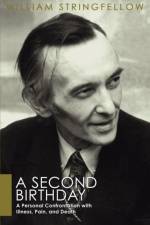
To endure pain is to suffer anticipation of death, in both mind and body. It must be acknowledged, confronted, suffered, and survived on its own terms, as it were, as the very aggression of death against life. What must be faced and felt, in the uttermost of a person's being, is that assault of the power of death feigning to be sovereign over life--over the particular life of a particular person and over all of existence throughout all of history. It is, so to speak, only then and there--where there is no equivocation or escape possible from the fullness of death's vigor and brutality, when a person is exposed to absolute vulnerability--that life can be beheld and welcomed as the gift which life is. William Stringfellow almost died. In the spring of 1968, he contracted a baffling and apparently hopeless disease that horribly wasted his body before a last-ditch operation brought about a dramatic cure. This is Stringfellow's own account of that ordeal of pain and of the fundamental beliefs that sustained him in his agony and gave him the courage to undergo the dangerous surgery that saved his life. His vivid description of that experience, told without emotion or cant, is both startling and strengthening. His story is a personal testimony to the relevance of faith and love in the mystery of healing, and to the gift of life itself that few of us take time to recognize.
By selecting as her focus 'mutuality, ' Nothwehr brings to the fore an issue of perennial importance in Christian social ethics, that of power. As she shows, feminist theology invites religious ethicists to reconceive normative questions of power from the vantage point of its dynamic, mutual sharing, a sharing that encompasses not only individual relations, but society and the natural world. She also demonstrates how attention to relations of mutuality sheds light on the spectrum of classical Christian theological and moral topics, revealing dimensions of our traditions that standard assumptions about power as domination tend to obscure. --Christine Firer Hinze, Associate Professor of Theology, Marquette University This book allows 'mutuality' to take its rightful place along with 'love' and 'justice' in Christian social ethics. Written with great clarity, with excellent scholarship, and with the thinking of key historical figures in mind, this book focuses on the thinking of four contemporary Christian feminists--Beverly Wildung Harrison, Carter Heyward, Elizabeth Johnson, and Rosemary Radford Ruether--to show that 'mutuality' is at the heart of ethics. But it does more. It shows that 'mutuality' at the heart of the human, at the heart of the divine, and at the heart of the meeting between the two. --John J. Shea, visiting Associate Professor of Pastoral Care and Counseling, Boston College Dawn Nothwehr employs a corrective category, 'mutuality.' At first blush the term would seem too tender and nebulous to address the splits in our consciousness, but this theologian brings well-informed care to its definition. It becomes in her hands a critical tool which can do healing surgery on many foundational categories of Catholic theology, and indeed on much of modern thinking beyond the pale of Catholicism. Mutuality calls attention to the essential interdependency of all that is in our cosmos. --Daniel C. Maguire, Professor of Theological Ethics Marquette Universit
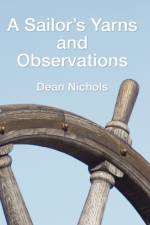
I read the manuscript from beginning to end and couldn't put it down until I had finished. This book is remarkably detailed, and amazingly accurate. This 'is' the way it really was. Bob Anderson, former Protection Officer, Alaska Department of Fish and Game My husband tells a story with captivating drama. I relived this remarkable adventure as I read this book, as if I, myself, were there on the decks of that little ship. Ramona Nichols wife of this most unusual Captain
Captain Nichols may be a crusty, old River Rat, but he is a real Christian. And he tells it like it is. Michael Sorace body shop owner and member of Christian bikers group, Sons of Thunder Dean Nichols writes in depth on the lofty principals of life, with emphasis on the quintessence of old and sacred traditions. Dr. Anthony Amendola Christian Psychologist In this man's writings, I found a kindred spirit. Bob Wagstaff School Principal and Creation Science teacher Mr. Nichols writes in the old traditions, the 'Spun yarns of old.' We relive some very important parts of our American heritage through these delightful, often profound stories. Sylvana Amendola Christian Counselor
Abonner på vårt nyhetsbrev og få rabatter og inspirasjon til din neste leseopplevelse.
Ved å abonnere godtar du vår personvernerklæring.