










Gjør som tusenvis av andre bokelskere
Abonner på vårt nyhetsbrev og få rabatter og inspirasjon til din neste leseopplevelse.
Ved å abonnere godtar du vår personvernerklæring.Du kan når som helst melde deg av våre nyhetsbrev.

This 1912 book was intended to redress the vague and inconsistent conceptions of sin in the early twentieth century.
The Eucharist is at the heart of individual Christian devotion and at the center of every Christian community. Tissa Balasuriya challenges us to see the relation between the spiritual Bread of Life and the staff of life, food for the physically hungry, who make up one-third of the world. This is disturbing but dynamic reading for all who gather at the Table of the Lord's Supper.
Available again for the first time in many years, Moses Stuart's Grammar of the New Testament Dialect was America's earliest complete Greek grammar. This second edition, published in 1841, represents a marked improvement over the first edition and stands as a landmark in the history of Greek grammars written in the English language.
Roman citizenship was important to St. Paul for it brought privileges and powers granted to no other men. Yet with this in mind, after his conversion, Paul tells the community of Philippi, As for us, our commonwealth is in heaven. Christians thus, he says, are to claim the citizenship of heaven, fully aware of the privileges, powers, and responsibilities of that great destiny. From the writings of St. Paul, the author shows how the Saint wishes us to live as citizens of heaven: Christians, you are already saved from the moment of your baptism; you are already glorified with Christ here and now. The author first shows how the paganism of the times indicated the necessity of revelation from God and how this revelation came from the Father in the person of Christ in the New Testament. Christians as a result must express their gratitude to the Father by living anew in Christ Jesus. This Christian concept of life is not a mere institution involving a moral code and abstract doctrine, but is rather summed up in the Person of Christ. The Christian can accomplish this by the work of the Holy Spirit, who fosters a life of faith in Christ, dominated by a love and a freedom of the children of God. The fruit of this conformity to the Spirit is the beauty of the moral life. Yet for all its nobility, such a life is incomplete. Fulfillment comes only in heaven where those who have struggled to obtain the victory will merit the living and eternal crown of blessedness with the Trinity. Filled with the spirit of St. Paul, this volume will be of great value to those who seek a sound Scriptural theology. The great Pauline themes are marvelously interwoven and highlighted in presenting a unified spiritual doctrine.
From the moment King Fernando and Queen Isabel sponsored Christopher Columbus's voyage, they began issuing contracts, decrees, and privileges implementing the project. Previous editions of these collected documents, known as the Book of Privileges, have been published. Yet because such editions have ordered the material as Columbus left it, use of these books has proven problematic. The Repertorium Columbianum edition presents these documents in chronological order, providing a continuous historical narrative of the monarchs' and Columbus's enterprise. (The documents also appear, separately, in Columbus's arrangement.) Superbly translated, with historical and philological commentary, this edition of the Book of Privileges is a valuable historical resource.
This well known work on the atonement is primarily a historical and descriptive work. Mozley overviews the biblical material and follows with chapters on the atonement in Greek and Latin theology, and in Reformation and post-Reformation doctrine. Long used as a standard text, Mozley's overview is succinct and informative.
An excerpt from 'The Wealth of Christians': There is no escaping Jesus' teaching on care and love for our fellow men. There is no exclusivity for Christians: the hungry, thirsty, naked, sick, prisoners, children, poor, crippled, lame, blind, widows, even enemies are his followers' responsibility and are to be welcomed into the Christian community (Mt. 25: 35-44).... What is particularly special about [Jesus'] teaching, however, is that he claimed that, when we carry out acts of generosity and love, we are at the same time witnessing to his presence in our lives: 'He who abides in me, and I in him, he it is that bears much fruit: for apart from me you can do nothing' (Jn. 15: 5).
In this classic text, William Henry Simcox describes the style and language of each of the writers of the New Testament. Two appendices complete the work: the first highlights similarities in vocabulary between different groups of writers, and the second illustrates, in detail, the contrast between 'Hellenic' and 'Hellenistic' Greek.
In this work, Oesterley presents an outline of the antecedents of the Christian doctrine of last things. He also endeavors to distinguish the fundamental differences between the Gospel teaching and its precursors.
Dr. Morison's 'Commentaries on St. Matthew and St. Mark' are simply invaluable. With immense labor he has gathered together all that previous commentators, ancient and modern, foreign and native, have contributed to the interpretation of these sacred 'memoirs, ' and in so far as it is of value has given it a place in his work. Samuel Cox in 'The Expositor' We are happy to call attention to this painstaking and exhaustive work. No student can well do without it. It is a marvelous display of learning and labor. C.H. Spurgeon in 'Sword and Trowell
My purpose in these Lectures is to give a short history, as clear as I can make it, of the Religion of the Old Testament. By this I mean that I have endeavored to group the religious material contained in that book in chronological order, and to trace the historical development, which then becomes visible, from its beginning to its end. This beginning has been but lightly touched upon, partly because of its extreme obscurity and partly because of my own insufficient equipment to deal adequately with so complex a problem; but more space has thus been won for the delineation of that phase of the Jewish religion in which it stood at the close of the Old Testament period, and on the lines of which it was destined to develop for many subsequent centuries. from the Preface
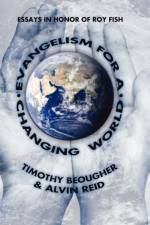
Since the first century, believers have worked diligently to find the most effective means of evangelizing. In every age there have been great teachers who have excelled in their abilities to show others how best to communicate the good news of Christ. Roy Fish, Professor of Evangelism at Southwestern Baptist Theological Seminary, has inspired generations of evangelists who have learned his balanced, biblical methodology. These essays written in his honor discuss personal evangelism, preaching, discipleship, great spiritual awakenings, contemporary spirituality, worship, mission work, and related topics. Included are contributions by scholars and preachers such as Jimmy Draper, Calvin Miller, Robert Coleman, and Rick Warren. This collection is a must for evangelists, students of theology, pastors, Bible teachers, or anyone interested in effective outreach.
This is the best book on deacons I have come across in many years. It is well researched and has proven to be an excellent tool for training deacons, deaconesses and mothers. No diaconate training program would be complete without it." Dr. Michael S. Williams, Author of Christian Marriage, Choice or Chance? Pastor of St James Baptist Church, San Francisco, CA I am using this book for training my deacons. This book is mandatory reading for my deacons, and should be in the hands of every Baptist Church member." Dr. T.P. Fields, Author of 'With Christ, ' 'It Can Be Done, ' and Pastor of New Hope Baptist Church, Union City, CA
A smooth transition to excellence in management cannot be achieved by an abortive hodgepodge of borrowed programs and panaceas. First-rate company success must derive from a top executive who can think . . . who can provide the rest of his team with a desire to excel and a distinct impatience with mediocrity. In this his second book, the author of 'Tough-Minded Management' presents a formula for developing an entirely new business way of life. Using candid, no-nonsense language, he pinpoints the one element that can turn a mediocre company into a great one . . . the one element that can enlighten and energize ordinary firms so that they accomplish extraordinary things--Climate! Executives will find here not fanciful theories but tough-minded principles. -Principles that have been tested and proved in the marketplace and in the executive suite. -Principles that will help managers everywhere to understand the way of their jobs. -Principles that will help managers to develop and, in fact, settle for nothing less than employees who welcome responsibility and the challenge of contributing to company profits. Here is a book for leaders and for potential leaders; a book for any executive who senses the need for Developing a 'Tough-MInded Climate for Results.'
Ever since its original publication over a decade ago, Earthkeeping has presented a thought-provoking, biblically based call for responsible stewardship. In view of the continuing environmental crisis worldwide and in light of increased ecological awareness in recent years, the book's message regarding earthkeeping is now more pertinent than ever. This greatly revised and augmented edition of Earthkeeping updates the original edition while retaining the same breadth of perspective, reflecting the combined insights of Christian scholars in biology, physics, economics, literature, and philosophy. The book begins by laying out, with scientific precision, the state of the planet. Several chapters then carefully examine various historical and contemporary views of creation. Next the authors survey biblical and theological teaching relative to humanity's use of creation. The book concludes by offering helpful, practical guidelines for an earthkeeping ethic. Besides providing an updated state of the planet analysis, this revised edition of Earthkeeping deals with recent cultural and religious developments, incorporating new material, for example, on the Deep Ecology and new age movements, the Gaia hypothesis, and ecofeminism. This edition also takes into account the recent wealth of Christian thinking about the earth, including the recovery of important but neglected voices from the Christian tradition, such as Hildegard of Bingen and Celtic spirituality. At the end of the book, an expanded and updated annotated bibliography, organized according to subject area, and new indexes (of names and subjects and of Scripture references) enhance the value of Earthkeeping as a significant resource fostering better human stewardship of God's creation.
In addition to exegetical, biblical, and systematic theology, there is room also for a philosophy of revelation which will trace the idea of revelation, both in its form and in its content, and correlate it with the rest of our knowledge and life, writes the author, one of the most distinguished Reformed theologians of the twentieth century. Theological thought has always felt the need of such a science. Thus Philosophy of Revelation, first published in 1909, is part of the same discipline and heritage as James Orr's 'The Christian View of God and the World' (1893) and Gordon Clark's 'A Christian View of Men and Things' (1952). Bavinck deals with the relationship between revelation and (in chapters 2-3) philosophy, (4) nature, (5) history, (6) religion, (7) Christianity, (8) religious experience, (9) culture, and (10) the future. He contends that the word cannot be explained without God, that the natural and social sciences presuppose metaphysics, and that none of the subjects under consideration here is intelligible or meaningful apart from special revelation.
One of the most fascinating aspects of biblical research today involves Near East discoveries and how they cast light on the Bible. Newspaper headlines are made by the Dead Sea Scrolls, or Gnostic Gospels, or an Inscription by Pontius Pilate, or unearthing the bones of a crucified Jew from the first century, or the Shroud of Turin. Here is a handy guide discussing some twenty-five of the most significant archaeological and documentary finds of our times, and explaining how they broaden our knowledge of the biblical world. For the general reader this is a most helpful companion to the 'New Testament Message' and 'Old Testament Message' series. The author, Raymond E. Brown, has been described by 'Time' as probably the premier Catholic Scripture scholar in the U.S. The Sulpician priest, who is Auburn Distinguished Professor of Biblical Studies at Union Theological Seminary in New York City, has been awarded over a dozen honorary doctorates from American and European universities. He was commended by Pope Paul VI for his learning, prudence, and Catholic regard for the Magisterium of the Church. In a revealing Introduction Brown reports that reading about such discoveries was the spark that moved him to commit his life to formal Bible study. These discoveries helped him to develop his cardinal principle of biblical interpretation: The Bible as word of God is a combination of divine inspiration and human time-conditioned perception. A knowledge of the civilizations and places in which God's people lived should convince open-minded Bible readers that the time-conditioning must be acknowledged if one is not to distort the Scriptures.
Correcting much of the received tradition, Ian Siggins has undertaken original research that leads to a new understanding of the formative role that Martin Luther's mother played in his verbal, spiritual, and psychological development. Siggins begins with a discussion of the traditional portrait of Hanna Luder, including a review and the resolution of the debate about Hanna's maiden name. Next, he looks at a much less technical and more colorful controversy involving Luther's mother. He describes the social background and achievements of Hanna's family, and relates details of young Martin's contact with that family during his impressionable adolescent years. Siggins pays special attention to the preaching that Luther heard in the circle of his maternal relatives. Finally, he examines Luther's mature writings for traces of his mother's influence.
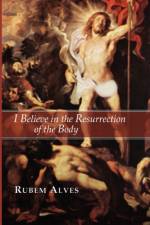
I wrote these things as celebrations of the resurrection. In the hope of the resurrection of the dead. To exorcise death, which we ourselves feed with our flesh. Invocations of joy and beauty. Whoever is joyful and loves beauty fights better. Resurrected bodies are more beautiful warriors because they bring in their hands the colors of the rainbow. And so bodies are transformed into seed which impregnates the earth so the future can be born. . . .
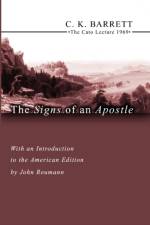
What did it mean to be an apostle in New Testament times? What does it mean today? C. K. Barrett explores these questions in a lively and penetrating manner. First he surveys the New Testament to discover who the apostles were and what they did. The relation between the original twelve apostles and later Christian leaders, including Paul, is also examined. From the biblical background, the author moves to the church today--how does a church reflect its apostleship in its faith and preaching, life and order? The marks of an apostolic church are seen by Barrett within the context of radical theology and modern plans for church union. As Methodist clergy involved in ecumenical issues and a noted New Testament scholar, Barrett brings a refreshing perspective to his subject. Pastors and laity alike will enjoy the clarity of style and vital approach to the church, past and present.
'The Jesus of Christian History' is volume three in a series developing a theology of Jesus. This volume explores Jesus as understood and interpreted from within the historical Christian tradition. Not a history of Christology as such, it attempts to retrieve the Christian's Jesus by looking at key moments in the history of classical theology from the Fourth Gospel through Martin Luther.
'Catholic Worship' is a major introduction to today's liturgy by one of the country's most prominent liturgical scholars. It offers a comprehensive survey of the Second Vatican Council's teaching on the liturgy and its decrees concerning liturgical revision and reform, and it provides a guide to the revised forms of Mass, the office, the sacraments and other rites. Focusing throughout on the meaning and significance of the liturgy, the author also discusses the principles of authentic participation and why we should make the most of the liturgy. The early chapters deal with the origins of the liturgy and with significant developments in medieval and modern times. The main part of the book is devoted to the rites and texts, but there are also chapters dealing with the place of music, art, architecture, speech, and movement in liturgy, and the significance of time and of signs and symbols. The general principles governing music and signing in the various rites receive special attention, and there is a section on the design and re-ordering of churches.
The most important matter of concern for theologians today, as always, is the existence of God. Theologians of the past have relied upon rational proofs for God's existence, especially those based on an analysis of contingency and causality. These Thomistic proofs served their purpose in a culture that was permeated with philosophical orientations and metaphysical argumentation. But such logical arguments seem to have lost their relevance in our technological age. Many people today are looking to religion not so much for spiritual guidance, counseling or psychotherapy as for some kind of experience of the mystery which is God. Individuals seeking meaning and hope in their lives are not comforted by a God described as the Necessary Cause or Unmoved Mover. Rather they seek to experience the presence of the personal and loving God of Biblical revelation and the Judeo-Christian tradition. They search for signs of the divine presence in their daily life experiences. This problematic of identifying God's presence in an experience may necessitate the construction of an entirely new theological methodology radically different from the traditional one which proceeded largely by way of rational analysis. Realizing this, Father Meyer analyzes, from the theological point of view, the experience of God's presence in daily life and surveys the criteria and norms by which that experience can be identified as being of divine origin. He also includes an analysis of the fundamental yet often forgotten role of the Holy Spirit in religious experience, thereby exploring the basis of the current Pentecostal movement.
Abonner på vårt nyhetsbrev og få rabatter og inspirasjon til din neste leseopplevelse.
Ved å abonnere godtar du vår personvernerklæring.