









Gjør som tusenvis av andre bokelskere
Abonner på vårt nyhetsbrev og få rabatter og inspirasjon til din neste leseopplevelse.
Ved å abonnere godtar du vår personvernerklæring.Du kan når som helst melde deg av våre nyhetsbrev.

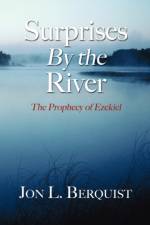
The book of Ezekiel begins with a strange vision, full of chariots and fire, living creatures with wings and too many faces, and a throne floating through the air. It ends with a vision of a new era for God's people--the beginning of a new manner of life with God. In between are some of the most puzzling passages in all of prophetic literature. Ezekiel's meaning for our times is not an easy one to grasp. In this insightful and highly readable study, Jon Berquist leads the reader through a lucid exploration of Ezekiel's complex visions. The result is a moving account of one prophet's wrestling with the issue of God's ever-surprising presence.
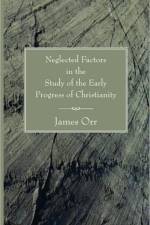
This volume represents the Morgan Lectures delivered at Auburn Theological Seminary in New York in October 1897. The advances in the history of Christianity have come about not so much from the discovery of new materials--though of these also unremitting research has yielded an abundant supply--as from the new historical temper in which scholars have approached their task; from the fresh power acquired of reading aright the meaning of the data already possessed, and of setting them in new lights and relations; from increased skill in coligating them, and in interpreting the significance of unnoticed details in their bearing on an entire situation--in which lies so much of the higher art of the historian. Just as the naturalist is reputed to be able from a single bone to reconstruct the form of some creature of the past, so our modern scholars aim at showing that the minutest fact is not isolated, but stands in organic relation with the all-pervading life of the time; and from comparison of the facts they seek to re-create for us a picture whose justification is its verisimilitude, and its power of interpreting the sum-total of the phenomena. --from Lecture One
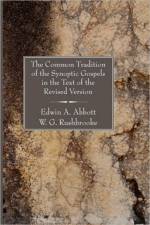
The object of this book is to place before English readers this Common Tradition, as being a tradition earlier than any of our existing Gospels, and consequently exhibiting the closest approximation we possess to some parts of the original narrative from which our Gospels are derived. . . . It is possible that for some time the Evangelistic records were handed down not in writing, but by means of oral tradition, like the Mishna of the Jews; which is said to have been editorially arranged about the end of the second century, but not committed to writing till afterwards. A tradition intended to be handed down orally might naturally aim at brevity; and the following extract from a condensed and interesting essay on the Mishna will shew that, at all events in Jewish tradition, brevity was occasionally accompanied by its proverbial danger, obscurity. --from the Introduction
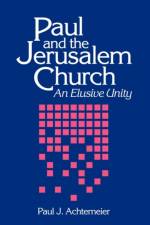
The evidence in the New Testament is clear: the church, from its beginning, faced problems of division and disunity, with the result that such unity still remains a goal to be achieved in the life of the visible body of Christ. Only a clear, hard-eyed view of the kind of problems that have beset the Christian community from its beginning will enable that community to move forward, under the guidance of God's Spirit, to that unity to which it is called. - From the Introduction
Muzorewa is chair of the Department of Philosophy and Religion at Lincoln University of Pennsylvania. He is also the author of "The Origins and Development of African Theology" and "The Great Being: Yahweh, Chuku, Allah, God, Brahman."
Pass It On is the ringing battle cry from the Apostle Paul in his two letters to Timothy, and pass it on is the same message and challenge to followers of Christ who study those letters today. The books of 1 and 2 Timothy are a gold mine for Christians who want to learn (or review) the basics in spiritual living. With careful scholarship and clear writing, Robert Mounce gives you the tools to mine that gold as he covers both letters in verse by verse style - - from knowing how to avoid going wrong, to discovering the role of women in the church; - from finding qualities you need for church leadership, to guarding against cashing in on attractive new converts; - from refuting the legalism of super sainthood, to training you to be in good spiritual condition; - from learning to give tender loving care, to avoiding the love of money. These are just a few of the many truths Paul shares with Timothy and which the author helps you apply to your own spiritual life. The result is a practical commentary, a manual of church discipline...a series of instructions on how Christians in a local community should organize themselves in order to worship God and live together in Christian love.
Messianic Prophecy is the most important of all themes; for it is the ideal of redemption given by the Creator to our race at the beginning of its history, and it ever abides as the goal of humanity until the divine plan has been accomplished. . . . [It] has been too much dominated by the apologetical and the polemical interests, and the historical and dogmatic bearings of the theme have been too much neglected. This has given occasion to another common fault in the treatment of the subject. It has not been grasped as a whole and treated by a comprehensive method. --from the Preface
I have been engineer for Captain Nichols, when he was in command of another ship. He is a real Captain. But on this remarkable voyage, he was the storyteller; and he most certainly told it well. - Rex Lukinich Marine Engineer I have worked the often stormy waters of the Pacific Coast, and recognize a storyteller with both accuracy and drama. One rides every wave, hears every sound, feels every heartbeat of this bruising voyage. - Capt. Norval Evans Master, Fishing Vessel 'Quasar
In this book, 'Israel and the Church', Markus Barth renews the conversation between those who still wait for the Messiah and those who believe in Jesus Christ. Israel and the church are both brothers and strangers, but Dr. Barth shows that they can share their faith in the one living God and help each other in the adversities of this world. In the first of three sections, the author poses the question, What can a Jew believe about Jesus - and still remain a Jew? The Apostle Paul's reputed anti-Semitism is examined next. Dr. Barth does not criticize the image of Paul in Jewish literature, but points out that the trouble lies in the Christian understanding of Paul rather than in Paul himself or in Jewish interpretation. Finally, the author deals with Israel and the church in Paul's Epistle to the Ephesians. He shows how Ephesians can throw light on the problems of Christian usage of the Old Testament, the mission to the Jews, and Christian responsibility in regard to hidden or manifest anti-Semitism.
Jesus of Nazareth inaugurated his earthly ministry with an announcement of the fulfilment of time as well as the nearness of the kingdom of God. The Good News he preached came as a challenge to start a new way of living in our historical process. In fact, time and history are the most important parameters of human life. The ongoing flow of time is what we call history and the entire historical process of the world is at the same time salvation history. Humans are the makers of history and they are also being formed and transformed by this history. The Church, in continuing the saving mission of Christ, tries to become the sacrament of God's presence in history and imparts to the world at large its healing and saving power. It is from the Bible that we have to derive a comprehensive and holistic meaning of time and history, and it is this salubrious understanding that should be the source of inspiration for all in approaching and celebrating the challenge of time and history in our times. The various studies in this 'Time and History: Biblical and Theological Studies' try to throw light on some of the forgotten dimensions of time and history, and invite men and women towards a more meaningful commitment to our historical process.
Contents Introduction Book I: Johannine Key-Words 1. Believing 2. Authority 3. Johannine Synonyms Book II: Johannine and Synoptic Disagreements 1. Johannine Deviations from Synoptic Vocabulary 2. Synoptic Deviations from Johannine Vocabulary Book III: Johannine and Synoptic Agreements 1. Words Peculiar to John and Mark 2. Words Peculiar to John and Matthew 3. Words Peculiar to John and Luke 4. Words Peculiar to John, Mark, and Matthew 5. Words Peculiar to John, Mark, and Luke 6. Words Mostly Peculiar to John, Matthew, and Luke Conclusion
Congregationalism has always accorded large liberty to local churches in their interpretation of doctrine and polity. Its creeds are not exclusively binding, and its platforms have always been held to be open to revision. They have been witness to the faith and practice of the churches rather than tests for subscription. But by reason of this liberty a colletion of Congregational creeds and platforms illustrates the history of the body whose expressions they are better than if those symbols were less readily amended. The points wherin they agree may therefore confidently be believed to set forth that which is abiding in the faith and practice of the churches, while the features of change and the traces of discussion of more temporary importance which these creeds and platforms exhibit illustrate as clearly that which is mutable in our ecclesiastical life. It is because the writer deems such a collection of prime value in illuminating the history of Congregationalism that this compilation has been made. - from the Preface
This exploration in creative theology aims to discover what will happen to Christian doctrine if the category of story is substituted for all the philosophical metaphors and scientific models that have been previously used to give intellectual shape to the gospel . As a systematic theologian, Robert Paul Roth constructs an ontology of story and applies it to the doctrines of the church.
Third World theology has grown and developed in recent decades - largely due to the efforts and activities of the Ecumenical Association of Third World Theologians (EATWOT). The present volume, arising from their Second General Assembly, is an ideal introduction to this emerging movement, exploring both the common bonds that unite Third World theologies and the distinctive elements and concerns that distinguish them from one another. Bringing together reflections and evaluations from world-renowned theologians, 'Third World Theologies' offers an overview of the state of theology - and its political, economic, and social context - in Africa, Asia, Latin America, and among minorities in the United States. It then addresses the specific commonalities and divergences of these theologies, exploring the interplay of concern for issues of class, race, sex, and culture. 'Third World Theologies' concludes with an evaluation of the development (past and future) of EATWOT itself, which represents in its own history the development of Third World theology.
What if you wanted to treat all of life as good, in full view of its pains? It is not 'simply' that all of life is good, because its pains can clearly be overwhelming. But is it possible to find life good, including its hard and painful parts? How might one live that way? ---------------- This book is written so that rumors of God in his functional presence might not die out. It is written so that those who want to affirm life in full view of its pains and wrongs may do so with recognition and intention.
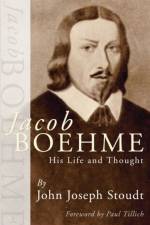
Jacob Boehme, the German religious mystic of the late sixteenth and early seventeenth centuries, had an astounding influence on the history of Western philosophy. The impact of his thought left its mark on such men as Hegel, Schopenhauer, Nietzsche, Bergson, Heidegger, and especially through his ideas concerning creation and evil, he was a power in the speculative theology of the nineteenth century. This fresh study of Jacob Boehme's life and writings not only presents a concrete and vivid picture of Boehme's personal affairs and of the spiritual situation of Protestant Germany more than three hundred years ago; it also demonstrates for the first time the development and growth of Boehme's thought. Utilizing new biographical sources and newly discovered manuscripts, the author has, in addition, analyzed Boehme's speculative system in its mature form after he had worked through his strange symbolic language to a more traditional synthesis. This is an objective examination of Boehme's life and thought. It avoids depicting him either as a heaven-blessed saint or a Baroque Faust. On the basis of the evidence now available, Dr. Stoudt offers a new portrait of Boehme as the proponent of a theology that stresses feeling and intuition instead of reason and intellect. As Paul Tillich states in his Foreword to this volume: John Stoudt's book will be a help to all philosophers and theologians who desire an introduction to one of the most profound and strangest systems of Western thought - strange in comparison to the prevailing method of modern philosophy, profound in comparison with much theism in modern theology.
Overview The early church leaders were prolific in their writing and historical documentation. While some of this work has been canonized, much has been forgotten. The Text and Studies: Contributions to Biblical and Patristic Literature collection resurrects these documents in a renewed and focused study, attempting to glean the wisdom and insight of the ancients. These volumes dig deep into apocryphal literature with critical analyses, close readings, and examinations of the original manuscripts.
To ask why Christians live together, writes Tom Breidenthal, is to ask what a Christian household is and what kind of householding Christian faith inspires. In the church today we find many different kinds of households: married couples with and without children, single parents, same-sex couples, monastic communities, people living alone. In constructing a theology of the Christian household Breidenthal begins with New Testament texts on the family and goes on to develop criteria by which we can tell the difference between households that are holy, households that fall short of holiness, and households whose basic premises rule out any possibility of holiness. He thus sheds considerable light on the essential and vexing questions of our time concerning intimacy, sexuality, community, childrearing, and the sanctifying nearness of others.
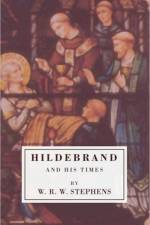
Hildebrand, who took the name Gregory VII when he ascended to the Papacy, is considered one of the most significant popes of the Middle Ages. He attempted sweeping reforms in the Church and took a stand for the primacy of the papacy over secular authorities, a policy that was epitomized in his conflict with Emperor Henry IV. His life's work was based on his conviction that the church was founded by God and entrusted with the task of embracing all humankind in a single society in which divine will is the only law; that, in her capacity as a divine institution, she is supreme over all human structures, especially the secular state; and that the pope, in his role as head of the church, is the vice-regent of God on earth, so that disobedience to him implies disobedience to God: or, in other words, a defection from Christianity. A controversial Pope who was once regarded as an ambitious tyrant, most modern historians have revised this perspective, viewing him as sincerely pursuing justice. In his own lifetime the Church suffered division, and he himself incurred much criticism; but Gregory's example and the activities of his successors did much to regenerate the Church.
'Vital'...pertaining to life; essential; of critical importance. 'Contemporary'...of the present time; belonging to the same time or period. 'Issues'...a point or matter, the decision of which is of special or public importance. How does the Christian faith affect our understanding of vital contemporary issues such as abortion, euthanasia, and the AIDS crisis? How can we evaluate the moral conflicts of our era from the perspective of biblical truth, and what does the Bible say about social issues, modern-day claims to miraculous gifts, and the tragedy of suicide? 'Vital Contemporary Issues: Examining Current Questions and Controversies' draws upon the insights and studies of numerous evangelical scholars and writers to address crucial moral and social concerns. Some of the chapters included in this volume are: Biblical Absolutes and Moral Conflicts by Norman L. Geisler Euthanasia: A Biblical Approach by J. Kerby Anderson The Church and the AIDS Crisis by Timothy D. Howell Evangelical Pluralism: A Singular Problem by W. Gary Phillips Christian readers, church leaders, and pastors alike will appreciate the insight and guidance of 'Vital Contemporary Issues'.
Dr. Morison's 'Commentaries on St. Matthew and St. Mark' are simply invaluable. With immense labor he has gathered together all that previous commentators, ancient and modern, foreign and native, have contributed to the interpretation of these sacred 'memoirs, ' and in so far as it is of value has given it a place in his work. Samuel Cox in 'The Expositor
Abonner på vårt nyhetsbrev og få rabatter og inspirasjon til din neste leseopplevelse.
Ved å abonnere godtar du vår personvernerklæring.