








Gjør som tusenvis av andre bokelskere
Abonner på vårt nyhetsbrev og få rabatter og inspirasjon til din neste leseopplevelse.
Ved å abonnere godtar du vår personvernerklæring.Du kan når som helst melde deg av våre nyhetsbrev.

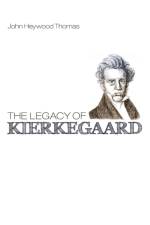
John Heywood Thomas was probably the earliest twentieth-century British scholar to study Kierkegaard's texts. Here he offers, as the fruit of a lifetime's devotion to that study, what Kierkegaard would call a ""fragment""--a little of what needs to be said about the legacy of this radical Danish writer, philosopher, and theologian. This book, based on lectures given at the University of Calgary, seeks to explore different aspects of Kierkegaard's work in its original context and its legacy. Chapters include studies on Kierkegaard the writer (located within the history and development of European literature and nineteenth-century aesthetic theory) and Kierkegaard the philosopher (understood within the context of the development of philosophy in the first quarter of the nineteenth century). Also, since he always described himself as a religious thinker, Kierkegaard's view of religion is explored and in particular his attitude to the possibility of Christianity without the confines of an established church. Because Kierkegaard's philosophy is never separate from his religious thinking, Heywood Thomas also offers studies on the issues of metaphysics in Kierkegaard--its relation to theology, the scope of reason, the problem of time, and the meaning of death. Finally, to appreciate Kierkegaard as a man of his time as well as a ""man for all seasons,"" his views on education are considered.
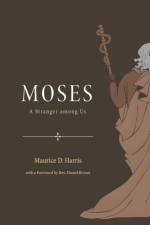
In Moses: A Stranger among Us, Rabbi Maurice Harris leads us to look beyond familiar and popular portrayals of Moses so that we can discover the Moses whose lesser-known attributes and experiences provide us with surprisingly fresh ethical and spiritual guidance. Harris offers many angles on his subject, interweaving traditional religious interpretations, academic Bible scholarship, psychological and sociological analysis, feminist readings, and more. Combining deep respect for the biblical text with a willingness to question received tradition, Harris reveals a complex Moses whose life story gives us important tools for better understanding issues like religious fundamentalism, intermarriage, identity confusion, civil disobedience, gay and lesbian equality, and the nature of sacred mythic storytelling. Written in a refreshing, plainspoken voice for people of all faiths or none, the result is a volume of creative, thought-provoking, and exciting readings of the Bible.
Synopsis:In this engaging and provocative study, John Peter Kenney examines the emergence of monotheism within Greco-Roman philosophical theology by tracing the changing character of ancient realism from Plato through Plotinus. Besides acknowledging the philosophical and theological significance of such ancient thinkers as Plutarch, Numenius, Alcinous, and Atticus, he demonstrates the central importance of Plotinus in clarifying the relation of the intelligible world to divinity. Kenney focuses especially on Plotinus's novel concept of deity, arguing that it constitutes a type of mystical monotheism based upon an ultimate and inclusive divine One beyond description or discursive knowledge. Presenting difficult material with grace and clarity, Kenney takes a wide-ranging view of the development of ancient Platonic theology from a philosophical perspective and synthesizes familiar elements in a new way. His is a revisionist thesis with significant implications for the study of Greco-Roman, Jewish, and Christian thought in this period and for the history of Western religious thought in general.Endorsements:"This book should be required reading for all those seriously interested in the study of religion, both ancient and contemporary. This is not only because it presents, with up-to-date scholarship and great clarity and elegance, a form of ancient monotheism which is not sufficiently well known. It shows that there exist, firmly rooted in our common tradition, not only one form of monotheism but two, not only the exclusive one with which we are familiar, but an inclusive one, which has had a great deal of influence on religious minds through the centuries, and continues to do so. And this is a fact of far-reaching contemporary importance."-- A. Hilary Armstrong"The canon of western scholarship tends to skip cavalierly from the classical Greek philosophers--Plato and Aristotle--to medieval giants like Thomas Aquinas, quite oblivious of the fact that the theological synthesis attributed to Aquinas would be inconceivable without the work of intervening generations of scholars--pagan, Jewish, Christian, and Muslim alike. Nor can we overlook the effect of the writings of Plotinus on the giant bridge-figure, Augustine. John Peter Kenney's remarkable work fills in this yawning gap by providing us with stepping stones from the classical to the medieval worlds, and reminding us in the process how much their philosophy fulfilled the role of wisdom, providing a way of life and so a 'mystical theology.'"-- David Burrell, C.S.C."In analyzing the development of the mystical monotheism that reached its culmination in Plotinus, Kenney has made a major contribution both to the study of ancient thought and to the renewal of philosophical theology."-- Bernard McGinnAuthor Biography:John Peter Kenney is Professor of Religious Studies at Saint Michael's College of Colchester, Vermont.
""All Scripture is God-breathed"" and yet some parts seem rather less God-breathed than one might imagine, or even like. The prophecy concerning Moab in Jeremiah 48 is one such text, since it appears to equate the Lord's work with bloodshed and curses those who withhold their swords. How, if at all, might such a passage inform the Christian community of faith? In this sophisticated study Julie Woods identifies some salient features of Jeremiah's Moab oracle by means of a careful analysis and comparison of both the Septuagint and the Masoretic Text of Jeremiah 48. She also explores the implications of links between the Moab oracles in Jeremiah 48 and Isaiah 15-16. The focus then moves to theological hermeneutics via an examination of some recent Christian interpretations of the oracle (from Walter Brueggemann, Ronald Clements, Terence Fretheim, Douglas Jones, and Patrick Miller). Building on the observations of these scholars and the conclusions reached from her own textual analyses, Woods provides an innovative Christian reading of the oracle (including two imaginative film scripts to bring the text to life). Perhaps one of the more surprising proposals is that Easter is the ultimate horizon of Jeremiah 48.
For many Americans, Christian missionary efforts have usually involved distant and exotic places. Sometimes, however, we can learn more about missions and interreligious engagement by looking in our own backyard. This collection of essays deriving from a consultation on missionary history and attitudes in colonial Jamestown, Virginia, explores long-standing assumptions related to Christian mission by listening to Native American voices. What were the ideologies and theologies that motivated early Virginia colonists? How did certain understandings of mission and church provide support and legitimacy for invasion and exploitation? What were, and are, the responses of indigenous populations, and how should Christian mission to Native Americans continue in light of this history? This book addresses these still very relevant questions and explores ways in which new understandings of Christian mission are needed in the expanding religious and cultural diversity of the twenty-first century.
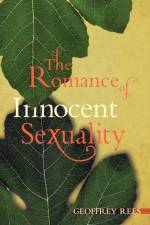
From the polling place to the pulpit, The Romance of Innocent Sexuality investigates the passions that are enacted in debates about same-sex marriage. In a critique that is at once humorous and unrelenting, Geoffrey Rees argues that sexual desire is fundamentally a desire to make sense of oneself as a whole person. Through a constructive engagement with the writings of Saint Augustine on original sin, Rees turns on its head the conventional wisdom regarding the goodness of sexual relationship, arguing that sin, not innocence, is the starting point in pursing justice in sexual ethics. To that end Rees boldly reclaims the wisdom of the most disreputable teachings of the Augustinian tradition: that original sin is a literal inheritance of all humanity of the singular disobedience of Adam and Eve in Eden, and the inherent sinfulness of all human sexuality. This work also engages theological readings of nineteenth-century fiction and literary readings of contemporary theological writings. In so doing Rees shows that debates about same-sex marriage are so compelling because the participants are all telling a common story in which they seek to establish the innocence of their own preferred forms of self-understanding as defined against some other persons' sinful selves. In contrast to this, Rees argues for the acceptance of responsibility for the sinful exclusions that make possible finding the meaning of embodied personal identity through marriage between any two persons.
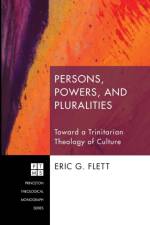
Synopsis:Through an intimate conversation with the writings of Thomas F. Torrance, Flett articulates a Trinitarian theology of culture. Torrance's work suggests that Christian assumptions in the areas of God, creation, and humanity had an important influence upon the development of Western scientific culture. This book develops each of these areas of Torrance's thought in order to articulate a theology of culture rooted in a Christian understanding of God as triune, creation as contingent, and human persons as stewards created in the image of God. Drawn together, these three areas of Torrance's thought suggest that human culture and cultural plurality ultimately originate in the creative action of a triune God, mediated through the creative activity of the human creature as it engages a contingent created order in its attempts to foster human flourishing and to bear embodied witness to its Creator. The result is not only a unique contribution to the emerging secondary material on Torrance's work, but also a contribution to the field of theology of culture as a systematic locus in its own right.Endorsement:"T. F. Torrance's vitally important work is only just beginning to receive the wide hearing it properly deserves. Flett has done us a great service in presenting a bold vision of the nature of human culture that emerges directly out of Torrance's work. This deserves to be read and discussed widely."-Jeremy BegbieThomas A. Langford Research Professor in TheologyDuke University"Persons, Powers, and Pluralities provides a clear and compelling case for developing a theology of culture in conversation with the work of T. F. Torrance. This volume is a must read for those engaged in the discipline of theology of culture and is a fitting introduction to the great Scottish theologian's Trinitarian vision. Far from subverting the created order and human culture, we find here the celebration of creation and culture in and through the triune God's personal and dynamic engagement of the world."-Paul Louis MetzgerProfessor of Christian Theology & Theology of CultureMultnomah Biblical Seminary "Flett is on the right track here. Many North American Christians are struggling to figure out what culture is and how to 'engage' it well. Approaching culture theologically is crucial and T. F. Torrance is, in my view, one of the most important Protestant theologians of the last century. Thinking about culture in light of Torrance's Trinitarian outlook makes a lot of sense."-Christian Smithauthor of What is a Person?: Rethinking Humanity, Social Life, and the Moral Good from the Person UpAuthor Biography:Eric Flett is Associate Professor of Theology and Culture at Eastern University, St. Davids, Pennsylvania.
In the mid nineteenth century, Reformed churchmen John Nevin and Philip Schaff launched a fierce attack on the reigning subjectivist and rationalist Protestantism of their day, giving birth to what is known as the "Mercersburg Theology." Their attempt to recover a high doctrine of the sacraments and the visible Church, among other things, led them into bitter controversy with Charles Hodge of Princeton Seminary, as well as several other prominent contemporaries. This book examines the contours of the disagreement between Mercersburg and Hodge, focusing on four loci in particular-Christology, ecclesiology, sacramentology, and church history. W. Bradford Littlejohn argues that, despite certain weaknesses in their theological method, the Mercersburg men offered a more robust and historically grounded paradigm for the Reformed faith than did Hodge. In the second part of the book, Littlejohn explores the value of the Mercersburg Theology as a bridgehead for ecumenical dialogue, uncovering parallels between Nevin's thought and prominent themes in Anglican, Catholic, and Orthodox theology, as well as recent debates within Reformed theology. This thorough study of one of the most creative movements in American theology offers an alluring vision of the quest for Reformed catholicity that is more relevant today than ever.
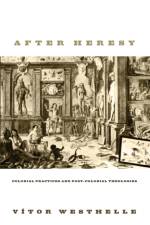
In this important contribution to post-colonial theological studies, the argument is made that religious practices and teachings imposed on colonized peoples are transmuted in the process of colonization. The very theological discourse that is foisted on the colonized people becomes for them, a liberating possibility through a process of theological transformation from within. This is offered as an explanation of the mechanisms which have brought about the emergence of the current post-colonial consciousness. However, what is distinctive and unique about this treatment is that it pursues these questions with two basic assumptions. The first is that the religious expressions of colonized people bear the outward marks of the hegemonic theological discourse imposed on them, but change its content through a process called ""transfiguration."" The second is that the crises of Western Christianity since the Reformation and the Conquest of the Americas enunciates the very process through which post-colonial religious hybridity is made possible.This book unfolds in three parts. The first (the ""pre-text"") deals with the colonial practice of the missionary enterprise using Latin America as a case study. The second (the ""text"") presents the crisis of Western modernity as interpreted by insiders and outsiders of the modern project. The third (the ""con-text"") analyses some discursive post-colonial practices that are theologically grounded even when used in discourses that are not religious.Some of the questions that this project engages are: Is there a post-colonial understanding of sin and evil? How can we understand eschatology in post-colonial terms? What does it mean to be the church in a post-colonial framework? For those interested in the intersection of theology and post-colonial studies, this book will be important reading.
Wondering about what you need to know before entering into ministry? Bothered about what the call of God entails? Or do you desire an evaluation of your life and work as a minister? If your answer to any of the above questions is ""yes,"" then ""Fifteen Ps For Every Minister"" is a must read for you. This book examines all the essentials of ministry, providing detailed answers to previously unanswered questions and making propositions that will rock your boat, all from the very words of Jesus found in just one chapter of the Bible-Matthew 10.Reading this book may be the beginning of a radical change in your walk with and work for God.
Anglicans around the world have responded to the gospel in many different cultural contexts. This has produced different customs and different ways of thinking about church issues. In the process of enculturation Anglicans have found themselves encountering social and political realities as malign forces against which they have had to struggle. As a consequence, the personal and local dynamic in Anglicanism has created not just diversity of custom and mental habits, but it has done so at points that have been vital to the way Anglicans have been committed to the gospel.Conflict and the Practice of Christian Faith looks at the process by which local traditions developed in Christianity and how these traditions have related to other sub-traditions of the universal church. It assesses some specifics of the Anglican experience and argues for a significant re-casting of some prominent elements of that tradition, at the same time clarifying some of the distinctive elements in the Anglican tradition. This leads to a more nuanced appreciation of the force of the social and political framework within which Anglicans have had to work out their salvation and of the different forms of secular society and different understandings of plurality and diversity. It also entails showing how the imperial route to catholicity took no firm root in Anglicanism. Going global has been a significant experiment in Anglican ecclesiology that is by no means over yet. The terms of that experiment lie at the heart of the current Anglican debates. The book will be of interest to Christians generally who belong to faith traditions spread across different cultures. It is also a case study of the issues of global reach and local tradition.
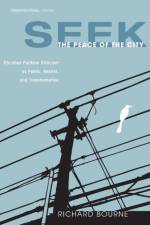
Seek the Peace of the City provides a robust engagement with the theological foundations and practices of Christian social and political criticism. Richard Bourne identifies a theological realism found in the work of John Howard Yoder. This realism bases social and political criticism in the purposes of a nonviolent, patient, and reconciling God. Bourne develops this account and shows how it is consonant with aspects of the work of a range of contemporary theologians including Stanley Hauerwas, John Milbank, Karl Barth, and Dietrich Bonhoeffer. In developing this theological realism, the book furnishes an account of Christian criticism capable of addressing key debates in contemporary theology and political theory. Bourne begins by arguing for the public status of theological political claims. He demonstrates that only a vigorous theological realism, grounded in the universal lordship of Christ, is capable of providing a foundation for local, particular, and ad hoc practices of critique. The book concludes by developing an account of the impact such a theological realism and practice of critique might have on contemporary political theory--with explorations of the doxological nature of social change, the changing shape of the state, governmentality and political sovereignty, and the status and role of religious communities in civil society.
Synopsis:Education has contributed enormously to the Scottish national character. The emphasis has always been on making a good education available to all and on giving those with talent every opportunity of advancement. At the beginning of the nineteenth century, however, it was clear that the provision of schooling was failing to meet the needs of an expanding population and the growth and diversification of the economy. In 1824 the Church of Scotland began an ambitious program to tackle the problem. In setting up new schools and the first teacher training colleges, the Church saw itself as supplementing an existing system of national education for which it shared a statutory managerial responsibility. This book offers an account of the struggles and achievements of the Church of Scotland over some fifty years as it sought to control and strengthen school education throughout the country. In so doing, it furthered the model of education for which Scotland became famous. Readers interested in current debates about the curriculum and standards in school education, the involvement of parents, the place of religious education, and the desirability or otherwise of faith schools will recognize their beginnings in these pages.Endorsement:"A commitment to public education is the spine of the Scottish Reformed tradition. John Stevenson''s authoritative study of the resilience of the Church of Scotland in sustaining that Reformation commitment in the face of the enormous challenges of a modern society undergoing profound economic and social change is an inspiring example to Reformed churches and educators around the world today. I commend it to that global readership and to all who are concerned for education."-Dr. William StorrarDirector, Center of Theological Inquiry, Princeton, New Jersey"John Stevenson provides an original and important study into developments in education at a crucial time in Scottish history. This insightful analysis fills a gap in our understanding by focusing on policy at the national level through the work of the Church of Scotland''s Education Committee. Education and the National Church were inseparable, making this book essential reading for anyone interested in Scotland''s past and, through the Scottish diaspora, its influence on education systems in many other countries."-Peter HillisVisiting Professor, University of Strathclyde, Glasgow, ScotlandAuthor, The Barony of Glasgow: A Window onto Church and People in Nineteenth-Century Scotland (2007)Author Biography:John Stevenson is a retired Church of Scotland minister. He was awarded a PhD by the University of Edinburgh in 2005. As a minister he served in three parishes before being appointed as General Secretary in the Church''s Department of Education, which is responsible for the Church''s interest in state education and religious education in schools. He has been chairman of the Association for the Teaching of Religious Education in Scotland (ATRES) and of the Religious Education Movement in Scotland. For a number of years Stevenson represented the Church of Scotland on the European Forum for the Teaching of Religious Education (EFTRE); on the Scottish Inter Faith Association; and on the UK Council of Christians and Jews. In 2000 he was awarded an Honorary Fellowship of the Educational Institute of Scotland (FEIS) for his services to school education.
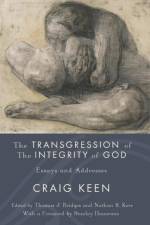
Synopsis:"In this dark, when we all talk at once, some of us must learn to whistle."In this comprehensive collection of his work, Craig Keen''s voice emerges as that of a theologian who has indeed learned to whistle. In a day when much of what passes for academic "theology" is careful to maintain a safe distance from any determinate act of faith or work of praise, Keen evinces a single-minded determination to think and to speak, to write and to live doxologically. And whether writing or lecturing, teaching or conversing, Keen understands theology to be nothing less than an invitation to work out one''s faith with fear and trembling.Throughout this volume Keen argues that the life, death, and resurrection of Jesus disrupt all metaphysical attempts to determine the reality of "God," and suggests instead that theology is to be done liturgically and eucharistically-as the work of a people whose labor is carried out with open hands, free from all attempts to grasp and control. Keen discusses doctrinal issues-the Trinity, incarnation, creation-as well as a number of critical theological concerns-church and culture, justice, holiness, Christian education-in this light. The result is a profound set of reflections on the ways in which the word of the cross simultaneously transgresses our constructions of "God" and gives us to live transgressively in love.Endorsements:"We''ve come to expect from Craig Keen that he will make things theological more difficult and complex than we thought they were. Then, after inviting us to accompany him in several unfamiliar paths, he makes us more trusting of the gospel without insisting that we eschew the complexity or arrive at a presumptuous conclusion. Masterful teacher that he is, he proffers only accompaniment, in all the richness of that term, knowing that each one will find the way only by being found by the Way. This is the method of these essays. What they also reveal is a writer whose humility and deference to God''s grace is palpable holiness. Would that this holy way could spread among theologians."-M. Douglas MeeksCal Turner Chancellor Professor of Theology and Wesleyan StudiesVanderbilt Divinity School"Talk of self-involving knowledge and performative speech has become so widespread in recent years that I almost hesitate to use it. But in relation to Craig Keen''s work, there is really no alternative. Keen''s writing is animated by a deep personal desire for an authentically kenotic existence, and a longing for the coming of a community of women and men who understand that they cannot live until they die. There is pain and anguish in these essays but there is also well-founded hope. I cannot read them without being reminded very forcibly of the crisis theology of the young Karl Barth. This is a book to be read and savored-and read again."-Bruce McCormackCharles Hodge Professor of Systematic TheologyPrinceton Theological SeminaryAuthor Biography:Craig Keen is Professor of Systematic Theology at Azusa Pacific University, Azusa, California. He is the author of the forthcoming After Crucifixion (Cascade Books).
In this book George Newlands seeks to work out a modern restatement of a Christian understanding of God, Father, Son and Spirit. Evil on the scale experience in modern wars, and the awareness of the variety of transcendent values in the pluralism of the contemporary world, have tended to reinforce intellectual objections to traditional doctrines. If the whole picture must remain partly obscure to us, nevertheless we must continue to reflect on the character and activity of the God of the Christian faith and renew our attempts to describe and state beliefs. In the first part of his study Professor Newlands considers the sources of a Christian understanding of God and analyses the substantive content of the doctrine of God as creator and reconciler of the cosmos, as personal, self-differentiated, transcendent being. The second part reflects on christology and examines the social and ethical dimensions of the cost of discipleship. Throughout, Professor Newlands demonstrates the importance of thinking about God, not in unreflecting slogans but with all our intellectual resources.
This new and refreshing approach to 2 Corinthians shows how exegesis of the New Testament writing can issue in theology that is relevant to today. Beginning with an account of the essential thrust of the text, the authors argue for the unity of the letter, setting it against both its Jewish and Hellenistic backgrounds, and examining questions of meaning and reference in the interpretation of particular passages. They then consider how the text can be illuminated by the modern study of hermeneutics, as well as by new sociological approaches. The whole study reaches its climax with an assessment of Paul's authority then and now, and the importance of what he says about God. To conclude, the authors provide their own vivid and compelling translation of Paul's words, inviting a complete rereading of the letter in the light of all that has gone before.
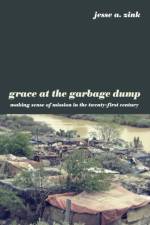
Synopsis:Like many young people in his generation, Jesse Zink had long been eager to work overseas and make the world a better place. As a missionary working in a shantytown community in South Africa, he found all that and much more--in demanding, unexpected, and surprising ways. Grace at the Garbage Dump takes readers with Jesse through his years in South Africa: struggling with AIDS patients to get life-saving drugs, coaching women through a micro-credit program, and teaching preschool students to sing (and dance) to "Johnny B. Goode." It's a story that leads us to a deeper understanding of our world and is at once hopeful and uplifting while also being credible and serious. The headlines are dominated by disaster and despair but young people remain passionate about service to the least among us. Grace at the Garbage Dump is an invigorating call to respond to the difficulties of our time with an active and engaged faith. Whether you end up at the local soup kitchen or halfway around the world, you'll be challenged to seek God's grace in even the most adverse circumstances.Endorsements:"One part travelogue, one part coming-of-age story, one part spiritual autobiography, and one part reflections on poverty and what it means to help and be helped by those in need, Grace at the Garbage Dump introduces us all to Jesse Zink--talented as a writer, honest as a Christian thinker, and smart as an activist--exactly the kind of voice we need."--Brian McLarenAuthor of A Generous Orthodoxy"Jesse is well placed to reflect and write on the missional challenges in a context that looks and feels God-forsaken. We, however, know that there is no such place untouched by the grace of God. Yet the missional challenges in this part of Mthatha make hope dim."--Thabo MakgobaArchbishop of Cape Town, primate of the Anglican Church of Southern Africa"Grace at the Garbage Dump adds a vital young voice to the vocation of Christian mission and illustrates the life-changing power of a ministry of presence. Jesse's willingness to be vulnerable and stand in unfamiliar terrain surrounded by the swirl of an alien language and situation is a witness to the courage born of faith and testifies to the truth that God throws no one away. All people, whether their homes are in a mansion or on a mountain of trash, are precious to God."--Mpho TutuDirector of the Tutu Institute for Prayer & Pilgrimage, author with Desmond Tutu of Made for Goodness"Jesse is an articulate, passionate, and sophisticated young scholar and activist for God's global mission of restoration and reconciliation, who brings a unique and refreshing perspective to the realities and study of Christian mission in the world today. I can think of no more exciting study of Christian mission than Jesse's book. It is a welcome resource to the many people who are looking for a meaningful and contemporary presentation of what God is up to in the world today."--Ian DouglasEpiscopal bishop of Connecticut, former Angus Dun Professor of Mission and World Christianity, Episcopal Divinity School"Grace at the Garbage Dump is a vivid and honest journey of exploration and spiritual depth. It is a heartfelt glimpse into what it means to cross a border, leave a comfort zone, and reach into the lives of others. Living in the midst of such vulnerability, Jesse Zink gives voice to beauty, despair, joy, and sorrow. What emerges is full of dignity, life, and meaning."--Paul-Gordon ChandlerEpiscopal priest, interfaith advocate, and author of Pilgrims of Christ on the Muslim RoadAuthor Biography:Jesse Zink is ordained in the Episcopal Church and a student at Yale Divinity School. In addition to being a missionary, he's also been an ambulance driver, news reporter, and DJ.
This book proposes a new and comprehensive chiastic structure as well as a new unifying theme for the Letter of James. In accord with this structure that organizes its oral performance, the words "worship to live by" express what the letter as a whole is exhorting its audience to adopt. "Worship" includes not only liturgical worship but also the ethical behavior that complements it, so that the result is a holistic way of worshiping God. And the words "to live by" embrace the worshipful conduct by which to live out presently one's birth to a new life as a believer before the final coming of the Lord Jesus Christ, with a view to the future eternal life to be granted at the last judgment as the outcome of such worship. In short, the Letter of James urges its audience to practice the worship to live by now in order to live eternally.
Reclaiming Mission as Constructive Theology offers a compelling case for the need to integrate God's mission and missional church conversation with a public and post-colonial study of World Christianity. Driven by a commitment to publicly engaged theology that takes seriously the reality of Global Christianity, Paul Chung presents a vital new model for understanding the mission of God as a dynamic word-event. This is argued in conversation with contemporary missional theology and analysis of the development of Global Christianity, and as such brings important transcultural issues to bear on contemporary American conversations about the missional church. All of this serves to innovatively stimulate this missional church conversation and more directly address the various questions that arise in pursuing mission in a multiculuralized American society.
The Holy Spirit provides access to relationship with and reflection on the Triune God. In West Africa, Christians approach the Triune God in a way that challenges the Jewish-Christian memory. Deeply rooted in their ancestral memory, where living is relationality, they embrace the Trinitarian faith, the economy of the relational God-Christ-Spirit, by expanding and reinventing their indigenous experience of God, deities, spirits, and ancestors. Christian faith-practice is marked by the spectacular dominance of the Holy Spirit, whose charisms reflect the operations of deities. African Initiated Churches (AICs), Protestant and Catholic charismatic movements, experience God-Spirit's liberating and healing hand for the enhancement and realization of communal and individual destiny (what one expects from a concerned providential deity). This book argues that the emergent West African Trinitarian imagination is in harmony with Hebrew insight into the One and Only Yahweh of the patriarchs that assumed the dimensions of Elohim, God--experienced as a sound of sheer silence by Elijah, and proposed in utter weakness as the Only God by Deutero-Isaiah--the God that Jesus called Abba, Father. As Spirit and Life, the Holy Spirit, which is the source of all charisms (Origen), is our link to the Trinity.
Spanning various regions of Sub-Saharan Africa, the authors of this volume come together to explore the complex relationship between religion and democracy in contemporary Africa. As a result of the end of the Cold War and the fall of the Soviet Union, many African countries have come to the realization, however partial, that political and social change is inevitable in spite of government heavy-handedness and threats. It has also become evident that no political system that refuses to permit freedom of political expression and alternative systems of governance could continue to be sustained.It is in precisely this political climate that religious institutions have collaborated with other elements of civil society to call for political reforms, with the church often becoming the prominent voice against oppressive governments in countries such as Kenya and South Africa. It is the purpose of this book to assess how religion shapes political issues and to what extent religious forces influence the civil society. By acknowledging the role of the civil society, the essays recognize the resilience that comes out of Africa even when the sociopolitical situation seems unbearable.
The apostle Paul was a man of many journeys. We are usually familiar with the geographical ones he made in his own time. This volume traces others--Paul's journeys in our time, as he is co-opted or invited to travel (sometimes as abused slave, sometimes as trusted guide) with modern and recent Continental philosophers and political theorists. Kierkegaard, Nietzsche, Heidegger, and Benjamin; Taubes, Badiou, Zizek, and Agamben--Paul journeys here among the philosophers. In these essays you are invited to travel with them into the regions of philosophy, hermeneutics, political theory, and theology. You will certainly hear the philosophers speak. But Paul will not remain silent. Above the sounds of the journey his voice comes through, loud and clear.
Synopsis:Here at last is a book that deals seriously and comprehensively with the rapidly growing field of spiritual direction. Spiritual Direction offers practical help to those clergy and laypersons who are responsible for the spiritual lives of other people. Spiritual Direction encourages spiritual directors to take their responsibilities seriously and professionally, moving spiritual direction away from "cozy little chats" to the "cold, hard slab" of the examining table. Equipped with certain skills--a keen knowledge of human psychology and an awareness of biblical and contemplative traditions--the spiritual director objectively examines the client, then offers concrete guidance for the spiritual life of the client. As a prominent figure in pastoral theology and Anglican spirituality for three decades, Martin Thornton is uniquely qualified to offer us insights into spiritual direction. He restores credibility and professionalism to spiritual direction, which is at once hard, analytical, and supportive. Thornton writes with wit, common sense, and an absence of sentimentality on a topic that calls for serious attention. Spiritual Direction is important reading for the increasing numbers of laypeople involved in spiritual direction, as well as for clergy and pastoral counselors.Author Biography:Martin Thornton (1915-1986) was an Anglican priest and spiritual director, author and lecturer on ascetical theology. He was active for much of his life in the Diocese of Truro, England.
Synopsis:This is a book for those whose life is in a state of change, who wait--though not for a clearly defined outcome--unsure of where they are going or where they may be taken. Often the need for change emerges within one of life''s transitional periods: the early years of parenthood, ill-health, unemployment, redundancy, retirement, separation, divorce, or bereavement. These are those whom Donald Eadie calls "Saturday People"--people in a wide variety of circumstances learning what it can mean to wait within a sustained, bewildering, or messy period of transition. There is a long Saturday between the Friday of crucifixion and the Sunday of resurrection. Periods of transition, particularly when we are in pain or distress, are no time for easy answers or religious clichés. Sustenance of a different kind is needed, coming from deep roots and underground streams. Grain in Winter offers a series of meditations and seed thoughts for those who find the waiting hard.Donald Eadie is himself a Saturday person. He chose to learn about life in a Yorkshire mill when his contemporaries went on to university studies. Through marriage, Sweden is his second home. He has often been in the firing line for advocating justice and respect between people of all faiths, women and men, gay and straight people. In recent years he has lived with a serious spinal condition which forced him to retire early as Chairman of the Birmingham District of the Methodist Church. He has not given up being a much consulted Methodist minister, leading retreats and writing about spirituality.
Synopsis:What if the story of Eve and Adam was not meant to be a story about creation and the origin of life? What if Eve and Adam were not personifications of all women and men? What if the curse on the woman had nothing to do with the physical pain of giving birth? What if working by the sweat of the brow was a description of the slavery that existed under the monarchy? What if being cast out of the garden of Eden was a metaphor for the deportation of people from Judah to Babylon?The author of this book takes readers on a journey of inquiry leading to the conclusion that the story of Eve and Adam was authored by the theological school of Jeremiah in order to dissuade the Judean people never to reinstate the monarchy after their return from Babylon--a monarchy that previously was responsible for so much infant mortality, subjugation of women, and enslavement of its own people. At the heart of this journey is the discovery that Eve and Adam actually are metaphors for Israel and Judah--two nations that chose to have a king like other nations and suffered the consequences.Endorsement:"Moe-Lobeda has taken sharp notice of the diverse genres of literary expression in the Old Testament; he has matched that with a diversity of historical circumstances reflected in the text. The outcome is a kaleidoscopic survey of the many lenses of the Bible, a range that gives readers much freedom and that refuses every absolutism about the text. The result is that readers must allow great room for each other."--Walter BrueggemannColumbia Theological SeminaryAuthor Biography:Ron Moe-Lobeda is the pastor of University Lutheran Church in Seattle, Washington. He and the members of this congregation are founders of Elizabeth Gregory Home, which provides a day center and transitional housing for homeless women.
Synopsis:What really happens to human consciousness at death?How might love and immortality be related?What is purgatory and do most religions teach the concept of purgatory?What is spirituality?Is the essence of the mystery we call "God" the same for the Buddhist, Christian, Hindu, Jew, and Muslim?Is it more important what my religion teaches me to believe, or is it more important that my religion enables me to become more loving and compassionate?How might one practice a reverence for life by our food choices?How do we balance work and spirituality?How do we balance spirituality and social-justice work?In this collection of sermons and reflections, Floyd Vernon Chandler suggests that there are many valid spiritual paths to Enlightenment and Holiness. Understanding the mystery we call "God" is akin to the story of five blind men touching different parts of a huge elephant. Each man''s description and understanding of the elephant will vary based upon the location of his touch. The importance of any religion is determined by how much our respective spiritual paths lead us to grow in love and compassion for one another and for all other forms of life on this planet. The sermon and reflections found in Beyond the Grave: Love and Immortality express a Universalist theology that all souls will eventually be reunited with the mystery we call "God." Inherent in this collection of writings is the belief that there is truth in all religions and that there are many valid spiritual paths. No religious dogma or ideology has a monopoly on truth.Author Bio:Floyd Vernon Chandler is an ordained Unitarian Universalist minister and has provided ministry in a variety of settings over the past thirty-three years, including parish ministy, correctional chaplaincy, and military chaplaincy.
Endorsements:"The republication of this definitive text is long overdue and a must for all those who are concerned for the maintenance of a sound, optimistic spirituality."-Alan Jones "Skillfully uses Bible and history to good advantage in this long look at English Spirituality''s roots." -The Christian Century"I know of no other book that rivals Thornton''s work as a clear and well written compilation of so much valuable material." -Review of Books & Religion "Will provide both Protestant and Catholic readers with an exceptionally readable and thorough treatment of a shared tradition."-Spiritual LifeAuthor Biography:Martin Thornton was one of the leading lights in Anglican theology and spirituality. Of his numerous books, English Spirituality and Spiritual Direction have helped shape the course of ascetical theology. Before his death in June 1986, Thornton served for ten years, as Chancellor of Truro Cathedral. A Joyful Heart was his last book.
Abonner på vårt nyhetsbrev og få rabatter og inspirasjon til din neste leseopplevelse.
Ved å abonnere godtar du vår personvernerklæring.