








Gjør som tusenvis av andre bokelskere
Abonner på vårt nyhetsbrev og få rabatter og inspirasjon til din neste leseopplevelse.
Ved å abonnere godtar du vår personvernerklæring.Du kan når som helst melde deg av våre nyhetsbrev.

In 1843 the Church of Scotland split apart. In the Disruption, as it was called, those who left to form the Free Church of Scotland claimed they did so because the law denied congregations the freedom to elect their own pastor. As they saw it, this fundamental Christian right had been usurped by lay patrons, who, by the Patronage Act of 1712, had been given the privilege of choosing and presenting parish ministers.But lay patronage was nothing new to the Church in Scotland, and to this day it remains an acceptable practice south of the border. What were the issues that made Scotland different?To date, little work has been done on the history of Scottish lay patronage and how antipathy to it developed. In A Great Grievance, Laurence Whitley traces the way attitudes ebbed and flowed from earliest times, and then in the main body of the book, looks at the place of Scottish lay patronage in the extraordinary and complex period in British history that followed the Glorious Revolution of 1688. The book examines some of the myths and controversies that sprung up and draws some unexpected conclusions.
Home and Away provides new vantage points in contextual theology. An initial stream looks at the significance of postcodes as a way of mapping local areas as situations for pastoral ministry and theological reflection. A second, but not ancillary, stream of essays considers the local within a range of glocal and global dynamics. The essays do not unfold a single trajectory of thought about context, and at various points they indirectly question and challenge each other. The pieces meld into an international and ecumenical conversation about contemporary Christian ministry. It includes voices from North America, Europe, and Austral/Asia. Although open ended, and constantly crisscrossing questions from one context to another, the collection is emphatic in its common conviction that attention to very local circumstance is crucial for Christian ministry, just as are wider views of a locality's position in broader flows.
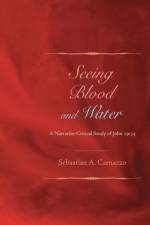
One of the most significant features of the Fourth Gospel is its unique version of the crucifixion of Jesus (19:12-42). A full understanding of the central section of this scene, the depiction of Jesus' death and the details immediately surrounding (19:31-37), depends on the interpretation of the verse that recounts the piercing of his side and the ¿ow of blood and water (19:34). Yet, there has never been a clear consensus as to the meaning of this verse. This difficulty is not insurmountable, as the solution becomes apparent when one lends an attentive ear to the voice of the narrator. The event described in verse 34 is explicitly declared by the narrator in verse 37 to be the fulfillment of a "Scripture passage" that says, "They shall look at him whom they have pierced." It is, therefore, to that Scripture, Zechariah 12:10, that the author directs his audience for the meaning of this occurrence, and it is then from the literary context of the Zechariah passage that we can come to understand better this Gospel's account of the death of Jesus.
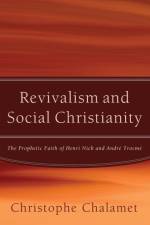
How does one become a "Righteous among the Nations"? In the case of Henri Nick (1868-1954) and Andre Trocme (1901-1971), two French Protestant pastors on whom that title was conferred by Yad Vashem (Jerusalem) for their acts of solidarity toward persecuted Jews, the answer seems to be: by being immersed, from an early age, in the discourses and practices of social Christianity. By focusing on the lives of two significant figures of twentieth-century Christianity, this study, the first in English on the Social Gospel in French Protestantism, presents a genealogy of that movement, from its emergence in the last decades of the nineteenth century to its high point, during World War II, in Le Chambon-sur-Lignon, where Trocme and many people of that area of southern France rescued hundreds of Jewish refugees. As social Christians who prayed and worked for the coming of God's kingdom on earth in the midst of a world torn by two world wars, Henri Nick and Andre Trocme combined a deep revivalist faith with a concern for the concrete conditions in which people live. They wished to "save" others, and indeed they realized that intent in ways they did not foresee.
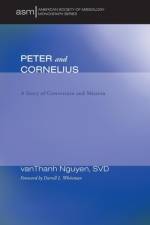
The mission to the Gentiles and their conversion into the church gave rise to conflict in the early Christian community. Acts 11:1-18 indicates that there was clearly dissension over the issue of Peter going to the house of Cornelius and participating in table fellowship with him. The issue was no small matter, since it could have split the church. How then does Luke portray the resolution of the conflict? Instead of writing a long theological treatise, the author employs the art of storytelling. The study of Luke-Acts has long been dominated by historical-critical methods, focusing on Luke as a historian and theologian. This work, however, proposes a paradigm shift by looking at Luke as a storyteller. Since narrative criticism is concerned with the work of the writer as author and not simply redactor, and since it treats narrative precisely as narrative, the time has come to apply the narrative-critical approach to Acts 10:1--11:18. This approach explores a different set of questions: What is the story of Peter and Cornelius about? How is the story told? What effect does the story have on the reader and why?
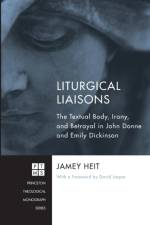
When Jesus offers his body as a promise to his disciples, he initiates a liturgical framework that is driven by irony and betrayal. Through these deconstructive elements, however, the promise invites the disciples into an intimate space where they anticipate the fulfillment of what is to come. This anticipatory energy provides the common thread between Donne and Dickinson, who draw specifically on the unstable story that unfolds during the Last Supper in order to develop a liturgical poetics.By tracing the implications of the body as a textual presence, Liturgical Liaisons opens into new readings of Donne and Dickinson in a way that enriches how these figures are understood as poets. The result is a risky and rewarding understanding of how these two figures challenged accepted theological norms of their day.
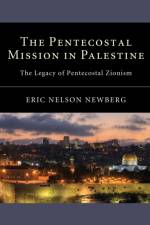
The Pentecostal mission in Palestine is a virtually unknown episode in the history of Pentecostalism. Its story begins in 1906 at the Azusa Street Revival, from which missionaries were sent to Palestine. In its first thirty years, the Pentecostal mission in Palestine gained a foothold in Jerusalem and expanded its reach into Jordan, Syria, and Iran. It was severely tested and lost traction during the tumultuous period of the Arab Revolts, World War II, and the Partition Crisis. With the catastrophic war of 1948, the Pentecostal missionaries fled as their Arab clients were swept away in the Palestinian Diaspora. After 1948, a valiant attempt was made to revive the mission, but only with relative success. Although the Pentecostal missionaries failed in their objective of converting Jews and Muslims, they were eyewitnesses of the formative events of the Arab-Israeli conflict. Newberg argues that the Pentecostal missionaries functioned as brokers of Pentecostal Zionism. He offers a postcolonial assessment of the Pentecostal missionaries, crediting them for advocating philosemitism, yet bringing them up short for disregarding the civil rights of Palestinian Arabs, espousing Islamophobia, and contributing to the forces working against peace in the Holy Land.
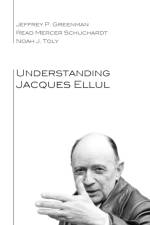
Jacques Ellul (1912-1994) was one of the world's last great polymaths and one of the most important Christian thinkers of his time, engaging the world with a simplicity, sincerity, courage, and passion that few have matched. However, Ellul is an often misunderstood thinker. As more than fifty books and over one thousand articles bear his name, embarking on a study of Ellul's thought can be daunting. This book provides an introduction to Ellul's life and work, analyzing and assessing his thought across the most important themes of his scholarship. Readers will see that his remarkably broad field of vision, clarity of focus, and boldly prophetic voice make his work worth reading and considering, rereading and discussing.
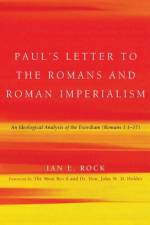
This book seeks to demonstrate that the Letter to the Romans may be seen as an attempt by a subordinate group to redress actual and potential issues of confrontation with the Empire, and to offer hope, even in the crisis of facing death.Paul demonstrates that it is God's peace and not Rome's peace that is important; that loyalty to the exalted Jesus as Lord and to the kingdom of God--not Jupiter and Rome--leads to salvation; that grace flows from Jesus as Christ and Lord and not from the benefactions of the Emperor. If the resurrection of Jesus--the crucified criminal of the Roman Empire--demonstrates God's power over the universe and death, the very instrument of Roman control, then the Christ-believer is encouraged to face suffering and death in the hope of salvation through this power. Paul's theology emerges from and is inextricably bound to the politics of his day, the Scriptures of his people, and to the critical fact that the God who is one and Lord of all is still in charge of the world.
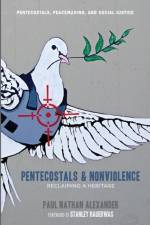
Pentecostals and Nonviolence explores how a distinctly Pentecostal-charismatic peace witness might be reinvigorated and sustained in the twenty-first century. To do so, the book examines the nature of the early Pentecostal commitment to nonviolence, and investigates the possibilities that might emerge from Pentecostals and Anabaptists entering into conversation and worship with each other. Contributors engage the arguments surrounding the heritage of Pentecostal pacifism in the United States and then move toward exploring nonviolence and peacemaking as crucial for contemporary Christianity as a whole. Ranging from theology, testimony, and pastoral ministry to interchurch relations, activism, and protest, this diverse collection of essays challenge and invite the whole church to the task of peacemaking while exploring the distinctive, and often neglected, contributions from the Pentecostal-charismatic tradition.
Christian marriage is a permanent union which requires the commitment of both spouses for its maintenance through fulfillment of its stipulations. The failure of the fulfillment of the latter provides legitimate grounds for divorce and remarriage of the innocent party. This work employs a fourfold approach for the development of NT ethical argumentation based on Richard B. Hays' Moral Vision of the New Testament. The author establishes the proper contextual grounds for the NT study through formulation of the Old Testament perspective on marriage as covenant. The relevant NT passages are examined through historical-critical and narrative-critical methods. A critical study of the main Christian traditions leads to an ecumenical formulation of the theological conclusions. Pragmatic implementation of the thesis follows an examination of the contemporary pluralistic context and applications in both Christian communities and the larger society within its legislative system.
Stanley Hauerwas begins this volume with a vigorous response to the charge of sectarianism leveled against his work by James Gustafson, among others. "Show me where I am wrong about God, Jesus, the limits of liberalism, the nature of the virtues, or the doctrine of the church," Hauerwas replies to his critics, "but do not shortcut that task by calling me a sectarian."The essays that follow explore in a lucid, compelling, firm, and provocative way the church's nature, message, and ministry in the world. Hauerwas writes on the church as God's new language, on clerical character, on the pastor as prophet, on the ministry of the local congregation, on grace and public virtue, and on the relation of church and university.Underlying Hauerwas's argument is his conviction that "the most important knowledge Christian convictions involve, and there is much worth knowing for which Christians have no special claim, requires a transformation of the self. Christianity is no 'world view,' not a form of primitive metaphysics, that can be assessed in comparison to alternative 'world views.' Rather, Christians are people who remain convinced that the truthfulness of their beliefs must be demonstrated in their lives. There is a sense in which Christian convictions are self-referential, but the reference is not to propositions but to lives."
The notion that there are two kinds of human beings, the strong and the weak, is dispelled in this helpful and balanced study of psychic strength and spiritual strength. We are much more alike than we may think, says Paul Tournier, the renowned Swiss psychotherapist and student of the Bible. What is different is the external mask that hides identical inner weaknesses and fears. All of us are afraid of others, of God, of ourselves, of life, and of death. What distinguishes us from one another is the way we react to our common distress.In vivid case histories from his notebook, Dr. Tournier illustrates the importance of self understanding in the advancement of healing in Christian freedom. He turns to the Bible to show that the Christian message of sin and grace helps us to accept ourselves realistically in the confidence that God has already accepted us in Jesus Christ. It is through the power derived from Him that we are enabled to find hope and freedom from fear.This book, with its refreshing insights into the parts played by psychology and religion in human problems, opens up new perspectives for people seeking self knowledge and provides an invaluable resource for pastoral and other counselors.
Most commentaries on Acts are written by Western scholars for a Western audience. This book comes out of more than forty years of teaching in the Majority World. It is aimed at the new breed of emerging missionaries from Asia, Africa, and Latin America. The apostles in Acts faced a hostile world. Yet in that context, the Holy Spirit gave them incredible courage. The scenes of Peter, Stephen, and Paul facing angry mobs and the fury of the Jewish Sanhedrin are being played out in India, China, and Eritrea today. Acts teaches us how to have a "courageous witness in a hostile world." Further, this work addresses the powerful forces that assault the worldwide church--particularly the racism that splits the church all over the world. Acts: Courageous Witness in a Hostile World will thrill you as you see how God's Spirit overcomes every obstacle and keeps the church on track, even when we think all is lost. Read this book for yourself and become courageous.
Sehnsucht: The C. S. Lewis Journal, established by the Arizona C. S. Lewis Society in 2007, is the only peer-reviewed journal devoted to the study of C. S. Lewis and his writings published anywhere in the world. It exists to promote literary, theological, historical, biographical, philosophical, bibliographical and cultural interest (broadly defined) in Lewis and his writings. The journal includes articles, review essays, book reviews, film reviews and play reviews, bibliographical material, poetry, interviews, editorials, and announcements of Lewis-related conferences, events and publications. Its readership is aimed at academic scholars from a wide variety of disciplines, as well as learned non-scholars and Lewis enthusiasts. At this time, Sehnsucht is published once a year.
Who Is Phaedrus? This book delivers answers.Many have said Phaedrus is the most intriguing of Plato's works. Phaedrus is certainly one of the most difficult to follow and fathom. In part this is because the title figure, Phaedrus himself, has remained a mystery.Who Is Phaedrus? takes us on a tour of this intricate dialogue: a work of philosophy and history, and a work of art. In Who Is Phaedrus? we see how and why Phaedrus became involved in the most sensational scandals, both religious and political, in ancient Athens; and yet we see Phaedrus come across as a person remarkably contemporary, someone who could walk through a time seam and be wholly understandable as a soul in the twenty-first century.Perplexed as well as perplexing, Phaedrus, in the final analysis, needs Socrates' timeless philosophy as a salve and therapy, and we follow along as Socrates delivers.
Luke-Acts is an impressive two-volume narrative seeking to convince and engage readers regarding the spiritual impact of Jesus of Nazareth on the Jewish people and other nations. To this end, Luke employs an impressive arsenal of literary and narrative techniques. This book focuses on a motif and its performance, the thoroughfare motif, which includes those figurative and concrete expressions involving ways, roads, city streets, and country paths. This study traces this motif's performance within the unfolding plot asking what difference the motif makes--progressively and cumulatively--to the reader's encounter with the story's emphasis on salvation. For example, why does Luke take pleasure in describing transformational events on or in relation to thoroughfares? What are the connections between expressions like "the way of peace," "the way of salvation," and "the way of God/Lord"? Why does Luke use such an unusual expression like "the Way" to describe Jesus' followers? How do such expressions contribute to the spiritual landscape of Luke-Acts, the intermingling of concrete and figurative uses of physical imagery? Like an instrument in an orchestra, the thoroughfare motif works together with other motifs and themes to create a captivating exploration of spiritual transformation, received and opposed.
He's baaack! That infernal demon, Screwtape, from C. S. Lewis's classic book, The Screwtape Letters, has returned. Screwtape is armed with a "Master Plan" designed to acidify and ultimately destroy the cultural tapestries of a critical region of the world and the humans therein. In a series of lectures delivered to a legion of demons, Screwtape highlights key principles and tactics for twisting human thinking and behavior in the areas of materialism, sexuality, intergroup relationships, self-actualization, work and vocation, and understandings of Jesus. Screwtape's ultimate objective is to snuff out God's light in the region by encouraging Christians to assimilate to prevailing cultural norms or withdraw into their own "cultural bubbles" rather than faithfully integrate into the cultures around them. Through a process known as the "Amishification of the Church," Screwtape expects the Christian church to become a minor backwater institution in the region by the end of the twenty-first century.
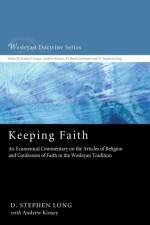
Keeping Faith offers resources to help Christians reclaim the importance of doctrine and thereby know and love well God and God's creation. Although it gives particular attention to the Wesleyan and Methodist tradition, it is of necessity an ecumenical effort. Neither the Wesleyans nor the Methodists invented Christian doctrine. In fact, the Wesleyan tradition contributes little that is distinctive or unique. This is a good thing, for unlike other disciplines where originality and uniqueness matter greatly, Christian doctrine depends on others and not the genius of some individual. Chesterton once said that Christianity is the democracy of the dead. In other words, doctrine depends on the communion of the saints. They help us speak of God as we should. We need to hear their voice. For this reason, this work is an ecumenical commentary on the Confession of Faith and Articles of Religion found in the Wesleyan tradition that also draws on ancient and modern witnesses to God's glory. It is ecumenical because it brings these doctrines into conversation with the broader Christian tradition. Doctrine unites us in a "communion," which is greater than any single denomination and makes us what we otherwise cannot be: one, holy, catholic and apostolic.
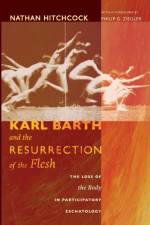
Early Christian writers preferred to speak of the coming resurrection in the most bodily way possible: the resurrection of the flesh. Twentieth-century theologian Karl Barth took the same avenue, daring to speak of humans' eternal life in rather striking corporeal terms. In this study, Nathan Hitchcock pulls together Barth's doctrine of the resurrection of the flesh, anticipating what the great thinker might have said more systematically in volume V of his Church Dogmatics. Provocatively, Hitchcock goes on to argue that Barth's description of the resurrection--as eternalization, as manifestation, as incorporation--bears much in common with some unlikely programs and, contrary to its intention, jeopardizes the very contours of human life it hopes to preserve. In addition to contributing to Barth studies, this book offers a sober warning to theologians pursuing eschatology through notions of participation.
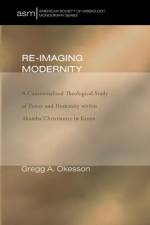
This is a book about Christianity in one particular region in Kenya. It walks into churches, listens to sermons, dances to music, and interviews the people sitting in the pews, all with the aim of understanding how spiritual power enables these churches to function as agents within their contemporary society.Ecclesiastical communities in Africa draw upon divine power in order to engage in modernity-related topics. Humans are not unresponsive to global flows of meaning; they are integrative agents who fashion their world by living in it. The kind of modernity arising from these churches does not blindly follow Western forms, but flows from its own internal logic in which spiritual power occupies central hermeneutical function. Theological resources contribute to the formation of sociological expressions. Divine power pertains directly to human constructs, which then allows the churches to actively ""image"" God for the development of unique forms of modernity arising on the continent.
A respected lecturer and author, the Rev. Dr. Peter Toon (1939-2009) was born in Yorkshire, England, and graduated from King's College, University of London. Ordained a priest in the Church of England in 1973, he taught theology in both England and America, and was a visiting professor and guest lecturer at a variety of seminaries and universities in Asia, Europe, and Australia. Through his engagement in debates about all matters Anglican, he became the foremost exponent of ""the Anglican Way,"" a path both Reformed and Catholic. A self-identified evangelical, he brought an evangelical fervor to his love of the church and the gospel, and he has influenced a generation of priests around the world. This volume of essays, collected in his honor, furthers the work that Dr. Toon started, defending the continuing importance of the theology of the English Reformation and Anglican worship. Essays included discuss Thomas Cranmer, the Book of Common Prayer, the Thirty-Nine Articles, and the legacy of Dom Gregory Dix. The authors include Roger Beckwith, Bryan Spinks, Rudolph Heinze, Joan Lockwood O'Donovan, Gillis Harp, Graham Eglington, and Ian Robinson.
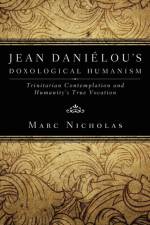
In the spring of 1946, Jean Danielou published an article by the title of "Les orientations presents de la pensee religieuse" for Etudes. Danielou's article--at least according to his critics--set the program for what would be later referred to as la nouvelle theologie. Though Danielou's influence was definitive at the inception of the movement (loosely understood) and continued up until Vatican II and after it, relatively little (especially compared to his close associate Henri de Lubac) has been written about Danielou in English even in the recent resurgence of interest in nouvelle theologie. This book seeks to fill that gap in part by providing an overview of his theology with extensive reference to his vast corpus of writings by highlighting what seems to be the key to his thought: that all human beings were made for contemplation and that one is only truly human when one exercises this innate calling in a Trinitarian fashion.
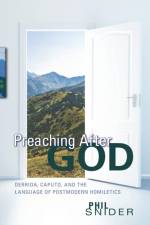
Even though the postmodern return of religion is dramatically shaping the future of twenty-first-century theology, its riches for preaching are rarely mined. Preaching After God highlights the trajectories of the postmodern return of religion by introducing readers to the positive theological themes stirring in the work of influential philosophers like Jacques Derrida, John Caputo, and Slavoj ¿i¿ek. Phil Snider shows how engaging their thought provides possibilities for preaching that highly resonate with postmodern listeners. Preachers familiar with the postmodern return of religion will appreciate its homiletical appropriation, while those introduced to it for the first time will discover just how much it is helpful for the preaching task. Six lectionary-based sermons are included as examples.
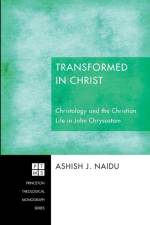
Scholarly readings of John Chrysostom's Christology seldom examine the intimate relationship that exists between his doctrinal, sacramental, and praxeological views. The vital correlation between exegesis and praxis in patristic thought must be taken into consideration in any evaluation of christological positions. Chrysostom's doctrine of Christ is intricately bound to life in the church. Within this conceptual framework, Chrysostom's commentaries on John's Gospel and Hebrews are examined. The christological portrait that emerges from this oeuvre is a depiction of the personal continuity of the divine Son in Christ; his sacramental presence in the church, the body of Christ; and his transforming work in the Christian, to the likeness of Christ. This persuasive study demonstrates that Chrysostom's view of the Christian life is the outworking of his exegetically informed and pastorally rich christological doctrine.
Both engineering and human living take place in a messy world, one chock full of unknowns and contingencies. ""Design reasoning"" is the way engineers cope with real-world contingency. Because of the messiness, books about engineering design cannot have ""ideal solutions"" printed in the back in the same way that mathematics textbooks can. Design reasoning does not produce a single, ideally correct answer to a given problem but rather generates a wide variety of rival solutions that vie against each other for their relative level of ""satisfactoriness."" A reasoning process analogous to design is needed in ethics. Since the realm of interpersonal relations is itself a fluid and highly contingent real-world affair, design reasoning offers the promise of a useful paradigm for ethical reasoning.This volume undertakes two tasks. First, it employs design reasoning to illustrate how technological artifacts can be assessed for their inherent moral properties. Second, it uses the design paradigm as a means for bringing engineering ethics into conversation with Christian theology in order to show how each can be for the other a catalyst for the revolutionary task of living by design.
Prior to his death in 2007, the self-described secular philosopher Richard Rorty began to modify his previous position concerning religion. Moving from "atheism" to "anti-clericalism," Rorty challenges the metaphysical assumptions that lend justification to abuses of power in the name of religion. Instead of dismissing and ignoring Rorty's challenge, the essays in this volume seek to enter into meaningful conversation with Rorty's thought and engage his criticisms in a constructive and serious way. In so doing, one finds promising nuggets within Rorty's thought for addressing particular questions within Christianity. The essays in this volume offer charitable yet fully confessional engagements with an impressive secular thinker.
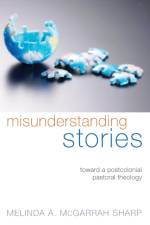
How can we work toward mutual understanding in our increasingly diverse and interconnected world? Pastoral theologian Melinda McGarrah Sharp approaches this multifaceted, interdisciplinary question by beginning with moments of intercultural misunderstanding. Using misunderstanding stories from her experience working with the Peace Corps in Suriname, Dr. McGarrah Sharp argues that we must recognize the limits of our own cultural perspectives in order to have meaningful intercultural encounters that are more mutually empowering and hopeful. Bringing together resources from pastoral theology, ethnography, and postcolonial studies, she provides a valuable resource for investigating the complexity of providing care and fostering communities of belonging across cultural differences. McGarrah Sharp illustrates a process of moving from disconnection to regard for diverse others as neighbors who share a common yearning for hopeful and meaningful connection. Leaders in faith communities, practitioners of care, and scholars will all be able to use this resource to better understand the conflicts, tensions, and uncertainties of our postcolonial twenty-first-century world. An included discussion guide facilitates classroom study, small group discussion, and personal reflection.
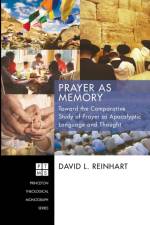
What would a comparative study of prayer look like? If the human impulse is to survive by thinking and acting religiously, Reinhart says religion is born on the day prayer first finds breath. He discusses prayer as a discourse since that first day that is speech out of brokenness or suffering is expressed in the hope of something more. Through his engagement with theorists of language and memory (Habermas, Derrida, Metz, Ricoeur, and others), Reinhart develops a framework that sustains an innovative approach to apocalyptical thought that also lays the foundation for a new field: the comparative study of prayer.
The Austin Dogmatics brought the theology of Karl Barth to the United States in an accessible and forceful statement of the most exciting theology of the day. In addition, the yearlong course of lectures proposed a radical theology of Christian mission and ministry to the American churches that grew from the author's three years of working in the inner city. While at times hammering home a single point, the lectures often flower into a passionate homiletical style that is still captivating half a century later.Publication of the Austin Dogmatics fills a gap in American theological history. In 1963, the author published The Secular Meaning of the Gospel, which the press identified with the death of God movement. While the author denied the association, the Austin Dogmatics explains how he moved from the strict Barthianism of his early period to the linguistic analysis of his middle period. His late and perhaps most important work that lay ahead was yet in another direction entirely, making van Buren one of the most versatile and adventuresome American theologians of the second half of the twentieth century.The current publication includes personal reminiscences by friends and colleagues after the author's passing.
Abonner på vårt nyhetsbrev og få rabatter og inspirasjon til din neste leseopplevelse.
Ved å abonnere godtar du vår personvernerklæring.