










Gjør som tusenvis av andre bokelskere
Abonner på vårt nyhetsbrev og få rabatter og inspirasjon til din neste leseopplevelse.
Ved å abonnere godtar du vår personvernerklæring.Du kan når som helst melde deg av våre nyhetsbrev.

What is the relationship between the gospel and the church's responsibility toward the poor? Can social action be evangelism? Wasted Evangelism is an exploration in the Gospel of Mark on the subject of evangelism and social action. A proclamation-centered definition of ""evangelism"" based on the etymology of the word ""evangelize"" and a few isolated proof-texts is devoid of much of the biblical content that Mark offers to us through his Gospel, detaching the concept of evangelism from the narrative meaning that Mark gives to the gospel of Jesus Christ.In Wasted Evangelism Chip Anderson develops an exegetically based, narrative understanding of biblical evangelism, which, according to Mark's Gospel, includes God's care for the economically vulnerable and his concern for the issues of poverty. The studies gathered in this volume propose that social action should not be considered a separate, distinct responsibility for the church, but is rather a vital component of evangelism. A close examination of Mark's Gospel and the biblical texts associated with idolatry, poverty, and justice provides an opportunity for church leadership to rethink the evangelistic activities of their churches and to reconsider what it means to engage their surrounding communities as agents of God's kingdom.
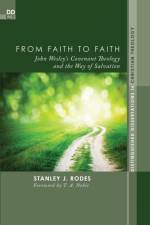
The idea that covenant theology is profoundly influential in John Wesley's theological thought sounds dissonant. What would an evangelical Arminian have to do with a theological framework that historically belongs to a Reformed understanding of salvation? How could this possibly square with his ongoing controversy with the Calvinism of his day? On the basis of compelling evidence from his sermons and correspondence, this investigation dares to push through the impulse to dismiss the idea that covenant theology belongs to the infrastructure of Wesley's thought. The resulting discovery of its role in shaping his narrative of the way of salvation is surprising and intriguing. Wesley is not only informed and fluent with respect to covenant theology, but thoroughly committed to it. This study demonstrates that, with theological precision and discernment, Wesley appropriates covenant theology in a way that is consistent both with its primary theological features and with his Arminianism. His distinctive view of "the gradual process of the work of God in the soul" supplies valuable grist for further reflection, especially by those charged with the care of souls in the twenty-first century
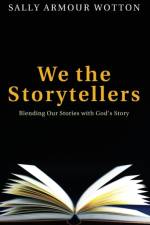
We the Storytellers provides examples and techniques for expressing deeply held beliefs through the oldest form of communication--stories. This book can be used as a resource on narrative theology for preachers, teachers, and storytellers.Narrative theology is about peeling back the known to discover the unknown. Rather than pronouncing facts, it gives an opportunity for an ""ah ha"" experience. In a sermon it allows the hearer to grasp an element of truth through fiction or personal story--Jesus's method. And narrative theology is about revealing the relationship between God and God's people. What better way to look at relationships than through stories?The book is written in two parts. Part 1 asks what is a sacred story and offers a number of possibilities. Part 2 is a workshop on acting, writing, and presentation skills aimed at those who are drawn to expressing themselves through stories.The stories here are from Sally's own life experiences--the monologues from her imagination. Each story is related to a theme and is humorous, poignant, and human. We the Storytellers will inspire and equip its readers to develop and perform their own sacred stories.
Are the gospels found within the New Testament superior to others? Has the church unfairly chosen Matthew, Mark, Luke, and John while leaving out many others? Are there truly lost Christianities that would enrich our understanding of Jesus? Would modern-day seekers as well as followers of Jesus be better served by including gospels outside of the New Testament in their understanding of Jesus? Jesus Tried and True answers these questions by examining the date, source, and reception of the canonical gospels of Matthew, Mark, Luke, and John and then comparing this data with the other gospels. It assesses this information by looking within these gospels and also evaluating early church history, examining the writings of early church writers such as Papias, Ignatius of Antioch, Justin Martyr, Irenaeus, and Eusebius. It then compares these findings with the date, source, and reception of the non-canonical gospels that have received the most attention lately such as the Gospel of Thomas, Gospel of Mary, Gospel of Judas, Gospel of Philip, and Gospel of Peter. There is also a brief survey of thirteen of the most important non-canonical gospels. The survey provides an opinion on the dependence of these upon the gospels within the New Testament. Jesus Tried and True affirms the superiority of the New Testament gospels. It concludes by addressing whether non-canonical gospels are ""lost Christianities"" and also whether the designation ""apocryphal"" is appropriate for other gospels.
In this volume some of the outstanding Christian scholars of our day reflect on how their minds have changed, how their academic fields have changed over the course of their careers, and the pressing issues that Christian scholars will need to address in the twenty-first century. This volume offers an accessible portrait of key trends in the world of Christian scholarship today.Christian Thought in the Twenty-First Century features scholars from Great Britain, Canada, the United States, and Switzerland. The contributors represent a wide variety of academic backgrounds--from biblical studies to theology, to religious studies, to history, English literature, philosophy, law, and ethics.This book offers a personal glimpse of Christian scholars in a self-reflective mode, capturing their honest reflections on the changing state of the academy and on changes in their own minds and outlooks. The breadth and depth of insight afforded by these contributions provide rich soil for a reader's own reflections, and an agenda that will occupy Christian thinkers well into the twenty-first century.
How important is childhood in the spiritual formation of a person? How do children experience God in the context of their lives as they grow? What does God do in the lives of children to draw them to himself and help them grow into a vital relationship with him? How can adults who care about children better support their spiritual growth and direct it toward relationship with God through Jesus Christ? These are critical questions that church leaders face as they consider how best to nurture the faith of the children God brings into our lives. In this book, over two dozen Christian scholars and ministry leaders explore important issues about the spiritual life of children and ways parents, church leaders, and others who care about children can promote their spiritual formation.
Synopsis:The stories of transgender people reach back to the beginnings of recorded history. At this particular point in time the psychiatric, medical, and secular worlds are beginning to appreciate the authenticity of Lesbian, Gay, Transgender, Bisexual, and Queer people. Sadly, many Christian churches and denominations continue to oppress and vilify the LGTBQ community. This is the story of a transgender man who has been an ordained elder in The United Methodist Church since 1984 and has quietly served his congregations for twenty-eight years before sharing his story and spiritual journey with his congregation, denomination, and the world. This is the story of a Transgender man, a Christian, an ordained minister, a loving husband and father--a human being. It is his challenge to his denomination and to all Christians and spiritual seekers to consider the truth of gender identity and sexual orientation as God given gifts, to be celebrated and embraced among all other gifts.Endorsements:"Questions about whether a transgender pastor can have a successful ministry have been resoundingly answered in the affirmative in this story of three decades of effective and inspiring pastoral ministry, while keeping secret from the church and society his gender reassignment surgery. Remarkable--courageous-- encouraging!"--Bishop Calvin D. McConnellUnited Methodist Church, RetiredPortland, Oregon"From the time David was appointed my pastor in the 1980s, to the compelling revelation of his challenging circumstances, he has sustained his integrity, his courageous, creative, inclusive ministry and hope-filled spirit. His personal story offers liberation to others trapped, either in their bodies or in gender roles defined by society."--Velma Duell McConnellLay Pastoral CarePortland, Oregon "David Weekley shares his wilderness journey in this warm and honest autobiography. In the wilderness (both past and present), David has encountered deep loneliness, powerful mentoring and friendship, unbearable pain, and profound joy. Through it all, he has journeyed with a courage that will inspire courage in his readers. As a teenager, David could not speak of himself as "I" but only as "i." He gradually learned to honor himself and to form deep and honest relationships, which have shaped his powerful and compassionate ministry with others. Thank you, David!"--Mary Elizabeth MooreBoston UniversityAuthor Biography:The Rev. David Weekley is an ordained United Methodist clergy. He received his BA in Psychology from Cleveland State University in 1976 and entered seminary at Boston University School of Theology, where he earned an MDiv in 1982. He has served churches in the Oregon-Idaho Annual Conference for twenty-eight years.
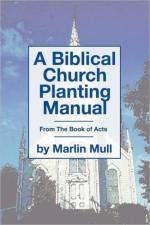
The four gospels - Matthew, Mark, Luke, and John - present Jesus Christ, God Himself, breaking into human history.... The story of Jesus and the early church should not end. Jesus Christ laid the foundation for the church through His life, death, and resurrection as recorded in the four gospels.... The followers of Jesus Christ then continued His work by spreading the gospel through preaching and teaching and the planting of new churches.... To continue the work begun by Christ and His disciples, new church planting should be at the top of our list of priorities, as it was in theirs.--From the PrologueAuthor Biography:Dr. Marlin Mull received his Doctor of Divinity degree from Southern Wesleyan University, and has done post-graduate work at both Columbia and Asbury Seminaries. He served as a pastor for twenty-three years and as General Director of Evangelism and Church Growth for The International Center of The Wesleyan Church from 1988-2000. Dr. Mull has been married to his wife, Barbara, for 53 years. They have two children and six grandchildren.
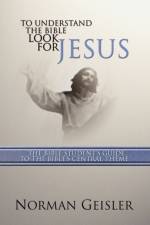
Synopsis:Believing the fundamental Christian claim that the purpose of the Bible is to present the Savior, Geisler focuses on Christ as the unity and unfolding message of the whole of Scripture. Christ is the tie between the Testaments, the content of the canon, and the unifying theme within each book of the Bible.This book is basic to both Bible study and preaching and serves as an excellent guide to the Bible''s central theme. It encompasses far more than a study of types and the Old Testament prophecies. Each chapter takes seriously the affirmation of Jesus: "Everything written about me in the law of Moses and the prophets and the psalms must be fulfilled" (Luke 24:44).Related to Geisler''s central thrust - that Christ is the clue to the whole Bible - is the clear assertion concerning the inspiration of Scripture and the deity of Christ. Chapter topics include: (1) Christ Is the Key to the Bible; (2) Christ in the Old Testament; (3) Christ in Both Testaments; (4) Christ in Every Section of the Bible; (5) Christ in Each Book of the Bible; (6) The Word of God; Personal and Propositional. Also included are a bibliography, subject index, and Scripture index.Author Biography:Dr. Norman Geisler is author or coauthor of some fifty books and hundreds of articles. He has taught at the university and graduate level for nearly forty years and has spoken or debated in all fifty states and in twenty-five countries. He holds a Ph.D. in philosophy from Loyola University and now serves as President of Southern Evangelical Seminary in Charlotte, NC.
Synopsis:Nineteenth-century evangelicals have often been dismissed as anti-intellectual and philistine. This book draws on periodicals, memoirs, and letters to discover how far this was true of British evangelicals between 1790 and 1833. It examines their leisure pursuits along with their enjoyment of art, music, literature, and study, and concludes that they shared the thought and taste of their contemporaries to a far greater extent than is usually acknowledged. What is more, their theology encouraged such activities. Evangelicals regarded recreations which engaged the mind or which could be pursued within the safety of the home as more concordant with spirituality than "sensual" or "worldly" pleasures. Nevertheless, their faith did militate against culture and learning. Some evangelicals dismissed all non-religious pursuits as "vanity," since their deep-rooted otherworldliness made them suspicious of anything that did not contribute to eternal well-being. A new generation adopted a more rigid attitude to the Bible, which made them unwilling to examine new ideas. In the last resort, even the most cultured evangelicals were unable to reconcile their delight in the arts with their world-denying theology. Endorsements:"Doreen Rosman''s book . . . bears testimony to the eagerness of evangelicals to join in cultural affairs . . . It goes a long way towards explaining the permeation of nineteenth-century culture by evangelical values."--David BebbingtonProfessor of HistoryUniversity of Stirling"This ground-breaking work investigates an important, albeit neglected, aspect of English Evangelical history. As Roseman makes clear, simplistic notions of philistinism fail to take into account the extent of cultural and intellectual pursuits (broadly defined) within Evangelical domestic life, and thus perpetuate misleading prejudices. Publication of this new edition is a welcomed event."--Grayson CarterAssociate Professor of Church HistoryFuller Theological SeminaryAuthor Biography:Doreen Rosman taught history at the University of Kent, Canterbury, UK, from 1974 to 2001. She is the author of The Evolution of the English Churches 1500-2000 (Cambridge University Press, 2003).
Climate change. Radical politics. National debt. Globalization. What do Christians have to say to the big questions we all face? Whatever they try to say, they will be seriously handicapped if they do not know their own story. Finding Pieces of the Puzzle will fill the knowledge gap. It breaks away from the usual manner in which history is written. Here is a sweeping overview of the story of Christianity that takes the reader to parts of the world seldom visited, that watches as the message of Christ encounters cultures as different as ninth century Persia and sixteenth century Kongo. The story is carried from the first to the twenty-first century by a series of mini-biographies--a young woman facing martyrdom, a boy from a little French town who becomes Pope and launches an army, an African-American who uses a successful international trade network to combat slavery. The glory, the confusion, the shame, the holiness of Christianity are all here. As the pieces are slipped into place, the puzzle begins to make sense. Watching Christians of the past face their challenges helps us understand who modern Christians really are.
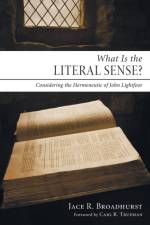
Invariably, people who read Scripture are forced to answer the question, ""What is the 'literal sense'?"" This question is not new. In the seventeenth century, John Lightfoot--signer of the Westminster Confession of Faith and a master of Hebrew and of rabbinic writings--wrestled with the same question, and his conclusions had a profound impact in the world of hermeneutics. In an age of much animosity towards the Jews, Lightfoot embraced the insights found in the Jewish writings while staying grounded in his reformational dogmatic theology. In so doing, his exegesis could properly be considered a via media between Reformed Scholasticism and Judaism. Lightfoot's hermeneutical principles and presuppositions outlined in this book not only provide valuable insight into his thinking but also reject the previously normative notion that Reformed Scholasticism has little to offer dogmatically or exegetically. The current tensions between systematic and biblical theology, the rise of interest in Second Temple and medieval Judaica, and the never-ending question of biblical authority make What Is the Literal Sense? an important read.
This long-standing series provides the guild of religion scholars a venue for publishing aimed primarily at colleagues. It includes scholarly monographs, revised dissertations, Festschriften, conference papers, and translations of ancient and medieval documents. Works cover the sub-disciplines of biblical studies, history of Christianity, history of religion, theology, and ethics. Festschriften for Karl Barth, Donald W. Dayton, James Luther Mays, Margaret R. Miles, and Walter Wink are among the seventy-five volumes that have been published. Contributors include: C. K. Barrett, Francois Bovon, Paul S. Chung, Marie-Helene Davies, Frederick Herzog, Ben F. Meyer, Pamela Ann Moeller, Rudolf Pesch, D. Z. Phillips, Rudolf Schnackenburgm Eduard Schweizer, John Vissers
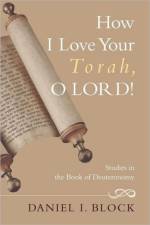
Like the book of Romans in the New Testament, the book of Deuteronomy provides the most systematic and sustained presentation of theology in the Old Testament. And like the Gospel of John, it represents mature theological reflection on God's great acts of salvation, in this case associated with the exodus of Israel from Egypt. Unfortunately, for many Christians, Deuteronomy is a dead book, either because its contents are unknown or because its message is misunderstood. The essays in this collection arise from a larger project driven by a passion to recover for Christians the life-giving message of the Old Testament in general and the gospel according to Moses in particular. The "meditations" cover a wide range of topics, from explorations into the meaning of specific texts to considerations of the ethical and homiletical relevance of the book for Christians today.
Your Neighbor's Hymnal provides a winsome and thoughtful exploration of popular music, from rock to hip-hop to metal to soul, as a vital source contemporary culture continues to go to learn about faith, hope, and love. Where some Christians have kept their focus only on a hymnal found in their church or formed by the genre of Contemporary Christian Music, Keuss argues that your neighbor's hymnal is filled with great music that God is using and deserves a deeper listen. Offering forty songs spanning time and genres, each section includes a number of representative reflections on the history and artist that created the song, reflections on its lyrical content, and theological and biblical connections that will hopefully show some ways in which the song illustrates how your neighbor is hearing, seeking, and finding faith, hope, and love through popular music.This book can be approached in a number of ways. As an introduction to this stream of popular culture, the overviews and short introductions to each song provide a glossary useful in courses needing texts in theology and popular culture. For use with church groups, whether adult bible studies or youth groups, Your Neighbor's Hymnal provides points of reference for connecting key aspects of the Christian faith with illustrations readily available for discussion. For interested music listeners, the book will provide a means of giving voice to their own musings on faith.As with faith, good music is meant to be shared, and Your Neighbor's Hymnal offers a wonderful opportunity to do both.
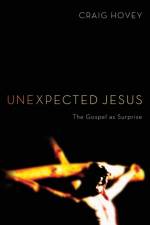
How can Christians live with a surprising God? How can we know and trust God without taming God or reducing God to an idol? Is knowing God the same thing as being open to God? Is God's freedom to act independently of our knowing him actually how we know him most genuinely and deeply? In Unexpected Jesus, Craig Hovey explores in depth the idea that the Christian gospel is a surprising encounter that calls for people to risk living with a God who shows up in unexpected ways.The Gospels often portray Jesus Christ as elusive and difficult to grasp. Hovey helps the reader to ""un-expect"" Jesus--to preserve Jesus's reality as a surprise rooted in the resurrection. As living and free, the joyous presence of Christ in the world is also unfathomable and uncontainable. Jesus's being free and surprising--unexpected--strengthens Christians' trust in God and helps them to live in God's world.
Whitehead had a place for God in his comprehensive cosmological vision, and his theism has long attracted interest from some Christian theologians. But Whitehead's ideas have much wider use. Some Buddhists have found help in articulating their nontheistic vision and relating it to the current world of thought and action. In this book religious writers in seven different traditions articulate how they can benefit from Whitehead's work. So this volume demonstrates that various features of his thought can contribute to many communities. According to his followers, Whitehead shows that the deepest convictions and commitments of the major religious communities can be complementary rather than in conflict. Readers of this book will see how that plays out in some detail. A Whiteheadian Hindu can recognize the truth in a Whiteheadian Judaism, and both can appreciate the insights of Chinese Whiteheadians committed to their classical thinking. Perhaps a new day in interreligious understanding has come.
The Wendell Cocktail describes a major social problem, exemplified by the journals of a person with coexisting conditions--mental illness and addiction. Although there are resources for people with each of these conditions--psychiatry for mental illness and twelve-step programs for addiction--there are few effective resources for people with both. Since about half of the mentally ill medicate with an addiction, an increasingly large percentage of the American population is left without adequate care. Wendell's journals illuminate the complexity of a tormented mind that is nevertheless capable of exquisite enjoyment of music, natural beauty, and delight in the observation of birds and animals. The book's conclusion suggests approaches to understanding and better providing for persons with addiction and mental illness.
Did Lucy know God? Could Neanderthals talk? Was Ardi self-conscious? These are the strange new breed of questions emerging as we discover more and more about our prehistoric origins--questions about knowing. While fossil digs and carbon dating tell a remarkable story about the bones and times of our ancient ancestors, we cannot help wondering what they knew, and when. Exploring such questions Original Knowing takes contemporary science as seriously as religious tradition and searches for the story behind this odd creature who senses more to the universe than meets the eye. In limestone bluffs and butterfly migrations, from Stone Age tool-making to Sumerian beer-making, clues are sought to better understand this strange mind that ponders the origins of its own existence. When do babies point, and why does it matter? What does throwing a Frisbee reveal about our distant ancestors? Is language the key to our minds as many believe? Or perhaps the heart of knowing rests in something more basic, in a smile, and the powerful social abilities at work allowing us to sense a depth to life--to our own lives--a depth that our minds help us glimpse if only through a glass darkly.
resurrection and death in order to connect modern preaching with the excitement of a changed world. Although we may be jaded by sermons that chase Bible verses tediously for twenty minutes or more, original listeners heard the gospel as a huge excitement...The apostles announced a changed world. The human world, they claimed, had begun all over again; we are living now in a 'new creation.' They invited startled listeners to join God's new humanity. --From the Introduction Buttrick's teatment is no romanticizing of early Christianity. The church then was as dismaying as it is now. Instead, this book focuses on the early Christian sense that they had passed from death to new life--a reversal that began with Jesus' resurrection, then explored his passion, and finally his ministry and life. This book carefully examines the Gospel traditions so that this great reversal can be captured in Christian theology and proclamation.
Whether and in what sense the Son of God might eternally submit to his Father's will is a question that has ignited a firestorm of controversy in today's evangelical academy. On one side stand those who regard the affirmation of any inequality whatsoever in the Godhead as a revival of ancient subordinationism. On the other stand persons who consider the Son functionally subordinate to the Father even within the immanent Trinity, without respect to the Incarnation, and regard their belief as integral to historic orthodoxy.Many evangelicals, moreover, view the issue of subordination within the Trinity as pivotal to contemporary disputes about the role of women in church, home, and state. If the relations of the divine persons constitute a paradigm for human life, persons on all sides of the gender question argue, human relations ought to reflect either the divine persons' exceptionless equality or their orderly differentiation of roles. At the same time, others consider the issues of equality in the Trinity and gender relations irrelevant to each other and accuse both complementarians and evangelical feminists of degrading the doctrine of the Trinity into a partisan weapon.The New Evangelical Subordinationism? gathers commentary on evangelical debates about equality and subordination in the Trinity from representatives of the gamut of perspectives just mentioned. Here, evangelical theologians, biblical scholars, and church historians of widely differing theological orientations address themselves to the panoply of questions raised by these debates. This volume, unprecedented in the breadth and depth of its coverage of the controversy over subordination in the Trinity, should become a standard source for teaching and research on its subject.
A Theology of Religious Change asks a simple question with a complicated answer: Why do people change religious faiths? The study invites its readers on a trek through sociological and psychological literature that suggests many causes of religious change. Moving beyond a mere catalogue of motives for conversion, the author explores how a theological account of conversion and the doctrine of election can be broadened, strengthened, and reformulated in light of the complexity of faith's human side. This book seeks to guide pastors, church workers, and theologians in their task of communicating the message of good news effectively by drawing attention to the diverse factors influencing religious change.
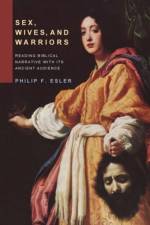
Synopsis:Why and how should we read Old Testament narrative? This book provides fresh answers to these questions. First, it models possible readers of the Bible--religious and nonreligious, professional and nonprofessional--and the reasons that might attract them to it. Second, with the aid of Mediterranean anthropology, it sets out an approach that helps us to interpret a selection of narratives with a cultural understanding close to that of an ancient Israelite. Powerful stories, such as those of Tamar and Judah in Genesis 38, Hannah in 1 Samuel 1-2, Saul and David in 1 Samuel, David and Bathsheba in 2 Samuel 10-12, and Judith, burst into new light when understood in closer relation to their original audience. Interpreted in this way, these narratives allow us to refresh the memory that links us with pivotal stories in Jewish and Christian identities, they disclose more ample possibilities for being human, they foster our capacity for intercultural understanding, and they provide aesthetic pleasure from their embodying plots of great imaginative power. Endorsements:"Esler shows us how to read afresh in the ancient narratives of the Old Testament. He shows us that these several plots of David and his traveling companions are saturated with old social habits and old cultural presuppositions that summon us to alertness and attentiveness. He offers us his deep learning of how stories work, how folk society functions, and how texts reveal and conceal. The outcome is a fresh invitation to textual materials that we thought we had long since mastered an exhausted. This is a welcome exercise in method that keeps its focus on plot and character in all their thickness."-Walter BrueggemannColumbia Theological Seminaryauthor of A Pathway of Interpretation"Philip Esler has done much to make biblical scholars aware of social-scientific approaches. In this book he brings this perspective to a reading of Old Testament narrative texts, showing just how much social science can illuminate the Bible. The stories of wives, warriors, kings, and madmen are here read against the backdrop of the real society in which they were first told, and so become three-dimensional to the modern reader."-John BartonOxford Universityauthor of Reading of the Old TestamentAuthor Biography:Philip F. Esler is Principal and Professor of Biblical Interpretation at St Mary''s University College, Twickenham, London. He is the author of Conflict and Identity in Romans (2003), and New Testament Theology (2005), and the editor of Ancient Israel (2006).
Praying--with the Saints--to God Our Mother celebrates the feminine characteristics of God by uncovering a treasury of texts that have been overlooked for centuries. Over 150 scriptural passages, both from the original biblical languages and other ancient translations, radiate the warmth and vitality of the maternal face of God. Additionally, passages from five Ecumenical Councils, all thirty-three Doctors of the Church, another thirty-six Fathers, and a total of seventy-one saints from every century reveal a vast richness of feminine images of God. Stramara's in-depth scholarship, presented in a format of prayer and meditation, makes this book inviting for all readers. Praying-with the Saints-to God Our Mother will be the standard reference for Christians of any tradition for years to come.
The book you hold in your hands says that our churches and our nation are in desperate need of biblical awakening and revival. It begins with the churches. In stark opposition to the quest to give our utmost for God's glory, as a whole, the modern evangelical movement has settled for a compromised form of Christianity. The book exposes the roots of this compromise, analyzes keys areas of church life where we have abandoned the biblical record, and offers a roadmap for revival and reformation.
Synopsis:A resurgence of Trinitarian interest gained momentum in the twentieth century and it is showing little sign of abating in the twenty-first century. This research endeavors to critically evaluate Miroslav Volf''s ecclesial model for "the church as the image of the Trinity," one that he presents with the English title, After Our Likeness. Volf proposes a social doctrine of the Trinity, one that is heavily influenced by the theological writings of J├╝rgen Moltmann, and he puts forward that this nonhierarchical Trinity should be reflected in the structures and theology of the church. If Volf is correct, then a radical reshaping is needed for the church to conform to an egalitarian pattern, one that is "after the likeness" (Gen 1:26) of an egalitarian God.In this critical examination, Kevin J. Bidwell begins by stating the theological influences that are pertinent to Volf''s thesis in After Our Likeness and the assumptions that undergird and inform his whole theological paradigm. An important theological excursus is offered to assess the theology of John Smyth, the first English Baptist, who is Volf''s representative figure for the location of his own ecclesiology, the Free Church. A critical analysis follows of Volf''s engagement with his two chosen dialogue partners who represent both Western and Eastern theological traditions: Joseph Ratzinger and John D. Zizioulas.Volf presents five theses for "the church as the image of the Trinity," which could be labeled as Volf''s Free Church in the image of Volf''s revised doctrine of the Trinity. This monograph offers extensive insight into the contemporary debate on the doctrine of the Trinity, but it also assesses many aspects of ecclesiology from both Eastern and Western perspectives.Endorsements:"Miroslav Volf has had a profound impact on contemporary discussions on the doctrine of the Trinity, and its significance for contemporary ecclesiology. Kevin Bidwell''s book provides the first comprehensive evaluation of his approach to these topics, which impresses by his unbiased critical discussion of Volf''s ecclesiological egalitarianism."-Johannes HoffLecturer in Systematic Theology & PhilosophyUniversity of Wales: Trinity Saint David "This book by Kevin Bidwell represents a major, original contribution to contemporary Trinitarian theology. His contribution lies in a critical engagement with Miroslav Volf''s social understanding of the Trinity, Moltmann''s influence on Volf, the adaptation of the early Separatist writings of John Smyth by Volf, and his development of an egalitarian ecclesiology. This is research at its best and must be read by church ministers and academics." -Eryl DaviesPrincipal Emeritus Wales Evangelical School of Theology"Miroslav Volf argues cogently for a social doctrine of the Trinity and for an egalitarianism in both the Trinity and the church--ideas which are very popular today. He also claims that his ecclesiology flows from his doctrine of the Trinity. Kevin Bidwell subjects these claims to a penetrating criticism, and all who hold to them need to listen carefully to what this book has to say."-Tony LaneProfessor of Historical TheologyLondon School of TheologyAuthor Biography:Kevin J. Bidwell is the minister of Sheffield Presbyterian Church (a church plant with the Evangelical Presbyterian Church in England and Wales). He has completed doctoral research with the University of Wales: Trinity Saint David.
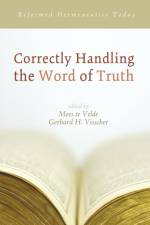
How should the Word of God be interpreted and applied today? Does our modern culture affect how we read the Bible? Can certain passages be interpreted in different contexts and in different ways, all the while acknowledging that God speaks with a clear and consistent voice? These are the enduring challenges of hermeneutics. In this volume, no less than sixteen Reformed scholars from four different countries join together to tackle the hard questions that often arise when we busy ourselves with the weighty responsibility of interpreting Holy Scripture. As iron sharpens iron, so also these Reformed scholars challenge each other and their readers to ask not only how hermeneutics can be done, but ultimately, how it should be done so that God''s Word of Truth may be handled correctly (2 Tim 2:15)."Brothers in one faith discuss the implications of their confidence in the authority of Scripture. Honestly facing minor disagreements, they share the faith in God who has spoken. Sola scriptura remains the vital standard for today because it witnesses God''s acts in history and reveals God in Christ. Participating in Him we find all treasures of wisdom and knowledge. Therefore we can only handle the word of God correctly, if we let the Word correct and handle us."--Henk van der Belt, Associate Professor, University of Utrecht, Utrecht, NetherlandsMees te Velde is Rector and Professor of Church History and Church Polity at Theological University of the Reformed Churches in the Netherlands, Kampen, the Netherlands.Gerhard H. Visscher is Principal and Professor of New Testament at Canadian Reformed Theological Seminary, Hamilton, Canada.
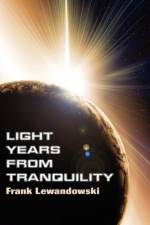
Synopsis:In the distant future an enemy of Mankind is destroying space colonies, causing human expansion among the stars to come to a halt. Unaware these events have been taking place, Starship Captain Erik Houston is en route back to headquarters. He can''t stop thinking about Zama, a female Believer from his last mission. A shocking discovery aboard his ship causes him to question her motives. Despite his concerns he seeks to get reassigned to her planet. Instead, his superiors send his crew and he on a high-risk mission to a star system where two rival species are about to go to war.Some highly improbable events unfold that seem meant to be, almost as if an unseen hand were guiding things. First Officer Fred Montoya, a religious skeptic, begins to feel his long-held views may be wrong. Perhaps there is a God after all. The story offers adventure and a romance that transcends time and space. Light Years from Tranquility is the sequel to Lewandowski''s previous novel, Light Years from Paradise.Author Biography:Frank Lewandowski is the author of Light Years from Paradise.
Synopsis:Contemporary literature has, for several decades and in various guises, been dominated by questions of identity and the self. It has been forgotten that, until the Enlightenment, theological reflection emphasized the close connectedness of the self with God; knowledge of God is essential to knowledge of the self; and vice-versa, correct knowledge of the self is a necessary correlate to true knowledge of God. This has been called the double knowledge.Writing God and the Self examines two literary texts and lives as representative of two antithetical positions. The first, represented by Samuel Beckett''s life and his Three Novels, is that the self is independent of God; the second, represented by C. S. Lewis and Till We Have Faces, is that God and the self are intimately connected. Beckett''s radical apophaticism about God is shown to be tied to his extreme apophaticism about the self, whereas Lewis''s sense of selfhood is demonstrated to be integrally connected to his sense of a personal and self-transcending God. Other voices-Augustine, Teresa of Avila, Charles Taylor, Rowan Williams, Mark McIntosh and Vladimir Lossky-join the chorus of theologians, psychologists, and other thinkers, past and present, that contribute to this exploration of what Christian theology has to say about the insistent problem of the self. Taken together, all these voices articulate a powerful vision of selfhood in relation to God that is desperately needed today. Endorsements:"In Writing God and the Self, Sharon Jebb provides a deft critique of the concept of the autonomous self. Drawing upon Samuel Becket, C. S. Lewis, and the history of Christian thought, she offers an alternative vision of the self as a dynamic agent that finds its deepest freedom and fulfillment in its relationship to God. This is a wise and insightful work of Christian scholarship."-Roger LundinBlanchard Professor of EnglishWheaton College"A penetrating exploration of the intertwining of God-knowledge and self-knowledge. Highly unusual also-in that Jebb''s conversation partners are two literary figures we wouldn''t quickly associate. A fascinating and important book."-Jeremy BegbieThomas A. Langford Research Professor in TheologyDuke UniversityAuthor Biography:Sharon Jebb is a lecturer in literature and theology and in spiritual theology. She is currently teaching at the University of Aberdeen, and at Union Theological College, Belfast.
Abonner på vårt nyhetsbrev og få rabatter og inspirasjon til din neste leseopplevelse.
Ved å abonnere godtar du vår personvernerklæring.