













Gjør som tusenvis av andre bokelskere
Abonner på vårt nyhetsbrev og få rabatter og inspirasjon til din neste leseopplevelse.
Ved å abonnere godtar du vår personvernerklæring.Du kan når som helst melde deg av våre nyhetsbrev.

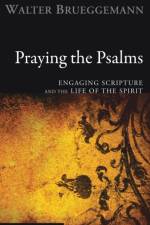
In this thoroughly revised edition of a classic in spirituality, Walter Brueggemann guides the reader into a thoughtful and moving encounter with the Psalms. This new edition includes a revised text, new notes, and new bibliography.""The movement and meeting of God with us is indeed a speech-event in which new humanness is evoked among us. Being attentive to language means cultivating the candid imagination to bring our own experience to the Psalms and permitting it to be disciplined by the speech of the Psalms. And, conversely, it means letting the Psalms address us and having that language reshape our sensitivities and fill our minds with new pictures and images that may redirect our lives."" --from Chapter 3
In Seeking the Imperishable Treasure, Johnson tracks the use of a single saying of Jesus over time and among theologically divergent authors and communities. He identifies six different versions of the saying in the canonical gospels and epistles (Mark, Matthew, Luke, John, James, and Colossians), as well as the Gospel of Thomas and Q. After tracing the tradition and redaction history of this wisdom admonition, he observes at least two distinctly different wisdom themes that are applied to the saying: the proper disposition of wealth and the search for knowledge, wisdom, or God. What he discovers is a saying of Jesus--with roots in Jewish wisdom and pietistic traditions, as well as popular Greek philosophy--that proved amazingly adaptable in its application to differing social and rhetorical contexts of the first century.
The connections between religion and violence are complex and multifaceted. From the conflicts in Middle East and the Balkans to those in Southeast Asia and beyond, religion frames and legitimates political violence. Moreover, in international relations since 9/11, religious language and metaphors have acquired a new significance. In this context the emerging consensus appears to be not only that violence is intrinsic to religion, but also that religions incite, legitimate, and intensify political violence. However, such an unambiguous indictment of religions is incomplete in that it fails both to appreciate significant counter examples and to recognize the diversity that exists within religions on the issue of violence, particularly the religious roots of pacifism and the ethics of non-violence. This collection explores aspects of this ambivalence between religion and violence. It focuses on traditions of legitimation and pacifism within the three monotheistic religions: Judaism, Christianity and Islam, and concludes with an examination of this ambivalence as it unfolds in each tradition's engagement with the politics of gender.
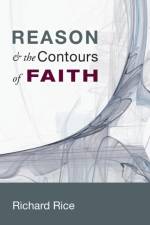
Can reason and religion get together? Should believers think? Can thinking people believe? Does religion have to make sense? Does careful thinking help or hinder religious experience? People have wrestled with such questions for hundreds of years, and they are just as perplexing today as ever. Reason & the Contours of Faith explores the wide-ranging issues these questions raise, from biblical interpretation and proofs for God's existence to the nature of religious conversion. Its central purpose is to find an alternative to both fideism, the idea that reason has nothing to do with faith, and rationalism, the conviction that reason has everything to do with it. Part One, ""Reason and the Contents of Faith,"" argues that reason contributes in important but limited ways to our understanding of religion. Part Two, ""Reason and the Experience of Faith,"" shows that reason can support religious commitment, but never produces it.
About the Contributor(s):Israel Scheffler is Victor S. Thomas Professor of Education and Philosophy Emeritus at Harvard University. He taught philosophy at Harvard from 1952 to 1992 and, from 1983 to 2003, was codirector, then director of the Philosophy of Education Research Center there. He is a Fellow of the American Academy of Arts and Sciences, a founding member of the National Academy of Education, and a past president of both the Philosophy of Science Association and the Charles S. Peirce Society. Among his previous books are ""The Anatomy of Inquiry""( 1963), ""Four Pragmatists""(1974), ""Of Human Potential""(1985), ""In Praise of the Cognitive Emotions""(1991), and ""Worlds of Truth""(2009). His main interests lie in the philosophical interpretation of language, symbolism, science, and education.
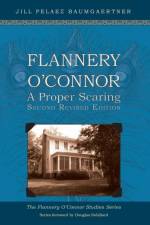
""To the hard of hearing you shout, and for the almost blind you draw large and startling figures.""--Flannery O'Connor, Mystery and MannersDrowning in a river, the violent murder of a grandmother in the backwoods of Georgia, and the trans-genital display of a freak at a carnival show are all shocking literary devices used by Flannery O'Connnor, one of American literature's best pulp fiction writers. More than thirty-five years after her death, readers are still shocked by O'Connor's grotesque images. Dr. Jill Baumgaertner concentrates on O'Connor's use of emblems, those moments of sudden and horrid illumination when the sacred and the profane merge as sacrament. This readable volume is ideal for college students, O'Connor scholars, or those wishing to better understand southern gothic fiction.
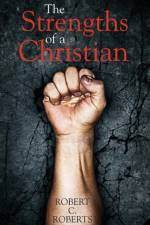
Patience, perseverance, and self-control--these strengths provide the basis for a truly fruitful and expressive Christian life. Robert C. Roberts offers a thoughtful analysis of these traits as the ways Christians have to keep themselves steadfastly on the track of hope, faith, joy, thanksgiving, and love. Filled with vivid illustrations and concrete advice, this book reveals the strengths of Christians as powers which permit us to live with integrity and become definite individuals, not merely pawns of the social environment to be shaken by every passing impulse and mood.
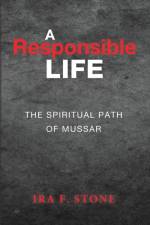
"Love your neighbor" is the central obligation of Jewish life. Mussar, a late nineteenth-century Jewish renewal movement, focused on this precept as a means of self-improvement and spiritual growth. Through the practical applications of Mussar, one can learn how to awaken to a spirituality that is compassionate, moral, and generous. In this book, Rabbi Ira Stone provides a contemporary theological framework for understanding Mussar and describes how participation in a Mussar group can offer support and guidance for this powerful spiritual practice.
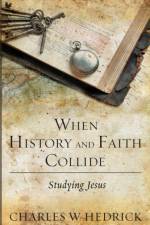
Hedrick explores the tension, or collision, that occurs when studying the Jesus of faith with the critical eye of historical scholarship. He outlines the nature of historical inquiry, gives a brief history of how scholars have understood Jesus, and indentifies the essential issues confronting the reader of the New Testament Gospel accounts of Jesus: discrepancies, contradictions, and the differences as well as strong similarities among different writers.
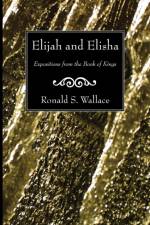
This is a series of expositions of most of the passages in the first and second books of Kings which give the history of the two prophets, Elijah and Elisha. Some of these stories are among the most vivid and memorable in the Old Testament, and have never failed to prove themselves relevant and challenging in the preaching of the church. Others of them present what to many are the most difficult moral and intellectual problems both for the preacher and the listener.
Being Koetschau's text of the De Principiis translated into English, together with an introduction and notes by G. W. ButterworthOrigen's On First Principles was the first attempt to formulate a coherent system of Christian philosophy, and also the best expression of the theologian's general opinions. The work is divided into four parts: book one deals with God and creation, book two with creation (rational and irrational natures), providence, and redemption, and book four with the interpretation of Holy Scripture. Origen's views are based upon the authority of the Scriptures and Church tradition, and grounded upon the tenets of Neoplatonism. In On First Principles many maxims are given as to the nature of the Trinity, the person of Christ, and man's free will under the hand of Providence, most of which are considered Orthodox teachings. On the other hand, the principles found in this work that engendered controversy and were later condemned by the Fifth Ecumenical Council in 553, are the preexistence and transmigration of souls, and universal salvation at the consummation of the world. This edition, being Koetschau's English text translated from Rufinus' definitive Latin volume, contains selected fragments of St. Jerome's rendition and the meager remains of the original Greek texts in order to furnish a more comprehensive view of Origen's writings. Also included are in-depth introductions to Origin's life and works by the scholar G. W. Butterworth.
Description:Dr. Braun's concise twenty-three-page booklet is great for those who need a refresher course in the various terms and concepts of English grammar. As Braun states in the preface: ""It is the aim of this booklet to assist the student of foreign languages in the review of those basic terms of English grammar the knowledge of which the authors of many introductory texts to foreign languages take for granted."" The terms are in alphabetical order and each concept is illustrated by at least one example.
In these pages, laymen will find themselves and their condition of life the center of attention at all times. Consequently they will not find a specifically spiritual vocabulary or an alien pious rhetoric. They will not find a long list of prayers, practices and penances. They will not find a list of things to be given up.Patiently and gently, these souls will open up to God. They will see that true peace comes from true love, and that love means an entire giving, and that giving means some changes. Such transitions are sometimes easy, sometimes not. But in the end what was once unwisely loved is now put aside, and what was once foolishly despised is now embraced with gratitude. Every man who has gone even a part of the way knows this. The purpose of the book, then, is to open the soul to the grace of God and to show some practical consequences of the love of God in a life that wants to find love and peace.--from the Introduction
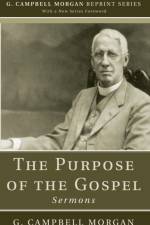
About the Contributor(s):G. Campbell Morgan (1863-1945) was a leading Bible expositor in England and the United States. Despite a lack of substantial formal training, Morgan was a prolific writer and teacher. Ordained into the Congregational ministry, he was the pastor of Westminster Chapel, London (1904-17 and 1933-45). Morgan also conducted two very successful teaching tours in the United States, including work with D.L. Moody's ministry.
Vital Old Testament IssuesVital . . . pertaining to life; essential; of critical importance.Old Testament . . . the covenant of God with the Hebrew people as set forth in the BibleIssues . . . a point or matter, the decision of which is of special or public importance.A dictionary can define the terms, but tackling the tough texts and difficult issues of Old Testament studies requires skillful study and balanced reflection upon the whole of Scripture.Vital Old Testament Issues: Examining Textual and Topical Questions draws upon the insights and study of numerous evangelical scholars and writers to address crucial interpretive questions.Some of the chapters included are:""The Validity of Numbers in Chronicles"" by J. Barton Payne""The Archaeological Background of Daniel"" by Edwin M. Yamauchi""The Prophecy of the Ten Nation Confederacy"" by John F. WalvoordChristian readers, church leaders, and pastors will appreciate the helpful scholarship of Vital Old Testament Issues.
The aim of this book is to present without reservation and in simple fashion the beliefs of the Mennonites and their uncompromising nonconformity. As such it sets forth for the first time the basis of the distinctive ethical code of the Mennonite community. It will appeal to all persons who are interested in the Christian faith, regardless of their own church affiliation.The Problem of Mennonite Ethics is divided into four parts. The first section states the problem, discusses Mennonite belief in relationship to modern theology, and sets forth the need and challenges of today.The second part expounds the biblical basis of Mennonite philosophy and theology, and compares Mennonite ethics to Humanism, Pietism, and Mysticism.Part three deals with the application of Mennonite ethics to others and the Mennonite view of the individual.Part four contains the conclusion, appendixes, and a bibliography.
Vital Christian Living IssuesVital . . . pertaining to life; essential; of critical importance.Christian Living . . . the lifestyle of the believer in conforming to the standards of the Bible and confronting the spirit of the world system.Issues . . . a point or matter, the decision of which is of special or public importance.A dictionary can define the terms, but tackling the tough issues of the Christian life requires skillful study and balanced reflection upon the whole of Scripture.Vital Christian Living Issues: Examining Crucial Concerns in the Spiritual Life draws upon the insights and study of numerous evangelical scholars and writers to address crucial questions and issues of contemporary life.Some of the chapters included are:""What is Spirituality?"" by Charles C. Ryrie""Re-examining Biblical Worship"" by Kenneth O. Gangel""Sarah as a Model for Christian Wives"" by James R. SlaughterChristian readers, church leaders, and pastors will appreciate the insight and guidance of Vital Christian Living Issues.
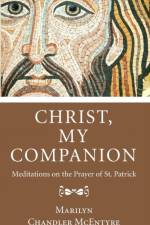
""Christ be with me, Christ within me, Christ behind me, Christ before me, Christ beside me, Christ to win me, Christ to comfort and restore me. Christ beneath me, Christ above me, Christ in quiet, Christ in danger, Christ in hearts of all that love me, Christ in mouth of friend and stranger.""Christ promises to be with you always. Yet how often do you feel misunderstood, scared, and abandoned? In the much beloved ""St. Patrick's Prayer,"" the patron saint of Ireland passionately invokes the ways Christ is present to us.Inspired by this litany, Marilyn Chandler McEntyre shares her contemporary reflections on St. Patrick's ancient, yet timeless, prayer. Her thirteen deeply devotional meditations take you on a journey through Christ's love for you.By the end, the poignant words of this prayer are sure to be etched in your heart forever--a comfort for times when you question where God really is. You will be left resting peacefully in the assurance of a divine embrace that will not let you go.
By culture, George B. Thompson Jr. means not just racial, ethnic, economic, or regional culture, but also a congregation's way of doing things--its history, customs, conventions, and procedures. In order to launch and maintain a successful ministry, pastors and other church leaders must come to grasp that unique culture of their parish. They must develop a ""culture capital"" within their congregations, meaning that they invest themselves deeply in how their church does its work and goes about its ministries. The author presses clergy to answer such questions as ""How well do I know what I'm getting into?"" and ""Have I been adopted yet?"" and even ""Is it time to move on?""The book is ideal for pastors in solo settings, but pastors in multiple staff settings will also find the author's insights helpful.
Dr. Morse comments on the so-called psalms of lamentation or sad psalms as resources for the difficult days in our life journeys. While often dark and angry and dealing with themes of suffering, sorrow, sin, repentance, and anguish, the sad psalms can be intensely personal and rewarding in dealing with life's stresses and sorrows.
-More than 80 million Americans claim no church affiliation.-Only six other nations have a total population of more than 80 million.-Another 90 million who claim membership or affiliation don't attend church.-It is obvious that this many people will not be reached by existing congregations.The answer: More churches are needed. Here is a book, written by one of the nation's authoritative voices on church planting, with both biblical and practical help for those who share his vision that the task of church planting rests not with denominational leaders, but with the people and pastors of local churches
Endorsements:""A technical insight to Africa's development.""-- United Nations Conference for Trade and Development (UNCTAD), Geneva""This book is good news and a compelling work o four times. It creates hope, challenges despair, re-establishes authentic human development and original African values.""--Prof. Obiora Ike, Catholic Institute for Development, Justice and Peace, Nigeria""A very precious contribution to Christian conversation on the future of Africa by a young African researcher.""--Prof. Benezet Bujo, Chair, Centre for Moral Theology and Social Ethics, University of Freibourg, Switzerland""This book is a stirring manifesto for social reconstruction and interior transformation in Africa.""--Prof. James H. Olthuis, Institute for Christian Studies, Toronto""This is a bold attempt at contextual theology.""--Dr. Joseph Faniran, Catholic Institute for West Africa""Stan Chu Ilo is one of Africa's bright stars and provides a Christian socio-ethical compass for navigating life in Africa for generations to come.""--Prof. Uche Uguwueze, Professor of African Studies, California State University, Long Beach""A fascinating discourse on the trials and hope of the African continent.""--Milwaukee Community Journal, USAAbout the Contributor(s):Stan Chu Ilo is Assistant Professor of Religion and Education, University of St. Michael's College in the University of Toronto. He is the founder and Director of Canadian Samaritans for Africa, and the publisher of the online journal Theology in Africa. He is the author of The Church and Development in Africa: Aid and Development from the Perspective of Catholic Social Ethics.
The dominant view among Christian theologians and philosophers is that God is timeless--that he exists outside of time in an ""atemporal"" eternity. In God, Time, and the Incarnation, Richard Holland offers a critical evaluation of this traditional view in light of the most central doctrine of Christianity: the Incarnation of Christ.Holland reviews the history of this controversy, highlighting the various theological problems for which atemporal models have been offered as a solution. He asserts the central importance of the Incarnation for Christian theology and evaluates several atemporal models in light of this doctrine. Finally, he suggests that the traditional atemporal view is not compatible with a robust and orthodox view of the Incarnation. This book rejects the traditional atemporal view of God's relationship to time and argues, based on the Incarnation, that God experiences temporal sequence in his existence.
Creating Women's Theology engages women's questions:- Can women from different religious traditions engage one theological approach?- Can one philosophical approach support feminist religious thought?- What kind of belief follows women's criticism of traditional Christianity?Creating Women's Theology offers a portrait of how some women have found room for faith and feminism. For the last twenty-five years, women religion scholars have synthesized process philosophy with their feminist sensibilities and faith commitments to highlight the value of experience, the importance of freedom, and the interdependence of humanity, God, and all creation. Cutting across cultural and religious traditions, process relational feminist thought represents a theology that women have created. This volume offers an introduction to process and feminist theologies before presenting selections from canonical works in the field with study questions. This volume includes voices from Christianity, Judaism, goddess religion, the Black church, and indigenous religions. Creating Women's Theology invites new generations of undergraduate, seminary, and university graduate students to the methods and insights of process relational feminist theology.
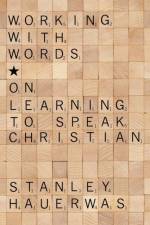
Synopsis:The crucial challenge for theology is that when it is read the reader thinks, "This is true." Recognizing claims that are "true" enables readers to identify an honest expression of life's complexities. The trick is to show that theological claims--the words that must be used to speak of God--are necessary if the theologian is to speak honestly of the complexities of life. The worst betrayal of the task of theology comes when the theologian fears that the words he or she must use are not necessary.This new collection of essays, lectures, and sermons by Stanley Hauerwas is focused on the central challenge, risk, and difficulty of this necessity--working with words about God. The task of theology is to help us do things with words. "God" is not a word peculiar to theology, but if "God" is a word to be properly used by Christians, the word must be disciplined by Christian practice. It should, therefore, not be surprising that, like any word, we must learn how to say "God."Endorsements:"The essays and sermons in Working with Words reveal that the vibrancy of Stanley Hauerwas arises from his single-minded, manic determination to learn from Jesus and the Scriptures to see and speak as a Christian, and to teach other Christians to do the same."--Peter J. LeithartNew St. Andrews Collegeauthor of Defending Constantine"Working with Words displays more clearly than ever before the basso ostinato that is Wittgenstein's imprint on the Hauerwasian dialect . . . This is vintage Hauerwas."--Jennifer A. HerdtProfessor of Christian Ethics, Yale University "Whether preaching or teaching, writing or conversing, Stanley Hauerwas serves the Word with words--careful words, bold words, nuanced words, provocative words. . . . Reading Working with Words is its own reward, as are the insights one receives upon its completion."--Michael L. Buddeauthor of The Borders of Baptism: Identities, Allegiances, and the Church (forthcoming in the Theopolitical Visions series of Cascade Books). "Thanks be to God that we are blessed with a God who loves us enough to say something substantial to us. And thanks for Stanley Hauerwas who is able to say so well what God says."--William H. WillimonBishop, The United Methodist Church, Birmingham, Alabama Area"Stanley Hauerwas is a word provocateur-but always in service to the Word that is our life and our hope."--Debra Dean Murphyauthor of Teaching That Transforms: Worship as the Heart of Christian Education"They range wide and deep, offering both priestly affirmation and prophetic critique. Writing as always in his distinctively Christian voice, Hauerwas helps his audience to cease mumbling and fumbling about the Gospel and the Church. Indeed, he leaves us without excuse for speaking anything other than Christian."--Ralph C. WoodUniversity Professor of Theology and LiteratureBaylor UniversityAuthor Biography:Stanley Hauerwas is Gilbert T. Rowe Professor of Theological Ethics at Duke Divinity School. Publishers Weekly named his memoir, Hannah's Child: A Theologian's Memoir, one of the Best Religion Titles of 2010.
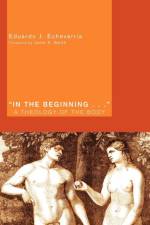
One of the most significant contributions of Pope John Paul II to the church, and arguably to the culture, was his development of a theology of the body. This theology explores the rich meaning and vocation of human embodiment, of the body-person, in light of the fundamental truths of creation, fall into sin, and redemption in Jesus Christ. In this book, Eduardo J. Echeverria inquires into the biblical, theological, and philosophical foundations of the Pope's theology of the body. In a wide-ranging discussion of a Catholic theology of revelation, biblical hermeneutics, and a biblical perspective on the Christ-centered dynamics of the moral life, Echeverria clearly establishes the fundamental principles needed for a full understanding of John Paul II's thought. He probes the philosophical foundations of the Pope's thought in the context of a Catholic theology of nature, sin, and grace. The book concludes with an analysis of the normative implications of the Pope's theology for sexual ethics and provides a novel and provocative application of the theology of the body to the morality of homosexuality. Echeverria's study of John Paul II's theology of the body helps us to make sense of how the pope's theology deepens our understanding of the Catholic teaching that ""the human body shares in the dignity of the 'image of God'"" (Catechism of the Catholic Church, no. 364).
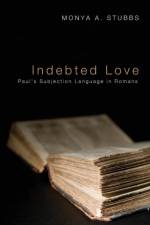
For Paul, the gospel message is simple, yet profound: Be subject to God. But, subjection for Paul means recognizing that the gift of God to one is the capacity to acknowledge and appreciate the gift of God in another. Paul argues that God's reconciling work in the world is manifest through the process of all people (Jews and Gentiles) understanding themselves in a mutually indebted relationship with each other. The power of the gospel, according to Paul, empowers these groups to function out of a mutually indebted mindset and enables them to discern and demonstrate the good, perfect, and acceptable will of God.In establishing his argument Paul gives considerable attention to hypotass¿ (subjection), dokimaz¿ (discern), phron¿ma/phrone¿ (mindset/way of thinking), and metamorphomai (transform) as key theological concepts. In this light, Monya Stubbs analyzes the ways in which Paul speaks about subjection, engages in reflection, and exhorts his readers to transformation--a type of transformation necessary for those to whom he exhorts to walk in the nearness of God's salvation power. Focusing on these categories, Stubbs helps us recognize the ways in which the text explores ideological systems of convictions and their implications for human relationships.
Abonner på vårt nyhetsbrev og få rabatter og inspirasjon til din neste leseopplevelse.
Ved å abonnere godtar du vår personvernerklæring.