






Gjør som tusenvis av andre bokelskere
Abonner på vårt nyhetsbrev og få rabatter og inspirasjon til din neste leseopplevelse.
Ved å abonnere godtar du vår personvernerklæring.Du kan når som helst melde deg av våre nyhetsbrev.

Superior studies on salient themes and texts of Proverbs now join similar anthologies on Job and Ecclesiastes that have been compiled by Roy B. Zuck. 'Learning from the Sages' assembles thirty-two essays by twenty-seven scholars, covering genre, themes, and expositions of selected passages. Some include technical details of Hebrew, but in-depth linguistic knowledge is not necessary. Part 1 looks at the structure, context, and message of Proverbs, and offers suggestions on understanding its content, terms used, and metaphors for wisdom, wealth, and poverty. Essays on individual texts are arranged in canonical order in Part 2. Commentators discuss such memorable sections as the advice to young men in Chapter 3, the seductress of Chapter 5, and the comparisons of the fool and the wise. Contributors include Kathleen Farmer, R.N. Whybray, William Mouser, Jr., Bruce Waltke, William McKane, Roland Murphy, Duane Garrett, Sid Buzzell, Allen Ross, and David Hubbard.
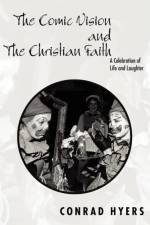
Is comedy an inconsequential part of life, useful primarily for relaxation and escape? Conrad Hyers asserts that comedy is central to all aspects of existence. In The Comic Vision and the Christian Faith Hyers offers the first detailed study of the special significance of comic and religious themes to show that the comic tradition enriches and informs as well as entertains. Maintaining that comedy constitutes its own mythology, Hyers examines the great array of comic figures - tricksters, clowns, jesters, fools, humorists, comedians, and the like - and shows their historical significance in giving meaning to the major issues with which humankind has been concerned. Finally, Hyers shows us that when we appreciate the importance of the comic vision, we gain a keener, fresher, and more meaningful outlook.
There is nothing but God's grace. We walk upon it; we breathe it; we live and die by it; it makes the nails and axles of the universe, concluded Robert Louis Stevenson. In 'Ruth: A Story of God's Grace, ' Cyril J. Barber trumpets God's grace. Grace leads Elimelech to Moab, brings Naomi back to Bethlehem, guides Ruth to Boaz's field, and directs Boaz to Ruth. Marvelous, infinite, matchless grace encircles the Book of Ruth. From the gracious acts of God Ruth's time, the author draws lessons for twentieth-century believers. He fathoms the importance of decision-making, the purpose of suffering, and the power of love. But the author does more than expound truths; he helps the reader understand the Bible text by explaining customs and word meanings. He also intersperses his own translation of Ruth throughout his commentary. Writing for the Bible student rather than the Bible scholar, Barber summarizes the Book of Ruth in a concise introduction, places all technical discussions and notes at the back, and provides two helpful indexes
John Wesley strived for a theology--a theology both written and lived--that delicately balanced sanctification and justification. He hoped to uphold both faith alone and holy living. Sadly, says theologian H. Ray Dunning, many of Wesley's followers have not maintained that balance. Some have tended toward legalism, some toward a preoccupation with personal holiness, and others toward social activism with little theological grounding. Dunning believes Wesleyanism possesses the resources to help all Christians reflect the divine image, and to do so holistically, in all aspects of life. His book incisively examines issues of ethical methodology and then shows how an ethic based on the Imago Dei shapes our relation to God, to one another and to the earth. This introduction to and overview of ethics will enlighten and benefit Christians in all traditions, not despite but especially because it is written in the true Wesleyan tradition--passionate, profoundly faithful and plainspoken.
Jacob Neusner, the preeminent Judaic scholar who is himself a Jew and a Zionist, here explores the issue he believes to be at the very heart of American Judaism: how two events remote from the experience of most American Jews have become the twin pillars upon which their world view is built. These two events, the murder of six million Jews between 1933 and 1945 and the subsequent creation of the State of Israel, form what Neusner calls the myth of the Holocaust and redemption. 'Stranger at Home' scrutinizes the paradox of a central myth generated out of events never witnessed and a place never inhabited by the majority of American Jewry. Written over a period of nearly twenty years, these systematically related essays begin with an analysis of the social and psychological problems confronting American Jews. The second and third set of studies concern the implications of the two elements that constitute the mythic vision that begins in death, the Holocaust, and is completed by rebirth, Israel. Finally the author offers his view of the actual and desirable role of Zionism for the Jewish community outside of Israel. Neusner's penetrating exposition sheds light on the search of an American minority culture for identity in the context of freedom and free choice and on the process of adaptation of an archaic religious tradition to modernity.
Produced ca. A.D. 600, the Babylonian Talmud--or Bavli-- serves as the single authoritative statement of Jewish law and theology. In this fourth volume of his examination of major formative texts of Judaism, Jacob Neusner explains how and why the Bavli came to define the Jewish faith from its time to ours. Through an analysis of the text, its sources and editorial organization, he traces the history of the composition of the Babylonian Talmud, clarifies its relation to the earlier corpus of canonical literature, and clearly establishes its philosophical, religious, and cultural context. Because there is little objective, external evidence from which to interpret the Bavli's development, Neusner uses the signs of redactional layering within the literature to discover the motivations and techniques by which the Talmud was formed. His use of the critical, secular methods of modern literary and historical study is unique in Talmudic exegesis and provides an entirely new perspective for understanding the Bavli in relation to the Mishnah and Yershalmi, the Jerusalem Talmud. Much of Neusner's research compares the use of the various literary forms of the Mishnah by the editors of the two Talmuds. Offering detailed examples and statistical lists to buttress his analysis, he argues that only in the Bavli have the editors achieved a genuine redactional synthesis between the Mishnah and Hebrew Scriptures, the two major sources of the Jewish tradition. In conclusion, Neusner spells out the religious significance of Bavli's achievement and shows how this unique combination allows for the tradition's continual renewal.
Jacob Neusner has--in over sixty scholarly works, fourteen textbooks, and thirteen collections of essays--laid the foundation and completed the structure for a new understanding of the history of Judaism. The present volume is the capstone effort to date in this endeavor. Neusner reconstructs and interprets the Mishnah's intellectual history, presenting a picture of the beginnings and first major expression of Judaism. What makes this account distinctively historical, writes Neusner in his Introduction, will be our sustained effort to relate the unfolding of the ideas of the Mishnah to the historical setting of the philosophers of the document, to compare context and concept, to ask about the interplay between idea and social, material reality. Neusner succeeds in this specific task and in the greater task of providing a work with methodological significance for the entire field of the history of religions.
In this close analysis of 'The Fathers According to Rabbi Nathan', a sixth-century commentary on the Mishnah-tractyate 'The Fathers' (Avot), Jacob Neusner considers the way in which the story, as a distinctive type of narrative, entered the canonical writings of Judaism. The final installment in Neusner's cycle of analyses of the major texts of the Judaic canon, 'Judaism and Story' shows that stories about sages exist in far greater proportion in 'The Fathers According to Rabbi Nathan' than in any of the other principal writings in the canon of Judaism of late antiquity. Neusner's detailed comparison of 'The Fathers' and 'The Fathers According to Rabbi Nathan' demonstrates the transmission and elaboration of these stories and shows how these processes incorporated the newer view of the sage as a supernatural figure and of the eschatological character of Judaic teleology. These distinctions, as Neusner describes them, mark a shift in Jewish orientation to world history. 'Judaism and Story' documents a chapter of rabbinic tradition that explored the possibility of historical orientation by means of stories. As Neusner demonstrates, this experiment with narrative went beyond argumentation focused on the explication of the Torah. The sage story moved in the direction of biography, but without allowing biography to emerge. This development, in Neusner's account, parallels the movement from epistle to Gospel in early Christianity and thus has broad implications for the history of religions.
Martin Hengel gathers an encyclopedic amount of material, ancient and modern, to present an exhaustive survey of the early course of Hellenistic civilization as it related to developing Judaism. The result is a highly readable account of a largely unfamiliar world which is indispensable for those interested in Judaism and the birth of Christianity alike. An extensive section of notes and bibliography is included.
Those looking for a compendium of the major world views, written from a Christian perspective, need look no further. Comprehensive and readable, well organized and up to date, 'Worlds Apart' stands alone. After introducing the meaning and function of a world view, the authors explore the seven major world views of our day -- theism, atheism, pantheism, pantheism, deism, finite godism, and polytheism. They delineate the varieties within each view, analyze the beliefs of its major representatives, and outline and evaluate its basic tenets. The authors present the seven world views in such a way that one can compare and contrast these views. It is our hope, they write, that [readers] will carefully consider all the options and then decide, even if it means discarding the world view [they] now have. In this revised edition the authors have updated the text and bibliography, rewritten several sections, and included suggested readings for each world view. Like the original edition, published in 1984, this volume contains a glossary of terms and an index of subjects and names.
Hypnosis is a controversial practice with many myths about its power and dangers. 'Hypnosis, Healing and the Christian' cuts through the confusion to present a balanced defense of the use of hypnosis by Christians, arguing that it is a powerful tool in bringing about psychological change. John Court avoids minimizing the dangers of this powerful phenomenon, as he discusses examples of clinical hypnosis by Christians who have found emotional and spiritual benefits from its use. Setting ethical concerns about the use of hypnosis firmly within a framework of the biblical material, he argues that hypnosis is a morally neutral technique which may be used for good or ill. Its use by pagan and other religions should not prevent its constructive and godly use by Christians. This stimulating book will be of interest not only to those involved in counseling and healing ministries but also to Christians interested in broader understanding of how our human minds work.
Churches thrive on communication; they are stifled by conflict. Renowned Christian educator Kenneth O. Gangel joins his colleague Samuel L. Canine to bring good news to the church - communication skills can be learned and conflict can be managed. The church need no longer hide conflict nor excuse itself for poor communication, but can instead acknowledge where it has problems and seek transformation. The authors offer scriptural strategies for overcoming conflict and for building trust in relationships - even relationships among deacons or between deacons and pastors. Drawing from recent studies in the social sciences, Gangel and Canine show the church how to manage strife and foster dialogue so that the church can flourish. Chapter titles include Learning To Listen, Power in Conflict Management, Negotiation and Bargaining in Conflict Management, Organizational Causes of Conflict, Coalitions in Conflict Management, Managing Conflict Destructively or Constructively, Stress: Cause And Cure, and The Workaholic Syndrome. This book is a valuable resource for training church leaders. It is also an important resource for those who are already pastors, for whom the issues are daily realities and not just academic theory. Through its use in churches and seminaries, the book is designed to lead God's church through its conflicts to renewed vigor in ministry and growth.
The bible college is a major force in the evangelical church of North America today, producing many of its leaders and 75 percent of its missionaries. Underlying the educational philosophy of the bible college is the concept that the teachings of scripture are foundational and permeating truths that impact all areas of life. Not until now has any book presented the biblical model of faith and learning as a practical paradigm for an educational institution. Toward a Harmony of Faith and Learning: Essays on Biblical College Curriculum is a comprehensive presentation of the unique educational philosophy of the bible college. The overall structure of the book follows the threefold curriculum pattern of the bible college - biblical, professional, and general (liberal arts) studies. Each chapter examines one academic discipline within the bible college, its biblical foundation and philosophical rationale. Practical suggestions on curriculum development and classroom implementation are provided in each chapter, including helpful ideas on teaching methods, textbook selection, student involvement, and student preparation for future service or vocational ministry.
How is the Bible authoritative in this postmodern age? In this exchange from the 1995 Hein/Fry Lectures Series, Fretheim and Froehlich mount important, though divergent, analyses of the contemporary situation regarding Scripture and suggest varying strategies to meet it. What does it mean to say that Scripture has authority for Christian faith and life in light of contemporary forms of biblical criticism? How do we understand a biblical text to be the Word of God when the meaning of the text can vary, depending on the perspective of the reader/hearer? Given the profound hermeneutical challenges of our time, how does Scripture serve as a guide in worship, doctrine, preaching, and ethical decision-making for the people of God? -From the Foreword
The debate over whether New Testament writers were entirely accurate in their quoting from the Old Testament has raged since before the turn of the century. This fundamental question has been one starting point in thought for both redaction and canon criticism. A majority of contemporary scholars have even agreed that New Testament writers (and readers) permissively interpreted the Old Testament text. Author Walter Kaiser, Jr., elucidates how this state of doctrinal affairs came about. He references the Old Testament text for accurate exegesis and content to answer the one question symbolizing the entire work: Have the New Testament writers fairly cited the Old Testament quotations according to their real truth-intention and original writer's meaning in their attempt to show that the Messiah and many of the events in the first century A.D. church had indeed been anticipated by the O.T. writers? The apostles preached and wrote while utterly convinced that Old Testament writing had anticipated the marvelous events they proclaimed. Did they give meaning to meaningless Old Testament texts? Did they squeeze fulfilled prophecy out of a dry passage? These are the central questions answered in this work.
When Wesley spoke, ordinary people were inspired to pursue their Christian vocation in extraordinary ways with fervor and obedience to the mission of the gospel. The subject of Christian vocation appeared often in the letters, journals, hymns, sermons, and books of John and Charles Wesley. At the Methodist Conference of 1744, John Wesley posed three crucial questions for Christian vocation: What do we teach?, How do we teach?, What do we do? For the theme of Christian vocation, Paul Wesley Chilcote has assembled nuggets and selections from the literature by the Wesleys. Each of the three questions is helpfully introduced and set in perspective. We are astonished by Wesley's ability to speak clearly to our turbulent times about doctrine, liturgy, worship, hunger, oppression, peace, and service in the world. Chilcote follows up each chapter with reflection questions that ask the reader to apply Wesley's teachings to personal situations in the home and in the community. The resource has been tested in various settings and is recommended for Covenant Discipleship groups. It is ideal for personal retreats or for a group study that helps us to clarify what and how to teach, then what to do.
Gage's thesis is that Genesis 1-7 constitutes a paradigm for macrocosmic (world) and microcosmic (Israelite) history, so that the history of the prediluvian world is parelleled in the histories of the postdiluvian world. This thesis is supported by an examination of the structural and literary parallels in the historical records; after identifying five major theological themes as having their basis in Genesis 1-7, Gage then traces them through Scripture, showing that the eschatology of the Bible is intimately bound up with the protology of the early chapters of Genesis.
Narrative Theology is still with us, to the delight of some and to the chagrin of others. 'Why Narrative? is in reprint because it represents what is still a very important question. This diverse collection of essays on narrative theology has proven very useful in university and seminary theology classes. It is also of great use as a primer for the educated layperson or church study group. Jones and Hauerwas have done an excellent job of selecting representative essays that deal with appeals to narrative in areas such as personal identity and human action, biblical hermeneutics, epistemology, and theological and ethical method.
Senses of the Soul explores the way art and visual elements are incorporated into Christian worship. It incorporates research conducted in Los Angeles congregations. Through extensive interviews in a sample of Protestant, Catholic, and Orthodox congregations it looks into the way visual elements actually become part of the experience of worship. By looking at attitudes and experiences of beauty, art, and memories, it suggests that believers appropriate images and aesthetic encounters in terms of imaginative structures that have been formed through worship practices over time. By comparing responses across denominations, the book proposes that people receive visual elements in ways that have been shaped by long traditions and specific background beliefs. In addition to discussions of the differences between the major Christian traditions, the book also examines the relation of art and beauty to worship, the role of memories and everyday life, and the power of images in spirituality and worship.By its focus on the worshiper, the book seeks to make a contribution to the growing conversation between the arts and Christian worship and to the process of worship renewal.
It is well known that Henri de Lubac's groundbreaking and highly controversial work on nature and grace had important implications for the Church's relationship to culture and was intended to remove a philosophical obstacle hindering Catholicism's faithful engagement with the secular world. This book addresses a too-often neglected dimension of de Lubac's theological renewal by examining the centrality and indispensability of spiritual exegesis in his oeuvre and making explicit its social and political significance for the Church's worship and witness. In addition to exploring the historical and ecclesial context within which he worked, the current work brings de Lubac into a critical engagement with the more recent theological movements of postliberalism and radical orthodoxy in order to demonstrate the enduring significance of his theological vision.
This book is intended for all those with an interest in New England Puritanism, American evangelicalism, the history of revivalism, or the history of pastoral ministry.
This is a work of Christian theology that Karl Barth might call an ad hoc or secondary apologetic. Relying on a paraphrase of Anselm--""faith seeking the ethical""--Boesel engages modern and postmodern theologians and philosophers--from Kierkegaard to Barth, Ruether, Hegel, Derrida, and Levinas--to analyze the imperialistic dynamics entailed in the church's theological interpretations of the Jewish neighbor. He demonstrates the dimensions of the problem as they are paradigmatically visible in the evangelical theological assumptions of Karl Barth. Turning to Ruether's exemplary remedy of the problem, Boesel illumines the ways her analysis and critique are funded by a specific cluster of modern assumptions that constitute what he calls ""modern ethical desire."" Employing a reading of Levinas and Derrida, Boesel shows that these assumptions constitute an imperialistic discourse of a different order, with its own specific hostility toward the Abrahamic tradition. In light of these postmodern critiques, Boesel returns to Barth to suggest that his evangelical theological assumptions, while indeed amounting to a form of Christian interpretive imperialism in relation to the Jewish neighbor, may nevertheless determine and delimit the knowledge and speech of Christian faith in such a way that resists more toxic forms of Christian imperialism. Broader implications of the argument follow: The ethical faces a radical limit, both in general and in relation to concrete faith. Therefore, no human remedy for the imperialistic discourse of Christian faith presents itself that does not entail an interpretive imperialism. To paraphrase Derrida: there is always an interpretive imperialism. Ethically, then, there is only discernment between different forms of interpretive imperialism. Theologically, an understanding of Christian faith as irreducible to the ethical may offer surprising though always risky ethical resourcement within this predicament of radically limited ethical possibility.
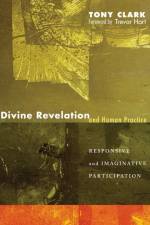
In this creative contribution to the doctrine of revelation, Clark seeks to develop and articulate an understanding of God's self-disclosure located in the participation of the ecclesial community in the trinitarian life of God. Clark takes as his point of departure Karl Barth's doctrine of the Word of God. Barth has impressed upon theology that revelation is primarily an event in which God establishes relationship with humanity in an act of his sovereign freedom. But what is the role of human participation in this revelatory event? It is here that Barth's account is less than satisfactory, and this shortcoming points to the principal theme of the book. Addressing this theme, Clark engages with the work of Michael Polanyi, whose philosophy provides a potent resource for the task. One profoundly innovative aspect of Polanyi's work is his theory of tacit knowledge, which demonstrates how articulate knowledge (conceptual understanding) arises out of knowledge established through practical and intrinsically imaginative participation in particular practices or ""life-ways."" Although we depend upon such knowledge, we can articulate it only in part. We know more than we can tell. This insight has profound implications for the doctrine of revelation. It suggests that knowledge of God is necessarily bound up with the various practices of the church in which Christians are imaginatively engaged and through which God makes himself known. It also suggests that such knowledge cannot be fully articulated. Clark does not deny the possibility or the importance of doctrinal formulation, but he does issue a reminder that theological statements are only possible because God gives himself to be known in the life and practices of the church.This substantial work provides important and original proposals for rearticulating the doctrine of revelation.
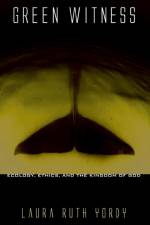
Green Witness is a work in theological ethics, addressed primarily to theologians and seminarians, but also to clergy and church study groups. Yordy approaches the topic of Christian environmental work not from the perspective of a global crisis that must be solved, but from the perspective of God's promise of the Kingdom. She argues that Christians can and should work for the wholeness of the biophysical environment whether or not their efforts bear immediate visible fruit, because God always welcomes and makes good use of faithful discipleship. This is good news to religious environmentalists who have grown weary of struggling to "make a difference" amid ever-louder announcements of environmental destruction. The eschaton is clearly a realm of interspecies peace, abundance, and diversity, and part of the church's mission is to demonstrate these aspects of God's plan for the world, although only God can and will consummate the Kingdom.
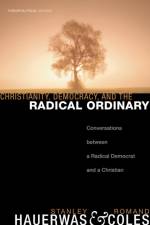
In Christianity, Democracy, and the Radical Ordinary, theologian Stanley Hauerwas and political theorist Romand Coles reflect about possibilities and practices of radical democracy and radical ecclesia that take form in the textures of relational care for the radical ordinary. They seek to shift political and theological imaginations beyond the limits of contemporary political formations (such as global capitalism, the mega-state, and empire), which they argue are based upon both the denial and production of death. Hauerwas and Coles call us to a revolutionary politics of ""wild patience"" that seeks transformation through attentive practices of listening, relationship-building, and a careful tending to places, common goods, and diverse possibilities for flourishing. Both authors translate back and forth across--as well as dwell in the tensions between--the languages of radical democracy and of trial, cross, and resurrection. Engaging each other through a variety of genres--from essays, to letters, to cowriting and dialogue--Hauerwas and Coles seek to enact a politics that is evangelical in its radical receptivity across strange differences and that cultivates power in relation to vulnerability.The authors argue that there is a strong relation between hope and imagination, as well as between imagination and the encounter with and memory of those who have lived with receptive generosity toward the radical ordinary. Hence, throughout this book they think extensively in relation to specific lives and practices: from Ella Baker and the early Student Nonviolent Coordinating Committee organizing efforts for beloved community and civil rights, to L'Arche communities founded by Jean Vanier, to contemporary faith-based radical democratic organizing efforts in dozens of cities by the Industrial Areas Foundation. Pushing and pulling each other into new and insightful journeys of political imagination, this conversation between a radical Christian and a radical democratic trickster spurs us toward a politics that acknowledges, tends to, and enacts the powers of the radical ordinary.
Abonner på vårt nyhetsbrev og få rabatter og inspirasjon til din neste leseopplevelse.
Ved å abonnere godtar du vår personvernerklæring.