







Gjør som tusenvis av andre bokelskere
Abonner på vårt nyhetsbrev og få rabatter og inspirasjon til din neste leseopplevelse.
Ved å abonnere godtar du vår personvernerklæring.Du kan når som helst melde deg av våre nyhetsbrev.

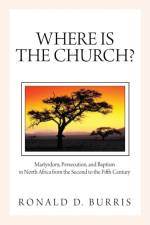
Where Is the Church? Martrydom, Persecution, and Baptism in North Africa is an overview of North African Christianity from the second to the fifth century. Beginning with the African martyrs, Ronald D. Burris investigates the idea of how "church" was defined in North African Christianity through the understanding of water baptism, martyrdom (baptism in blood), and key theological concepts such as origo or conscientia. In addition to baptism and ecclesiology, this work investigates the social, political, and economic issues that were germane to the shaping, hardening, and eventual condemnation of those beliefs as expressed by the North African Christians, called the Donatists. Morevoer, this work seeks to explain why so many North African Christians were drawn to that group. They were drawn to the Donatists because the latter more closely represented the tradition of the early African martyrs, Tertullian, and their beloved hero and martyr, Saint Cyprian.
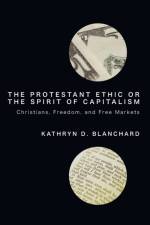
Since the publication of Max Weber's classic, The Protestant Ethic and the Spirit of Capitalism, it has long been assumed that a distinctly Protestant ethos has shaped the current global economic order. Against this common consensus, Kathryn D. Blanchard argues that the theological thought of John Calvin and the Protestant movement as a whole has much to say that challenges the current incarnation of the capitalist order. This book develops an approach to Christian economic ethics that celebrates God's gift of human freedom, while at the same time acknowledging necessary, and indeed vital, limitations in the context of material and social life. Through sustained interaction with such unlikely dialogue partners as Adam Smith, Milton Friedman, Deirdre McCloskey, and Muhammad Yunus, this book shows that the virtues of self-denial, neighbor love, and sympathy have been quite at home in the capitalism of the past, and can be again. Though self-interest has enjoyed several decades as the unquestioned ruling principle of American economics, other-interest is steadily coming back into view, not only among Christian ethicists, but among economists as well. This book explores the important implications of this shift in economic thinking from a theological perspective.
If prophets are called to unveil and expose the illegitimacy of those principalities masquerading as ""the right"" and purportedly using their powers for ""the good,"" then Will D. Campbell is one of the foremost prophets in American religious history. Like Clarence Jordan and Dorothy Day, Campbell incarnates the radical iconoclastic vocation of standing in contraposition to society, naming and smashing the racial, economic, and political idols that seduce and delude.In this anthology Campbell diagnoses a problem afflicting much of the church today. Zealous to make a difference in the world by acquiring the power of legislation and enforcement, Christians employ society's political science rather than the scandalous politics of Jesus. Although well-intentioned, Christians are, Campbell laments, mistakenly ""up to our steeples in politics."" Campbell's prescription is for disciples simply to incarnate the reconciliation that Christ has achieved. Rather than crafting savvy strategies and public policies, ""Do nothing,"" Campbell counsels. ""Be reconciled!""Yet his encouragement to ""do nothing"" is no endorsement of passivity or apolitical withdrawal. Rather, Campbell calls for disciples to give their lives in irrepressible resistance against all principalities and powers that would impede or deny our reconciliation in Christ--an unrelenting prophetic challenge leveled especially at institutional churches, as well as Christian colleges and universities.In sermons, difficult-to-access journal articles, and archival manuscripts, Campbell then develops what reconciliation looks like. Being the church, for example, means identifying with, and advocating for, society's ""least one""-including violent offenders, disenfranchised minorities, and even militant bigots. In fact, in Campbell's ordo the scorned sectarian and disinherited denizen is often closer to the peculiar Christian genius than are society's well-healed powerbrokers.Disciples seeking to discern their calling can hardly do better than taking direction from this ""bootleg,"" pulpitless preacher.
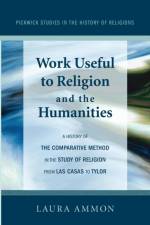
In many ways, the method of comparison in the study of religion is connected to European expansion and empire building. This work explores the early modern origins of the comparative method for the cross-cultural study of religion, beginning with its roots in the earliest missionary contact in the Spanish conquest and concluding with the Victorian anthropologists of the British Empire. Ammon explores the development of the comparative method in religion from the sixteenth through the nineteenth centuries, approaching the history of comparison by tracing its development from the first moments of contact with the New World through the recognized origin of the discipline of anthropology. This work delineates the comparative method from Bartolome de Las Casas to Edward Burnett Tylor, exploring a piece of the story we can tell about the development of the comparative methods and religious transformation in the disciplines of anthropology, ethnology, and comparative religion.
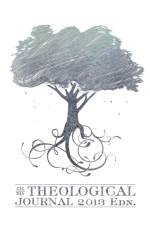
Description:ContentsLetter from EditorsSECTION I: INDIGENOUS LEADERSHIP AND THE SCRIPTURESCultivating Oaks of Righteousness: Restoration and Mission in Isaiah 61Daniel R. CarrollNow is the Time: Reflections on Isaiah 61:1-4Marshall HatchJesus''s Model for Us in Luke 4:15-30 and Luke''s GospelCraig KeenerIsaiah, Luke, and Jesus on the CornerPatty Prasada-RaoSECTION II: CROSS-CULTURAL LEADERSHIPRethinking Incarnational Ministry Soong-Chan RahOn Preparing Leadership for a Rapidly Changing Inter-Cultural Urban WorldJuan Francisco MartinezCultivating Autochthonous Leadership: Why Ministry in Under-Resourced Communities Should be Led from Within Vince BantuSECTION III: HISTORICAL, SOCIOLOGICAL AND THEOLOGICAL ANALYSYS The Cultivation of Racial Hierarchy in Early New Orleans during French, Spanish, and British Colonial RuleMae Elise CannonA People''s History: A Liturgical Call to Remembrance Dominque GilliardTRIBUTETribute to Richard Twiss Noel CastellenosMark CharlesAndrea SmithBOOK REVIEWSLinking Arms, Linking Lives: How Urban-Suburban Partnership Can Transform Communities by Ronald J. Sider, John M. Perkins, Wayne L. Gordon, and F. Albert TizonReviewed by Gary VanderPolThe New Jim Crow, by Michelle AlexanderReviewed by Michael McBride
Description:Based on ten years of research, God Beyond Borders is a comprehensive study of interreligious learning in faith communities. The United States is one of the most religiously diverse countries of the world. Kujawa-Holbrook details the many practices of interreligious learning in faith communities; through interreligious encounters, religious education, shared sacred space, shared prayer, and compassionate action. The book also surveys the field of interreligious learning and investigates some of the more common intentionally interreligious communities--families, clergy groups, chaplaincies, and community organizations. Kujawa-Holbrook combines theory and praxis to make a case for the importance of interreligious learning in all religious organizations.
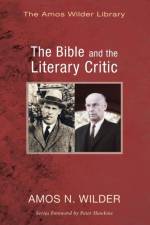
About the Contributor(s):Amos N. Wilder (1895-1993), New Testament scholar, poet, literary critic, and clergyman, received all earned degrees from Yale. His teaching career included posts at Andover Newton Theological School, Chicago Theological Seminary and the University of Chicago, and Harvard Divinity School. Special honors included the Golden Rose of the New England Poetry Club (1943) and the Bross Prize (1952). Wilder also received the Croix de guerre for service in World War I. He was the brother of playwright and novelist Thornton Wilder.
Description:Biblical texts are the springboards for proclaiming the Good news. For Rev. James S. Lowry, these springboards lead to recollections from life and ministry that make the Gospel come alive in a special way. Memories of two very different créches shed light on Mary''s Magnificant; the funeral of dissolute ne''er-do-well Tex Malone provides a surprising context for that most famous of verses, John 3:16; a misspelled word becomes a fountain of grace for an entire congregation; and the low-back, ladder-back, cane-bottom chair with the legs cut off just so to accommodate Lowry''s diminutive childhood caregiver, Bessie Grier, calls forth the God who guarded that daughter of slaves and who now guards the adult Lowry as he prepares to face each day.
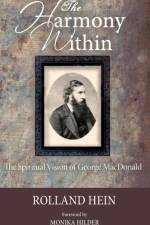
Description:George MacDonald is a witness to the power of imagination. By using the art of enchantment, he is able to draw readers into another world seemingly more real than this one. What was the power behind his imagination and what drove MacDonald''s art? It was his vision of the spiritual life that provided the context for his fantastic fairy tales and other writings.The Harmony Within: The Spiritual Vision of George MacDonald takes a close look at the religious roots of MacDonald''s writing. So many people today are looking for a spiritual connection between God and man, between myth and destiny. George MacDonald''s work provides a doorway to other worlds; the ideas behind his writing may help reshape the mythic elements of our lives.
Description:""Peace is my farewell to you, my peace is my gift to you"" (John 14:27). With these words, Jesus established his legacy to humankind. Yet the journey to peace is not an easy one. Father Feider presents a step-by-step understanding of inner peace, its importance as a gift from God and as a means for discovering the real meaning of life. Writing in a simple, experiential manner, he gathers together and explains the primary healing themes, and makes accessible to the reader the experiences of reconciliation, courage, inner healing, and listening to the Lord. He develops and explains six principles, and follows each with a reflective section composed of a prayer and several selections from Scripture. ""It is a summary of my thoughts and experiences from working with people on their journey toward inner peace,"" he explains. ""It dares to journey into the mystery of the silent confidence of Jesus and those who follow him. It is a journey into ourselves.""
Mark: A Theological Commentary for Preachers engages hermeneutics for preaching, employing theological exegesis that enables the preacher to utilize all the narrative units of Mark to craft effective sermons.This commentary unpacks the crucial link between Scripture and application: the theology of each preaching text. The Gospel of Mark is therefore divided into twenty-five narrative units, with the theological focus of each clearly delineated. The specificity of these theological ideas for their respective texts makes possible a sequential homiletical movement through each pericope of the book, progressively developing the theological trajectory of Mark's theme of discipleship, and enabling the expositor to discover valid application for sermons.While the primary goal of the commentary is to take the preacher from text to theology, it also aids in the advance from theology to sermon by providing tips for preaching and two possible sermon outlines for each of the twenty-five units of the Gospel. The unique approach of this work results in a theology-for-preaching commentary that promises to be useful for anyone teaching through Mark's Gospel with an emphasis on application.
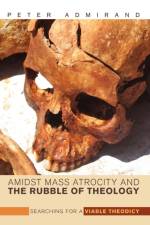
It is hubris to claim answers to unanswerable questions. Such questions, however--as part of their burden and worth--must still be asked, investigated, and contemplated. How there can be a loving, all-powerful God and a world stymied by suffering and evil is one of the unanswerable questions we must all struggle to answer, even as our responses are closer to gasps, silences, and further questions. More importantly, how and whether one articulates a response will have deep, lasting repercussions for any belief in God and in our judgments upon one another.Throughout this wide-ranging, interdisciplinary work, Peter Admirand draws upon his extensive research and background in theology and testimonial literature, trauma and genocide studies, cultural studies, philosophy of religion, interreligious studies, and systematic theology. As David Burrell writes in the Foreword: "". . .[T]he work's intricate structure, organization, and development will lead us to appreciate that the best one can settle for is a fractured faith built on a fractured theodicy, expressed in a language explicitly fragmented, pluralist, and broken.""
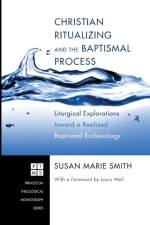
Most people, even non-Christians, know that Christians gather for worship once a week, and that they are right there to support each other when there is a baptism or a wedding or a funeral. But what about other poignant, vulnerable, or life-changing times? How does the church help people handle changes that in the past, in Christendom, were considered "secular"? Does the church have a role at retirement when one's ministry changes, or when a family's children leave home and familiar patterns seem to grind to a halt? Is there any rite possible for someone who is called to Christian ministry but not to ordination? Or to someone whose vows are broken in divorce? Christian Ritualizing and the Baptismal Process asserts that baptism marks the beginning of a process of participation in Christ's ministry, so that no part of life can finally be considered secular. Susan Marie Smith shows how every passage, healing, and ministry vocation is "holy," and she lays the groundwork needed for every church to create the rituals necessary to lament and celebrate the endings and beginnings that happen in every Christian life.
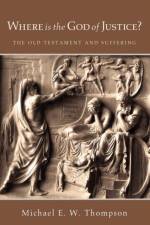
Synopsis:What does the Old Testament say about the problem of suffering? Though Christians believe themselves to be held in the care of the God of love and strength, they yet find that sufferings come their way. Moreover, whole communities, even whole nations, experience terrible sufferings-all of which frequently raises the question, "Where is the God of justice?"Those parts of the Old Testament that deal with this question are here considered and discussed, both those that understand suffering as due to human sinfulness and those that raise serious questions about that sort of understanding. Further, here are Jeremiah''s questions about why he, as the Lord''s prophet, must suffer; the gentler questions in Ecclesiastes; the perplexing life experiences of Joseph; the agonized prayer of Habakkuk; those most urgent questions in the book of Job; the outspoken words of psalmists; the radical talk about a "suffering servant"; and the confident hope expressed in Daniel. Thompson argues that while the Old Testament cannot always give us answers, it does point us to God for hope in the midst of suffering.Endorsements:"With the insights of a scholar and the heart of a pastor, Michael Thompson considers what the Old Testament can say to help those going through times of suffering. He gently leads his readers through a variety of books, treating the problem with realism and showing that a number of responses are considered. This sensitive treatment marks a great advance on many previous dogmatic approaches."-H. G. M. WilliamsonUniversity of Oxford"The Bible does not shy away from the problem of human suffering and the challenge it presents to belief in divine justice. In this book, Michael Thompson gives the reader a first-rate insight into the many-sided approaches that are offered by the prophets, psalmists, and sages of the Old Testament. I commend it very highly for its clarity and readability."-Ronald E. ClementsKing''s College, University of London"Michael Thompson has brought to bear on a fundamental theme of the Hebrew Bible a deep familiarity with biblical texts and scholarship. With clarity he guides us through important ways the biblical writers have wrestled with the question of God''s justice. The chapters flow easily and logically, specifying, explaining, and framing the various responses. While offering his own well-argued judgments, Thompson leaves his reader with a sense of the profundity and complexity of the question. The book opens, not closes, the Bible. It is a thoughtful contribution in its own right and will make a valuable resource for students in a variety of settings."-David GunnTexas Christian UniversityAuthor Biography:Michael E. W. Thompson is a Methodist minister who, in retirement, has served as part-time tutor in Old Testament with East Midlands Ministry Training Course in England. He is author of I Have Heard Your Prayer: The Old Testament and Prayer (1996) and the Epworth Commentary Isaiah 40-66 (2001).
Why does it feel like most of the world today considers irrelevant the gospel we cherish and so faithfully proclaim in our churches? Why do our Christian responses fail to satisfy the heart quests of our neighbors? Does the shallowness of our neatly packaged answers alienate us from them and from each other?More Questions than Answers offers the hope of reconciliation through exploring how we can develop listening relationships. Walking together in what becomes a spiritual accompaniment, we learn to attune ourselves to one another and to the Spirit within us. Then we dare to reach across the chasm that separates us and discover an authentic faith emerges.
How did the ancient Hebrew writers understand their emotional experiences of being in distress? Were their feelings similar to those of an English speaker who feels down, or were there other embodied experiences they used to make sense of physical, social, and emotional distress? This research establishes a cognitive linguistic methodology for addressing these questions, and investigates the use of embodied experiences of VERTICALITY, CONSTRAINT, FORCE, DARKNESS, and BAD TASTE in the conventional language of classical Hebrew lament to understand and reason about situations of distress.
This collection of essays outlines a new political economy. Twenty years after the demise of Soviet communism, the global recession into which free-market capitalism has plunged the world economy provides a unique opportunity to chart an alternative path. Both the left-wing adulation of centralized statism and the right-wing fetishization of market liberalism are part of a secular logic that is collapsing under the weight of its own inner contradictions. It is surely no coincidence that the crisis of global capitalism occurs at the same time as the crisis of secular modernity. Building on the tradition of Catholic social teaching since the groundbreaking encyclical Rerum Novarum (1891), Pope Benedict XVI's Caritas in Veritate is the most radical intervention in contemporary debates on the future of economics, politics, and society. Benedict outlines a Catholic ""third way"" that combines strict limits on state and market power with a civil economy centered on mutualist businesses, cooperatives, credit unions, and other reciprocal arrangements. His call for a civil economy also represents a radical ""middle"" position between an exclusively religious and a strictly secular perspective. Thus, Benedict's vision for an alternative political economy resonates with people of all faiths and none.
This long-standing series provides the guild of religion scholars a venue for publishing aimed primarily at colleagues. It includes scholarly monographs, revised dissertations, Festschriften, conference papers, and translations of ancient and medieval documents. Works cover the sub-disciplines of biblical studies, history of Christianity, history of religion, theology, and ethics. Festschriften for Karl Barth, Donald W. Dayton, James Luther Mays, Margaret R. Miles, and Walter Wink are among the seventy-five volumes that have been published. Contributors include: C. K. Barrett, Francois Bovon, Paul S. Chung, Marie-Helene Davies, Frederick Herzog, Ben F. Meyer, Pamela Ann Moeller, Rudolf Pesch, D. Z. Phillips, Rudolf Schnackenburgm Eduard Schweizer, John Vissers
Synopsis:Colin Gunton argued that Augustine bequeathed to the West a theological tradition with serious deficiencies. According to Gunton, Augustine''s particular construal of the doctrine of God led to fundamental errors and problems in grasping the relationship between creation and redemption, and in rightfully construing a truly Christian ontology. Bradley G. Green''s close reading of Augustine challenges Gunton''s understanding.Gunton argued that Augustine''s supposed emphasis of the one over the many severed any meaningful link between creation and redemption (contra the theological insights of Irenaeus); and that because of Augustine''s supposed emphasis on the timeless essence of God at the expense of the three real persons, Augustine failed to forge a truly Christian ontology (effectively losing the insights of the Cappadocian Fathers). For all of Gunton''s insights (and there are many), Green argues that Augustine did not sever the link between creation and redemption, but rather affirmed that the created order is a means of genuine knowledge of God, the created order is indeed the only means by which redemption is accomplished, the cross of Christ is the only means by which we can see God, and the created order is fundamentally oriented toward a telos-- redemption. Concerning ontology, Augustine''s teaching on the imago Dei, and the prominent role that relationship plays in Augustine''s doctrines of man and God, provides the kind of relational Christian ontology that Gunton sought. In short, Green argues, Augustine could have provided Gunton key theological resources in countering the modernity he so rightfully challenged.Endorsements:"The late Colin Gunton was an ardent and influential critic of Augustine''s Trinitarian theology. His work was influential on many in the English speaking theological community. Brad Green''s book offers the most sustained critique currently available of Gunton''s work and should be read by anyone who has been swayed by Gunton''s presentation. But more than this, Green''s work also makes available a very different Augustine. Building on the work of a growing body of scholarship, Green reveals to the theological community a vision of Augustine that will help us to think again about this most important of the Church Fathers in the west."--Lewis AyersCandler School of Theology"Brad Green offers a persuasive reading of Augustine that corrects misapprehensions found, not just in the work of Colin Gunton, but much more widely across contemporary theology. He also shows us how Augustine, rightly understood, can be recovered as a positive resource for contemporary theology. The book is not merely corrective, however: the reader will discover a perceptive and sympathetic reading of Gunton''s own thought that gives us insight into a significant contemporary figure. This book will open up ancient and modern theology, and how they should be related. These are important matters, and I hope it will be widely read."--Stephen HolmesUniversity of St. AndrewsAuthor Biography:Bradley G. Green is Associate Professor of Christian Thought and Tradition at Union University (Jackson, Tennessee). He is the author (editor and contributor) of Shapers of Christian Orthodoxy: Engaging with Early and Medieval Theologians (2010) and the author of The Gospel and the Mind: Recovering and Shaping the Intellectual Life (2010).
'Inculturation' is a word come only recently into theological language, having its origin and impetus in a revolution in the perception of Christian mission--even of Christian identity. 'Toward a Theology of Inculturation' is the first book to bring together the many strands of current and historical Catholic thought on what might be called a theology of a multicultural church. Inculturation, Shorter argues, is the recognition that faith must in effect become culture to be fully received and lived. In the course of a wide-ranging discussion, the author explores the intimate relationship between inculturation and theology, focusing in particular on scripture, the history of missions (especially in Africa), and contemporary Catholic thought. Shorter concludes with an exploration of the future of the church--a multicultural church. 'Toward a Theology of Inculturation' offers a substantive explication of what inculturation is, what it is not, how and when it occurs, and what its limits are or should be.
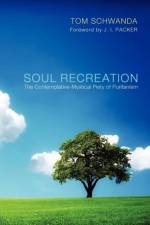
Spiritually there is a great hunger today for contemplative and more satisfying experiences with God. Puritanism might seem to be an unlikely source for this, yet few groups in the history of Christian spirituality have written more extensively or wisely on the subject. Isaac Ambrose (1604-64), a relatively forgotten English Puritan, developed a theological foundation for the spiritual life based upon the Christian's intimate union with Christ, which the Puritans often called "spiritual marriage." Schwanda demonstrates that this vibrant relationship of union and communion with Jesus, inspired by the Holy Spirit, was manifested in a deep contemplative piety of gazing lovingly and gratefully upon God. At the same time, Ambrose did not neglect loving his neighbors. This study reveals how heavenly meditation was one of the significant practices engaged by Ambrose to cultivate spiritual intimacy and enjoyment of God. Further, his experiential reading of Scripture, in particular the Song of Songs, provided him with a language of ravishment and delight in God. This book provides a distinctively Protestant foundation for recovering the contemplative life while recognizing the significant contributions of the Western Catholic tradition.
Twenty-four scholars join their efforts to congratulate David Lee Balch for a long career of dedication to scholarship and teaching. Topics range from the life of early Christian house churches to the kinds of challenges that early Christians needed to negotiate in their artistic and literary worlds as they established their own identity.ContributorsEdward AdamsFrederick E BrenkWarren CarterJohn R. ClarkeEverett FergusonJohn T. FitzgeraldRichard A. FreundRonald F. HockRobin M. JensenDavina C. LopezMargaret Y. MacDonaldAbraham J. MalherbeAliou Cisse NiangPeter OakesTodd PennerLeo G. PerdueTurid Karlsen SeimDennis E. SmithYancy W. SmithStephen V. SprinkleHal TaussigOliver Larry Yarbrough
My Brother's Keeper is a collection of essays penned by people interested in educating primarily European church leaders, theological educators, and missionaries as well as other Christian leaders from around the world. All of the authors are related to the ministries of Tyndale Theological Seminary, the Netherlands. This book is in honor of missionary Hebrew scholar and colleague, Ellis R. Brotzman upon his retirement. Included is material from the fields of biblical studies, theological studies, and pastoral ministries and missions. The articles represent a sampling of the type of teaching provided at Tyndale since its beginnings in 1985 as well as a taste of the ongoing research of some of its members. Most of the authors have many decades of experience primarily as missionary professors throughout Europe. Others include those with pastoral ministry experience in Europe and North America. Theological educators, local church leaders, and cross-cultural workers will find this a worthwhile addition to their personal and school libraries.
What would biology look like if it took the problem of natural evil seriously? This book argues that biological descriptions of evolution are inherently moral, just as the biblical story of creation has biological implications. A complete account of evolution will therefore require theological input. The Dome of Eden does not try to harmonize evolution and creation. Harmonizers typically begin with Darwinism and then try to add just enough religion to make evolution more palatable, or they begin with Genesis and pry open the creation account just wide enough to let in a little bit of evolution. By contrast, Stephen Webb provides a theory of how evolution and theology fit together, and he argues that this kind of theory is required by the internal demands of both theology and biology. The Dome of Eden also develops a theological account of evolution that is distinct from the intelligent design movement. Webb shows how intelligent design properly discerns the inescapable dimension of purpose in nature but, like Darwinism itself, fails to make sense of the problem of natural evil. Finally, this book draws on the work of Karl Barth to advance a new reading of the Genesis narrative and the theology of Duns Scotus to provide the necessary metaphysical foundation for evolutionary thought.
Your time in seminary can be a period of great blessing and adventure, on the one hand, but also a time of great confusion and doubt, on the other. How do you navigate the challenges, questions, and even frustrations of seminary life? Am you the only one who is confused in your classes or struggling with what you believe? What does all this theological stuff have to do with serving Christ? Finding Your Way was written to help you with these questions and perhaps with others that you didn't even know you had. This little book will help you see that seminary education is not a hoop to jump through or a burden to bear on the way to "real" ministry. Rather, your theological education is an important part of your vocation and spiritual formation now and for your future service. To this end, this book serves as a guide to the ins and outs of seminary life, to fostering a loving relationship with the church, and to developing spiritual habits that will bless you throughout your ministry.
The mid-second-century apocryphal infancy gospel, the Gospel of Thomas, which deals with the childhood of Jesus from age five to age twelve, has attained only limited interest from scholars. Much research into the story has also been seriously misguided--especially study of the story's origin, character, and setting. This book gives a fresh interpretation of the infancy gospel, not least by applying a variety of new approaches, including orality studies, narrative studies, gender studies, and social-scientific approaches.The book comes to a number of radically new conclusions: The Gospel of Thomas is dependent on oral storytelling and has far more narrative qualities than has been previously assumed. The narrative world depicted in the gospel is that of middle-class Christianity, with the social and cultural ideas and values characteristic of such a milieu.The gospel's theology is not heretical--as has often been claimed--but mirrors mainstream thinking rooted in biblical tradition, particularly in the Johannine and Lukan traditions. Jesus is portrayed as a divine figure but also as a true-to-life child of late antiquity.The audience for the Gospel of Thomas is likely to have come from the rural population of early Christianity, a milieu that has received little attention. A main audience for the story was children among early Christians, making this--at least within Christianity--the oldest-known children's tale.The book provides a Greek text and a translation, and several appendixes on the story, along with other early Christian infancy material.
Abonner på vårt nyhetsbrev og få rabatter og inspirasjon til din neste leseopplevelse.
Ved å abonnere godtar du vår personvernerklæring.