











Gjør som tusenvis av andre bokelskere
Abonner på vårt nyhetsbrev og få rabatter og inspirasjon til din neste leseopplevelse.
Ved å abonnere godtar du vår personvernerklæring.Du kan når som helst melde deg av våre nyhetsbrev.

The Psalms have long been the preferred prayer book of souls in quest of God's guidance and comfort. It has been a hymnbook for the soul and a trove for canticles and verses of the heart. The Psalms have served both Judaism and Christianity's religious communities as a favored source of rich and magnificent readings perfect for liturgical settings. Most significantly, they have nurtured the soul in its desperate times of brokenness and longing for God. This is true of both religions and of their various branches across the years. For that reason, the Psalter ranks among the noblest of spiritual masterpieces, cherished for its eloquent and poignant prayers that lift the heart to God even as they bring God down to mend the soul.We need such times of private and communal withdrawal into the sphere where God alone reins. Solitariness with God heals the heart's wounds, individually and communally. Alone with God, God sees us as we are and allows us to acknowledge ourselves as we are--at our best and worst, in our joy and folly. The Psalms remind us that God is inescapably present wherever we allow God in to renew, inspire, redeem, and fulfill the highest hopes of our human capacity.By the Waters of Babylon provides meditations on all 150 of the Psalter's hymns. They are written to speak to the heart as well as to the mind and soul in search of grace and consolation.
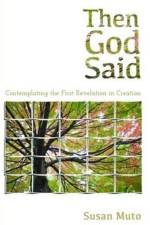
Then God Said teaches us to open our eyes and behold the gifts of creation that unfold before us in all their splendor. We abide in awe before the generative forces of the universe. We delight in the splendor of created things and thank God for this outpouring of gifts from the beginning of time. Each chapter of Then God Said invites us to contemplate the first revelation in creation--from water and sky to cattle and creeping things. We ponder, page by page, the power of the Father, the presence of the Son, and the productivity of the Holy Spirit. We behold anew the majesty of this planet and the merciful dispensation of the Divine under which we live day by day. We celebrate the beauty of the earth and the sheer majesty of each minute trace of the transcendent. Readers are encouraged to find the footprints of love that move the sun, the moon, and all the stars. Creation not only reminds us of God's glory; it offers us a sacramental understanding of all that we see, hear, touch, taste, and smell, thereby increasing our ecological sensitivity and our commitment to foster respectful stewardship over all that we survey.
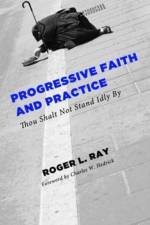
Holocaust survivor and Nobel Prize winner Elie Wiesel has said that there is a new commandment: "Thou shalt not stand idly by." This book articulates a progressive faith that represents a true marriage of the academic work of the modern biblical critical movement and the historical Jesus work of the Jesus Seminar applied within the life of an active parish. Setting aside the magic and superstition found in much of traditional religious life and affirming an evidence-based approach to faith, author Roger Ray strives to apply Wiesel's injunction to actively respond to the injustice, violence, and discrimination in the world. In concrete terms, Ray describes what progressives can embrace intellectually and morally, and how those convictions can be lived out in a faith community.
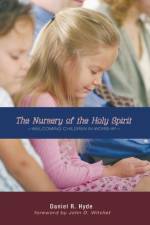
Public worship is the nursery of the Holy Spirit.As you enter the sanctuary, you notice them at once. Then, as you take your seat next to a family, they are right there beside you. Throughout the ensuing service, you see them--and hear them. The presence of children in public worship is not only striking, but also increasingly strange in modern American church life. In fact, the idea of your children sitting or standing next to you during prayer, singing, or the pastor's sermon can be downright scary.This book is based in the conviction that public worship is the nursery of the Holy Spirit and that bringing children in is both beneficial and a blessing. The Nursery of the Holy Spirit offers practical advice on how to make this ideal a reality in your children's lives.
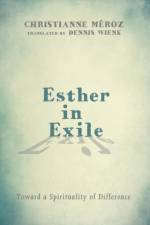
The biblical book of Esther is the dark, yet marvelous, story of a Jewish girl deported with her uncle to the Persian Empire. They are in exile from Israel and from humanity, condemned to wander as nomads and strangers in a foreign land. Yet, almost in spite of herself, Esther becomes a queen, succeeding in saving her people from extermination.How hard it is when everything seems to be falling apart to stay true to one's identity! It might be even more difficult for these exiles to keep faith with a God who seems hidden deep in the very heart of history. However, only this kind of faithfulness makes it possible to accept the other, the one who is different, and to be accepted by the other oneself.The stakes are high. In spite of conflicts and tragedies, this story sets forth a real spirituality of difference. Esther in Exile is a penetrating work on the human condition in general and on the female condition in particular.
What did writers in the Reformed tradition mean by suggesting that the Covenant of Works with Adam has been republished in the Mosaic Covenant? Not all forms of this doctrine of "republication" are the same. Merit and Moses is a critical evaluation of a particular version of the republication doctrine--one formulated by Meredith G. Kline and espoused in The Law Is Not of Faith (2009). At the heart of this discussion is the attribute of God's justice and the Reformed view of merit. Has classic Augustinian theology been turned on its head? Does--or can--God make a covenant at Sinai with fallen people by which Israel may merit temporal blessings on the basis of works? Have "merit" and "justice" been redefined in the service of Kline's works-merit paradigm? The authors of Merit and Moses examine the positions of John Murray and Norman Shepherd with respect to the reactionary development of the Klinean republication doctrine. Klinean teachings are shown to swing wide of the Reformed tradition when held up to the plumb line of the Westminster Standards, which embody the Reformed consensus on covenant theology and provide a faithful summary of Scripture.
The study of Christianity in the non-Western world reveals a demographic shift in the center of Christianity from the Northern Hemisphere to the South. But the contradictory aspect of the massive African conversion to Christian faith is the grinding poverty level in Africa. This condition raises important theological and ecclesiological questions that demand urgent answers. Therefore, the research objectives of this book are to examine African Catholicism's involvement in human promotion and to seek a new way of theologizing Christianity that moves sub-Saharan African peoples to action against the massive injustices that keep them poor. Drawing on Africae Munus, the Post-Synodal Apostolic Exhortation of the Second African Synod (2011), and Bernard Lonergan's notion of culture, African Catholicism and Hermeneutics of Culture argues that to truly be ""the spiritual 'lung' of humanity,"" African Catholicism must appropriate the Christian message to transform African attitudes and personhood and so foster a self-reliant commitment to integral African development.""Professor Ogbonnaya offers us a rich, provocative, and unsparingly candid assessment of African Catholicism in light of the Second African Synod. He urgently summons the church in Africa to take its rightful place as an agent of moral transformation and social reconciliation. His prescriptions for a genuinely liberative African social spirituality give me great hope that Africa can breathe new life into global Christianity, as he points the way to healing the psychic wounds that afflict believers not only in Africa, but in the African diaspora as well. This is a book not only for Africa, but the entire Catholic church.""--Bryan N. Massingale, Professor of Theological Ethics, Department of Theology, Marquette University, Milwaukee, WI""This is a book that every person in Africa and beyond should read, digest, meditate upon, and allow the ideas contained therein to challenge us for a change that is necessary and urgent. If we allow these thoughts to influence our actions and conduct, there will be salvation for the clergy and for the church, otherwise the revolution that will take place will be worse than that of the French Revolution and we, the clergy, will be in for it.""--The Most Rev. John I. Okoye, Bishop, Catholic Diocese, Awgu, NigeriaJoseph Ogbonnaya is Assistant Professor of Theology at Marquette University, Milwaukee, WI. He is the author of Lonergan, Social Transformation and Sustainable Human Development (2013) and a co-editor of The Church as Salt and Light (2011).
In Baptists and the Emerging Church Movement, David Rathel examines the major ecclesiological proposals of the emerging church movement. Though many theologians argue that the emerging church movement emphasizes epistemology, Rathel contends that its primary concern is ecclesiology. Emerging church leaders offer a number of important ecclesiological proposals, including restructuring traditional church leadership models to accommodate the rise of postmodernity, changing the mission of the church so that the church may strike a more "missional" tone in contemporary culture, removing the categories of "in" or "out" within the church body, and adopting the multi-site church model. In assessing these proposals, Rathel draws upon historic Baptist convictions about the nature of the church, using Baptists' ecclesiological distinctives and long history of ecclesiological thought as a helpful reference point. This book will not only serve as a guide for those who wish to learn of emerging church ecclesiology, it will also be an aid to Baptists who wish to evaluate recent trends in ecclesiology in light of their denominational distinctives.
In these challenging times, the resident population served by the predominantly African-American church demands and deserves specific attention in order to preserve the uniquely cohesive nature of the African-American community. While this work is specifically focused on one local church community, there is a shared hope among church members, clergy, civic and lay professionals, and the Samuel DeWitt Proctor School of Theology that this project will serve as a model for success beyond its local audience.This work was conceived to help mitigate growing environmental and social concerns beyond traditional emergencies--such as floods, hurricanes, tornadoes, severe weather, and power outages--imposed upon communities already strained by economic and social inequities. This book is designed to provide guidance on crisis and emergency preparedness by offering an example of how a church or similar institution may undertake the task of setting up an appropriate emergency planning structure for its congregation and community.
The African-American community represents a paradox of sorts. While collective success has been achieved in many areas, African-Americans still disproportionately suffer from a variety of social ills. The residual effects from years of slavery and exclusion from the major institutions of American life are still trenchant. Yet, there is hope. As we move forward into a new millennium, our greatest answers can be found by exploring the past. The Christian faith has served as a sustaining force that has been the backbone of this community for generations. This faith, along with a holistic commitment to family, political participation, education, and entrepreneurship, are the key to its future. The Way Out tackles this issue with a mature voice that represents a juxtaposition of faith and public policy. It rejects the culture of partisan gridlock, racial division, and religious cynicism by fostering a fresh and pluralistic discourse about the greatest solutions for our most pressing civic challenges. From the experienced policymaker to the common citizen wanting to make a difference, The Way Out provides tangible solutions through which we can all find ways to engage. It stands firmly at the intersection of religion, race, politics, and culture to light a clear path forward.
Synopsis:Kierkegaard''s Pastoral Dialogues takes a selection of Kierkegaard''s most insightful spiritual writings and transforms them into a series of dialogues between two friends, a believer and a nonbeliever. In this way, some of Kierkegaard''s complex religious thought is made accessible to a wider readership, so as to provide a resource for individual or group study in pastoral, counseling, or spiritual direction contexts. Each dialogue is accompanied by a commentary and questions to help discussion by groups or application by individuals. Finally, there are three responses from, respectively, a philosopher, a theologian, and a hospital chaplain, looking at how the dialogues may be relevant to these different fields of practice.Endorsements:"Kierkegaard is a profound, Socratic, and dialogic thinker. Sometimes this dialogue is implicit in his work, and other times explicit. Kierkegaard''s Pastoral Dialogues offers a way into this thinking that makes the dialogical element both explicit and attentive, relating Kierkegaard''s dialogue with his reader to a contemporary pastoral context. A good book that presents, not learning about, but from Kierkegaard."--Eberhard Harbsmeier, Professor, Aarhus University "In these imaginative dialogues, Pattison and Jensen have captured the pith of Kierkegaard''s thinking on matters of life and death. They have done so without bowdlerizing or oversimplifying the texts. It is an achievement in the art of communication that Kierkegaard himself would have smiled upon!"--Gordon Marino, Director of Hong Kierkegaard Library, St. Olaf College"Can Kierkegaard comfort the anguished--acknowledging wounds and also ways to staunch them--through reflection and also through posture and bearing? This book is an utter success in bringing Kierkegaard''s ''Lilies of the Fields and Birds of the Air'' into immediate resonance with believer and nonbeliever alike, addressing aching questions, not as aberrant, but as profoundly and touchingly human. It provides heartfelt pastoral dialogues on sorrow and delight that a reader will find transforming."--Edward F. Mooney, Professor at Syracuse University"This is a most welcome book, full of fresh and vibrant vistas on faith, prayer, virtue and Christian character. Pattison and Jensen''s adaptation is richly complemented by essays from John Lippit, Simon Podmore, and John McLuckie, who provide helpful and illuminating reflections on Kierkegaard''s extraordinary pastoral wisdom. This is an outstanding book that will both challenge and nourish all who study pastoral theology."--Martyn Percy, Ripon College CuddesdonAuthor Biographies:George Pattison is Lady Margaret Professor of Divinity at the University of Oxford and has written extensively on Kierkegaard and modern religious thought. His most recent books are Kierkegaard and the Theology of the Nineteenth Century and Kierkegaard and the Quest for Unambiguous Life.Helle M├╕ller Jensen has a doctorate in Systematic Theology from the University of Aarhus. After eleven years of experience as a hospital chaplain, she is currently a parish priest in the Danish People''s Church and is also a military chaplain to the Danish Royal Lifeguards.
Synopsis:Scripture, like any performance, aims for transformation of its audience. In this new study Jeanette Mathews demonstrates how literature from the diverse field of performance studies can be applied to the prophetic book of Habakkuk in order to draw out themes and features that are common to both. Mathews offers a fresh new translation of Habakkuk that emphasizes and celebrates its intrinsic dramatic features. This translation provides the "script" for the performance of Habakkuk. The attitudes and actions of the "actors" in the performance become models for their "audience," such that the audience members are drawn into the performance and do not remain impartial spectators. The context of crisis that forms the book''s "setting" is of crucial importance, ensuring that genres such as complaint and lament are taken seriously as expressions of faith in the midst of traumatic experience. The open-ended script makes explicit the drama of faithfulness in the midst of cultural trauma and public crises--a faithfulness that is ready to be reenacted in our own settings.Endorsements:"Performance criticism is a developing critical methodology providing new insights into the Hebrew prophets . . . Performing Habakkuk provides a clear and thorough application of performance criticism in a way that breathes new life into the book of Habakkuk. A must-read for those interested in the Hebrew prophets!"--Terry Giles, Charles Sturt University"Mathews carefully and creatively engages performance criticism as a lens for interpreting prophetic literature. She highlights performative elements within Habakkuk that both aid in its interpretation and serve as clues for a script that can be re-enacted for today''s communities of faith."--James D. Nogalski, Baylor University"This pioneering work illustrates the use of performance criticism to present a holistic understanding of the composition and implied rhetorical impact of Habbakuk. In addition to a helpful review of secular and biblical performance studies, Mathews develops a step-by-step procedure to explore the sounds, emotions, characters, images, and audience of Habbakuk . . . In so doing, she brings considerable insight to the artistry and meaning of this prophetic composition."--David Rhoads, Lutheran School of Theology at Chicago"Readers wanting the best biblical criticism will find it here, as Mathews gives new life to Habakkuk through the lens of performance criticism. Habakkuk becomes a dramatic script enlivened with sight and sound, awakening modern readers to participate in the drama. Mathews draws us into the heart of Habakkuk, the struggle to live faithfully in crisis. Habakkuk is not simply to be read, but heard, seen, and lived by all communities seeking to live faithfully. Mathews shows us how."--Kandy Queen, Stetson University "The prophetic book of Habakkuk aims, as does all Scripture, at the transformation of its audience. Mathews has creatively used performance criticism to highlight the drama of Habakkuk and retrieve its message of faithfulness in the midst of cultural trauma and public crises. She has also provided a new translation that provides the ''script'' for the performance of Habakkuk. I highly recommend this book."--Thorwald Lorenzen, Charles Sturt UniversityAuthor Biography:Jeanette Mathews teaches Old Testament at the School of Theology of Charles Sturt University in Australia. She is an ordained Baptist minister.
Synopsis:The Reformed tradition of worship in England has given the English-speaking world the Westminster Directory for the Public Worship of God, and the hymns of Isaac Watts. In this collection of essays, scholars and ministers who are inheritors of this tradition reflect on the continuities, innovations, and tensions in Reformed worship and their lived expression in contemporary church life. Among the tensions explored is that between order and freedom in worship, and the bold contention is made that "ordered freedom" is the scriptural mark of the church''s worship and the character of all good liturgy, for "order is love in regulative operation" (Anglican- Reformed International Commission). This collection of essays on the theology, history, and practice of Reformed worship also includes examples of psalmody, liturgy, and a sermon. Endorsement:"The revival of our worship depends on a rediscovery of the mystery at the heart of life, and that will only grow from a profound and disciplined attentiveness to the sources of faith in Scripture and in the on-going tradition of faith in the Christian community. This collection of writings is evidence of such attentiveness." --from the Foreword by Angela TilbyEditor Biography:Julian Templeton is a minister of the United Reformed Church, serving in Highgate and New Barnet, London. Keith Riglin is an Anglican priest, serving in the Diocese of London.
Synopsis:In her latest book, What the Heavens Declare, Lydia Jaeger provides a detailed analysis of the role of the theistic doctrine of creation in the rise of modern science, with a particular focus on the natural order. As the author explains, despite the common use of the expression "laws of nature" by both scientists and laymen, there is a long-standing tradition of philosophical debate about, and even refusal of, the notion that laws of nature might exist independently of a divine or human mind. This work attempts to account for natural order in harmony with the religious worldview that significantly contributed to the original context in which modern science began: the world seen as the creation of the triune God.Endorsements:"Readers of Lydia Jaeger''s arresting book may at first be surprised to find favorable references to ''creationism'' and ''creationists,'' terms that so often connote anti-evolutionary rhetoric and religious fundamentalism. But they should not be deceived. Her object is not to defend populist religious movements but to reinstate a sophisticated theology of creation having distinguished precedents within Christian tradition, and a Protestant Reformed tradition in particular. The universe she describes is one in which everything that exists is radically dependent on a Creator God whose wisdom and faithfulness guarantee the order of nature. Despite many competing accounts of nature''s ''laws,'' and despite current critiques of the applicability of the concept, Dr. Jaeger gives a spirited defense of a philosophy of science in which physical laws are still best understood as divine legislation. A bold and challenging essay."--John Hedley BrookeEmeritus Professor of Science and Religion, Oxford University"What the heavens declare is here unfolded in all its fullness. Anyone who wants to understand what creationism really means should read this work. It restores the recently narrowed doctrine of creation to its historic stature and does so in conversation with contemporary issues in science, philosophy of science, and theology of nature. Discerning and inspiring."--Jitse M. van der MeerProfessor of Biology and History and Philosophy of Science, Redeemer University College, Ancaster, OntarioCoeditor of Nature and Scripture in the Abrahamic Religions (2008)"In What the Heavens Declare, the author provides a scholarly survey of the biblical doctrine of creation, in dialogue with the key ideas that led to the emergence of modern science. The book provides a fine contribution to our understanding of the critical role played by the Christian concept of creation in shaping the history of Western thought. It is warmly recommended."--Denis AlexanderDirector of The Faraday Institute for Science and Religion, St. Edmund''s College, Cambridge, UKAuthor Biography:Lydia Jaeger is Academic Dean at the Institut Biblique de Nogent-sur-Marne, near Paris. She is the author of five books and several articles on the relationship between Christianity and the natural sciences.
Evangelical and feminist approaches to Old Testament interpretation often seem to be at odds with each other. The authors of this volume argue to the contrary: feminist and evangelical interpreters of the Old Testament can enter into a constructive dialogue that will be fruitful to both parties. They seek to illustrate this with reference to a number of texts and issues relevant to feminist Old Testament interpretation from an explicitly evangelical point of view. In so doing they raise issues that need to be addressed by both evangelical and feminist interpreters of the Old Testament, and present an invitation to faithful and fruitful reading of these portions of Scripture.
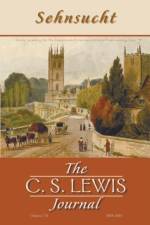
Sehnsucht: The C. S. Lewis Journal, established by the Arizona C. S. Lewis Society in 2007, is the only peer-reviewed journal devoted to the study of C. S. Lewis and his writings published anywhere in the world. It exists to promote literary, theological, historical, biographical, philosophical, bibliographical and cultural interest (broadly defined) in Lewis and his writings. The journal includes articles, review essays, book reviews, film reviews and play reviews, bibliographical material, poetry, interviews, editorials, and announcements of Lewis-related conferences, events and publications. Its readership is aimed at academic scholars from a wide variety of disciplines, as well as learned non-scholars and Lewis enthusiasts. At this time, Sehnsucht is published once a year.Grayson Carter is Associate Professor of Church History at Fuller Theological Seminary, where he has taught since 2002. Since its inception, Carter has served as General Editor of Sehnsucht: The C. S. Lewis Journal, the only peer-reviewed journal devoted to the study of C.S. Lewis and his writings published anywhere in the world.
This book introduces Midrash both in general and through many examples of the kinds of Midrash that flourished among ancient Judaism. Neusner, as a preeminent authority on the subject, lays special emphasis upon the exegesis of Scripture produced by the Judaism of the dual Torah, oral and written.
This book is a bold attempt to present a love-based personal and corporate politics fit for the coming decades of the twenty-first century. Taking as its starting point the love for friends, neighbors, and enemies embodied in the life of Jesus and recognized both inside and outside the church, this book sets out a contemporary practical politics called kenarchy that has already positively impacted many lives. Its contributors set out the key components of kenarchy, challenging the reader to confront the norms of personal rights, security, and economic gain with a love for "the other" that restores a female world perspective lost over generations of patriarchal dominance. Discovering Kenarchy is the promised response to the inevitable disintegration of the partnership of church and sovereign power outlined in its companion volume, The Fall of the Church. It is an inspirational resource for all those who desire to fill the emerging new political space with a loving, just, and practical alternative to the devaluation of human life by global capitalism and the reactionary religious and racist behavior that threatens the common good. "The authors of Discovering Kenarchy, in combining the concept of kenotic love with the '-archy' of order and relation in socio-political structures, have succeeded in both opening and enlarging the familiar radical inversions and apparent paradoxes of Jesus' teaching. Dismantling the conventionally understood exercise of sovereign power as the only means to peace, the book explores the self-emptying love expressed in the command to love your enemy, and its potential in our own troubled and violent times for transforming the inherently conflictual into a new politics of peace. That is an appeal which reaches far beyond the Christian and the theologian."--Jill Segger, Associate Director, Ekklesia, London, UK"Discovering Kenarchy is a challenging and thought-provoking book destined to inspire and unsettle. The authors unfold the implications of a politics of radical love in a call to reconfigure relationships and institutions shaped around self-giving, non-violence, the renunciation of power, and sacrifice. The impact of the book lies in the clear commitment of each writer to live out this vision in concrete ways, working for the empowerment and human flourishing of those who are traditionally on the margins. The dedication to the formation of Christ-like relationships of self-giving and peace comes as a tough, but deeply hopeful challenge."--Lucy Peppiatt, Principal, Westminster Theological Centre, Cheltenham, UKRoger Haydon Mitchell is an honorary research fellow and partnerships coordinator for the Richardson Institute for Peace Studies in the Politics, Philosophy, and Religion Department at Lancaster University. He has worked as an international consultant to the church for forty years and currently co-directs 2MT, a charity offering help negotiating change at www.2mt.org.uk. He and his wife Sue have two sons and four grandchildren. Julie Tomlin Arram is a journalist living in London. Her work, which focuses on women's activism, has been published in The Guardian, New Statesman, and Huffington Post. She is director of Words of Colour and a co-founder of Digital Women UK, managing and writing for its website with a particular focus on digital feminism.
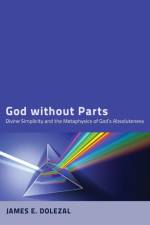
The doctrine of divine simplicity has long played a crucial role in Western Christianity's understanding of God. It claimed that by denying that God is composed of parts Christians are able to account for his absolute self-sufficiency and his ultimate sufficiency as the absolute Creator of the world. If God were a composite being then something other than the Godhead itself would be required to explain or account for God. If this were the case then God would not be most absolute and would not be able to adequately know or account for himself without reference to something other than himself. This book develops these arguments by examining the implications of divine simplicity for God's existence, attributes, knowledge, and will. Along the way there is extensive interaction with older writers, such as Thomas Aquinas and the Reformed scholastics, as well as more recent philosophers and theologians. An attempt is made to answer some of the currently popular criticisms of divine simplicity and to reassert the vital importance of continuing to confess that God is without parts, even in the modern philosophical-theological milieu.
What part did religion play in late eighteenth- and early nineteenth-century Britain? How did the local situation differ from the national picture? What was the role of women in society and the church? And how did the emerging centers of industrial activity interact with the places in which they sprung up? These are wide questions, but they can be seen in microcosm in one small area of the English midlands: the parish of Madeley, Shropshire, in which was the ""birthplace of the industrial revolution,"" Coalbrookdale. Here, the evangelical Methodist clergyman John Fletcher ministered between 1760 and 1785, among a population including Catholics and Quakers as well people indifferent to religion. Then, for nearly sixty years after his death, two women, Fletcher's widow and later her protege, had virtual charge of the parish, which became one of the last examples of Methodism remaining within the Church of England.Through examining this specific locality, these essays engage particularly with areas of broader significance, including: Methodism's roots and growth in relation to the Church of England, religion and gender in eighteenth-century Britain, and religion and emerging industrial society. The last decade has seen substantial growth in studies of John and Mary Fletcher, early Methodism, and its relationship to the Church of England. Religion, Gender, and Industry offers a contribution to this developing area of research. The groundbreaking essays in this volume are written by an international group of scholars and present the latest research in this field. The contributions in this volume, originally presented at a conference in Shropshire in 2009, address these themes from multidisciplinary perspectives, including history, theology, gender studies, and industry. In addition to furthering knowledge of Madeley parish and its relation to larger themes in eighteenth-century Britain, the impact of the Fletchers in nineteenth-century American Methodism is examined.
This book explores the little-regarded phenomenon of the tricolon in biblical Hebrew poetry, that is, those poetic lines that appear to have a tripartite form rather than the more common bipartite form. Taking the Psalms of Ascents as a sample corpus of poetic texts, it identifies tricola on an explicit and consistent basis. It draws on the rhythmical-accentual approach of Eduard Sievers, and in so doing highlights an important but neglected aspect of his method. The concept of a ""para-tricolon"" is developed, designating a line that is tripartite, yet rhythmically equivalent to a conventional bicolon. Analyses of psalm structures and of the syntactic and semantic structures of each tripartite line facilitate an assessment of the function of, and characterization of, tripartite lines. The significance of enjambment is explored as a distinguishing factor between different line-forms and as a means of uniting non-parallel cola.The study demonstrates clear differences between the form and function of para-tricola and those of tricola, and so will facilitate a more nuanced and realistic appraisal of the functional significance of Hebrew poetic line-forms.
If you think you know all about angels, think again!Although the modern Western world claims to have left angels behind as mythical creatures, they are back in popular culture. And much of what people are thinking, exploring, and believing about them finds its roots in ancient Jewish and Christian beliefs. Andrew Angel opens up the surprising world of angels to interested enquirers through an examination of the ancient Jewish and Christian texts in which they are found. He asks questions about what angels have to do with religious ecstasy, surviving suffering, and politics, among other things--finding surprising and sometimes controversial answers. Informed by the latest scholarship yet accessible to all, this book provides a well-researched and thought-provoking introduction to angels.
In a cinematic culture where multiple visions of reality "play" at the same time, it is critical that Christian believers know how to confidently identify and "discern," among other stories, the Jesus-story that defines their most important commitment in life. Using the optical metaphor of the "eye of faith," the author identifies the spiritual life as a "visual life." Through themes such as "looking through Jesus' eyes," the bible as a "visionary text," and the church as a "wide-eyed people," he builds a connecting bridge between the seeing-soul in Christian spirituality, and the twenty-first century as the "age of the eye." The key words for this exploration are spirituality, discipleship, insight, luminescence, and optical "therapy." The author proposes the need for a "catechism of the eye" that will lead to the renewal of Christian ministry, spirituality, discipleship, and identity.
Reading Scripture with a view to hearing its significance and challenge within its original, foreign context is the essence of exegesis and an anchor point for responsible hermeneutics. Reading Scripture alongside others from a significantly different social location also helps us see fresh aspects of the meaning of the text itself, as well as fresh angles on its challenge to Christian discipleship. This innovative commentary by respected New Testament scholar David deSilva is grounded in both approaches: a careful exegesis of Galatians as a basis for discerning the challenge of Scripture in any social location; and a reading of Galatians from the viewpoint of the challenges to living out its message among the churches in Sri Lanka, the result of extensive interaction with Christian leaders in Sri Lanka. Seeing the text afresh from within its ancient context and a different, modern social location will challenge readers in the West to consider once more Paul's message of transformation through the Spirit, with implications for Western Christians in their own context and in the larger global matrix of the Church universal.
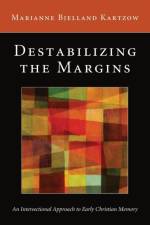
In this book Marianne Bjelland Kartzow suggests that ideas taken from recent discussions of multiple identities and intersectionality, combined with insights from memory theory, can renew our engagement with biblical texts. Some marginal early Christian passages, and what the scholarly community has reconstructed of their historical contexts, are encountered, looking for alternative ways these texts can produce meaning. A fresh look at some marginal biblical figures--such as male and female slaves who are beaten by a fellow slave, the queer figure of the Ethiopian eunuch, foreign Egyptian women, rebellious widows, or a possessed fortune-telling slave girl--can help biblical users to talk in more critical and creative ways about responsibility, identity, injustice, violence, inclusion/exclusion, and the intersections of gender, sexuality, race, and class. These perspectives may be relevant for those who see the New Testament as Christian canon or as cultural canon, or as both.
In this volume, Richard Hiers challenges the popular assumption that the Bible has a low view of women and that biblical law either ignores women or requires them to be subject and subservient to men. He does so by identifying and carefully examining hundreds of biblical texts and allowing them to speak for themselves. Among the findings: - that biblical tradition generally represents women positively, as strong and independent persons; - that no text represents wives as subject to their husbands and that no biblical law requires such subjection; - that biblical laws provide many protections for women's rights and interests--in several instances, rights equal to those enjoyed by men. The book focuses particularly on the Old Testament and Old Testament law, and argues that Old Testament laws and their underlying values provide important resources for Christian ethics and social policy today.
In A Faith Not Worth Fighting For, editors Justin Bronson Barringer and Tripp York have assembled a number of essays by pastors, activists, and scholars in order to address the common questions and objections leveled against the Christian practice of nonviolence. Assuming that the command to love one's enemies is at the heart of the Gospel, these writers carefully, faithfully--and no doubt provocatively--attempt to explain why the nonviolent path of Jesus is an integral aspect of Christian discipleship. By addressing misconceptions about Christian pacifism, as well as real-life violent situations, this book will surely challenge the reader's basic understanding of what it means to be a follower of Jesus.
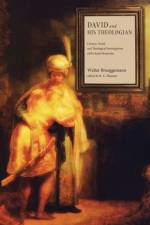
Throughout Walter Brueggemann's career, he has repeatedly found his way back to the David and royal traditions. From some of his earliest articles and essays to monographs, commentaries, and sermons, he has explored this rich field in literary, social, and theological depth. As he has said, ""My preoccupation with David rests on the awareness that David occupies a central position in the imagination of ancient Israel and in the rendering of 'faith and history' by that community. As the genealogies locate David, he stands mid-point between the rigors of Mosaic faith and the destruction of Jerusalem; as a consequence he becomes, in the artistry of Israel, the carrier of all the ambivalence Israel knew about guarantees and risks in the world YHWH governs."" This volume brings together some of Brueggemann's key essays on the David traditions, as well as their interrelationships with traditions in the book of Genesis.--from the Foreword
Abonner på vårt nyhetsbrev og få rabatter og inspirasjon til din neste leseopplevelse.
Ved å abonnere godtar du vår personvernerklæring.