









Gjør som tusenvis av andre bokelskere
Abonner på vårt nyhetsbrev og få rabatter og inspirasjon til din neste leseopplevelse.
Ved å abonnere godtar du vår personvernerklæring.Du kan når som helst melde deg av våre nyhetsbrev.

Synopsis:The Adam and Eve narrative in Genesis 2-3 has gripped not only biblical scholars, but also theologians, artists, philosophers, and almost everyone else. In this engaging study, a master of biblical interpretation provides a close reading of the Yahwist story. As in his other works, LaCocque makes wise use of the Pseudepigrapha and rabbinic interpretations, as well as the full range of modern interpretations. Every reader will be engaged by his insights.Endorsements:"This book by LaCocque is an important contribution to the numberous studies on the story of paradise. . . . The reading of this book is enriching. The range of material on which L. draws is remarkable. . . . LaCocque''s book is original in approach and rich in insights. I highly recommend it to scholars and students alike."--Catholic Biblical Quarterly"André LaCocque brings a distinctive style of imagination, interpretation, and articulation to his growing corpus of valuable exposition. Here he probes the thickest text of biblical faith. He goes ''back'' to common cultural myths, but then shows how Israel has claimed generic myths for its own peculiar lived experience. And then he goes ''forward'' to show how the voiced experience of Israel is paradigmatic for all human reality. Along the way he connects with the demanding interpretive tradition that includes Kierkegaard, Ernest Becker, and Ernst Bloch plus the richness of rabbinic work. The outcome is a compelling invitation to think again, afresh, about texts that have too long been settled in conventional, reductionist ways. LaCocque models the courage needed for reading and demanded by the texts."--Walter Brueggemann, Columbia Theological SeminaryAuthor Biography:André LaCocque is Professor of Old Testament Emeritus at Chicago Theological Seminary. He is the author of ''The Feminine Unconventional'' and ''Romance, She Wrote,'' and the coauthor (with Paul Ricoeur) of ''Thinking Biblically: Exegetical and Hermeneutical Studies.''
Synopsis:"The world and all that is in it is mine," says the Lord. Should we then hold it in contempt?Pro-Existence means that man should be for existence, not against it. The external universe is there because God created it. Thus creativity, work and property--yes, even the things of the universe--have value.Udo Middelmann takes a long, hard look at man''s place in the circle of reality, and he suggests how men can express their unique identity and recognize that their lives are significant.Author Biography:Udo Middelmann was born in Germany and educated in Germany, the United States, and Switzerland. He holds a degree in law from Freiburg University and a BD and MA from Covenant Seminary in St. Louis.
Synopsis:This book presents a realistic and thoroughly spiritual outlook upon the entire created reality. It lets us envisage that various created entities are participant in a relationship with God that becomes increasingly one of an intimate personal quality; that is, a relationship of love. It thus invites discernment that the universal reality is valuable in its own right and not only as a good for the use of humanity. Drawing mainly upon Scripture, ancient writers (especially Maximus the Confessor), as well as contemporary natural sciences, this book encourages the reader to perceive human salvation not as a lifting of humanity out of creation, but as a transformation into God''s presence in the midst of the wider created order. It shows that Christian faith at its best does not exclude the wider creation but provides us with insight and hope for a harmonious being-in-God that is inclusive of creation. It shows that Christian faith can be a resource that helps overcome the ecological crisis.Endorsements:"This is a deeply Christian meditation that speaks to the world. It needs to be heard and reflected upon."--From the Foreword by David Jasper, University of Glasgow "Grounded in a fully developed Trinitarian faith, Govaerts offers a radical new approach to the Christian relationship with creation. From his wide-ranging exploration of scientific, philosophic, theological, biblical, and patristic thought emerges a synthesis both intellectually rigorous and spiritually profound. Creation is shown to be non-deterministic and yet open to its creator''s transformative guidance, so that through co-operation (cosmic prayer) all levels of creation, including humankind, can enter into relationship with God." --Jennifer Dines, Heythrop College"Many Christians who desire to take on board the insights of Darwinian evolution regarding the natural world, and the place of humans in it, may feel there to be a dearth of theological resources to assist them in doing so. This book--a poetic synthesis of careful biblical exegesis, detailed reflection on patristic writers, and insights from modern scientist-theologians--offers precisely the kind of theological engagement with these issues that will be found hugely valuable."--Michael Fuller, Theological Institute of the Scottish Episcopal ChurchAuthor Biography:Robert Govaerts is Honorary Lecturer at the University of Glasgow. He holds degrees in physics and theology from the Universities of Antwerp, Leuven, and London. He lived several years in religious communities and obtained a doctorate in theology at the University of Wales, Lampeter. He is married and together with his wife pursues a prayerful and contemplative lifestyle.
Synopsis:At the end of Romans 11, Paul quotes both Isaiah and Job. As with other New Testament uses of Old Testament texts, this raises several questions. What is the context of these Old Testament passages? How are they used in other Jewish literature? What is Paul''s hermeneutical warrant for using them in Romans 11? What theological use does Paul make of them? How, if at all, does their use in Romans 11 contribute to the broader discussion on the use of the Old Testament in the New? In addressing these questions, this book reveals a remarkable typological connection that climaxes in the doxology of Romans 11:33-36, exalting God''s incomprehensibility, wisdom, mercy, grace, patience, independence, and sovereignty.Endorsements:"In the growing literature that examines how the New Testament cites the Old, this book makes its own important contribution. Writing with enviable clarity, Naselli not only carefully traces out the Old Testament background behind Romans 11:34-35, but makes a strong case for an overlooked typology that contributes a theologically rich strand to our understanding of God."--D. A. Carson, Trinity Evangelical Divinity School "Surprises are in store for the reader of this book, for Naselli conducts a helpful tour of the message of Romans, Isaiah, and Job. Furthermore, he insightfully demonstrates the typological use of the Old Testament in Romans 11:34-35. This is written with an engaging style that is typically lacking in scholarly works."--Thomas R. Schreiner, The Southern Baptist Theological Seminary"This fine study fills a gap in the literature . . . It traces out Paul''s reasons for doxological utterance, thereby leading readers to contemplate God in his deep knowledge, wisdom, and mystery. [It] exemplifies technical exegesis at a mature level while laying groundwork for the theological interpretation being called for today. From Typology to Doxology deserves a wide readership among all with an interest in Romans, Paul, God, or any combination of the three."--Robert W. Yarbrough, Covenant Theological SeminaryAuthor Biography:Andy Naselli (PhD, Bob Jones University; PhD, Trinity Evangelical Divinity School) is research manager for D. A. Carson, administrator of the journal Themelios, and adjunct at several seminaries. He is the author of Let Go and Let God? A Survey and Analysis of Keswick Theology (2010) and coeditor of Four Views on the Spectrum of Evangelicalism (2011).
Synopsis:This second volume of Sermons by Jonathan Edwards on the Matthean Parables contains a previously unpublished series of six sermons by Edwards on Jesus'' parable of the Sower and the Seed, as found in Matthew 13:3-7. Edwards preached these sermons in 1740 immediately following the visit of George Whitefield to Edwards'' church in Northampton, Massachusetts, in October of that year. Not only does this series have a historical significance for its place in the Great Awakening, but it contains important pronouncements on the preacher''s craft and the hearer''s responsibilities. These sermons have been placed in the context of Edwards'' preaching style and method, and framed by historical considerations. Prepared from the original manuscripts by the staff of the Jonathan Edwards Center at Yale University, this series represents a significant addition to the available Edwards corpus that will be of interest to scholars, religious leaders, and general readers.Endorsements:"Two preeminent figures of the Great Awakening--George Whitefield and Jonathan Edwards--came together in Northampton, Massachusetts, in October 1740. In the following month, with Whitefield in mind, Edwards started to discuss the subject of preaching in a series of sermons. Expounding on the parable of the Sower, the sermons are reproduced here with the usual accuracy of the Jonathan Edwards Center at Yale."--David William Bebbington, University of Stirling "In the entire history of the church there have been few greater preachers than George Whitefield and Jonathan Edwards. Here we meet both of them in conversation with each other at the height of the Great Awakening . . . Students of the Great Awakening will treasure this documentation of one of the great moments of American history. For students of homiletics, this could become an indispensible source on the art of great preaching." --Stuart Piggin, Macquarie UniversityAuthor Biography:Kenneth P. Minkema is the Executive Editor and Director of the Jonathan Edwards Center, Yale University, and Research Scholar at Yale Divinity School. Adriaan C. Neele is the Associate Editor and Director of the Jonathan Edwards Center, Yale University, Research Scholar at Yale Divinity School, and Professor Extraordinary at the University of the Free State, Bloemfontein, South Africa.Wilson H. Kimnach is the Presidential Professor in the Humanities (Emeritus), Bridgeport University, and General Sermon Editor of The Works of Jonathan Edwards.
Synopsis:Sex is worth celebrating. It is one of God''s loveliest gifts to the human race. But the loveliness of sex is ruined whenever it is found outside the proper context of marriage. And God knows what powerful temptations come our way in the area of sex.The Song of Solomon is a celebration of sex and love within marriage, as this book explains. Jonathan Bayes draws out the practical advice implicit in the Song for husbands, for wives, and for courting couples. He points out the warnings in the Song against sex outside the context of marriage. The Song of Solomon has often been read as an allegory of the relationship between Christ and his people. Jonathan Bayes does not see this as the main purpose of the Song, but agrees that human relationships are a reflection of that highest love of all. In Sex, Love, and Marriage--A Celebration, Bayes brings out the interplay between heaven and earth. We are directed upwards from human love to learn about that "Love divine, all loves excelling." Then we are brought back down to earth to make God''s love for us in Christ the model, which we seek to imitate in our human relationships.Author Biography:Jonathan Bayes (PhD, University of Sunderland) serves with Carey Outreach Ministries, training Christian leaders worldwide. He is the author of The Weakness of the Law (2000), The Threefold Division of the Law (2005), and The Apostles'' Creed (2010).
This cutting-edge volume has been brought together in honor of Thomas Boomershine, author, scholar, storyteller, innovator. The particular occasion inviting this recognition of his work is the twenty-fifth anniversary of the Society of Biblical Literature's section on The Bible in Ancient and Modern Media (BAMM), which Tom was instrumental in founding. For two and half decades this program unit has provided scholars with opportunities to explore and experience biblical material in media other than silent print, including both oral and multimedia electronic performances. This book explores many, though by no means all, of the issues lifted up in those sessions over the years.ContributorsA. K. M. AdamAdam Gilbert BartholomewArthur J. DeweyDennis DeweyJoanna DeweyRobert M. FowlerHolly E. HearonDavid RhoadsPhilip Ruge-JonesWhitney T. ShinerMarti J. SteussyRichard W. Swanson
Contributors:Scott Bader-SayeFrederick Christian BauerschmidtMichael Baxter Daniel M. Bell Jr.Jana Marguerite BennettMichael G. CartwrightWilliam T. CavanaughPeter DulaChris K. HuebnerKelly S. JohnsonD. Stephen LongM. Therese LysaughtDavid Matzko McCarthyJoel James ShumanJ. Alexander SiderJonathan TranPaul J. WadellTheodore Walker Jr.Endorsements:"Good arguments sustain good friendships, and this volume bears witness to the extraordinary friendships that Hauerwas and his students have been drawn into. Yes, there''s gratitude and devotion here, but it''s the criticisms that stand out, that make this a particularly feisty festschrift. His dependence on Yoder runs afoul of his devotion to Aristotle. He domesticates Wittgenstein''s skepticism in order to discount his own individualism. He misconstrues the church as polis, makes a mess of practical reason, and gives metaphysics short shrift. He bungles the relationship between disability and grace, misunderstands how liturgy affects the moral life, and runs rough shod over the just war tradition. He is not yet a pacifist! He is an heir of the liberalism he despises! And he''s a lousy dresser to boot! Those concerned that Hauerwas''s talk of tradition, community, and virtue encourages slavish emulation of authorities and exemplars will find little evidence of that here. Rather, what we find is appreciation mixed with complaint, confidence leavened with doubt, and loyalty expressed in conversation. That we might all have such students, such friends!"--John BowlinPrinceton Theological Seminary"Stanley Hauerwas is a public provocateur, a ravenous reader, a restless wrestler with the truth, and an eccentric devotee of baseball, murder mysteries, and liturgically-shaped discipleship. But most of all is he is a devoted, demanding, and dogged academic father to dozens of doctoral students. The breadth of his character takes a community to display. Here, more than ever before, that community of character does in public what Hauerwas and his students do best: tussle, and refine, and introduce new interlocutors, and dismiss out of hand, and rephrase more charitably, and rediscover ancient wisdom, and go back to Aquinas, and quote Barth, and dismantle platitudes, and unsentimentally face the gift and demands of Christ for church, academy, and politics today. This is a work of love turned into a call to renewal, a family reunion transformed into a symposium, a tribute in the guise of a challenge. Admirers and critics of Hauerwas will be enriched by these compelling essays, an ordered array of disagreements in love."--Sam WellsDean of the Chapel, Duke UniversityAuthor Biography:Charles Pinches is Chair of the Department of Theology and Religious Studies at the University of Scranton.
Thoroughly God-centric and Bible-saturated, this book is a plea for the church and her missionaries to return to the biblical mandate and prescription for missionary activity. In God's infinite wisdom, he has determined to ransom men from among every tribe, tongue, people, and nation through the proclamation of the gospel. This is the greatest enterprise ever undertaken in human history, and it will culminate in success. God will see to it.The church has a principal role to play in the enterprise, but that role is not one of global philanthropy. The modern view of missionary activity has robbed missionaries of the authority to preach the gospel and has left the nations wanting of the joy of salvation . . . but there is yet time. The modern church may still find great success in the spread of the gospel to the remotest part of the earth. All that is necessary is that we would seek the revealed will of God in the Scriptures and put into practice that which it requires.
Health is God's original created intent: whole persons, healthy relationships, a thriving environment, and ongoing interaction with himself. In the Bible, human health is body-based, community-based, and deeply integrated in a relationship with God's creating Spirit. The Pentateuch, prophets, writings, Gospels, and epistles all are deeply, if not primarily, concerned with the ongoing and ultimate health of God's good creation. Scripture also has a wide perspective on the disruption of human health. It deals with the human tendency to violence, corruption, and self-destructive behaviors.The recently renewed interest in health, vitality, and spirituality of all kinds has led to this articulation of a biblical spirituality in relation to human health. Surprisingly, when we look for spirituality in the Bible, we find real and embodied relationships. Everyone is for health and for the restoration of health. But what are health and healing? How does the Bible describe or define them?Here is the result of ten years of conversations with health care professionals in a master's course on biblical perspectives on health and healing. The biblical witness can transform the way we practice the healing arts. This book provides a biblical foundation for health and its restoration.
A silent crisis has been taking place for some time now: an ongoing eclipse in mission, whereby our understanding of what it is has been obscured by the idols of our Christian passions and biblical perspectives. Wherever that crisis has been perceived, energetic responses have been proposed and much has been done in the name of, and for the sake of, mission. However, those responses themselves have often overshadowed the problem of the identity of Christian mission. And so we remain in the darkness of understanding mission as we always have done. We even impose these understandings onto God--calling Him a ""missionary"" God--and we project our idols of ""mission"" onto the sacred Word. Here, then, is an uncomfortable but necessary critique of modern mission, and the ground from which it has grown.Here, too, is the proposition of a better basis for understanding what mission is, and for outworking it aright in all of our lives. By articulating a new paradigm for Christian mission, the eclipsed problem of mission in crisis will have been resolved, and the missional potential of a global church--dynamic with the very Spirit and presence of the living God--will be released.
""Walter Brueggemann is the master of finding fresh and compelling dimensions of meaning in texts so familiar they barely scratch the surface of our consciousness. In this exciting collection, Brueggemann finds that when we admit we are dust, we can be liberated. Why? Because we are free from acting like God. We are free to choose obedience to the one living, true Sovereign. The idols lose their grip on us and we live faithfully and in authentic joy.""--Ronald J. Allen, Christian Theological Seminary""According to Walter Brueggemann, the autonomy, secularity, and individualism that characterize modernity have 'exiled' the contemporary believer. Always concerned with the manner in which one is to live in the world, he argues for a subversive imagination similar to that found in the biblical wisdom writings, the Psalms, and the Prophets. One comes away from this book both energized by the vision presented and challenged to make it a reality.""--Dianne Bergant, Catholic Theological Union in Chicago""There is a reason why Walter Brueggemann remains, for preachers and pastors, the most loved and trusted of all biblical scholars--and that is simply because he writes for us. In every season and heartbreak of life and ministry, he writes for us. And over the years, we have come to see that when Brueggemann goes to the text before God, with his signature passion, candor, and ferocious energy, he goes not for our enlightenment or edification, but for our life and for his. Read this book and take off your shoes, because you will enter onto holy ground."" --Anna Carter Florence, Columbia Theological Seminary
The Liberating Mission of Jesus deals with the central message of the Gospel of Luke, provocatively arguing that the liberating mission of Jesus has two central themes: the universality of the love of God and the special love God has for the defenseless of society. Both of these pillars form the bedrock of Luke's theological vision, animate his Gospel throughout, and summarize the good news of the reign of God in subversive and radical form. This book shows how the liberating message announced by Jesus, as well as his liberating practice, is manifested throughout the Gospel and its implications for Christian life today. Through this thorough treatment, the full depth of Luke's vision of the liberating mission of Jesus is shown to be a paradigm for the personal and collective witness of believers, regardless of the social, political, cultural, or religious boundaries that try to inhibit them from giving witness to the God of life.
In this exciting volume, new and emerging voices join senior Reformed scholars in presenting a coherent and impassioned articulation of Calvinism for today's world. Evangelical Calvinism represents a mood within current Reformed theology. The various contributors are in different ways articulating that mood, of which their very diversity is a significant element. In attempting to outline features of an Evangelical Calvinism, a number of the contributors compare and contrast this approach with that of Federal Calvinism currently dominant in North American Reformed theology, challenging the assumption that Federal Calvinism is the only possible expression of orthodox Reformed theology. This book does not, however, represent the arrival of a "new Calvinism" or even a "neo-Calvinism," if by those terms are meant a novel reading of the Reformed faith. An Evangelical Calvinism highlights a Calvinistic tradition that has developed particularly within Scotland, but is not unique to the Scots. The editors have picked up the baton passed on by John Calvin, Karl Barth, Thomas Torrance, and others, in order to offer the family of Reformed theologies a reinvigorated theological and spiritual ethos. This volume promises to set the agenda for Reformed-Calvinist discussion for some time to come.
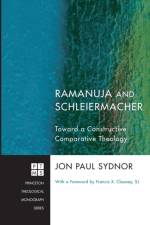
Synopsis:Can the comparison of two theologians vastly separated in space and time help contemporary theologians to think better? This book argues that it can. Specifically, this book argues that the novel and burgeoning discipline of comparative theology is a powerful method for gaining critical insight into our inherited worldviews. More important, it argues that the critical insights gained through comparison can produce constructive theology or, in other words, revised and renewed worldviews. New comparisons produce new questions, and new questions produce new answers. In order to demonstrate the power of this process, the book compares two preeminent theologians, Sri Ramanuja of the Hindu tradition and Friedrich Schleiermacher of the Christian tradition. Each argues that God sustains the universe at every moment of its existence, but they work out the divine sustenance in very different ways. By comparing their description of God's continual preservation of the universe, this book asks original, unfamiliar questions of each. Then, it speculatively suggests possible answers to those questions, inviting Ramanuja and Schleiermacher to respond to the challenges raised. This method demonstrates the incisive power of comparative theology to generate critical tension, as well as the creative power of comparative theology to resolve that very tension.Endorsements: "This is a fine example of comparative theology in action. If readers want to know how the discipline works when it works well, they can turn to Ramanuja and Schleiermacher."-Francis X. ClooneyDirector of the Center for the Study of World Religions, Harvard Divinity School"Across time and cultures, great figures within a single religious tradition become part of an ongoing scholarly interaction and argument. Only recently has this intimacy of conversation been extended across religious boundaries themselves. Sydnor offers us a theological dialogue between two giants, the Vaisnavite thinker Ramanuja and the Protestant theologian Schleiermacher. Sensitive to the distinctive settings of each, he is able to draw them into a fruitful collaboration around the questions of human and cosmic dependence on the divine. This is a constructive comparative theology that focuses the reader on the substance of these writers rather than the mechanics of interreligious study. Sydnor's book will be of interest both to those who value the depth of research behind the comparison and to those who are simply looking for theological light on the experience of absolute dependence."--S. Mark Heim Samuel Abbot Professor of Christian TheologyAndover Newton Theological School"In this acutely reasoned, stirring, and accessible analysis a blossoming philosopher-theologian-pastor-educator, Jon Paul Sydnor, brings forth accurate, in-depth readings of primary works by Schleiermacher and Ramanuja. Using up-to-date procedures, his comparison of these two highly discerning, seminal thinkers enables a still wider conversation between Christians and Hindus today. Here newly honed questions, observations, and insights vie with each other for attention. Overall, Sydnor's work calls forth a pondering over meanings and prospects that only this emergent field of comparative theology can offer. Within this new movement, it will bear the reputation of a pioneering work." --Terrence N. TiceProfessor Emeritus of Philosophy University of MichiganAuthor Biography:Jon Paul Sydnor has studied at the University of Virginia, Princeton Theological Seminary, and Boston College. He currently teaches world religions at Emmanuel College in Boston.
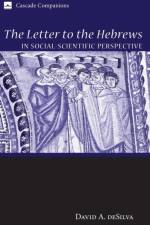
A lot of mystery surrounds the book of Hebrews, especially regarding its authorship, date, and audience. But by asking the right kind of questions, one can move beyond the impasses typical of historical investigation. In this volume, David deSilva explores Hebrews through a social-scientific lens, asking one of the most important questions when interpreting letters and sermons: What was going on in the community to occasion such a response? DeSilva looks for clues concerning the anonymous author, his education level, the influence of the Greek environment, and his perception of his own authority. In addition, by forming a social profile of the audience that includes location, ethnicity, and class status, deSilva brings to light the author's aims of helping protect Christian converts from persecution and social shame. This book not only helps the sermon ""to the Hebrews"" take on flesh and blood for contemporary readers; it also expands the readers' tools for asking fresh questions and exploring new dimensions in biblical texts.
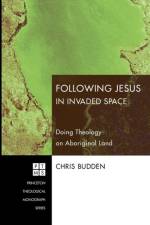
Christianity is never just about beliefs but habits and practices-for better or worse. Theology always reflects the social location of the theologian-including her privileges and prejudices-all the time working with a particular, often undisclosed, notion of what is normal. Therefore theology is never ""neutral""-it defends particular constructions of reality, and it promotes certain interests. Following Jesus in Invaded Space asks what-and whose-interests theology protects when it is part of a community that invaded the land of Indigenous peoples. Developing a theological method and position that self-consciously acknowledges the church's role in occupying Aboriginal land in Australia, it dares to speak of God, church, and justice in the context of past history and continuing dispossession. Hence, a ""Second people's theology"" emerges through constant and careful attention to experiences of invasion and dis-location brought into dialogue with the theological landscape or tradition of the church.
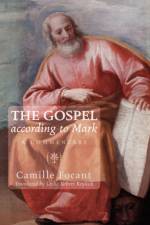
The world to which the Gospel of Mark introduces its reader is a world of conflicts and suspense, enigmas and secrets, questions and overturning of evidence, irony and surprise. Its principal actor, Jesus, is perplexing in the extreme. He is evidently so for the religious authorities who oppose him, but also for his disciples, who shift from incomprehension to opposition and flight. Questions of meaning, life and death, good and evil are continually broached. This narrative is a subtle invitation to enter into a new world, that of the coming Reign of God, in which the first are last and whoever wants to save his life must lose it.This commentary on the Gospel of Mark has been enthusiastically reviewed in the French edition as one of the best current commentaries on Mark. As a narrative critical commentary, it favors an interpretation of the Gospel that tries to grasp the dynamic of the text taken as a whole. Even if the technical vocabulary of narrative analysis is not used, and the main results of the historical-critical criticism, particularly those of redaction criticism, are not neglected, as the notes will reveal, it is narrative criticism that guides the proceedings.
The ongoing global financial crisis was not simply the fault of the financial sector. Bankers, households, and governments had all entered a spiral of greed, selfishness, and impatience in pursuit of their respective aims of higher remuneration, greater consumption, and enhanced popularity. The outcome, besides costly bank bailouts, has been rising private and public debt and stagnant economies. Economics, the ruling paradigm in today's society, can explain their motivation of self-interest but not the underlying irrationality of their behavior. Taking a view from Scripture, Philip Davis critiques the overall aims of individuals, as assumed by economics--wealth, consumption, and power--in contrast to Jesus' proclamation of the kingdom of God, the love for God and neighbor, and responsible stewardship of resources. In doing so, he aims to equip Christians to better understand the crisis from a kingdom perspective, to provide the church with a distinctive voice in these troubled times, and to press for radical Christian solutions to address the underlying difficulties. This little book aims to redress the gap in Christians' understanding that led the theologian Jurgen Moltmann to remark trenchantly, "The neglect of economics is a wound in the side of the church."
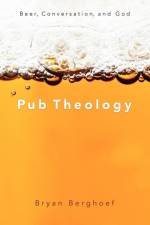
Synopsis:From London to New York to Ann Arbor, people are gathering in pubs and bars to communicate, connect, and learn from one another over the topic of religion, of all things. In Pub Theology, pastor, writer, and pub theologian Bryan Berghoef draws from his own experience in one such setting in northern Michigan. Berghoef contends that for too long the church has insisted on setting the terms for how one can find and encounter God. Yet what if God is to be found in places we haven''t been looking at all: in a coworker who doesn''t believe in God, in a Buddhist neighbor, in a friend who prefers a yoga studio to a sanctuary?This book will move readers to shift toward a more chastened, humble, and inviting faith. A faith that seeks not to teach, but to learn; not to speak, but to listen. A faith that will have a seat at the table in the important religious conversations our world is having.Real-life stories gleaned from conversations and encounters during pub theology gatherings, combined with the author''s own experience in grappling with these issues, make for an intriguing and enlightening read.So what are you waiting for? Pull up a chair and join the conversation!Endorsements:"Bryan Berghoef has given us the most complete presentation to date of what pub theology is, why it exists, and what it contributes to the lives and faiths of an increasing number of Christians. With his conversationally written and accessible reportage, he has also created something close to a manual for those who want to initiate a pub theology circle or simply find and join one."--Phyllis Tickle, author of The Great Emergence: How Christianity Is Changing and Why "Some of the best theological conversations happen over a beer at the pub. Bryan Berghoef captures something of the relaxed and relational dynamic that makes these discussions so pleasurable, while at the same time wrestling with serious theological questions. So pull up a chair, order your favorite drink, and settle in with this delightful and stimulating book. Invite a friend as well--the conversation''s just getting started."--John R. Franke, author of Manifold Witness: The Plurality of Truth"Pub Theology is a wonderful, whimsical, and wise story about what happens when a pastor with more questions than answers goes to the pub instead of church."--John Suk, author of Not Sure: A Pastor''s Journey from Faith to Doubt and former editor of The Banner"This is a book about God''s freedom and ours! Bryan Berghoef invites us to pull up a chair and dares us to converse about what matters. No fear! This engrossing and transformative story about how to live an open Christian life will save, stir, and strengthen the faith of many."--Samir Selmanovic, author of It''s Really All About God: How Islam, Atheism, and Judaism Made Me a Better ChristianAuthor Biography:Bryan Berghoef was the founding pastor of Watershed Church in Traverse City, Michigan, and has been facilitating Pub Theology gatherings for several years. He and his wife are currently starting a new faith community in Washington, DC.
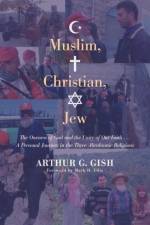
Synopsis:"A major challenge for people of faith is to resist the growing demonization of Islam, Christianity, and Judaism . . . I want to do something to build bridges between the three religions. I feel called to embody in my own life the healing, the reconciliation, the unity I long for between people of different religions." Art Gish became involved in the life and worship of all three religions; he considered himself a Christian, a Muslim, and a Jew, and worked at integrating those three perspectives into his life. Acknowledging that Judaism, Islam, and Christianity are all threatened by narrow-minded, violent extremists who put the particular interests of their own people above our common interests, he tells inspiring stories of open-minded Muslims, Jews, and Christians who struggle together for reconciliation and who confront injustices that spawn hostility. Gish looks not only at the disagreements but also at the unity of the three Abrahamic faiths. He writes, "When people cross boundaries, exciting things happen. Each time in Israel/Palestine that I experience Jews, Muslims, and Christians eating, working, laughing, and crying together, I sense a foretaste of the coming kingdom of God, a demonstration of how things could be, and one day will be."Endorsements:"Through stories of human witness in the contexts of suffering, hope, and personal testimony, Gish eloquently calls us to look more deeply into our faith--whether Muslim, Christian, or Jew--as the taproot for interfaith dialogue. Embodying the prophetic gift during his life and in these words published after his untimely death, Gish reminds us that because God can be trusted, we need not fear interfaith relationships."--Ruthann Knechel Johansen, Bethany Theological Seminary "Art Gish writes movingly as he draws from his diverse and difficult commitments in the world . . . Gish has seized his moment to be faithful in the world. It is up to us to seize our moment."--Marc H. Ellis, Baylor University"Art Gish has written an inspiring book for secular and spiritually motivated people who still question the role religion can play in building a culture of peace in the Middle East and around the world. This book is full of wisdom . . . and it is rich with practical experiences of how religious leaders can act for solidarity and justice."--Mohammed Abu-Nimer, American University"This book is full of inspiring stories of reconciliation and compassion that move toward countering religiously motivated violence. But more than that, Gish points us in a direction that is even more radical, one that will require deep collaboration by the peoples of the Abrahamic religions. He calls us to worship the one God through our words and actions."--Lydia Neufeld Harder, Toronto School of TheologyAuthor Biography:Raised a Christian, Art Gish became more personally involved with Islam and Judaism in his work in Israel/Palestine since 1995, with the Christian Peacemaker Teams. He was active in peace and justice for over fifty years. In 2010, after completing this book, Gish died tragically in a farming accident. He is the author of The New Left and Christian Radicalism (1970), Beyond the Rat Race (1972), Living in Christian Community (1979), Hebron Journal: Stories of Nonviolent Peacemaking (2001), and At-Tuwani Journal: Hope & Nonviolent Action in a Palestinian Village (2008).
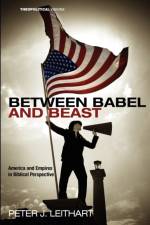
The United States is one of history's great Christian nations, but our unique history, success, and global impact have seduced us into believing we are something more--God's New Israel, the new order of the ages, the last best hope of mankind, a redeemer nation. Using the subtle categories that arise from biblical narrative, Between Babel and Beast analyzes how the heresy of Americanism inspired America's rise to hegemony while blinding American Christians to our failures and abuses of power. The book demonstrates that the church best serves the genuine good of the United States by training witnesses--martyr-citizens of God's Abrahamic empire.
Synopsis:Sometimes theological ideas are good topics for ongoing debate. Other times, the community of faith needs to come to a decision: yes or no. Christian Reconstructionism offers the Christian church a basic approach to faith different from mainstream historic Christianity. Is their approach warranted? Or is it a fundamental distortion of the gospel? The present volume seeks to set out the case that Christian Reconstructionism is not a legitimate variation of Christian doctrine, but rather a serious misunderstanding of the gospel attested in Holy Scripture. First, an attempt is made to look at the basic ideas of Christian Reconstructionism. Rather than focusing on names and dates, the focus is on the set of ideas that characterize this view of Christianity. Second, a response is given to each of the main ideas. The response makes use of traditional Protestant, Roman Catholic, and Eastern Orthodox doctrine; but it is based primarily on careful exegesis of Scripture. The ultimate question is if Christian Reconstructionism is grounded in the Bible, or in a political ideology foreign to Scripture. An epilogue briefly points to a different way of seeing Christian involvement in contemporary, global society.Endorsements:"Historians are not well positioned to offer firm theological conclusions about debated points in theology. But speaking as a historian, it is obvious that Christian Reconstruction, or Dominion Theology, has come to play a significant role in American life. To anyone it should be obvious that Paul McGlasson''s response to this theology is clear, charitable, forceful, and biblical. McGlasson''s effort to make the Christian gospel the center of his rejection of Dominion Theology makes this a particularly important book."--Mark A. Noll, Francis A. McAnaney Professor of History, University of Notre Dame "Paul McGlasson''s hard-hitting No! has convinced me that reconstructionism--with its mishmash of advocacy for a ''Christian America'' characterized by Christian dominion, a mentality of Christian either/or with no compromise politically or culturally--has infected the political right and, worst of all, compromised the Christian gospel. McGlasson is fair but scathing in his biblically based, evangelical, and theologically well-informed critique. This book is a badly needed theological corrective. Reconstructionism? No!"--William H. Willimon, Professor of Christian Ministry, Duke Divinity School "Paul McGlasson''s No! is in fact a profound ''Yes!'' that affirms Jesus Christ as the center of the gospel''s message. The ''No!'' that he speaks is aimed at idols that we contrive to avoid the scandalous grace of Jesus Christ. McGlasson sees that it is not the Law or the nation-state or cultural prominence or even one''s own faith that saves. To all of that one must say, ''No!'' The One who welcomes sinners and eats with them does not make Pharisees but forgiven, free, and joyful saints. --Thomas W. Currie, Dean, Union Presbyterian SeminaryAuthor Biography:Paul McGlasson is pastor of First Presbyterian Church in Sullivan, Indiana. He received his MDiv from Yale Divinity School, and his PhD from Yale University in Systematic Theology. He is the author of several books, including God the Redeemer, Canon and Proclamation, and Invitation to Dogmatic Theology. Before entering the parish ministry, McGlasson taught theology for several years in college and seminary.
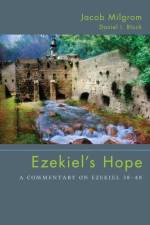
Jacob Milgrom was a man of deep faith and deep learning. As teacher and scholar he is best known for his work on ancient Israel''s religion, especially its cultic expression in tabernacle and temple. His command of this subject is evident in his massive, three-volume commentary on Leviticus (Anchor Bible Commentary) and his commentary on Numbers (JPS Torah Commentary). This provides perfect background for one who seeks to instruct us on the final chapters of Ezekiel. In this volume Milgrom guides us engagingly through Ezekiel''s oracle against Gog (chs. 38-39) and his final vision of Israel''s physical and spiritual restoration (chs. 40-48). Regrettably Professor Milgrom did not live to see his work on Ezekiel appear in print. Given his influence on biblical scholarship far beyond his native Jewish world, it is fitting that this final form of this project be cast as an interfaith dialogue with Daniel Block, who has himself written a major two-volume commentary on Ezekiel (NICOT). This volume offers a window into how one Jewish scholar engaged with the work of a Christian scholar. It invites readers to listen in on their conversation, in the course of which they will also hear the voices of medieval Jewish rabbis, particularly R. Eliezer of Beaugency and R. Joseph Kara. While Block and Milgrom are free to disagree in their reading of particular texts, readers will find this dialogue illuminating for their own understanding of the last chapters of Ezekiel."According to rabbinic tradition, rabbi Hananiah ben Hezekiah burned three hundred barrels of oil in his lamp before being able to harmonize the laws of Moses with those given in Ezekiel. In a similar way, Jacob Milgrom''s lifetime of scholarly study of the Pentateuch ideally equipped him to write a commentary on Ezekiel 38-48. This volume will be an indispensable reference point for all future work on the prophet."--Iain Duguid, Professor of Old Testament, Grove City College"The late Jacob Milgrom was the leading expert on biblical cult and ritual in his generation. His commentaries on Leviticus, for which he is best known, reflect the meticulous, holistic approach to biblical texts that became the hallmark of his life''s work. In this, his last major publication, Milgrom brings this approach to bear on the final chapters of Ezekiel. Never shy of new ideas, his bold proposals will challenge Ezekiel scholarship for years to come." --William A. Tooman, University of St. Andrews"Seldom has such a spirited written discussion taken place between a Jewish and an evangelical scholar as is found in this study. Even more fascinating is the direct way in which the most difficult portion of the prophecy of Ezekiel (chapters 38-48) is engaged--with respect for each other and with a commitment to the text. It is a joy to recommend this book both for the stimulating way it handles Scripture and for the promise it holds for additional joint ventures between the two scholarly traditions."--Walter C. Kaiser Jr., Gordon-Conwell Theological SeminaryJacob Milgrom (1923-2010), an esteemed rabbi in Conservative Judaism, was Professor Emeritus of Near Eastern Studies at University of California, Berkeley. He was the author of many books, most notably The JPS Torah Commentary: Numbers (1966) and the three-volume Anchor Bible Commentary of Leviticus (1991-2001).
Synopsis:The proposed Anglican Covenant impinges not only upon the future of the Anglican Communion but upon global Christianity as well. Pro Communione: Theological Essays on the Anglican Covenant is the first volume that considers the completed text of the Covenant and its congruity with the Anglican tradition. Contributors across the Anglo-American world appraise the Covenant within a holistic framework defined by liturgical, historical, and ecumenical perspectives. These essays transcend current debates by illuminating abiding theological themes within Anglicanism. Creative and edifying, rigorous and hopeful, Pro Communione envisions a revival of the Anglican imagination within the context of a covenanted Anglican Communion.Endorsement:"We need to get under the skin of the Anglican Covenant . . . and explore how it can help us learn [to have] relationships of mutuality and reciprocity within the body of Christ. This book challenges us to receive the Covenant as a gift to be lived into, through which we can grow in faithfulness to one another and the God whom we serve."--Thabo Cecil Makgoba, Archbishop of Cape Town and Metropolitan of the Anglican Church of Southern Africa"This is a timely book of pertinent, interweaving essays on the Anglican Communion Covenant . . . The authors are young theologians of profound promise. They love the Communion, and provide historical perspectives on the current discussions of the shape of the Church. The essays are erudite without being esoteric, and learned without being obscurantist. They are full of insight and wisdom."--Graham Kings, Bishop of Sherborne, Church of England"This collection of essays highlights some deep patterns in Anglican thought and practice. Those in favor of the Covenant will find their viewpoint endorsed by a wide range of new perspectives on the Covenant process. Those who reject the Covenant, because they consider it as undermining the Anglican tradition, may here discover that the Covenant aims to preserve and develop the Anglican tradition. I warmly commend it."--Tim Dakin, Bishop of Winchester, Church of England"Faced with the decision of whether or not to adopt the proposed Anglican Covenant, the worldwide Communion needs guides with theological acumen and cultural sensitivity. The contributors to this volume are such guides. Coming from across the Communion and beyond, holding a variety of positions within church and academy, they have come together in support of the Covenant. What sets this volume apart from others is the youthful perspective of these contributors, who bring fresh eyes to the riches they all see within the Christian tradition."--Benjamin King, Sewanee: The University of the South"This volume of theological essays, drawn from a generation of young Anglican theologians, speaks of God''s gracious purposes for the Anglican family of churches in post-Christendom times. Their theological horizons merit our attention."--Michael Nai Chiu Poon, Trinity Theological College"These essays are a splendid, varied, and important contribution to the discussion of the Anglican Covenant. They shed light on our Anglican past, point to the promise and richness of a covenanted way in the future, and contain insights for our ecumenical partners about the unity and identity of the Anglican Communion. They deserve to be widely read."--Dame Mary Tanner, President for Europe, World Council of ChurchesAuthor Biography:Benjamin M. Guyer is an MA/PhD student in the Department of History at the University of Kansas. He is the editor of The Beauty of Holiness: The Caroline Divines and Their Writings (2012).
Endorsements:""Richard Morgan equally blends Scripture, poetry, and prayer in ways that resonate with the souls of those who grieve. Pastors will find Meditations for the Grieving to be a valuable gift for those who are walking through the shadows of death. Additionally, Morgan provides a welcome resource for anyone who seeks to better understand the depths of our journey and welcome hope of a Word that provides light unto our path.''''--Dr. Donovan Drake, Senior Pastor, Westminster Presbyterian Church, Nashville, TN""I lost my grandfather and then my father within nine days of each other. People said many things to try to help ease the pain, and the pain of those around me. In spite of good intentions, words so often miss the mark. Meditations for the Grieving offered a kind of quiet solace, available when I sought it, but never imposing. Reflecting on how other people felt and acted in their times of loss helped me feel less isolated as I worked through my own loss.--Brenda M. Sobata, MSW, Volunteer Coordinator, Redstone Highlands, Greenburg, PA""Dr. Morgan can be trusted to offer honest, wise support to those experiencing loss. It is evident that he has listened well and offers Meditations for the Grieving as a healing touch. Grief is ''heavy,'' but the reality of the pain is faced with the hope of future peace. Along with the daily meditations are poignant readings that bring moments of new recognition and sage advice. I have shared this book with a multitude of persons through my ministry as a local pastor and professional chaplain in hospice, retirement living communities and nursing homes. It can be used for bereavement support groups or other group settings. Those who meditate upon the words of this book will come to understand that nothing can separate them from the love of God.''''--Rev. Jim Ludwick, retired United Methodist clergyman and chaplainAbout the Contributor(s):Richard L. Morgan is a volunteer in pastoral care for persons with Alzheimer''s disease and other forms of dementia. He facilitates an Alzheimer''s Support Group in North Huntingdon, Pennsylvania. At present he is a writer, and has written fifteen books in the field of Spirituality, Aging, Spiritual Care and Grief and Loss. His most recent books are: ''Meditations for the Grieving,'' ''Settling In,'' and ''No Act of Love Is Ever Wasted: The Spirituality of Caring for Persons with Dementia.'' His Web site is http://richardmorganauthor.com where his blog, ""View from 80,"" can be viewed.
Synopsis:Charles Simeon ministered for over fifty years in one parish at the heart of Cambridge during the bleak period of English national life between the French Wars and the passing of the Reform Bill. He was considered by Lord Macaulay to have had greater influence on the life of the church than any primate.Soundly converted in his first term at King''s College, he was appointed Vicar of Holy Trinity in 1782, combining the incumbency with a Fellowship and various academic posts. Highly unpopular at first on account of both his message and his manner, scorned and abused for many years, he carried on regardless of other''s opinions until in the end he became perhaps the best known and best respected name in Cambridge. Hot-tempered but warm-hearted, impetuous but infinitely patient, a man of imposing, even remarkable appearance, he was a "character," about whom the most entertaining stories are eagerly recounted. As a Christian of independent mind and strong convictions, he found his spiritual strength in a lifetime of deep devotion and strict personal discipline; as a biblical preacher he was the first for many generations to see the possibility and importance of teaching men how to expound the Scriptures; as a pastor and evangelist his work with both town and gown was marked by a rare faithfulness and zeal. Limited all his life to the one center of spiritual activity, he yet was the moving spirit in the formation of the Church Missionary Society, and an enthusiastic supporter of the Bible Society and of work among the Jews.Endorsements:"A brilliant biography. I can only think in superlatives . . . this book will be the definitive biography in any conceivable future."-Max WarrenAuthor Biography:Hugh Evan Hopkins was educated at Haileybury and Emmanuel College, Cambridge. Converted during his first year, he became President of the University Christian Union in 1930. After ordination he served as a missionary in South India and later spent three years in evangelistic work in the British universities. During World War II, he was Vicar of churches in Redhill and Durham before being appointed in 1947 Provost of Nairobi Cathedral, Kenya. On returning to England, he was successively Rector of St. Mary-le-Bow, Cheapside and Rector of the Parish Church of Cheltenham. He was made Honorary Canon of Gloucester Cathedral in 1960. In Cheltenham his interests included the work of the Samaritans, of which he was Director, and the Colleges of Education, of which he was Chairman of the Governors. His other books include Henceforth, The Mystery of Suffering, and Morning and Evening Prayer.
Description:The Apostle Paul leaves no stone, teaching, or truth untouched as he continues developing a pathway for each of us built upon the foundation of the Triune God. He has carefully and prayer-fully utilized the words in this magnificent letter to clearly, concisely, and forcefully relate the truths revealed to him by the Lord Jesus Christ and the Holy Spirit. Paul, in this illuminating sixth chapter of Ephesians, weaves together enlightening commands and counsel that will enhance the lives of people Walking With Jesus. He tells the believers what to do and what not to do in simple, straightforward language. He succinctly describes Christlike conduct, before expounding upon the lifestyles of those who will have no inheritance in the Kingdom of God and Christ. These tough words make one stop and think. At least, they should. The Apostle continues Walking With Jesus by urging Christ''s followers to walk wisely and Christ shall give thee light. See then that ye walk circumspectly, not as fools, but as wise. After building this part of God''s pathway, Paul focuses our attention on the two most important relationships in one''s life: (i) marriage; and (ii) Christ and His church. The truths presented by the Apostle provide Christ''s companions, as the walk together, with an increasing faith plus joy, knowledge, love, strength, and wisdom. May we ask for nothing more, nothing less, and nothing else. Endorsements:""Bob Callahan is a man who loves the Scriptures and loves the God to which they attest. His lessons on Ephesians are deep and rich. Bob has as his conversation partners the great minds and spirits of the church, and he is at once very readable and very faithful.""-Todd B. JonesPastor, First Presbyterian ChurchNashville, Tennessee""One would be hard-pressed to find a more thorough investigation of the treasures of Ephesians than what Mr. Callahan has written. The author has taken meticulous care to draw from the epistle as many of the theological riches as he could glean--and the reader could digest. No one will put his book down without a deeper appreciation for the relevancy of Paul''s insights and teachings as given first to the church at Ephesus and now, by God''s grace, to us.""-Norman H. McCrummen IIISenior Pastor, Spring Hill Presbyterian ChurchMobile, Alabama ""One of the most interesting recent developments in churches concerns the renewed focus on the doctrine of the Trinity. While historians of Christian thought and systematic theologians have been exploring the complex metaphysical issues, church members are beginning to recover the devotional and spiritual origins out of which this doctrine first rose into prominence. Robert Callahan''s book is a fine example of the way in which a layman has approached this magnificent topic in a spirit of Bible study and prayer.""-Richard RayGeneral Editor of Kerygma Bible StudiesFormer Managing Director of John Knox PressAbout the Contributor(s):Robert B. Callahan Sr. founded Callahan & Associates, Inc., in 1976, a telecommunications consulting firm. He is the author of The Triune God Speaks to the Saints, Volume 1 in an eight volume expository commentary on the Apostle Paul''s epistle to the Ephesians.
Abonner på vårt nyhetsbrev og få rabatter og inspirasjon til din neste leseopplevelse.
Ved å abonnere godtar du vår personvernerklæring.