







Gjør som tusenvis av andre bokelskere
Abonner på vårt nyhetsbrev og få rabatter og inspirasjon til din neste leseopplevelse.
Ved å abonnere godtar du vår personvernerklæring.Du kan når som helst melde deg av våre nyhetsbrev.

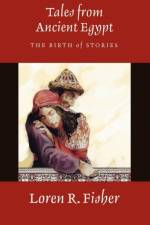
The Egyptian tales witness to some of the great moments in the history of Egyptian literature and represent the earliest beginnings in world literature. Many literary critics do not seem to know the importance of Egyptian prose tales told for entertainment (including C. S. Lewis, who does not know that the ""marvelous that knows itself as myth"" was alive and well by 1800 BCE). Unlike some other ancient states, both Israel and Egypt wrote epic tales in prose. And these great prose stories are important for the study of the Hebrew Bible. Some of the most exciting narrative prose parallels to the Hebrew Bible are found in the stories from Egypt. The details may vary, but in the setting, the purpose, the vocabulary, and the genre of the stories, one can find many similarities.Contents1 The Story of Sinuhe: A Wanderer on the Earth 2 The Enchanted Prince 3 The Story of the Shipwrecked Sailor4 The Journey of Wen-Amon5 A Dialogue between a Man and His Ba
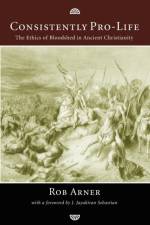
Synopsis:Consistently Pro-Life is a book about killing. Specifically, it takes up the question of when and under what circumstances is it morally justifiable for a Christian to take human life. The murder of abortionist Dr. George Tiller on Pentecost Sunday 2009 reignited the national debate over abortion by focusing attention on the seeming hypocrisy of those who would kill to defend life. But many times, those who would condemn the killing of Dr. Tiller would readily justify the killing of human beings in other circumstances. This leads to the question: What basis do we have to judge a specific act of violence as morally good or ethically justifiable in light of the gospel of Jesus Christ?Rob Arner explores these issues and argues that the deliberate killing of any human being is incompatible with the moral life of a follower of Jesus. Readers will discover in the witness of the ancient Christian church an example of how modern Christians might consistently apply gospel precepts toward questions of the taking of human life. Through a new taxonomy that categorizes the ancient Christian witnesses according to individual issues such as abortion/infanticide, killing in war, and the bloody Roman "games," Consistently Pro-Life demonstrates that the early church consistently opposed the killing of human persons, and suggests that the discipline and moral clarity of the ancient Christians on issues of violence can show us a new way forward in a time of polarizing culture wars.Endorsements:"Many have noted that in our 'time between the times' we have much to learn from the ecumenical consensus in the early church. Others have called us to attend to the 'ancient-future' practices of the church for a revitalization of current Christian worship. Some have even reminded us that grace and good works cannot, according to the early church, be separated. However, almost no one has reminded us as clearly as has Rob Arner, in this compelling and wonderfully written book, that if we are to be true to the substance of the teachings of the Ancient Church, true to the Spirit by which it was animated, then we must recover their commitment to a Consistently Pro-Life theological ethic."-Mark Thiessen NationEastern Mennonite Seminary"Consistently Pro-Life presents a well-argued, well-documented case for the view that the early church before Constantine opposed all killing of human beings. It also clearly connects the thinking of the early church with our contemporary debates about abortion, capital punishment, and war. Just War advocates will object at some points, but Arner provides data and a thesis that cannot be ignored."-Ronald J. SiderPresident, Evangelicals for Social Action"Rob Arner offers an important new approach to the issue of Christian participation in violence through a striking combination of contemporary and historical study . . . I personally have become convinced that followers of Christ give up their sacred birthright when they walk away from the radical nonviolence of Christ and his earliest followers. Arner's very important book will help many reach the same conclusion."-David P. GusheeMercer UniversityAuthor Biography:Rob Arner is a PhD candidate in Theology and Christian Ethics at the Lutheran Theological Seminary at Philadelphia, and an adjunct professor at Chestnut Hill College.
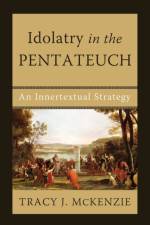
Idolatry in the Pentateuch addresses both the manner in which the Pentateuch was produced and how theological intentions can be discerned from the texts that constitute it. McKenzie attempts to read the final shape of the Pentateuch while not ignoring the diachronic complexities within its pages. Using a compositional approach to the Pentateuch, he establishes his methodology, analyzes several idolatry-related texts, and traces the theological intentions through an inner-textual strategy. Moreover, McKenzie briefly considers the history of interpretation through the last few centuries and discusses the state of Old Testament studies as he understands it.
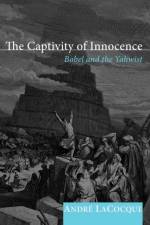
In this study-the third panel of a trilogy on J's tales about evil and innocence in the primeval era-the author turns to Genesis 11:1-9, another parable, this time on the so-called "Tower of Babel." The Captivity of Innocence analyzes a systemic robotization of society as a way of keeping innocence behind bars, contending that innocence never fails to offend, never fails to stir envy and hate. Here, evil is not wrought by an individual like Cain or Lamech, but by "all the earth," so that the summit of evil is now reached before Abraham's breakthrough in Genesis' following chapter. The present analysis uses a variety of techniques to interpret the biblical text, including historical-critical, literary, sociopolitical, psychoanalytic, and deconstructive approaches. The inescapable conclusion is that "Babel" is the "Kafkaesque" image of our world and is a powerful paradigm of our hubristic contrivances and constructions-"Des Tours de Babel," says Derrida-in order to deny our finiteness. Then innocence is trampled upon, but it is not overcome: Babel/Babylon's fate is to crumble down, and to bring up from her ashes the Knight of Faith.
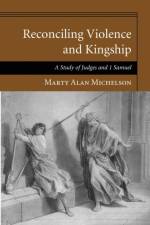
The Hebrew Bible preeminently hails King David in narratives of kingship. Israel's first king, Saul, is interpreted as a weak king whose failings contrast with David's success.Reading the stories at the end of Judges and early in 1 Samuel, Reconciling Violence and Kingship demonstrates the significance of Saul and the inauguration of monarchy independent of and preceding David's kingship. Attuned to issues of mimetic rivalry and sacrifice extending from Abimelech in Judges, Michelson argues that Saul's kingship is uniquely important in establishing the person of the king, inaugurated in order to minimize violence through sacrifice. Read in this way, Saul is not a failed king, but is truly Israel's predominant king. Israelite monarchy emerges with Saul alongside emerging practices of the sacrificial cult.
At a time when the Western church is having to come to terms--painfully and often reluctantly--with its diminished social and intellectual status in the world following the collapse of Christendom, we find ourselves, as interpreters of Paul, increasingly impressed by the need to relocate his writings in their historical context. That is not a coincidence. The Future of the People of God is an attempt to make sense of Paul's letter to the Romans at the intersection of these two developments. It puts forward the argument that we must first have the courage of our historical convictions and read the text before Christendom, from the limited, shortsighted perspective of an emerging community that dared to defy the gods of the ancient world. This act of imaginative, critical engagement with the text will challenge many of our assumptions about Paul's "gospel of God," but it will also put us in a position to reconstruct an identity and purpose for the people of God after Christendom that is both biblically and historically coherent
Synopsis:The Former Prophets of the Hebrew Bible includes the books of Joshua through 2 Kings, a narrative of ancient Israel's history of some seven hundred years from the "conquest" of Canaan to the exile, when Israel lost the land. From a critical perspective the narrative is a composite document incorporating many different literary sources from different times; seen as a whole, the result is a compelling example of ancient historiography as well as an impressive artistic achievement. Included are fascinating (and often horrifying) stories of war, religious fanaticism, terror, and disaster, as well as stories of deep personal loyalty, friendship, and faith. Many characters in the books of The Former Prophets are at once virtuous and villainous, such as King David: slayer of giants, writer of therapeutic songs, and builder of empire, who is also a permissive parent, a rapist, an adulterer, and a murderer. The books of the Former Prophets feature a witch who is far from wicked, and a religious reformer who slaughters the unorthodox. Even God makes an appearance as an evil spirit!Not only have such vivid personages inspired works of art and motivated groups, including the Pilgrims, who came to America to found communities like New Canaan. The Former Prophets also present parallels--often uncomfortable ones--to events in our own history from ethnic cleansing to tyrannical oppression. Yet the Former Prophets also picture the dream of a just and peaceful community that has motivated people of goodwill for thousands of years.Through it all the Former Prophets raise perennial questions: What is the relationship between divine sovereignty and human political institutions? How does a culture identify "insiders" and "outsiders"? In what sense are historical events the result of human acts and also of divine Providence? How does a nation come to terms with its failures as well as its triumphs? Endorsements:"Having retold the first part of the Bible's story of ancient Israel in his acclaimed The Book of the Torah, Thomas Mann now presents the second half with critical and theological acumen. The difficult themes and pictures are not glossed over, but Mann's rich interpretive retelling opens up avenues into a contemporary appropriation of this story, on which, for better or for worse, the Christian community is grounded."--Patrick D. MillerPrinceton Theological Seminary, Emeritus"An amazing achievement. Lucidly, with illuminating parallels from modern times, Mann guides us superbly through vast terrain. He keeps the big picture always in view, yet has an unerring eye for the telling detail. He concisely explains disparate sources and historical background. But always the story, with its rich cast of characters, takes pride of place. We see complexities and ambiguities in narratives fraught with violence and we confront the challenges they present today's reader. The final chapter, deeply thoughtful, critical, and constructive, lays out paths to better understand this great theological history as a work of theodicy, the struggle to comprehend God's ways in a calamitous world. In Mann's book, the ancient work has an excellent modern companion."--David M. GunnTexas Christian UniversityAuthor Biography:Thomas W. Mann has taught religious studies at the college, seminary, and doctoral levels and served as a parish minister in the United Church of Christ. He is the author of The Book of the Torah (1988), to which this book is a sequel.
Matthew's Gospel contains material unique to it among the canonical Gospels. What is the background for this material? Why does the writer of Matthew's Gospel tell the story of Jesus in the way he does--including women in his genealogy, telling the story of the birth of Jesus in his particular way, and including the visit of the magi led by a star? Enoch and the Gospel of Matthew shows that the writer of Matthew was familiar with themes and traditions about the antediluvian patriarch Enoch, including the story of the fall of the angels called "watchers," who transgress their heavenly boundaries to engage in illicit relations with women and teach them forbidden arts. The Gospel writer shows that Jesus brings about the eschatological repair of the consequences of the watchers' fall as told in the Enochic legend. This study focuses on Matthew's genealogy and infancy narrative and also has implications for the study of women in Matthew, since it is often through the stories of women in Matthew that the repair of the watchers' transgression takes place.
Shame has many faces. From the pressing need to avoid "losing face" to the urge to scapegoat and blame, from the desire to exclude those who are different to the horrors of ethnic cleansing, from the obsession with body image to the abiding terrors of the abused, shame is a universal phenomenon. It transcends boundaries of time and is evident in diverse cultures across the world. It is, furthermore, found throughout the pages of Scripture, yet in modern theology shame is conspicuous by its absence. This book attempts to redress the balance by exploring the theology of shame, from its inception in the garden of Eden, to the final triumph over shame on the cross. Restoring the Shamed will offer readers the opportunity to think theologically about one of the most urgent, yet strangely secret, issues of contemporary society.
Tracing the powerful motif of the "coming of the Son of man" from Daniel through to Revelation, Andrew Perriman provides thought-provoking ideas about eschatological narrative. What was it like to hear the biblical proclamation of this "coming" for the first time in a cultural, political, and religious context very different from our own? How did early Christians think about the imminence of the promised "day of the Lord"? What difference did this message make to how they thought, lived, and spread the gospel message?This book engages the minds of jaded twenty-first-century postmoderns who have "heard it all before." By seeing the fulfilment of much of New Testament apocalyptic in events of the first centuries, Perriman proposes that in some important sense we have moved beyond eschatology--into an age of renewed community and mission that is creational in its scope.The Coming of the Son of Manis important reading for those who want to engage in the debate concerning what church is--and will be.
By Bartholomew's Day, 24 August, 1662, all ministers and schoolmasters in England and Wales were required by the Act of Uniformity to have given their ""unfeigned assent and consent"" to the Book of Common Prayer of the Church of England. On theological grounds nearly two thousand ministers--approximately one fifth of the clergy of the Church of England--refused to comply and thereby forfeited their livings. This book has been written to commemorate the 350th Anniversary of the Great Ejectment. In Part One three early modern historians provide accounts of the antecedents and aftermath of the ejectment in England and Wales, while in Part Two the case is advanced that the negative responses of the ejected ministers to the legal requirements of the Act of Uniformity were rooted in positive doctrinal convictions that are of continuing ecumenical significance.
The remarkable discovery of ancient Near Eastern law collections or "codes," beginning with the Laws of Hammurabi and followed by many other collections in decades following, opened a new window upon biblical law. This volume seeks to examine within a single study all of the biblical laws that are similar in content with ancient Near Eastern laws from Sumer, Babylonia, Assyria, and Hatti. The book also examines a small but important group of early rabbinic laws from postbiblical times that exhibit significant similarities with laws found in the ancient Near Eastern collections or "codes." This later group of laws, although absent from the Bible, are nevertheless of comparable antiquity. The presentation focuses on the actual law statements preserved in these ancient law "codes." The discussion then adds narratives, records, and reports of legal actions from ancient sources outside the laws-all of which relate to the formal law statements. The discourse is non-polemical in tone and does not seek to revisit all theories and interpretations. The format allows readers, including those who are new to the subject of biblical law, to engage the primary sources on their own.
In 1967 Karl Rahner famously wrote: ""The economic Trinity is the immanent Trinity, and vice versa."" From that time onwards, Rahner's Rule has become the norm for conceiving the relationship between the Trinity in the economy of salvation and God's eternal inner life. Evangelical theologians currently employ Rahner's Rule in a variety of ways. One of the most popular is the ""Strict Realist Reading"" whereby trinitarian relationships in salvation history are taken to mirror eternal relationships within God. This book brings this norm into conversation with the witness of Scripture in order to assess its viability. In doing so, it highlights troubling issues that arise from the application of the Strict Realist Reading of Rahner's Rule to the narrative of Luke-Acts. This book suggests that the Strict Realist Reading can be shown to be a questionable basis for our doctrine of God's inner life.
This book is a collection of prayers based on the Old Testament texts--a good resource for worship leaders or generally for those interested in spirituality. The Spirit breathes life into us as we breathe and pray, thus granting us the hope that the Spirit can quicken and transform troubled waters into overflowing streams. This is an invitation to readers to breathe with God's Spirit despite the unformed abyss, lifeless chaos, and life's vicissitudes. It is often crisis or weakness that gets us to bend our knees. Through prayer, any dilemma or challenge can become fertile ground for growing in humanity as we journey with God, and consequently sojourn with one another and with creation.
This commentary weaves together the interpretations of Christian exegetes, spanning the past two thousand years, who have concerned themselves with that most mysterious of texts, the book of Leviticus. Even when their commentaries seem most fanciful, the depths of meaning of the Hebrew text comes through in all its many and diverse translations and applications. What we discover is evidence of a biblical text at work in some of the most eloquent of spokespersons throughout the generations. The third book of the Bible is happily enjoying a resurgence of interest in Jewish and Christian quarters alike, being received as a book for the life of the faithful community. What is attempted here is the story of its Western-Christian reception.
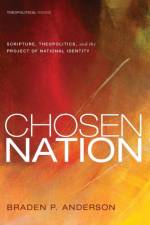
Christian teaching and modern sensibilities both eschew ""nationalism"" as an extreme, fanatical form of patriotism, an excessive or disordered form of an otherwise healthy and proper national identity. But what if the problem of nationalism is something much more fundamental? What if nationalism is actually the process leading to national identity in the first place? And what happens when this process entails selectively appropriating and reinterpreting the Christian tradition for the sake of the envisioned nation? This book takes up these questions within the context of American Christian nationalism. Here, the process of interweaving the Christian narrative with American history and myth is examined in depth through a thorough engagement with scholarship on nationalism and within a framework shaped by contemporary theopolitical studies and the biblical narrative. The study aims to discern how the Christian Scriptures and theological tradition have been used by Christians themselves to further what amounts to an alternative gospel. In so doing this book charts a path for the church to evaluate itself honestly in light of Christ's lordship, repent, and learn to tell its story more truly.
This is the first comprehensive study of the thought of the Welsh theologian-philosopher Huw Parri Owen (1926-1996). Indebted to the heritage of Christian thought, and not bewitched by Barth, bothered by Flew, or bewildered by Bultmann, Owen brought considerable biblical, philosophical, and theological acumen to the articulation of a reasonable, experientially grounded faith. A sharp-minded Christian thinker--a number of whose discussions of philosophico-theological themes remain pertinent to current scholarly debate--is here rescued from unjustified neglect.
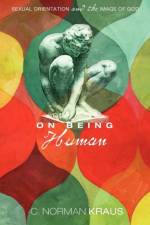
Too often the biblical passages governing sexual morality are interpreted in simplistic, proof texting ways that take no account of the cultural gap between ancient Israel and the modern world. And too often the official positions of churches are determined by opinion polls and majority votes rather than a sober theological and ethical assessment of the issues involved. A third way is called for that avoids the errors of both naive fundamentalism and the Bible-dismissing zeitgeist--a way that puts theological reflection at the forefront. This little book aims to provide a theologically informed, biblical approach to help Christians find a new way forward in their dialogue over questions surrounding homosexuality. It deconstructs the Augustinian theological tradition that has defined, evaluated, and regulated sexual behavior in the western Christian traditions. Kraus maintains that the doctrine of the creation (rather than the doctrine of sin) must be the framework for understanding sexuality and sexual desire. He argues that the basic justification for erotic physical intimacy is the fulfillment of God's original intention for human community (shalom).Beginning with the definition of ""the image of God"" as a social symbol that mirrors the Trinity, Kraus calls the church to reflect that trinitarian image as it is seen in Christ. He argues that this stance at the very least calls the church to empathetic inclusion of the GLBTQ community in its ongoing discernment conversation, which, of course, means full participation in its life.
Synopsis:Divine healing is commonly practiced today throughout Christendom and plays a significant part in the advance of Christianity in Latin America, Africa, and Asia. Such wide acceptance of the doctrine within Protestantism did not come without hesitation or controversy. The prevailing view saw suffering as a divine chastening designed for growth in personal holiness, and something to be faced with submission and endurance. It was not until the nineteenth century that this understanding began to be seriously questioned. This book details those individuals and movements that proved radical enough in their theology and practice to play a part in overturning mainstream opinion on suffering. James Robinson opens up a treasury of largely unknown or forgotten material that extends our understanding of Victorian Christianity and the precursors to the Pentecostal revival that helped shape Christianity in the twentieth century.Endorsements:"With interest in international Pentecostalism growing exponentially, the time is just right for James Robinson's carefully researched and wide-ranging investigation of its roots among the diverse healing and holiness traditions of the nineteenth century."-David HemptonHarvard Divinity School"This new study opens up vistas that enable us to see twentieth-century enthusiasm with new eyes: the revivals of Azusa Street in California, the excitation in the Celtic fringes of Britain, and the growing acceptance in Britain that the God of the bible could still heal had its roots in movements from the beginning of the nineteenth century, many of which have been neglected, marginalized, or forgotten. James Robinson, in this excellent book, traces their origins and influence. Theologically and sociologically they are a mixed bag, but this makes them more interesting and sometimes surprising."-Andrew WalkerKing's College, University of London"James Robinson's history of nineteenth-century divine healing movements is a welcome addition to what has become a burgeoning field of study. A special virtue of this book is Robinson's close attention to the role of Britain and continental Europe in transatlantic developments. Robinson both builds effectively on previous scholarship and provides greater depth, plumbing rich archival resources to provide new insight into how personal experience informed the theologies of healing evangelists."-Candy Gunther BrownIndiana University"James Robinson has portrayed the nineteenth-century Healing Movement vividly in this well-documented study, particularly paying attention to the movement in Europe and the links to later Pentecostalism. Few works on this subject have been as comprehensive, and this one will stand as a standard reference for years to come."-Allan AndersonUniversity of Birmingham, United KingdomAuthor Biography:James Robinson was awarded his doctorate, from Queen's University Belfast. He is the author of Pentecostal Origins: Early Pentecostalism in Ireland in the Context of the British Isles (2005).
American evangelicalism has recently experienced a new openness to Roman Catholicism, and many evangelicals, both famous and ordinary, have joined the Catholic Church or are considering the possibility. This book helps evangelicals who are exploring Catholicism to sort out the kind of concerns that typically come up in discerning whether to enter into the full communion of the Catholic Church. In simple language, it explains many theological misunderstandings that evangelicals often have about Catholicism and suggests the kind of practical steps many take to enter the Catholic Church. The book frames evangelicals becoming Roman Catholic as a kind of ""paradigm shift"" involving the buildup of anomalies about evangelicalism, a crisis of the evangelical paradigm, a paradigm revolution, and the consolidation of the new Catholic paradigm. It will be useful for both evangelicals interested in pursuing and understanding Catholicism and Catholic pastoral workers seeking to help evangelical seekers who come to them.
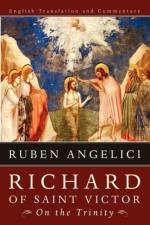
Synopsis:Very few in the history of the church have not struggled with the dogma of the Trinity. Those who have not dismissed it as incomprehensible gibberish have found it a battlefield for division and misunderstanding. Even Christians, who adhere to the faith of the Creeds, have often found such dogma difficult to grasp. Richard of Saint Victor, a twelfth-century Scottish monk and Prior in the Abbey of Saint Victor, is emblematic in this struggle: "I have often read that there is . . . [only] one God . . . I have also read . . . that he is one and triune . . . But I do not remember having read anything on the evidences for these assertions."Richard's theological response stems from a profoundly mystical life of prayer, which, in the Spirit, seeks to involve the mind, in continuation with the great Augustinian and Anselmian tradition. Ultimately, he presents a trinitarian model, intelligible to a Western context but which could also awake admiration from Greek theologians. Today Richard's dogmatics could represent a bridge for dialogue between different traditions.For the first time this theological masterpiece is being made available, unabridged, in English to allow a broader theological public to benefit from Richard's accomplishments. The translation offered here attempts to provide a clear and flowing text, while remaining as literally faithful as possible to the original Latin.Endorsements:"This first English translation of Richard of St. Victor's De Trinitate is a notable publishing event. Ruben Angelici's helpful introduction is both lively and learned. It is to be hoped that this project will renew the interest of theologians and philosophers in the stimulating theology of Richard of St. Victor."-Paul HelmTeaching FellowRegent College, Vancouver"Ruben Angelici deserves great credit for his commentary and translation of Richard of St. Victor's On the Trinity. His scholarship is impeccable and insightful and his translation is accurate and lucid. This is a most welcome and much needed contribution to the theological academy."-Thomas Weinandy, O.F.M.Executive Director of the Secretariat for DoctrineUnited States Conference of Catholic BishopsAuthor Biography:Ruben Angelici is a Graduate of the University of Manchester. He holds degrees and expertise in theology, philosophy, biology, and music. He has been a sessional lecturer in dogmatic and historical theology at Nazarene Theological College, University of Manchester.
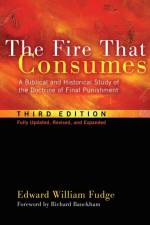
Synopsis:Evangelical Christians affirm together that a dreadful destiny awaits those who reject God's grace throughout life. According to the traditional view, that destiny will involve unending conscious torment in hell. However, believers are increasingly questioning that understanding, as both unbiblical and inconsistent with the character of God revealed in the Scriptures and in the man Jesus Christ.This internationally acclaimed book--now fully updated, revised, and expanded--carefully examines the complete teaching of Scripture on the subject of final punishment. It concludes that hell is a place of total annihilation, everlasting destruction, although the destructive process encompasses conscious torment of whatever sort, intensity, and duration God might require in each individual case.Endorsements:"I commend this book warmly. It is likely to remain a standard work to which everyone engaged with this issue will constantly return."-Richard BauckhamEmeritus Professor of New Testament StudiesUniversity of Saint Andrews, Scotland"The Fire That Consumes has long been recognized as one of the most thorough and compelling statements available of the view that the destiny of the unsaved will be final destruction rather than eternal torment. In this new edition, Edward Fudge provides extended engagement with traditionalist critics and an overview of developments in the last thirty years ensuring that it will remain a definitive work on the issue for years to come." -John R. FrankeTheologian in ResidenceFirst Presbyterian Church of AllentownAuthor Biography:Edward William Fudge is a Christian theologian, Bible teacher, author, and, for more than twenty years, a practicing attorney. He maintains an international internet ministry at www.EdwardFudge.com.
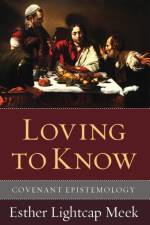
Knowing is less about information and more about transformation; less about comprehension and more about being apprehended.This radical book develops the notion of covenant epistemology--an innovative, biblically compatible, holistic, embodied, life-shaping epistemological vision in which all knowing takes the shape of interpersonal, covenantal relationship. Rather than knowing in order to love, we love in order to know. Meek argues that all knowing is best understood as transformative encounter. Creatively blending insights from a diverse range of conversation partners--including Michael Polanyi, Michael D. Williams, Lesslie Newbigin, Parker Palmer, John Macmurray, Martin Buber, and James Loder--Meek offers critically needed ""epistemological therapy"" in response to the pervasive and damaging presumptions that those in Western culture continue to bring to efforts to know. The book's innovative approach--an unfolding journey of discovery-through-dialogue--itself subverts standard epistemological presumptions of timeless linearity. While it offers a sustained and sophisticated philosophical argument, Loving to Know's texts and textures interweave loosely to effect therapeutic epistemic transformation in the reader.
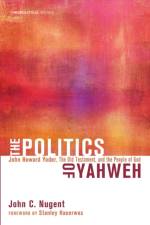
John Howard Yoder is most famous for arguing in The Politics of Jesus that a sound reading of the New Testament demonstrates the abiding relevance of Jesus to social ethics. However, it is seldom acknowledged that Yoder makes essentially the same argument with regard to the Old Testament. Throughout his extensive writings, Yoder offers a provocative interpretation of the Old Testament that culminates in the way of Jesus and establishes the ethical, ecclesiological, and historiographical continuity of the entire biblical canon. In The Politics of Yahweh, presented as a prequel to The Politics of Jesus, John C. Nugent makes Yoder's complete Old Testament interpretation accessible in one place for the first time.Nugent does not view Yoder's interpretation as flawless. Rather, Nugent moves beyond summary to offer honest critique and substantial revision. His constructive proposal, which stands in fundamental continuity with the work of Yoder, is likely to provoke thought from theologians, biblical scholars, and ethicists. Even at points where readers disagree with some of his and Yoder's interpretations, they will be challenged to explore new perspectives and rethink common assumptions concerning the diverse and often confusing issues that arise from sustained reflection on the Old Testament.
""The Lord is the Spirit"" (2 Cor 3:17) . . . and yet one might be excused for thinking otherwise when reading studies on God's attributes--omnipotence, omniscience, omnipresence, immutability, impassibility, and the like. Although Christians throughout the ages have defended the deity of the Holy Spirit, theologians have not adequately taken the doctrine of the Holy Spirit into account when formulating a theology of the divine attributes. The resulting understandings of God fall short of being fully Trinitarian. Gabriel builds on contemporary Trinitarian theology by advocating for the integration of insights from pneumatology into the doctrine of God's attributes. Three case studies are presented: impassibility, immutability, and omnipotence. Gabriel writes from an evangelical and Pentecostal vantage point as he engages in ecumenical dialogue with a wide spectrum of historical and contemporary theological voices.
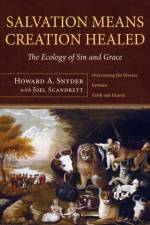
The Bible promises the renewal of all creation--a new heaven and earth--based on the incarnation, life, death, and resurrection of Jesus Christ. For centuries this promise has been sidelined or misunderstood because of the church's failure to grasp the full meaning of biblical teachings on creation and new creation.The Bible tells the story of the broken and restored relationship between God, people, and land, not just God and people. This is the full gospel, and it has the power to heal the church's long theological divorce between earth and heaven. Jesus' resurrection in the power of the Holy Spirit is the key, and the church as Christ's body is the primary means by which God is reconciling all things through Jesus Christ. Jesus' ultimate healing of all creation is the great hope and promise of the gospel, and he calls the church to be his healing community now through evangelism, discipleship, and prophetic mission.
The subject of "culture" has provided theologians with a whole new realm of exploration. By the turn of the twentieth century and the beginning of this new milennium the subject of culture had presented itself to theologians and church leaders for vital consideration. As one of the world's leading theologians, Robert Jenson's eminent career has coincided with the pre-eminence of culture in theological and churchly discussion. Having described himself as a theologian of culture in his earliest works, culture continually informs Jenson's systematic theology, which in turn works its way out in countless cultural forms. In Rhyming Hope and History we explore the philiosophical and theological influences of Jenson's work and outline their vast and varied applications to the world of culture and the life of the church. For Jenson, the church is the cultural embodiment of the risen Christ in the fallen reality of our world. In a series of conversations between Jenson and leading thinkers, including G.W.F. Hegel, Jonathan Edwards, Wittgenstein, Richard H. Niebuhr, Kathryn Tanner, Paul Tillich, Nicholas Wolterstorff, Augustine, and Jeremy Begbie, we explore this creative and courageous proposal.
Synopsis:In this book, Gordon Heath and James Dvorak bring together three traditions that are not often brought together under one roof: Orthodox, Catholic, and Protestant. Authors from a number of Protestant traditions, as well as one from Orthodoxy and one from Catholicism, have contributed to a volume that provides a grander vision of the diversity of the church as well as a deeper sense of the differences that divide and the similarities that unite. This book provides a much-needed and helpful forum for a variety of Christian positions to be presented and defended so that Christians can at least operate out of understanding rather than ignorance. The authors also hope that such understanding will nudge people closer together as baptized followers of Jesus Christ. The gracious spirit of each contributor to this volume indicates that it is possible. All contributors in this volume write about their own tradition, and a number write not just as academics but also as ordained leaders in their churches. The insider''s perspective that each author brings allows passionate presentations of each perspective but also committed defenses of the same.Endorsements:"Through such cross-pollination of traditions a fuller, more fruitful discussion will take place, and perhaps lead even to greater unity among Christians. Similarities between the views are striking and even comforting, pointing to much more agreement than one might expect. The frequent references to Romans 6, explanations of corporate/communal salvation, and the connection of concepts of baptism with the various ecclesiologies are all tremendously helpful. The differences in methodology are interesting and instructive. Putting these views on the table clearly will help in ecumenical discussion. This book will become required reading for my pastoral theology course."--William E. KooiProfessor of TheologyOklahoma Christian UniversityAuthor Biography:Gordon L. Heath is associate professor of Christian History at McMaster Divinity College, and Director of the Canadian Baptist Archives. His publications include Doing Church History: A User-friendly Introduction to Researching the History of Christianity (2008).James D. Dvorak is associate professor of Greek and New Testament at Oklahoma Christian University. He is currently co-editing a volume on New Testament ecclesiology.
In light of the contemporary struggle between science and faith, Kathleen Mulhern's timely exploration of late nineteenth-century neo-Pascalian thought both recovers a lost perspective on the ""war between science and religion"" and offers a fruitful angle of study for twenty-first-century reflection. As the science vs. religion rancor reached its early fury at the turn of the century, many devout French Catholic intellectuals struggled with the increasingly dogmatic spirit in both the Roman Catholic Church and the scientific community. The dominant ideology of scientism within the intellectual establishment of the Third Republic (1870-1940) collided with a growing authoritarianism within the Church, expressed in the 1893 papal encyclical, Providentissimus. Physicist Pierre Duhem, philosopher Maurice Blondel, and priest Lucien Laberthonniere rejected the Roman Catholic Church's Thomistic methodology and sought intellectual inspiration instead in the philosophy of seventeenth-century scientist, mathematician, philosopher, and Christian apologist Blaise Pascal. These neo-Pascalians offered an alternative to the adversarial relationship between modern culture and orthodox Catholic faith, but their ideas came to an abrupt and bitter conclusion when they ran afoul of Church authority. The narrative and contribution of the neo-Pascalians offers many insights and lessons that could helpfully inform the contemporary debates surrounding the dialogue between science and religion.
Paul L. Holmer (1916-2004) was Professor of Philosophy at the University of Minnesota (1946-1960) and Noah Porter Professor of Philosophical Theology at Yale Divinity School (1960-1987). Among his many acomplishments, Holmer was one of the most significant American students of Kierkegaard of his generation. Although written in the 1950s and 1960s, Holmer's theological and philosophical engagement with Kierkegaard challenges much in the contemporary scholarly discussions of this important thinker. Unlike many, Holmer refuses reductionist readings that tie Kierkegaard to any particular ""school."" He likewise criticizes biographical readings of Kierkegaard, much in vogue recently, seeing Kierkegaard rather as an indirect communicator aiming at his reader's own ethical and religious capacities. Holmer also rejects popular existentialist readings of Kierkegaard, seeing him as an analyzer of concepts, while at the same time denying that he is a ""crypto-analyst."" Holmer criticizes the attempt to construe Kierkegaard as a didactic religious thinker, appreciating Kierkegaard's ""cool"" descriptive objectivity and his ironic and stylistic virtuosity. In his important reading of Kierkegaard on ""truth,"" Holmer pits Kierkegaard against those who see ""truth"" empirically, idealistically, or relativistically. Holmer's carefully textured account of Kierkegaard's conceptual grammar of ""truth"" in ethical and religious contexts, fifty years after it was penned, addresses immediately current discussions of truth, meaning, reference, and realism versus antirealism, relativism, and hermeneutics. It will be of great interest to all interested in Kierkegaard and his importance for contemporary theology and philosophy.This is the first volume of The Paul L. Holmer Papers, which includes also volume 2, Thinking the Faith with Passion: Selected Essays, and volume 3, Communicating the Faith Indirectly: Selected Sermons, Addresses, and Prayers.
Abonner på vårt nyhetsbrev og få rabatter og inspirasjon til din neste leseopplevelse.
Ved å abonnere godtar du vår personvernerklæring.