










Gjør som tusenvis av andre bokelskere
Abonner på vårt nyhetsbrev og få rabatter og inspirasjon til din neste leseopplevelse.
Ved å abonnere godtar du vår personvernerklæring.Du kan når som helst melde deg av våre nyhetsbrev.

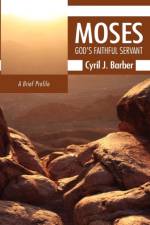
Great are the works of the Lord; They are studied by all who delight in them"" (Psalm 111:2, NASB).When treating the life of Moses the psalmist wrote: ""The Lord remembered His promise given to his servant Abraham, and brought His people out of Egypt with rejoicing, His chosen ones with shouts of joy. He also gave them the lands of the nations, that they might take possession of the fruit of other people's labor ..."" (Psalm 105:42-44)The story of the Exodus is an intriguing one. Moses first attempted to help his people without God's call, expecting success as a result of his own ability. In the end he never undertook anything without God's guidance, and it is no wonder that He is linked with Samuel as an example of the power of intercessory prayer (Jeremiah 15:1).As to Moses' character, the only strong personal trait which we are able to glean from the biblical text comes from Numbers 12:3, where the word ""meek"" should be rendered ""much enduring, or strength under control,"" for he persevered through extremely difficult, trying circumstances. It is no wonder, therefore, that after performing the task the Lord had given him, he became known as a man of enduring faith (cf. Hebrews 11:24-29).
This bibliography and resource consists of a chronological introduction to the development of Lewis's works, a copious bibliography and a guide to the study of Lewis, an introductory essay on Christology in Lewis, and a glossary for those unfamiliar with some of the background and terms to Lewis's understanding of revelation and the Christ. It will be an invaluable resource for all scholars of C. S. Lewis. The bibliography stands alone but it also serves to complement the three volumes of the series C. S. Lewis, Revelation, and the Christ.
The academy and pop culture alike recognize the great symbolic and teaching value of the undead, whether vampires, zombies, or other undead or living-dead creatures. This has been explored variously from critiques of consumerism and racism, through explorations of gender and sexuality, to consideration of the breakdown of the nuclear family. Most academic examinations of the undead have been undertaken from the perspectives of philosophy and political theory, but another important avenue of exploration comes through theology. Through the vampire, the zombie, the Golem, and Cenobites, contributors address a variety of theological issues by way of critical reflection on the divine and the sacred in popular culture through film, television, graphic novels, and literature.
"From a mission field to a missions sender." These words capture the story of the Brazilian evangelical church, which has gone from receiving missionaries in the nineteenth and twentieth centuries to becoming a movement that presently sends out more global laborers than the churches of England or Canada do. After narrating Brazil's missional shift, in this volume Smither addresses one fascinating element of the story--Brazilian evangelical efforts in the Arab world. How have Brazilians adapted culturally among Arabs, how have they approached ministry, and how have they cultivated a theology of mission in the process? Brazilian Evangelical Missions in the Arab World gives the reader insights from one emerging missions movement with an eye toward a more comprehensive view of the global church.
At the same time as Catholic and evangelical Christians have increasingly come to agree on issues that divided them during the sixteenth-century reformations, they seem increasingly to disagree on issues of contemporary "morality" and "ethics." Do such arguments doom the prospects for realistic full communion between Catholics and evangelicals? Or are such disagreements a new opportunity for Catholics and evangelicals to convert together to the triune God's word and work on the communion of saints for the world? Or should our hope be different than simple pessimism or optimism? In this volume, eight authors address different aspects of these questions, hoping to move Christians a small step further toward the visible unity of the church.
C. S. Lewis--The Work of Christ Revealed focuses on three doctrines or aspects of Lewis's theology and philosophy: his doctrine of Scripture, his famous mad, bad, or God argument, and his doctrine of christological prefigurement. In each area we see Lewis innovating within the tradition. He accorded a high revelatory status to Scripture, but acknowledged its inconsistencies and shrank away from a theology of inerrancy. He took a two-thousand-year-old theological tradition of aut Deus aut malus homo (either God or a bad man) and developed it in his own way. Most innovative of all was his doctrine of christological prefigurement--intimations of the Christ-event in pagan mythology and ritual. This book forms the second in a series of three studies on the theology of C. S Lewis titled C. S. Lewis, Revelation, and the Christ (www.cslewisandthechrist.net). The books are written for academics and students, but also, crucially, for those people, ordinary Christians, without a theology degree who enjoy and gain sustenance from reading Lewis's work.
Throughout ages the prophetic literature of the Old Testament has always fascinated its readers. Up to our modern times, the bold prophetic message of doom and salvation continually triggers our imagination. At the same time, the books of the prophets confront us with many questions as to their aim and theological content, challenging us to translate their message in our own actual context. The Lion Has Roared--an image used by the prophets themselves--was written to meet the need for a better understanding of the prophets.By taking into account recent trends in current scholarship on the prophetic literature in the Old Testament, this book explores the core theological message of each individual prophetic book, including the book of Daniel. This is done by viewing each book both from a historical and literary perspective. A selected bibliography on each prophetic book is also provided to guide the interested reader to further reading. This unique volume was written by sixteen Old Testament scholars from Africa, America, Asia, and Europe for use by students of theology and religious studies, pastors and preachers, and interested lay readers.
Many Christians who practice believer baptism struggle to answer basic questions about it, such as: What does it mean to be baptized? How does baptism relate to faith? What does God do through baptism?In Waters of Promise, Brandon Jones seeks to answer these questions by drawing from Scripture, theology, history, and church practice. The resulting recovery of the link between covenant theology and believer baptism may change not only how you think about baptism but also how your church practices it.
Did Luther get Christian freedom right? The answer to this question contains two elements: - What is Luther's understanding of Christian freedom? - How did his understanding stand up under the pressure of reformation? Muhlhan examines both of these elements and contends that the sublime beauty of Luther's early understanding of Christian freedom--an understanding that empowered the German reformation--is consistently the same understanding he used to undermine papal heteronomy and refute radical legalism. The relational character, cruciform substance, and complex structure of Luther's concept of freedom enabled him to speak both polemically and catechetically with a clear and authoritative communicative clarity that reinvoked the magnificence of Christ and him crucified for sinners. The impact, both positive and negative, of Luther's appraisal of Christian freedom finds its focus of impact in the small world of Wittenberg in the sixteenth century yet resonated throughout the church of his day as a powerful, theologically laden response to legalism and antinomianism. Therefore, in light of this impact and its correlation to biblical freedom, Muhlhan contents that we can confidently affirm that Luther did indeed get Christian freedom right and that he did not fail to live by the implications of this radical theology.
Who wrote the first five books of the Bible? Does it really matter who did? The Books of Moses Revisited explores this question by comparing the covenants of Exodus/Leviticus and Deuteronomy with the inter-state treaties of the late second millennium BC. Some compelling similarities come to light, both in the pattern adopted and in many small details. Lawrence clearly demonstrates this with many examples and diagrams, yet without assuming that readers possess a detailed knowledge of ancient history and linguistics. Despite the entrenchment of the widely held theory--the so-called Documentary Hypothesis--that the first five books of the Bible were the product of an anonymous editor living many centuries after Moses, this book argues that the first five books of the Bible bear many hallmarks of being late second millennium BC compositions and that Moses should not be ruled out as being the author. The book also explores how several ancient texts--the Egyptian Story of Sinuhe, the Mesopotamian Epic of Gilgamesh, and Homer's Iliad and Odyssey--were transmitted in antiquity and suggests that a similar process also lies behind the transmission of the first five books of the Bible.
The idea of "salvation" tends to be interpreted as an exclusively religious category. The author of this essay believes that philosophy, the quintessence of human thinking, possesses a salvific power, as it offers the possibility of broadening the horizons of humanity, leading us out of the oppressive limits of our "hic et nunc." However, philosophical salvation needs to be found in time and space. The edification of a society based upon the ideal of solidarity, in which history may be meaningful for everyone, is its preeminent manifestation.
In Light Shining in a Dark Place, Jeff Sellars has drawn together more than a dozen scholars around the theme of discovering theology through the moving medium of film. The varied contributors in this collection explore, through their particular lenses, how theological ideas might be seen in and considered through one of the most popular of modern art forms. From subjects of sin, grace, and forgiveness to violence, science fiction/fantasy, and zombies, Light Shining in a Dark Place assists the theologically interested film viewer in tracing the light that might be found in the filmic arts back to the source of all lights. Contributors: Bruce L. Edwards, J. Sage Elwell, Michael Leary, Peter Malone, Kevin C. Neece, Simon Oliver, Kim Paffenroth, J. Ryan Parker, Travis Prinzi, Megan J. Robinson, Scott Shiffer, James H. Thrall, and Alissa Wilkinson
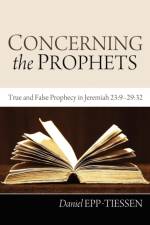
Epp-Tiessen sheds light on the compositional history, structure, and theology of the book of Jeremiah by demonstrating that a large concentric unit of material focusing on true and false prophecy stands at the center of the book. This unit, titled "Concerning the Prophets" (23:9), utilizes the heritage of Jeremiah to contrast the nature of true and false prophecy in order to warn the Second Temple community of the disastrous consequences of false prophecy and to highlight the saving potential of true prophecy. False prophecy leads to doom because it ignores the moral failings of the community, promises well-being in the face of catastrophe, and reinforces the misleading theological certainties of Judah's pre-587 way of life. In contrast, the true prophet Jeremiah challenges the faith community to embrace the physical and spiritual dislocation of the Babylonian destruction. Post-disaster life stands under the saving purposes of YHWH, but the only way forward is to learn the painful lessons of catastrophe and heed the prophetic summons to repent and embrace a Torah-based way of life.
Synopsis:The story of Adam is the story of Israel writ smallIn this text-centered interpretation of Genesis 1-3, Seth Postell contends that the opening chapters of the Bible, when interpreted as a strategic literary introduction to the Torah and to the Tanakh, intentionally foreshadows Israel's failure to keep the Sinai Covenant and their exile from the Promised Land, in order to point the reader to a future work of God, whereby a king will come in "the last days" to fulfill Adam's original mandate to conquer the land (Gen 1:28). Thus Genesis 1-3, the Torah, and the Hebrew Bible as a whole have an eschatological trajectory.Postell highlights numerous intentional links between the story of Adam and the story of Israel and, in the process, explains numerous otherwise perplexing features of the Eden story.Endorsements:"Dr. Postell has written a brilliant treatise arguing that Genesis 1-3 serves as the literary introduction to the Pentateuch, and, indeed, the entire Tanakh. He is clearly conversant with all the relevant literature and he makes a persuasive case. This is a work that needs to be read carefully and taken seriously."--David M. Howard Jr.Professor of Old TestamentBethel University"In a stimulating study of the first three chapters of Genesis, Dr. Postell has argued convincingly that they were written as fitting prelude to and portent of the ensuing narrative. Instead of looking to presumed parallel or contrasting ancient creation accounts for its meaning, this study confirms that the opening narratives of the Pentateuch exhibit language and themes coherent with the entire narrative that follows. The persuasive argument expressed here points to the necessity of further studies of similar approach to the Hebrew Bible."--Robert ColeAssociate Professor of Old Testament and Semitic LanguagesSoutheastern Baptist Theological Seminary"To anyone who suspects that there is a divine order behind the compilation of the Hebrew Scriptures, this excellent work by Seth Postell will confirm that suspicion. Not only has he carefully described the methodology used in evangelical canonical research of the text, he has built upon the existing evidence to further substantiate the approach. Fresh new insights are always pleasing to the theological senses! Research professors and students alike will be strengthened in their devotion to the sacred text and spurred on to answer the research questions that naturally arise from this work."--Gregory HaggProfessor of Bible Exposition/DirectorThe Feinberg Center for Messianic Jewish StudiesTalbot School of TheologyAuthor Biography:Seth D. Postell, formerly Assistant Professor of Old Testament at the Charles L. Feinberg Center for Messianic Jewish Studies (in partnership with Talbot School of Theology), is currently Lecturer in Biblical Studies at Israel College of the Bible in Netanya, Israel.
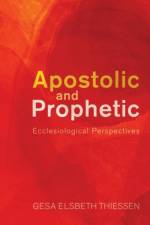
Apostolic and Prophetic promotes a vision of the church as apostolic, ecumenical, and radical. It explores the meaning of each of these ecclesial marks and their intrinsic connections. The volume thus draws a wide span between the apostolic past (tradition) and a radical perspective on the present and future ecumenical church. The book considers the concept of apostolicity emerging in patristic theology, and it examines this concept as it has been developed in some select Lutheran, Roman Catholic, and Anglican ecumenical documents. Unresolved ecumenical questions concerning ecumenical method and church ministry are frankly discussed, including critical observations on ecumenical praxis. The modern notion of churches as denominations is examined in detail, especially in the Lutheran context. The author also offers a critical assessment of an important ecumenical event, the annual Week of Prayer for Christian Unity. The notion of a radical church--aware of its roots and prophetically committed to faith in the kingdom of God seeking freedom and justice--is explored through an extensive analysis and discussion of the work of Dorothee Solle and Terry Eagleton, two seminal thinkers of our time.
This collection of essays is a celebration of the work of Timothy Gorringe. Like his theology, it is animated by a delighted and critical engagement with the diverse facets of human social life, and by a passionate concern to wrestle with the Bible and the Christian tradition in pursuit of human flourishing. The built environment, politics, education, art: these essays by leading Christian theologians ask what it means for Christian theology to concern itself with, to immerse itself in, and to risk critical commentary on, each of these and more. The collection follows the same rhythm that animates Gorringe's work: insistent attention to the Christian tradition in the light of the particular contexts where human flourishing is imagined, fought for, embodied and betrayed; and a critical, constructive and celebratory examination of those contexts in the light of the Christian tradition. The contributions are very diverse, touching on everything from city life to human curiosity, poverty to genocide--but they are united by a passion to make theological sense of human flourishing.
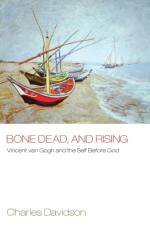
Synopsis:Here is a vivid, poetic, and evocative story of the painter Vincent van Gogh's struggle to become his true self. The author listens in on Vincent's most intimate, frequently startling thoughts on a host of topics, drawn from three volumes of his correspondence and his 900 extant paintings. What emerges is the portrait of an artist whose spiritual vision was borne of an agonizingly prolonged experience of the "dark night of the soul" through which his art dared to envision the triumph of joy over sorrow, of resurrection over suffering and death.Readers will discover that in many ways Vincent's story is as much about us as about him. Tracing van Gogh's pilgrimage from being an apprentice art dealer to being called to minister, in self-renunciation and misery, among destitute coal miners, the narrative follows his winding, tortuous path into adulthood as he struggles with family, associates, lovers--and with himself. Constantly evidenced in Vincent's own eloquent words and paintings is his tussle with the mysterious presence and maddening absence of God. Vocation unveils as a process of summoning and birthing his own self, through an attempt to imitate Christ, calling forth van Gogh's extraordinary creative powers from deep within.Adding choice supplies from other observers, Davidson here weaves his own exact, artful tapestry of interpretation, producing a suspenseful excursion into the life of van Gogh that offers profound meaning at every turn.Endorsements:"This richly detailed and deeply felt account of van Gogh's tormented and self-tormenting life, together with many telling quotations from his correspondence with his faithful brother Theo, will be essential reading for all who see him as one of the geniuses of the nineteenth century."--Frederick Buechnerauthor of Secrets in the Dark and The Yellow Leaves "Charles Davidson's book viewing Vincent van Gogh's life and work is an excellent contribution to ways we might best understand the artist's struggle and spirituality. The flow of the narrative and the presence of theological and psychological motifs help us re-vision the artist in a postmodern framework that opens new and creative channels for understanding."--Cliff Edwardsauthor of Van Gogh and God, The Shoes of Van Gogh, and Mystery of the Night Café"This work of supreme art unveils Vincent van Gogh's own great art--in life, work, and death. It accomplishes this in amazingly varied fashion and unpretentious, religious depth. It is remarkably attuned to, and mostly uses, Vincent's own strikingly honest, poetic statements in company with some of Vincent's paintings. In the process, it interprets both with every conceivably appropriate tool, drawing in others' profoundly insightful responses to Vincent with the author's own. From beginning to end, Charles Davidson--pastor, teacher, clinician, poet, musician, and scholar--has created, reflectively, a rare, simply magnificent portrayal. Any attentive reader who has known either deprivation or struggle in life can find here a healing love and joy."--Terrence N. Ticeeditor of Hermann Peiter's collected essays, Christian Ethics According to Schleiermacher, and translator of Friederich Schleiermacher's Christmas Eve Celebration"Bone Dead, and Rising is a psychologically and theologically incisive analysis of the life and work, the psyche and spirituality of Vincent Van Gogh. It is difficult to imagine that the artist himself would have missed the magnitude and worthiness of this verbally artistic rendering." --Lallene J. Rector co-editor of Psychological Perspectives and the Religious QuestAuthor Biography:Charles Davidson, a Presbyterian minister and psychotherapist, was the Darrel Rollins Professor of Holistic Ministry in Pastoral Theology, Care, and Counseling at Virginia University of Lynchburg, until retiring to Black Mountain, North Carolina, where he lives with his wife, dog, cats, saxophone, and clarinet.
Synopsis:This volume includes nine essays that move Ezekiel's creative reuse of older materials to the foreground of discussion. The essays highlight the transformation of earlier texts, traditions, and theology in Ezekiel. They explore the diverse ways that Ezekiel reshapes Israel's legal texts, rituals, oracles against foreign nations, royal ideology, conception of the individual, remembrance of the past, and hope for the future. The work concludes by noting the subsequent transformation of Ezekiel in scribal transmission and in the New Testament.Endorsements:"Tooman and Lyons present a wide range of significant scholars who address the key issue in Exilic and especially Ezekiel studies today--why and how did an almost total transformation of Israel's Religion take place during the Exile. Before exile, it was centered on active royal, ritualistic, and oracular activity; after exile, it centered on priestly-legislated and tradition-centered guidance of practical observance. The authors offer important insights on the concepts of idolatry, divine and human kingship, individual versus corporate moral responsibility, the role of divine holiness, the Exodus tradition, the importance of priestly viewpoints, and the way the Book of Ezekiel was written and enlarged. This single volume brings together all major trends in Ezekiel studies today."--Lawrence Boadt, CSP, Professor Emeritus, Washington Theological Union"The present volume, edited by two rising Ezekiel scholars, Michael A. Lyons and William A. Tooman, makes a substantive contribution to the burgeoning discussion of the book of Ezekiel by emphasizing the theme of transformation, understood in relation to the text of Ezekiel, the traditions on which it draws and by which it developed, and its theological perspectives. Each essay engages a different aspect of the study of the book, and thereby opens and advances scholarly dialog in its own right." Marvin A. Sweeney, from the ForewordEditor Biography:William A. Tooman is Lecturer in Old Testament at University of St. Andrews, Scotland.Michael A. Lyons is Assistant Professor of Old Testament at Simpson University. He is the author of From Law to Prophecy: Ezekiel's Use of the Holiness Code.CONTRIBUTORS:Daniel I. Block, Wheaton College Graduate SchoolTova Ganzel, Bar-Ilan University Paul M. Joyce, St. Peter's College, Oxford UniversityBeate Kowalski, University of Koblenz-LandauThomas Krüger, University of ZurichMichael A. Lyons, Simpson UniversityTimothy Mackie, University of Wisconsin-MadisonJill Middlemas, Århus UniversityPaul R. Raabe, Concordia SeminaryBaruch Schwartz, Hebrew UniversityWilliam A. Tooman, University of St. Andrews
Interpreting Isaiah requires attention to empire. The matrix of the book of Isaiah was the imperial contexts of Assyria, Babylon, and Persia. The community of faith in these eras needed a prophetic vision for life. Not only is the book of Isaiah crafted in light of empire, but current readers cannot help but approach Isaiah in light of imperial realities today. As a neglected area of research, Isaiah and Imperial Context probes how empire can illumine Isaiah through essays that utilize archaeology, history, literary approaches, post-colonialism, and feminism within the various sections of Isaiah. The contributors are Andrew T. Abernethy, Mark G. Brett, Tim Bulkeley, John Goldingay, Christopher B. Hays, Joy Hooker, Malcolm Mac MacDonald, Judith E. McKinlay, Tim Meadowcroft, Lena-Sofia Tiemeyer, and David Ussishkin.
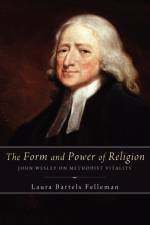
In "Thoughts Upon Methodism," John Wesley shared his hopes and fears for the future of his religious movement. The article contains this well-known passage: "I am not afraid that the people called Methodists should ever cease to exist either in Europe or America. But I am afraid, lest they should only exist as a dead sect, having the form of religion without the power. And this undoubtedly will be the case, unless they hold fast both the doctrine, spirit, and discipline with which they first set out." The Form and Power of Religion unpacks this statement by explaining what Wesley meant by the form and power of religion, identifying what Methodist Doctrine, Spirit, and Discipline were according to Wesley, and discussing how these aspects of Methodism worked together to maintain the vitality of the Revival. The book concludes with an evaluation of Wesley's theory of Methodist Vitality, and discusses its viability as a basis for contemporary Church Vitality programs.
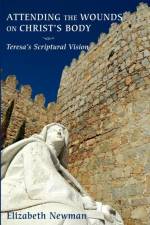
The disunity of the church is a social and theological scandal for it betrays the prayer of Jesus that we "will be one . . . so that the world will believe" (John 17:21). As a Baptist whose academic background focused on the Orthodox Church and whose teaching has included Catholic and Protestant contexts, this division is for Elizabeth Newman personal and professional. Attending to the Wounds on Christ's Body rests on the conviction that the broad tradition of Christianity already contains resources to heal the church, namely the saints of the church. Newman examines especially how Teresa of Avila (1515-1582) speaks to the whole church today in the midst of political, economic, and ecclesial brokenness. Teresa's reliance upon three scriptural figures--dwellings, marriage, and pilgrimage--helps make sense of an ecclesial way of life that is inherently unitive, a unity that stands in contrast to that of the nation-state or the global market. Teresa's scriptural journey offers an alternative at once liturgical, political, and economic. This Doctor of the Church provides "medicine" that can repair wounds of division that separate brothers and sisters in Christ.
For many Christians, spirituality and ethics are in separate mental and experiential compartments. Spirituality may be understood as an inner experience, while ethics is focused on decisions or positions on issues. Both of these views reduce spirituality and morality in Christian faith and practice, and ignore the centrality of desire for God and the things of God as key focal points for spiritual and moral formation. These aspects of Christian formation must be located in their scriptural and theological contexts in order to understand more fully what God desires for human life. This focus on desire provides content and context to Christian spirituality and morality. We are drawn outward to focus on God and the good of others while we learn to embody virtues, such as compassion, courage, self-control, gratitude, humility, and hope. Practices are crucial ways by which we learn to incarnate our ultimate desire of love for God and for what God desires in the pursuit of justice and goodness for all creation. In so doing, practices enable us to more fully integrate spiritual and moral growth in the processes of our desire for God and the things of God.
In The Text in Play, Mike Higton and Rachel Muers conduct a series of experiments in the reading of Scripture. They experiment in the first place with a form of Christian theological exegesis of the Bible that they call "serious play"--a form of reading beyond the literal sense that is nevertheless serious about the ethical, historical, and textual responsibilities of the reader. They experiment in the second place with the practice called Scriptural Reasoning--in which Jews, Christians, and Muslims read and argue over their respective Scriptures together--and argue that the practice makes deep sense for "seriously playful" Christian readers. This constitutes the most detailed and developed account of Scriptural Reasoning yet published.
In modern times the relationship between the church and academy has been strained and tension-filled. Mainstream church culture has often been skeptical of Bible scholars, depicting them as self-serving intellectuals trying to out-think God by devising new and controversial interpretations. Just as well, academics have often leveled harsh critiques against church culture, painting pastors and laity as anti-intellectual pseudo-spiritualists. Entering the Fray argues that, in spite of the wide gap between the academic and ecclesiastical worlds, the modern church should be aware of the key discussions taking place among biblical scholars. To be sure, the average churchgoer has not been tuned in to scholarly conversations concerning matters such as the Messianic Secret, Q, the Historical Jesus, the pistis Christou debate, and related topics. In fact, they may have purposefully tuned out! Some, however, are simply unaware that any such dialogue has taken place, and beyond the internet, may not have the first clue as to how to explore the details. This primer seeks to function as that ""first clue"" by helping congregants, pastors, and students of the Bible enter into the fray of scholarly discussions that, over the last few hundred years, have shaped both the academy and church.
In this practical book every occurrence of astheneia and its cognates in the Pauline Epistles is examined, both in its immediate context and in its relation to Pauline thought as a whole. The analysis begins, first, by examining both secular and Septuagintal Greek usages of astheneia as well as its usage in the non-Pauline New Testament writings. It then proceeds, secondly, by defining Paul's astheneia termini from letter to letter and context to context. All the passages in the Pauline literature where the words appear undergo a detailed exegetical examination. The Pauline weakness motif is then summarized, with the conclusion that the concept of weakness is foundational to Paul's anthropology, Christology, and ethics.
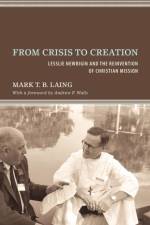
Lesslie Newbigin (1909-1998) was one of the seminal theologians of mission in the twentieth century, and perhaps the most important in the English-speaking world. His thinking was anchored in the practice of mission: he was a missionary in India, a bishop of the Indian church, and a leader in emerging international mission structures. In his late years, he pioneered research on how the gospel could engage with Western culture. For many he is the founding father of the missional church movement. This book is the first to address the crucial role Newbigin played in shaping ecumenical thinking on mission during the twentieth century, filling an important gap in our knowledge of the development of twentieth-century missional theology. It does so by seeking to answer a central question in Newbigin's thinking: How does ""mission"" relate to ""church""?Taking the integration of the International Missionary Council with the World Council of Churches as its central focus, this book provides a unique history of crucial events in the ecumenical movement. But more importantly, through a study of Newbigin's role in the theological debate, this book demonstrates how missional theology evolved during the postwar period when there was a ""sea change"" in understandings both of mission and church.
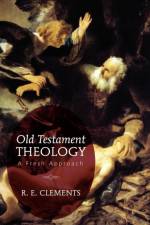
Synopsis:What is Old Testament Theology? For the past two hundred years Old Testament scholars have developed a distinctive presentation of the theological significance of this literature on the basis of a penetrating historical criticism. Increasingly, however, the form and structure of this discipline have moved away from other areas of theological investigation. The result is that today Old Testament theology bears little relationship to the historic ways in which Christians and Jews have actually found theological meaning in the Bible.Author Biography:R. E. Clements is Samuel Davidson Professor of Old Testament Studies at King''s College, London. His many books include Old Testament Prophecy, Studies in the Book of Isaiah, and Wisdom for a Changing World.
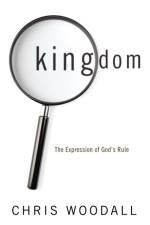
Synopsis:It has been said that history teaches us that history teaches us nothing. However true this may be in general terms, the fact that we so frequently look to the past in an attempt to shape our future by applying its lessons in the present suggests we remain keen to learn. In the context of the subject of this book, though the stalwarts of the faith can serve as tremendous examples, it is to the lessons of Scripture that we must turn if we are to have a better idea of what the kingdom of God is, what that means for us as believers, and how we can be better equipped to extend its values in today''s world. Thus, what we understand by the term "kingdom of God" will not only determine whether we believe ourselves to be its citizens, but also how we think we should conduct ourselves in the light of such knowledge. It is the contention of this book that the biblical concept of kingdom as the expression of God''s rule requires greater clarity of presentation in order to prevent it from confusion and/or distortion amongst Christians. Author Biography:Chris Woodall is former Associate Professor of Dogmatics at North-West University, South Africa. He is the author of Covenant: The Basis of God''s Self-Disclosure (Wipf & Stock).
Synopsis:The concept and institution of priesthood in the Catholic Church has been the subject of serious challenge not only since the time of the Protestant Reformation but also, more recently, from within the Catholic Church, as the Second Vatican Council (1962-1965) and theologians afterward have reconsidered the place and function of priests in relation to both bishops and laity. In dialogue with those challenges, and by means of research into Scripture and the theological tradition--patristic, medieval, and modern--the author of this book considers classic images of priests and priestly ministry as a way of recovering an understanding of the priesthood that is at once both biblically and theological sound.Endorsements:"The renewal of church life at the Second Vatican Council was facilitated by ressourcement, the return to the ancient sources of the Christian faith. Porter puts ressourcement to good use in the study of priesthood in the Old Testament, enriching our understanding of the priesthood in the church today."--Paul Langsfeld, pastor of St. Stephen Martyr Parish, Washington, D.C. "Porter provides here a sweeping survey of the theology of priesthood . . . drawing from both recent magisterial documents as well as the best contemporary theology, this book not only delineates and dissects the numerous ''assaults on priesthood'' of our day, it provides powerful and persuasive solutions as well."--David Vincent Meconi, Saint Louis University"The Assault on Priesthood is erudite, very readable, with just a touch of wry humor. He digs deep into the scriptures and into the history of the church to explicate a theology of the priesthood that is thoroughly Catholic. He has spent the last twenty-five years educating candidates for the priesthood. It''s easy to see where his passion comes from."--James A. Hamel, Air Force Chaplain Corps College"A work of great erudition"--Charles Gusmer, former president of the North American Liturgical Academy Author Biography:Lawrence B. Porter, PhD, a priest of the Archdiocese of Newark, is currently Professor and Chair of the Department of Systematic Theology in the Seminary School of Theology at Seton Hall University in South Orange, New Jersey. He is the author of A Guide to the Church: Its Origin and Nature, Its Mission and Ministries (2008).
Synopsis:Inward and Outward Health is the first interdisciplinary scholarly collection to provide an in-depth and new perspective on the medical and scientific activity of one of the eighteenth century''s most successful and controversial theological figures, John Wesley. These essays, written by established scholars in the field, convincingly correct a persistent view of Wesley as an irresponsible religious enthusiast who confused medical science and theology. The reader is given here instead a picture of someone who was a crucial admirer of Enlightenment principles: a deeply pious individual who could minister to the physical and spiritual welfare of the poor, applying remedies for the body or prayer for the soul as and when appropriate.Endorsements:"This collection of six essays unfolds the remarkably modern holistic approach to human health--physical, psychological, and spiritual--seen in the thought and practice of John Wesley in the eighteenth century. Grounded in a study of the natural philosophy and medical remedies from over two centuries ago, the authors examine not only the historical context but also the continued relevance of many of these scientific and religious approaches in the present day. Trained in various fields of science and religion, these writers bring a lively sense of contemporaneity to a wide variety of areas such as prayer and healing, spiritual senses and ecological concerns, body and soul, life and death. This collection, under the expert eye of Deborah Madden, makes a major contribution to a growing field of historical inquiry that rightfully attracts contemporary attention."--Richard P. Heitzenrater, William Kellon Quick Professor of Church History and Wesley Studies, Duke University"This is a superb collection of interdisciplinary research papers which illuminates not only the figure of John Wesley, but also religion and medical science more generally in the eighteenth century. In the eighteenth century, as now, people did not live their lives in narrow academic disciplines, and we miss so much when we study John Wesley only as a religious figure, or study the history of science as though it proceeded without reference to religious conviction. This book will do much to put Wesley back into the full context of the eighteenth century in all its richness. It also shows the relevance of Wesley''s holistic understanding of the human person for us all today. I used to get cheap laughs from audiences by quoting quaint remedies in Wesley''s Primitive Physick, especially those that involved ''electrifying'' the patient. No more! Now I will argue that John Wesley was the pioneer of the electrotherapy techniques used by my physiotherapist."--Bruce Hindmarsh, James M. Houston Professor of Spiritual Theology, Regent CollegeAuthor Biography:Deborah Madden is a Postdoctoral Research Fellow in the Theology Faculty at the University of Oxford. She has written several articles on religion, medicine, and culture in the eighteenth century, as well as a monograph examining John Wesley''s medical activity.
Abonner på vårt nyhetsbrev og få rabatter og inspirasjon til din neste leseopplevelse.
Ved å abonnere godtar du vår personvernerklæring.