










Gjør som tusenvis av andre bokelskere
Abonner på vårt nyhetsbrev og få rabatter og inspirasjon til din neste leseopplevelse.
Ved å abonnere godtar du vår personvernerklæring.Du kan når som helst melde deg av våre nyhetsbrev.

Dear to the hearts of many Christians is the land of the Bible, which today is convulsed by strife. Contradictory claims about the past, present, and future of this land can bewilder us. The essays in this volume invite Christians of every denomination to share in perspectives that are solidly grounded in Scripture and tradition, yet serve as alternatives to the currently prevailing approaches. A Lutheran, two Roman Catholics, two Episcopalians (one of whom is also a member of the American Baptist Church), an Eastern Orthodox Christian, and a Congregational (United Church of Christ) pastor explore the ramifications, for today's ongoing crisis, of ancient Israel's Covenant, of the early church's theological insights, and of the post-Reformation experiences of various branches of Christianity.
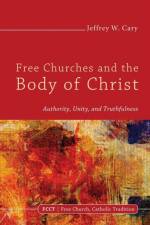
Those within the free church tradition have often appealed to the notion of the invisible church to account for the unity of the Body of Christ. A growing number of free church theologians, however, are giving increased attention to the importance of visible ecclesial unity, which immediately raises the perennial problem of the authorities by which unity is maintained. There is also a growing recognition among free church theologians of the need to recognize the authority of tradition in tandem with the authority of Scripture. In this book, Cary affirms these recent developments but then inquires whether a turn toward visible unity, together with an embrace of the authority of tradition, can eventually be coherent without also embracing the authority of an extra-congregational teaching office.To guide his study, Cary engages the work of two theologians from outside the free church tradition: Robert Jenson and Rowan Williams. He then brings them into contact with the prominent free church theologian James McClendon in order to supplement some of the deficiencies Cary perceives in McClendon's groundbreaking work. Once these deficiencies are addressed, however, the question intensifies whether the free church tradition, as such, can remain a coherent ecclesial option over time.
In this serial work of religious historical fiction, Magda, a "fallen woman" from Berlin turned maidservant in the house of Soren Kierkegaard, seeks the full life that has thus far eluded her. Two journals set in the summer of 1847 record Magda's responses to the Luther Bible, Goethe's Faust, and her elusive yet compelling master, who is simultaneously crafting his Works of Love. Three journals set in the fall, winter, and "people's spring" of 1847 and 1848 reflect Magda's ongoing engagement with secular and sacred writings, her sporadic yet intimate interactions with her master, the precariousness of her position in his household, and the rapidly changing social landscape, at the same time as Kierkegaard begins, revises, or completes several of his most existential and prophetic works. A sixth journal set in the summer of 1848 reveals Magda's final disposition. Is she judged, or is she saved?
Kierkegaard was a prophet who critiqued "Christendom," the perversion of authentic, New Testament Christianity into the institutionalized, materialistic, triumphalist, and flabby religion of modernism. Emergent Christianity is attempting to carve out a more authentic way of being Christian and doing church within--and beyond--the ineffectual, institutionalized church of modernity. In many ways, Kierkegaard's critiques, concerns, and goals overlap with emergent Christianity and the emerging church. For the first time, this book brings Kierkegaard into a dialogue with various postmodern forms of Christianity, on topics like revelation and the Bible, the atonement and moralism, and the church as an "apologetic of witness." In conversation with postmodern philosophers, contemporary theologians, and emergent leaders, Kierkegaard is offered as a prophetic voice for those who are carving out an alternative expression of the New Testament today and attempting to follow Christ through works of love.
Religious themes, concepts, imagery, and terminology have featured prominently in much recent science fiction. In the book you hold in your hands, scholars working in a range of disciplines (such as theology, literature, history, music, and anthropology) offer their perspectives on a variety of points at which religion and science fiction intersect. From Frankenstein, by way of Christian apocalyptic, to Star Wars, Star Trek, Battlestar Galactica, and much more, and from the United States to China and back again, the authors who contribute to this volume serve as guides in the exploration of religion and science fiction as a multifaceted, multidisciplinary, and multicultural phenomenon.
Since its inception, the discussion surrounding Open Theism has been dominated by polemics. On crucial philosophical issues, Openness proponents have largely been devoted to explicating the underlying framework and logical arguments supporting their perspective against competing theological and philosophical perspectives. As a result, very little constructive work has been done on the interconnections between Open Theism and the natural sciences. Given the central place of sciences in today's world, any perspective that hopes to have a broad impact must necessarily address such disciplines in a sustained and constructive manner. To date such engagements from the Openness perspective have been rare.God in an Open Universe addresses this deficiency. This book demonstrates that Open Theism makes a distinctive and highly fruitful contribution to the conversation and constructive work occurring between philosophy, theology, and the sciences. The various essays explore subjects ranging from physics to prayer, from special relativity to divine providence, from metaphysics to evolution, and from space-time to God. All who work at the intersection of theology and the sciences will benefit greatly from these essays that break new ground in this important conversation.
Description:While many in the criminal justice system would agree that the present punitive system of crime control is ineffective, unjust, and malevolent, there is little enthusiasm for talk about reforming the system or for a reexamination of its fundamental premises. In Justice as Sanctuary, noted Dutch criminologist Herman Bianchi details a new approach to crime control, one that promises to reanimate debate and initiate real change. He explores the cultural and religious roots of the current punitive system in search of new perspectives that can help create a more just and effective one. In the ancient Hebrew notion of tsedeka ("justice" or "righteousness"), Bianchi finds the inspiration for a new model of crime control based on conflict resolution rather than punishment. Because so many feel alienated from the criminal justice system, he argues for new procedures that will enable people to experience law as supportive of their lives and their social interactions. To complement the current punitive system, Bianchi proposes a system that provides victims and offenders a chance to resolve their conflicts and offers them the opportunity to reach non-punitive systems. By incorporating the concept of liability, Bianchi's model returns to offenders the responsibility for their acts while providing an active legal role for the victims of crime. It adapts structures and models from civil and labor law for conflict resolution of nonviolent crimes, and in the case of violent crimes, and in the case of violent crimes, proposes the creation of special "sanctuaries" that would protect the public while making it possible to effect true justice. Startling in its implications, Bianchi's system is not a utopian dream, but a carefully considered set of proposals that could be acted upon today.About the Contributor(s):Herman Bianchi was former Professor of Criminology and former Dean of the Law School of the Free University of Amsterdam.
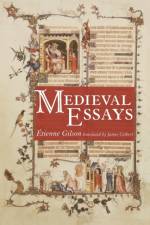
This book is a collection of nine articles by the twentieth century's leading medievalist, Etienne Gilson. A major participant in the revival of Thomistic philosophy, Gilson was a member of the French Academy and, after a university career culminating at the Sorbonne and the College de France, he turned down an invitation from Harvard University to become the guiding spirit of the Pontifical Institute of Medieval Studies at the University of Toronto for several decades. Several of the articles stand on their own as making a significant contribution to topics like St. Anselm's ontological argument for the existence of God. Likewise, ""The Middle Ages and Naturalism"" contrasts Renaissance Humanists and Reformers with the medievals on the defining issue of their attitude toward nature in order to understand who actually stands closer to the ancient Greeks.All of the articles give an insight into the great synthetic visions articulated by the better-known works of Gilson like The Spirit of Medieval Philosophy. We see Gilson's meticulous spadework for the broader theme of Christian philosophy in his examination of the Latin Averroist Boethius of Dacia's book on the eternity of the world. Gilson finds that Boethius never expresses the view attributed to Latin Averroism that there are contradictory truths in religion and philosophy, although he does think that Boethius is unsuccessful in his account of the relations between philosophy and theology. The opening piece revisits a battle now won (and won in great measure by Gilson's efforts), namely the fight to acknowledge the very existence of medieval philosophy and win its place in the academic world. But the article also makes the effort--which becomes a connecting thread throughout the nine articles-to pinpoint the uniqueness of what Gilson calls Christian philosophy. The closing article studies the profound influence of the great Muslim thinker Avicenna on Latin Europe drawing a parallel between Avicenna's work and that of the great Christian medievals like Thomas Aquinas and Duns Scotus.When Gilson died in 1978, a great deal of his work on the history of philosophy, and specifically God, the primacy of existence or esse over essence, and the impact of Christianity on philosophy had been translated. A significant amount of material, however, has not yet appeared in English. The publication of Medieval Studies represents a vital step in bringing these important works into the English-speaking world.
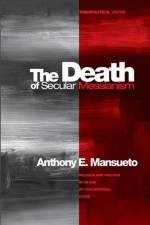
The Death of Secular Messianism argues that, the claims of secularists notwithstanding, modernity did not so much abandon humanity's historic search for the divine, but rather transposed it into a new, innerworldly key. This "secret religion of high modernity" came in both positivistic and humanistic variants. The first sought to overcome finitude by means of scientific and technological progress. The second sought to overcome contingency by creating a collective Subject--the Modern Democratic State or the Communist Party--in and through which human beings would become the masters of their own destiny. In making his case for this thesis, the author outlines a new political-theological and social-theoretical perspective which saves what is best in modernity--its focus on human creative activity and its commitment to rational autonomy and democratic citizenship--while re-engaging humanity's great spiritual traditions.
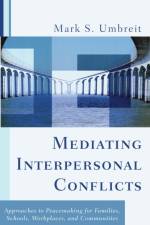
Description:Conflict is a normal and predictable part of life. How we respond to it, however, determines whether or not the conflict will be destructive. Mediating Interpersonal Conflicts is an up-to-date presentation showing how the techniques of negotiation and mediation can be applied in resolving a wide range of conflicts in families, communities, schools, and workplaces. Dr. Umbreit not only clearly outlines the communication, negotiation, and mediation skills involved in effective resolution of interpersonal conflict, he moves the reader beyond the mechanics of mediation to what he calls "a journey of the heart" through a humanistic mediation model that addresses the emotional context of the conflict. Endorsements:"Rather than a narrow 'techniques' approach to conflict resolution, Mark Umbreit provides readers with a broad understanding of the 'whys' of mediation. This is the heart and voice of a dedicated practitioner as well as a skilled observer."--Terry Amsler, Executive Director, The Community Board Program, San Francisco"An excellent introduction to mediation and a firstrate teaching device."--Lois Gold, M.S.W., Past President, Academy of Family Mediatorsauthor, Between Love & Hate: A Guide to Civilized Divorce"Clear, comprehensive and practical. Anyone working with people problems should have this book at their fingertips."--Dr. Thomas F. Christian, Unified Court System, State of New York, Director, Community Dispute Resolution Centers Program"In highly readable prose, Dr. Umbreit articulates a clear set of values for an approach to mediation that enhances the participants' humanity and educates and equips people for changed behaviors and transformed relationships."--Dean Peachy, Program Director, The Network: Interaction for Conflict Resolution, Waterloo, Ontario, CanadaAbout the Contributor(s):Mark Umbreit is the founding Director of the Center for Restorative Justice & Peacemaking at the University of Minnesota, School of Social Work. He also serves on the faculty of the Marquette University Law School in Milwaukee and on the faculty of the Center for Spirituality and Healing in the U. of Minn. Academic Health Center. He has served as a Fellow of the International Centre for Healing and the Law in Kalamazoo, Michigan. Dr. Umbreit is an internationally recognized practitioner and scholar with more than 35 years of experience as a mediator, trainer, researcher, and author of six books and numerous articles in the ¿elds of restorative justice, mediation, and peacemaking. He has conducted training seminars and lectures throughout the world. As a practitioner, he specializes in facilitating dialogue between family survivors/victims of severe violence, primarily homicide, and the offender. He is the author of Facing Violence: The Path of Restorative Justice & Dialogue, which reports on the ¿rst multi-site study of victim/offender mediation and dialogue in crimes of severe violence.
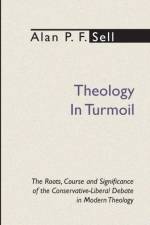
In Theology in Turmoil Alan Sell examines the controversy between conservatives and liberals. The perennially important question What is the Christian gospel? was, writes the author, thrust to the fore in that debate between theological conservatives and liberals which was at its height between 1890 and 1930, and of which echoes may be heard to this day. In this book I seek to trace the roots of this debate, to outline its course, and draw some lessons from it.
This book views the triune God from a Pentecostal viewpoint. In so doing, it offers a fresh articulation of the theology of the Trinity that starts with Pentecost and with the Spirit. It concludes that the Trinity cannot be adequately appreciated using any single model--whether social, modal, or psychological. Instead, it presents three models--relational, instrumental, and substantial--that need to be held in paradoxical tension with one another. Of these, the relational is the foremost. Pentecost offers rich potential for seeing these relations between the Father, the Son, and the Spirit as a dynamic reciprocal "dance" in which each person empties self in order to exalt the other.
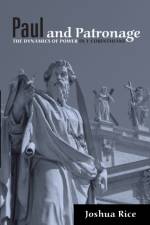
The question of how leadership and authority functioned in the Pauline church remains one of the most polarizing issues in New Testament scholarship today. On the one side are egalitarian and counterimperial readings that stake their interpretation of the liberating gospel upon a depiction of the Pauline church as radically countercultural with regard to leadership and authority. On the other side are authoritarian readings that just as easily conceive of Paul as fully embedded within the cultural conceptions and structures of leadership and authority in vogue across the Greco-Roman world. This study employs social-science criticism to construct a model of ancient patronage conventions and power-exchange dynamics in the Greco-Roman world, and this model is then applied to 1 Corinthians. This study finds that when Paul addresses his own apostolic relationship to the Corinthians, he tends toward reinscribing traditional hierarchies, but that when Paul addresses relationships between participants of the Corinthian assembly, he tends toward overturning them.
The parable of the Rich Man and Lazarus (Luke 16:19-31) seems to condemn the rich man to torments in Hades for no other apparent reason than his wealth and to reward poor Lazarus with bliss at Abraham's side for no other apparent reason than his poverty. Is divine judgment simply a matter of eternal reward for the poor and condemnation for the rich, a mathematical function inversely proportional to one's financial net worth? Or taken another way, is not the rich man's prosperity a tangible sign of divine blessing for a life well lived, and the poor man's misery an obvious sign of a divine punishment for a life of moral bankruptcy? But if this were true, then why would God reverse the eternal fates of these men upon their deaths?The parable of the Rich Man and Lazarus is one of seven ""money-lover"" parables in the Lucan Travel Narrative that addresses the issue of whether it is possible to be both rich and Christian--and if so, how so? When read utilizing the socio-narratological approach employed in this book, these parables come alive with new insights and implications for living a more authentic Christian discipleship.
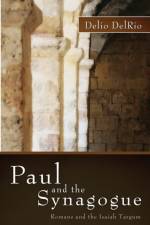
Delio DelRio offers a fresh perspective on the contemporary quest for Paul by doing the hard work to uncover the milieu few have attempted to integrate into our understanding of Paul--the Jewish synagogue. By all accounts, Paul was centered in the synagogue. Paul himself in his own letters indicates his synagogue priority in preaching the gospel, and the narrative of Acts corroborates this emphasis. We have a window into that synagogue world, says DelRio, in the literature of the Targums. DelRio uses a study of Jewish interpretive traditions in the Isaiah Targum to uncover an internal debate in the synagogue over the role of the Gentiles in the coming messianic kingdom. When Paul coined the phrase "obedience of faith" in Rom 1:5, a phrase found only in Romans in all of ancient literature, little did we realize, DelRio shows, that with this coined phrase at a crucial rhetorical juncture in Romans, Paul was plunging headlong into this synagogue debate with his own solution to this synagogue conundrum in his hermeneutic of the gospel of Jesus Christ.
Subversive Meals examines the Lord's Supper within the sociopolitical context of first-century Roman domination, and concludes that it was an anti-imperial praxis.Although the Christian communal meal looked much like a typical Roman banquet in structure, with a deipnon and a symposion, it was essentially different. The Roman meal supported the empire's ideology, honored Caesar and the gods, reinforced stratification among the masses, and upheld Rome's right to rule the world. The Christian meal, on the other hand, included hymns that extolled Jesus as Lord, prophecies that challenged Rome's ideological claims, and letters--read aloud--that promoted egalitarianism and instructed believers on how to live according to kingdom of God principles. Hence, the Christian banquet was an act of nonviolent resistance, or what James C. Scott calls a ""hidden transcript.""
For the first time, the Gospel material unique to both Matthew and Luke is brought together into one volume--in both Greek and English. For more than a century, New Testament scholars have asserted that Matthew and Luke drew on sources in addition to Q and Mark during the composition of their Gospels. For convenience, the non-paralleled material in Matthew has traditionally been labeled "M," and the non-paralleled material in Luke has traditionally been labeled "L." We learn only from Matthew, for example, particular stories like Joseph and Mary's escape to Egypt and the Great Commission; from Luke stories like the Prodigal Son and Jesus' appearance on the Emmaus road. Studying the material unique to each Gospel in isolation from their narrative contexts will allow students and scholars alike to engage these stories on their own. In this book, the individual special pericopae from Matthew and Luke are collected and arranged in Greek and English in the order in which they appear in the Greek New Testament. An introductory essay is provided to introduce readers to the Synoptic Problem, the notions of M and L and where they come from, what the parameters are for selection, and the critical debate, so that readers know how the selections were made and what is being asserted by their inclusion. This book will be a wonderful teaching tool for seminary and university professors, and will facilitate student engagement with distinctive Matthean and Lukan stories. It will also be a valuable resource for New Testament scholars doing research on this special material, since having it all in one place will no longer require them to search for the distinctive passages among the larger Gospel narratives.
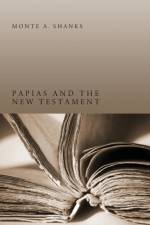
Who was Papias, who did he know, and what did he believe about the writings that now comprise the canonical New Testament? Very little can be objectively known about him, his ministry, and his work, and yet he demands the attention of any scholar, student, or layperson who desires to understand the origins of the New Testament. This book explores Papias as a source and what he wrote about the origins of certain New Testament books. It also analyzes what other patristic and medieval authors understood about him. Shanks argues that the surviving ""Fragments of Papias"" are indeed a valuable resource because they document a very early Christian belief that certain books of the New Testament originated from some of the original followers of Jesus Christ. This evidence cannot be quickly dismissed in proposals about the origins of these books.
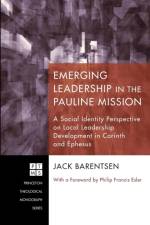
Where did Paul find leaders for his new churches? How did he instruct and develop them? What processes took place to stabilize the churches and institute their new leadership? This book carves a fresh trail in leadership studies by looking at leadership development from a group-dynamic, social identity perspective. Paul engages the cultural leadership patterns of his key local leaders, publicly affirming, correcting, and improving those patterns to conform to a Christlike pattern of sacrificial service. Paul's own life and ministry offer a motivational and authoritative model for his followers, because he embodies the leadership style he teaches. As a practical theologian avant la lettre, Paul contextualizes key theological themes to strengthen community and leadership formation, and equips his church leaders as entrepreneurs of Christian identity. A careful comparison of the Corinthian and Ephesian churches demonstrates a similar overall pattern of development. This study engages Pauline scholarship on church office in depth and offers alternative readings of five Pauline epistles, generating new insights to enrich dogmatic and practical theological reflection. In a society where many churches reflect on their missional calling, such input from the NT for contemporary Christian leadership formation is direly needed.
The history of the Jesus movement and earliest Christianity requires careful attention to the characteristics and peculiarities of oral and literate traditions. Understanding the distinctive elements of Greco-Roman literacy potentially has profound implications for the historical understanding of the documents and events involved. Concepts such as media criticism, orality, manuscript culture, scribal writing, and performative reading are explored in these chapters. The scene of Greco-Roman literacy is analyzed by investigating writing and reading practices. These aspects are then related to early Christian texts such as the Gospel of Mark and sections from Paul's letters.
The church is one of the most intriguing and significant institutions on earth. Because its essence and character are so widely misunderstood, this is a timely book. The church is not a mere human institution, though it is made up of human beings in community. Its roles and responsibilities are momentous, but all the elements of its organization came about as the church developed and attempted to fulfill its divine mandate, not as forms given at its founding. These papers from a Bingham Colloquium at McMaster Divinity College treat the church "then" in studies of the church in the various parts of the New Testament canon, followed by a historical study of the church under attack in places where it did not survive. The latter part of the book contains essays by several church practitioners from "now" who discuss their insights about and experiences with postmodern society, home churches, megachurches, and the missional church. Such a combination of biblical theology, history, and practice makes this a valuable book for scholars and practitioners, in fact, for all thinking members of the church founded by Jesus Christ.
Now a classic work in communication of the gospel to all people has been revised and updated to make it even more vital to contemporary needs. J. E. Conant's Every Member Evangelism remains a stirring call to arms to all Christians, a call back to the divine program given by Jesus to evangelize the world. It is a manual of arms as well, showing why and how every church can fully mobilize every member in the service of Christ and his message. In this revision, Roy J. Fish completely updates the language and substitutes new examples more in line with present-day experience. Conant's vision and fervor are intact. Just as Every Member Evangelism was the standard work for the growing church of an earlier day, this new version comes at a time when the need for it has never been greater.
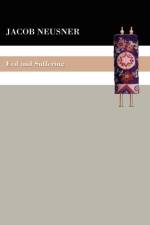
Do Hindus, Buddhists, Christians, Jews, and Muslims tend to experience pain in fundamentally different ways? Are suffering and human evil equally difficult problems in these particular religious traditions? How is each person to deal with or overcome suffering?In Evil and Suffering, acknowledged experts in each religion offer clear answers to these and similar questions. Through their discussions, the history and diversity of the traditions are also revealed.In this volume, editor Jacob Neusner address the topic from the standpoint of Judaism, Bruce Chilton presents the perspective of Christianity. Jonathan Brockopp discusses Islam, Brian K. Smith presents Hinduism, and Charles Hallisley discusses Buddhism.
- How could Jesus have preexisted his conception and birth? - What does the incarnation really mean? - How important is the virgin birth? - Would it have been possible for Jesus to sin? - Could Christianity get along without the cross? - Why should I believe in the bodily resurrection of Jesus? - What is Jesus doing for me now? Dr. Bruce Demarest answers these and many other questions relating to Jesus Christ, the God-Man. He shows that the truths the Bible teaches about Jesus are much more than theoretical or theological concerns. They are basic to the Christian faith-basic to your own faith.
Results May Vary addresses the unspoken assumptions and unquestioned expectations about what it means to be a Christian woman in a complex world. Far from offering a simple checklist or selling advice, this collection of essays weaves together a rich variety of voices--from women of different ages, backgrounds, professions, disciplines, and life choices--speaking honestly about the unexpected yet grace-infused twists and turns of life that exude the faithfulness of God in every unanticipated detail. For young women in their twenties and thirties tackling post-college life, Results May Vary offers the wry and diverse stories of real women grappling with real-world issues like friendship, health, money, ambition, vocation, marriage, motherhood, sexuality, and spiritual life.
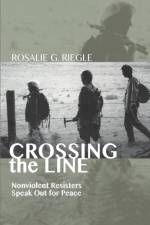
""'Of course, let us have peace,' we cry, 'but at the same time let us have normalcy, let us lose nothing, let our lives stand intact, let us know neither prison nor ill repute nor disruption of ties . . .' There is no peace because there are no peacemakers. There are no makers of peace because the making of peace is at least as costly as the making of war--at least as exigent, at least as disruptive, at least as liable to bring disgrace and prison and death in its wake."" Daniel Berrigan, No Bars to ManhoodMore than sixty-five peacemakers have contributed oral narratives to this compelling history of those who say no to war making in the strongest way possible: by engaging in civil disobedience and paying the consequences in jail or prison. Crossing the Line gives voice to often neglected social history and provides provocative stories of actions, trials, and imprisonment.This fascinating volume serves as an excellent supplement to conventional histories. Almost all the storytellers here are people of faith or are inspired by those who live by faith. Many work at conventional careers; some do full-time peacemaking by living in Catholic Worker houses or in the Jonah House community; several are priests and nuns who minister worldwide. Also featured are three resisters prominent in War Resisters League history.From World War II conscientious objectors to contemporary activists, these narrators have refused to be helpless in the face of a violent world, and have said with their bodies that they do not accept the status quo of permanent war and war preparation. In short, the voices illustrate hope at a time when it seems in short supply.
Eternal blessedness for all? This work shows how the acclaimed father of modern theology, Friedrich Schleiermacher, brilliantly approached this problem. It took many twists and turns of historical and philosophically minded analyses, however, for him to get to a theologically appropriate answer. This book unpacks those efforts in manageable form, based on a close examination of a pivotal 1819 essay, On the Doctrine of Election; his masterpiece, Christian Faith; sermons; and other related sources. Schleiermacher was the first modern theologian of stature to endorse the universal restoration of all humanity. This study also displays the historical, ecumenical, and doctrinal contexts in which his views were fashioned. It takes a careful look at the contemporary reception of his heterodox, universalist reinterpretation of the traditional Reformed doctrine of double predestination and of Lutheran alternatives, showing that his public stance was, in fact, rather ambiguous, for reasons made clear here. Finally, it examines reasons for his failure to convince contemporary theologians and concludes with an assessment of his interpretation of the doctrine of the one eternal divine decree of universal election in view of current interests in theology.
Created in Delight challenges the church to take seriously the relationship of human beings with the earth and their fellow creatures. It challenges communities of faith to construct youth and young adult ministry through an ecological hermeneutic. Van Meter includes narratives from his youth work and teaching as well as ecological theology and an exploration of contemporary ecological concerns. He challenges youth and young adult ministers to seek their own formation through practicing hope in resistance to despair as they engage ecological questions in partnership with young people. The book concludes by asserting that cultivating curiosity, compassion, resilience, wisdom and other virtues is essential for the continuing health of young people and faith communities.
Description:When considering and confronting the problem of evil, we may be asking the wrong question: Why is there evil in the world if God is good and powerful? It may be wrong because it smuggles in an unbiblical premise: God can and should use his coercive power to relieve suffering since he is both good and able. But what if coercive power does not work to accomplish God's goals? This book is an investigation into the possibility that the noncoercive power of the Cross must be at the center of this issue, and that the Cross could reform this question. We could ask, instead, How is God destroying evil and suffering--and why is he taking so long? The answer to this reframed question might be: He is using evil and suffering to destroy evil and suffering for His People; this is how long it takes. While not a "solution" to the problem of evil, could this help us learn to delight in God in a world in which evil and suffering seem at times so relentless?Endorsements:"Shenk's book belongs firmly in the field of theological responses to evil and suffering. . . . [It] presents us with a meditation that is philosophically acute, intellectually rigorous, and historically informed. It is also honest and humble, not offering a 'solution,' but a series of theological proposals based on a profound reflection on Scripture, a deft handling of philosophical concepts, and a careful consideration of a great breadth of the Christian theological tradition."--From the Foreword by Simon Oliver"Understanding God's purpose for suffering has been a source of mystery for many Christians. This book leads the reader down the road of reality between the guardrails of hope and joy."--Michael Frank Sabo, President, Christian Leadership Institute"The Wonder of the Cross is a bold and provocative exploration of the reality of evil and suffering in light of the character and purposes of God. . . . This is a Christ-centered and cross-centered proposal. It is both philosophically astute and historically grounded. But above all, Shenk is biblically shaped, pastorally relevant, and hope-filled. While not everyone will agree with every part of Shenk's proposal, all will profit from engaging with this discussion of the power of the cross and its role in the conquest of evil and suffering."--Steven C. Roy, Associate Professor of Pastoral Theology, Trinity Evangelical Divinity SchoolAbout the Contributor(s):Richard Shenk (PhD, University of Wales, Lampeter) is an Adjunct Professor at Bethlehem College and Seminary where he teaches theology and a pastor at Village Church (both in the vicinity of Minneapolis, Minnesota).
Description:C. S. Lewis--On the Christ of a Religious Economy I, Creation and Sub-Creation opens with Lewis on creation, the fall into original sin, and the human condition before God and how such an understanding permeated all his work, post-conversion. For Lewis, Christ, the second person of the Trinity, is the agent of creation and its redeemer. This leads into Lewis's representation through sub-creation: explaining salvation history and the purpose of the creation and the creature through story (The Chronicles of Narnia, The Space Trilogy, Screwtape, etc.), but also the question of multiple incarnations, and the encounters he pens between Aslan-Christ and creatures. What does this tell us about the human predicament and our state after the fall?This volume forms the first part of the third book in a series of studies on the theology of C. S. Lewis titled C. S. Lewis: Revelation and the Christ. The books are written for academics and students, but also, crucially, for those people, ordinary Christians, without a theology degree who enjoy and gain sustenance from reading Lewis's work.Endorsements:"In this truly wonderful book, Brazier . . . shows us how Lewis, a gifted storyteller, was able to appropriate the Hebrew creation account as a symbolic telling of a fundamental truth about the human condition. In the process, the reader is shown how classical Christian orthodoxy is upheld. . . . A pleasure to read for theologians and literary aesthetes alike."--Gerald L. Bray, Research Professor of Divinity, Beeson Divinity School"Like Lewis, Brazier casts a wide net, and his book is intended to appeal not only to students and theologians but also to the general reader. Never bogging down in obscure theological and philosophical discussion, Brazier leads us unerringly through the subtlety and rigor of Lewis' mind and imagination. . . . C. S. Lewis--On the Christ of a Religious Economy, 3.1 is an invaluable resource for literature as well as theology teachers."--Suzanne M. Wolfe, Professor of English, Seattle Pacific University"Brazier's work on the revelation of God in Christ will appeal to a very broad readership: academics and ministers, low church and high church, Lewis experts, and those exploring Lewis for the first time. Brazier's lucid and sympathetic explanations of Lewis' thought and theology provide an enormously valuable contribution to the existing corpus of Lewis studies."--Lucy Peppiatt, Dean, Westminster Theological Centre"As interest in and acclaim for the work of C. S. Lewis burgeons forth into a second century, more deeply rooted, systematic theological inquiry into the work of Lewis is essential. We are fortunate that Brazier answers this call for careful and contextualized analysis of Lewis' theology admirably and comprehensively in his ambitious and erudite series."--Bruce L. Edwards, Professor Emeritus of English and Africana Studies, Bowling Green State UniversityAbout the Contributor(s):P. H Brazier is an independent theologian and scholar living in London. He is the author of Barth and Dostoevsky (2008), and editor of the late Colin E. Gunton's The Barth Lectures (2007) and Revelation and Reason (2009).
Abonner på vårt nyhetsbrev og få rabatter og inspirasjon til din neste leseopplevelse.
Ved å abonnere godtar du vår personvernerklæring.