










Gjør som tusenvis av andre bokelskere
Abonner på vårt nyhetsbrev og få rabatter og inspirasjon til din neste leseopplevelse.
Ved å abonnere godtar du vår personvernerklæring.Du kan når som helst melde deg av våre nyhetsbrev.

From all corners of the world, both inside cities and in the remote countryside, the cry for ""just peace"" rings out loud and strong. But, as many will note in this book, the cry for just peace isn't enough, for just peace requires active faith, working hands, and willing hearts.Gathered in this volume are essays written from a wide variety of perspectives, religious traditions, nationalities, and ages (from a sixteen-year-old high school student to an eighty-four-year-old senior professor) that seek to offer insight toward answering one question: How are ""just peacemaking,"" faith formation, and discipleship connected within a twenty-first-century context?
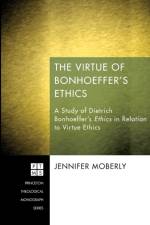
Does Dietrich Bonhoeffer's Ethics have any affinities with what we have now come to call virtue ethics? If so, what is the relationship between those affinities and the more widely recognized influence of Karl Barth? Moberly seeks to answer these questions through close analysis of the Ethics and engagement with other interpreters of Bonhoeffer, while discussing the nature of virtue ethics in a Christian context. The answers may be surprising, but they are certainly rewarding for anyone wanting to better understand Bonhoeffer and to see how his work could be helpful for current ethical debates.
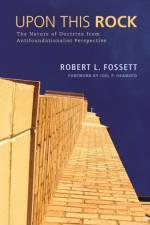
Nearly thirty years ago, George Lindbeck wrote his seminal and highly influential work The Nature of Doctrine. Since that time, there has been no serious attempt at moving beyond the problems he lays out, in particular the problem of foundationalism. Upon This Rock is not merely a response to George Lindbeck's important work; it is an attempt to show how theology and religious discourse can truly move past the particular problems posed by foundationalism--the assumption of and search for so-called objective and universal standards--by looking at just one important discussion within the field: the modern discussion on the nature and function of doctrine. Upon This Rock offers an account of doctrine--an account that includes such topics as the authority of Scripture, biblical interpretation, and the role of the Church and the nature of her doctrine, among others--that moves the Church past the problems of foundationalism and back to her one true rock: Jesus Christ, her Lord.
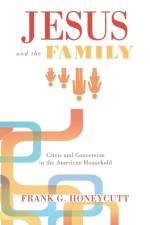
There are few more loaded words in American life than "family." Jesus grew up in one and honored his parents in fulfillment of the commandments. But his teachings on family life stand among the most jarring things he ever said. Jesus invites serious followers to "hate" mother and father. He predicts discipleship will bring division rather than peace to family life. He completely recasts the definition of kinship as "whoever does the will of God." In an era when families face unprecedented challenges sticking together for the long haul, Jesus's words at first glance seem to welcome disintegration of the Christian household rather than offering healing and a clear way forward. This book examines the off-putting words of Jesus in the wider context of radical allegiance and baptismal priority. In a country where family devotion is akin to honoring the national flag, Honeycutt unpacks an old word for a new generation of Christians called to place Jesus first in all things. It's only then that we'll be able to truly help those who share a common roof and lineage.
At the Heart of Luke is a unique contribution to Lucan studies focusing on the conspicuous concentration of Jesus' parables in chapters 14-16 of this gospel. Emmrich argues that this complex of texts forms the theological heart of Luke. The theme of reversal is the trademark common denominator of virtually all the stories and wisdom sayings assembled in this well-defined text unit. As such, it is key to the essential message of Luke's Gospel and furnishes the rationale for its inevitable climax, the great reversal of Jesus' cross. This study will prove to be of great benefit for students of Luke, especially those with a particular interest in the parables of Jesus that are unique to this Gospel.
How can one believe in an age of doubt? How can we name the mystery of God in human words? Does nature speak of the glory of God? Does science undermine faith? Is the problem of evil unanswerable? In this volume scientists, theologians, philosophers, as well as a historian and social scientist, take seriously the challenge of knowing and speaking about God in an age of doubt and challenge. All New Zealand writers, the authors reflect a variety of styles, inputs, and assumptions from "down under." Some look to answer new atheists directly, others point out links between belief and unbelief in any age. There are essays that show us new ways of reading old texts. Scientists reflect on nature, its signs, and its obscurity. We are confronted also with the mixed picture of belief and unbelief that the last few hundred years reveals to us. Most of these essays have come out of seminars and conferences put on by TANSA (Theology and the Natural Sciences in Aotearoa), a forum for discussion and interpretation amongst scientists and theologians in New Zealand.
Preaching is a personal event: a minister or speaker prepares his or her sermon and presents it to the congregation. Preaching, however, also includes the Bible as a central source; this source comes from and provides a basis for the believing community. The preaching event is also personal for the members of the congregation, who are not simply recipients of the preacher's words based on a biblical text. The congregation is involved personally in that each individual interprets the words and the text. What is said in the text, in the sermon, and the listener's response represent parts of each one's testimony. Testimony runs throughout preaching, the Bible, and the congregation. It is in this interchange of preacher, text, and listener that not just one testimony develops but many testimonies are present.
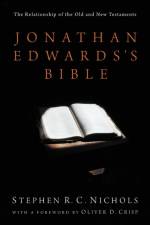
New England colonial pastor and theologian Jonathan Edwards (1703-58) was well aware of the threat that Deist philosophy posed to the unity of the Bible as Christian Scriptures, yet remarkably, his own theology of the Bible has never before been examined.In the context of his entire corpus this study pays particular attention to the detailed notes Edwards left for ""The Harmony of the Old and New Testament,"" a ""great work"" hitherto largely ignored by scholars. Following examination of his ""Harmony"" notes, a case study of salvation in the Old Testament challenges the current ""dispositional"" account of Edwards's soteriology and argues instead that the colonial Reformed theologian held there to be one object of saving faith in Old and New Testaments, namely, Christ.
The most popular source of theological hope for American Christians is that of Jurgen Moltmann. Preachers, teachers, and lay people reflect Moltmann's influence, with their hope in a this-worldly eschatology and a suffering God. However, an exclusive reliance on that hope deprives the church of crucial resources in the face of global economic, environmental, and military crises. This book explores Moltmannian hope and considers its costs before looking elsewhere for additional contributions, from Thomas Aquinas's theological virtue of hope to nihilism and beyond, in order to encourage the church to sustain and practice hope in Jesus Christ, our only hope.
Concerned to think intentionally about liturgy in Baptist life and thought, this book aims to address the practices of Christian worship in a theological light, examining how each brings individual Christian believers and communities of faith to a greater understanding and embodiment of the gospel. In this mode, worship becomes a seamless garment that forms disciples of Christ and opens out toward the world. In short, theology, worship, and mission all intersect in the liturgical life of the body of Christ. In addition to theological engagement with liturgical practices, Gathering Together links reflection to praxis by offering sample patterns as a guide for reenvisioning the shape of Baptist (and other free church) worship.
Personal and communal tragedies provoke intense emotions. In Scripture such emotions were given expression in complaints or laments. Such laments are the most frequent genre of psalm and are also found in the prophets and elsewhere in the Bible. The book of Lamentations is even named for this human response to tragedy. Yet neither lament nor complaint seems to be widely practiced in churches today, except at times of extreme communal catastrophe. Bringing together biblical scholars, liturgists, and practical theologians, this book begins to provide bridges between these worlds in order to enrich our ability to respond appropriately to personal and communal tragedy and to understand those responses.
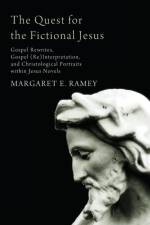
For almost two millennia, Jesus' story has been retold in various forms and fashions, but in the last century a new way of reimagining the man from Galilee and rewriting the canonical Gospels has sprung up in the form of Jesus novels. While the novels themselves are as varied as their authors, this work aims at introducing readers to some common literary strategies and theological agendas found in this rewriting phenomenon by surveying a few prominent examples. It also explores the question of what happens when we examine the intertextual play between these Gospel rewrites and their Gospel progenitors as we allow these contemporary novels to pose new questions to their ancient counterparts. An intriguing hermeneutical circle ensues as we embark on our quest for the fictional Jesus and accompany his incarnations as they lead us back to reexamine the canonical portraits of Jesus anew.
Jurgen Moltmann and others contend that Christian theology and the church face a dual crisis--one of relevance and the other of identity. Despite making this pronouncement nearly forty years ago, the church in the West continues to struggle with this crisis. Several proposals have been espoused, from the way of wisdom to the way of ecclesial praxis. Yet, little attention is given in Protestant theological discourse to the role God's beauty plays in bringing theology and ethics together. By neglecting God's beauty for theological discourse, we risk diminishing Christian worship, witness, and wisdom.God's Beauty-in-Act addresses these issues, in part, by arguing that the redemptive-creative suffering and glorious resurrection of Christ are the nexus of God's being, beauty, and Christian living. God's beauty, understood as the fittingness of the incarnate Son's actions in the Spirit to the Father's will, radiates God's glory and draws perceivers into the dramatic movements of God's triune life. These movements serve as the patterns that shape the imagination, enabling participants to perform their parts creatively and fittingly in God's drama of redemption. In doing so, human beings flourish as they jettison false identities and realities of their own making that are incommensurate with God's purpose found in Christ by the Spirit.
This book draws Soren Kierkegaard and Luce Irigaray into conversation on the nature and ethics of sexual difference. While these two initially seem like doubtful dialogue partners, the conversation between them yields a rich and compelling account of intersubjectivity between man and woman--an account that moves beyond the limited and tired debate over egalitarianism vs. complementarianism. Through engagement with Irigaray and Kierkegaard, this book develops a constructive, theological ethics of sexual difference that focuses on an epistemological and subjective gap that sets man and woman at a decisive distance from each other. They are a mystery to each other. Yet it is also an ethical framework that allows woman and man to encounter one another in ways that respect the independence, subjectivity, and becoming of each. Above all, this is a theological ethics of sexual difference that centers on Jesus Christ, who is defined as the middle term in every relationship and whose love command defines the encounter between man and woman in difference.
Paul's letter to Titus is one of the most neglected letters of the New Testament. Many have contended that it is an incoherent letter devoid of a theological message and purpose. This study proposes otherwise, presenting an entirely new structure for Titus that demonstrates how the theme "Exhort and Reprove to Commendable Works according to the Hope of Eternal Life" unfolds through the chiastic structures in the letter. Jeon not only demonstrates the unity of the letter but also invites the reader to explore other ways chiasms can be used to enhance New Testament interpretation. Any intrigued by Titus, and the Pastoral Letters as a whole, will discover herein a unique approach to the letter and a fresh and invigorating interpretation of its underlying message.
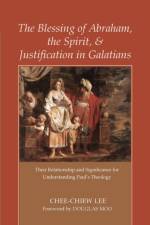
What has the Spirit to do with the blessing of Abraham and justification? This book challenges the common assumption that the Abrahamic blessing and the Spirit are equated in Gal 3:14 and points out how an accurate understanding of the relationship between these two motifs contributes significantly to appreciating Paul's overall argument in Galatians and his theology of justification. Even though Paul does not cite Old Testament passages on the promise of the Spirit in Gal 3:1-14, his arguments are nonetheless deeply influenced by the whole prophetic tradition about the Spirit. Most current discussions on the present and future aspects of justification have yet to consider the Spirit's role in the latter. Given the renewed interest in Pauline justification, this book contributes to this important aspect of the Spirit's role in future justification, which needs to be developed further in Pauline and New Testament theology.
Should Christianity's theological face remain largely European and North American in the twenty-first century in the wake of the expansion of Christianity in sub-Saharan Africa, Asia, and Latin America? The question about the "theological face" of Christianity cannot be ignored. For too long African, Asian, and Latin American theologians have been left out of mainstream theological discussions. Few standard textbooks on Christian theology acknowledge the unique contributions theologians from these continents have made to global Christianity. Introducing Christian Theologies: Voices from Global Christian Communities is a two-volume textbook that alters the predominantly European and North American "theological face" of Christianity by interacting with the voices of the Christian communities from around the globe. Introducing Christian Theologies explores the works of key theologians from across the globe, highlighting their unique contributions to Christian theology and doctrine.
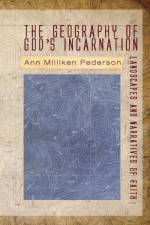
What does geography have to do with the incarnation of God and with our spiritual lives as Christians? We will embark on a theological road trip that explores how geographies are at the heart of understanding of God's incarnation in the world. It is no surprise to Christians that the center of the incarnation is the person of Jesus Christ--God in flesh made manifest. However, it might be a stretch for some Christians to imagine that the promise that God has become flesh is not only in a person but also in a place: in the creation. Christians need to expand what incarnation means and what it means to be created in the image of God so that the scope of God's creative and redemptive action and work indeed reaches to the scope of all things: from the outer reaches of space to the inner reaches of our hearts. To be the creatures of God that God calls us to be requires a kind of dual citizenship: within the details of our daily life, attending to the needs of our neighbors, simultaneously knowing we are part of a greater cosmos whose future is still unfolding.
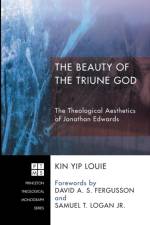
The eighteenth-century Puritan theologian Jonathan Edwards has become popular again in contemporary theological discussion. Central to Edwards' theology is his concept of beauty. Delattre wrote the standard work on this topic half a century ago. However, Delattre approaches Edwards mainly as a philosopher, and he does not address how Edwards employs the concept of beauty to explain and defend traditional Reformed doctrines. Recent writings by McClymond, Holmes, and others have shown that defending the Reformed tradition is a fundamental concern of Edwards. This work reveals how Edwards, starting with the common notion that beauty means the appropriate proportional relationship, develops a theological aesthetic that contributes to a rational understanding of major doctrines such as the Trinity, Christology, and eschatology. It shows that Edwards is both an innovative speculative theologian and a staunch defender of Reformed orthodoxy.
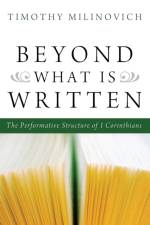
This book engages the structure and message of 1 Corinthians within its most relevant context of late Western antiquity's oral culture. Using a text-centered methodology, Timothy Milinovich demonstrates and analyzes a series of concentric patterns (or ring formations) through which Paul develops his arguments to the Corinthian church. Such patterns were ubiquitous in oral cultures and their literature. These structures, which are defined by objective lexical repetitions, aid the interpretation of an overall concentric pattern of three sections (A, 1:1--4:21; B, 5:1--11:1; A¿, 11:2--16:24), nine ring sets (a, 1:1-17; b, 1:18--3:3; ä, 3:4--4:21; a, 5:1--6:20; b, 7:1-40; ä, 8:1--11:1; a, 11:2--14:40; b, 15:1-58; ä, 16:1-24), thirty-five ring units (e.g., 5:1-13; 10:1-17; 15:12-24), and numerous micro-rings (e.g., 4:6-8; 8:1-4). Analyzing these lexical repetitions presents a demonstrably coherent message as it progresses through the concentric portions of the text. These findings represent a departure from previous treatments of the letter as if it were a modern, linear essay. As shown throughout this work, many linear treatments view the units like wooden blocks, only to build a single, unbalanced tower, and thus can miss important rhetorical connections in the concentric textual units. Milinovich treats the units and sets like interlocking pieces to present the inherent cohesiveness of the complex yet integral exhortation to grace, love, and unity that Paul wished to convey to this community on the verge of collapse. Among the conclusions drawn in this book, Milinovich argues that many parallel ring sets together present an anti-imperial message, and that both 11:3-15 and 14:34-35 are likely later interpolations. Scholars, pastors, and students alike will find many useful elements for interpreting or preaching 1 Corinthians in the modern world.
There are forms of knowing that seem either to come from a parting or to require one. Paradigmatically in Genesis, Adam parts from God in order to join in knowledge with his partner, the flesh of his flesh, and the result is a bereft but not unpromising knowledge, looking like a labor of love. Saint Augustine famously--some would say infamously--reads the Genesis paradigm of knowing as a story of original sin, where parting is both damnable and disfiguring and reuniting a matter of incomprehensible grace. Roughly half the essays in this collection engage directly with Augustine's theological animus and follow his thinking into self-division, perversity of will, grief, conversion, and the aspiration for transcendence. The remaining ones, more concerned with grace than with sin, bring an animus more distantly Augustinian to the preemption of forgiveness and the persistence of hell, morality and its limits, sexual piety, strange beauty, and a philosophy that takes in confession. The common pull of all the essays is towards the imperfection in self-knowledge--a place of disfigurement perhaps, but also a nod to transformation.
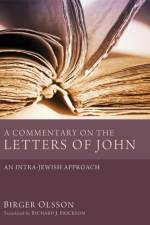
The long history of interpretation of the three Johannine letters has been largely characterized, at least since Irenaeus in the late second century, by the assumption that the Elder was addressing the Gnostic heresy. In recent years, particularly with the work of Raymond Brown, attention has been focused on the internal schism within the Johannine (or Beloved Disciple's) community, thus taking the first epistle as a corrective to secessionists' misguided attempts to read the Gospel of John in an ""advanced,"" spiritualizing manner.Birger Olsson returns to a less common perspective, one that views the crisis facing the Elder as a wholly ""intra-Jewish"" problem. The Johannine community comprised Jewish believers who regarded Jesus as the long-promised Messiah of Israel, but at some point in the community's life, under the leadership of one Diotrephes, some members of the community chose to reject this conviction and to entice other members to do likewise. Olsson anchors his thoroughgoing interpretation of the three letters in this conflict among Jewish Christians over the nature of the Messiah and the renewal of Israel's ancient covenant. Among other things, this implies that the letters were written in reverse order of their numbering.
Every culture has a way of perceiving and practicing marriage. Many contemporary Western Christians mistake what their culture prescribes regarding marriage with what the Bible portrays, and thereby take as biblical what is merely cultural. Uncritical conformity to cultural imperatives of marriage then becomes a Christian virtue, and a sweet surrender. Few recognize, much less question this confusion, even when its consequences are unhealthy. In Sweet Surrender Dennis Hiebert challenges Christians to comprehend what is cultural in their view of marriage, hold as optional what is not explicitly required by the Bible, and live out their marriages within the transcendent grace of God. Gaining greater awareness can free marriages from the control of culture for something more simply but deeply Christian. Marriages benefit when they are released from cultural directives that are not biblical callings, even if they choose to retain them as cultural practices. This book is for Christians who are ready to rethink their assumptions about marriage.
Although the object of centuries of study, only relatively recently has Genesis 1-11 been analyzed with attention to its literary unity and theological purpose. With the latter twentieth century's increased attention to synchronic approaches, many scholars began to consider Genesis 1-11 from the perspective of a literary unity in its final form and, therefore, to consider matters of intent and theological content. Yet, in spite of these treatments, there have been virtually no attempts to view the entire section of Genesis 1-11 as a literary and theological unity presenting a coherent message.This book begins to fill this void by seeking to identify the message of these chapters through utilization of a literary-theological approach. The study focuses on literary features, including the broader issues of surface and deep structure, while other topics of special concern include rhetoric as the art of composition for the purpose of communication and persuasion, and the use of speech as an important indicator of key issues in Hebrew narrative.
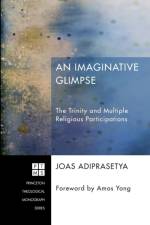
In contrast to the popular notion that the doctrine of the Trinity hinders Christians from engaging with the reality of religious diversity, this book argues that the doctrine is the best way of constructing contemporary theology of religions. An Imaginative Glimpse reexamines three prominent Trinitarian theologians of religions (Raimundo Panikkar, Gavin D'Costa, and S. Mark Heim) and proposes a fresh and creative model by bringing the classical idea of perichoresis to its present-day multifaith situation. Opening a new alternative in both Trinitarian theology and theology of religions, Adiprasetya's approach adds a distinctive contribution to the ongoing and challenging discussion in both fields. By using perichoresis imaginatively as a multidimensional category for multiple religious participations within the Trinity, Adiprasetya argues that the model is able to respect all religions on their own terms, while at the same time being faithful to the Christian standpoint.
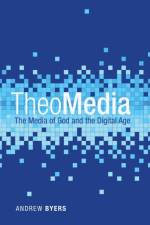
The church is unsure of itself in the twenty-first century's media culture. Some Christians denounce digital media while others embrace the latest gadgets and apps as soon as they appear. Many of us are stumbling along amidst the tweets, status updates, podcasts, and blog posts, wondering if we have ventured into a realm beyond the scope of biblical wisdom. Though there is such a thing as ""new media,"" Andrew Byers reminds us that the actual concept of media is ancient, theological, and even biblical. In fact, there is such a thing as the media of God. ""TheoMedia"" are means by which God communicates and reveals himself--creation, divine speech, inspired writings, the visual symbol of the cross, and more. Christians are actually called to media saturation. But the media that are to most prominently saturate our lives are the media of God.If God creates and uses media, then Scripture provides a theological logic by which we can create and use media in the digital age. This book is not an unqualified endorsement of the latest media products or a tirade against media technology. Instead, Byers calls us to rethink our understanding of media in terms of the media of God in the biblical story of redemption.
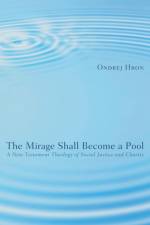
Few things are as important as our notions of justice and mercy. Yet how are we to make sense of our moral treatment of the poor given all the political, philosophical, and theological voices? While Christian Scripture is not silent on the matters of social justice and charity, even here our variously conditioned presuppositions cause us significant interference. Only a careful hermeneutical reset can move us beyond our personal and cultural situatedness. This requires a thorough exploration of both interpretative strategies and pertinent scriptural witnesses. So how would the New Testament witness have us treat the materially needy? How do we act justly and love mercy in walking humbly with our God?
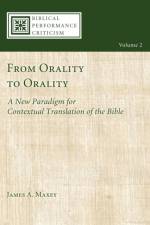
In this groundbreaking work, Bible translation is presented as an expression of contextualization that explores the neglected riches of the verbal arts in the New Testament. Going beyond a historical study of media in antiquity, this book explores a renewed interest in oral performance that informs methods and goals of Bible translation today. Such exploration is concretized in the New Testament translation work in central Africa among the Vute people of Cameroon. This study of contextualization appreciates the agency of local communities--particularly in Africa--who seek to express their Christian faith in response to anthropological pauperization. An extended analysis of African theologians demonstrates the ultimate goals of contextualization: liberation and identity. Oral performance exploits all the senses in experiencing communication while performer, text, and audience negotiate meaning. Performance not only expresses but also shapes identity as communities express their faith in varied contexts. This book contends that the New Testament compositions were initially performed and not restricted to individualized, silent reading. This understanding encourages a reexamination of how Bible translation can be done. Performance is not a product but a process that infuses biblical studies with new insights, methods, and expressions.
This collection of essays continues a long and venerable debate in the history of the Christian church regarding the legacy of the Roman emperor Constantine the Great. For some, Constantine's conversion to Christianity early in the fourth century set in motion a process that made the church subservient to the civil authority of the state, brought a definitive end to pacifism as a central teaching of the early church, and redefined the character of Christian catechesis and missions.In 2010, Peter J. Leithart published a widely read polemic, Defending Constantine, that vigorously refuted this interpretation. In its place, Leithart offered a thoroughgoing rehabilitation of Constantine and his legacy, while directing a rhetorical fusillade against the pacifist theology and ethics of the Mennonite theologian John Howard Yoder.The essays gathered here in response to Leithart reflect the insights of eleven leading theologians, historians, and ethicists from a wide range of theological traditions. They engage one of the most contentious issues in Christian church history in irenic fashion and at the highest level of scholarship. In so doing, they help ensure that the ""Constantinian Debate"" will continue to be lively, substantive, and consequential.
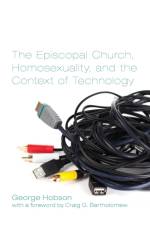
The aim of this book is to promote more serious theological discussion in the Church, especially in the mainline Protestant churches and the Episcopal Church, on the issue of homosexuality. George Hobson provides a theological perspective informed by biblical insights, on the one hand, and by analysis of the development and significance of the all-encompassing reality of science-technology, on the other. The question of technology is the determinant issue in the lives of modern men and women, for whom virtually every aspect of daily existence is controlled and oriented by technological imperatives. The central argument of the book is that reflection on the sexual revolution of our day, including the issue of homosexuality, cannot be carried forward effectively without consideration of this context of technology. A constructivist ideology, rooted in our technological power, underlies the fashionable notion that sexual behavior, even gender identity, is entirely culturally determined. Hobson opposes this notion on theological grounds and argues that the liberal disposition in the Protestant churches prevents them from seeing how the authentic Christian gospel is being subverted by this constructivism and the technologically driven quest for total control over every feature of reality that it represents.
Abonner på vårt nyhetsbrev og få rabatter og inspirasjon til din neste leseopplevelse.
Ved å abonnere godtar du vår personvernerklæring.