





Gjør som tusenvis av andre bokelskere
Abonner på vårt nyhetsbrev og få rabatter og inspirasjon til din neste leseopplevelse.
Ved å abonnere godtar du vår personvernerklæring.Du kan når som helst melde deg av våre nyhetsbrev.

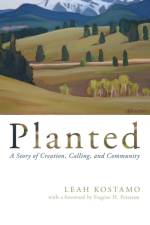
A Bird in the Hand is not a "how to" book, but a "how so" book in which the reader is invited to travel with Leah Kostamo on the wild ride of salmon saving, stranger welcoming, and God worshiping as she and her husband help establish the first Christian environmental center in Canada. Avoiding simplistic prescriptions or cliched platitudes, Leah wrestles with issues of poverty, justice, and the environment through the narrative of her own life experience. The lived-theology and humility of voice conveyed in these pages draws readers to new and creative ways to honor the Creator as they are inspired to care for creation.
The present volume is the first in a five-volume study of church doctrine. The multivolume set will cover the major parts of church doctrine: Canon, God, Creation, Reconciliation, and Redemption. This first volume begins with an introduction on why doctrine matters, which stresses the ecumenical, global, and above all biblical horizons of church doctrine as a primary expression of Christian witness. The purpose of this volume is to begin a search for an alternative to the many theologies available on the religious left and the religious right. Where doctrine is absent, the church is held captive to ideology; the same is as true among conservatives as it is among liberals. The present work is an attempt to struggle toward the meaning of orthodoxy in church doctrine--an orthodoxy that is never merely a given, but which always has to be sought and found again and again in each new generation of the church.Church doctrine is not a luxury, but a necessity for the living community of faith, by which its witness in word and deed is tested against the one true measure of Christ the risen Lord.
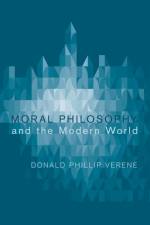
This work raises for the contemporary reader the ancient and abiding question of the nature and meaning of human virtue. In Part 1, it draws upon Plato, Aristotle, and Cicero and the works of Renaissance Christian humanists who were influenced by them, such as Pico, Vives, and Erasmus. The moral act guided by the cardinal virtues and the good is seen as the key to human happiness and the formation of character. Character is the basis for the pursuit of self-knowledge, decorum, and dignity, which properly guide human affairs.Part 2 takes up Hegel's principle of the labor of the negative as applied to three phenomena of modern life: the presence of terrorism, the personality of the psycho-sociopath, and the problems of the technologically dominated life of the modern person. These are the most powerful impediments to the good life in the modern world and pose problems to which the ethical doctrines of utilitarianism and the categorical imperative provide an insufficient response. To confront these phenomena, we are led back to the classical conception of the role of prudence or practical wisdom as the foundation of ethical life.
The book of Jonah remains an engaging part of the religious lives of Jews and Christians. On the human level, the dramatic story speaks to us of the possibility of second chances in our lives. On the spiritual level, it describes the paths an individual and a people can take leading them back to God.Medieval Jewish commentaries unfold new perspectives of meaning beyond the surface of the biblical text. In explaining the verses of the book of Jonah, the commentators explore many core topics, including human nature, our relationship with God, the interaction of Jews and gentiles, and the meaning of our lives. This book offers the first full English translation of the commentaries of Rashi, Ibn Ezra, Kimchi, Abarbanel, and Malbim. It also provides an explanation of their comments, making them accessible to contemporary Western readers. Until now one needed a high level of Hebrew to explore these works. Go to Nineveh opens this world to the modern English reader. The book also includes the author's own modern commentary, considering questions not raised by earlier commentators.
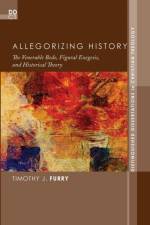
What is history and how does it impact biblical interpretation and theology? Allegorizing History seeks to begin answering this question by arguing that conceptions of the past and the purpose(s) of history impact biblical interpretation and vice versa. Furthermore, it is shown how philosophy and theology inevitably affect the understandings and practice of historical writing, thereby making all history figural or allegorical. Famous for his Ecclesiastical History of the Anglo-Saxon People and biblical commentaries, the Venerable Bede is studied in dialogue with Augustine, contemporary theology, and historical theory to make this interdisciplinary argument.
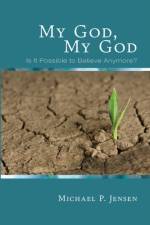
Once upon a time, it was not so difficult to believe. Believing in God was like breathing. It was a second sense of which people were hardly aware. But in an age when our faith is mainly in science and technology, is it possible to believe anymore?Michael P. Jensen takes a searching look at what makes us believe--or not believe--in God in this contemporary world. He converses with troubled souls, cranks, crackpots, and conspiracy theorists, and even with the devil himself.This entertaining and stimulating journey through the underworld of our beliefs will have you wondering whether things are always what they seem.
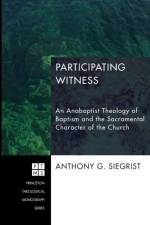
At a time when the fractious legacy of the Protestant Reformation is coming under new scrutiny, Anthony Siegrist explores the implications of ecumenism for believers' baptism. Writing from within the tradition of the Radical Reformation, he challenges dominant ecclesiological assumptions and argues that this central practice needs to be reconstrued. Siegrist works constructively to develop a concrete account of believers' baptism that attends closely to the dynamics of divine initiation. Siegrist deliberately stretches the traditional Anabaptist conversation to include not just expected voices like Yoder and Marpeck, but also luminaries from the broader Christian tradition; Barth, Bonhoeffer, and a variety of ancient sources are creatively engaged. The intent of Participating Witness is eminently practical, but its argumentation is carried out with theological rigor.
This book seeks to place before a broad audience essays on Jeremiah and the book of Jeremiah. A poem featuring Jeremiah is also included. There are technical essays on text criticism, form criticism, and rhetorical criticism; scholarly articles on the scribes who figure in the Jeremiah tradition; and more popular lectures given to beginning students and lay audiences on this important prophet in ancient Israel. Also included is an essay on how the author went about writing his three-volume Jeremiah for the Anchor Bible commentary series. These thirteen essays are collected to be read with profit by scholars, beginning and advanced students, adults in Bible study classes, and people anywhere who want an introduction to important issues in the study of Jeremiah and the book bearing his name. If these aims are realized, the book will have achieved its goal.
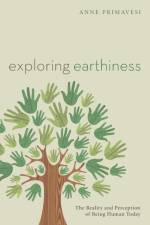
If we see ourselves as Earth rather than Earth as existing for us our perspective is transformed. A variety of religious, philosophical, cultural, and political self-perceptions that dominate our sense of human identity are deeply challenged by this shift in perspective. John Locke's doctrine of Earth as human "property" has been central to current presuppositions about our selves: justified on the grounds of our possessing unique, divinely bestowed, rational abilities. But today, the effects of that doctrine on Earth's resource base and on its other-than-human creatures directly challenge such assumptions. At the same time contemporary scientific findings about the evolution of earthly life demonstrate that while we belong to Earth and nowhere else, Earth does not belong to us. Exploring this role reversal raises fundamental questions about current theological, philosophical, scientific, and economic presuppositions that underpin the "business as usual" viewpoint and human-centered aims of contemporary policies and lifestyles. It takes us beyond hierarchical Christian and philosophical doctrines toward a deeper, Earth-focused and peace-based understanding of what it means to be human today.
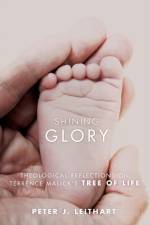
Terrence Malick's stunning film The Tree of Life is a modern Job story, an exploration of suffering and glory, an honest look at strife within a Texas family in the 1950s. In Shining Glory, Peter J. Leithart examines the biblical and theological motifs of the film and illuminates how Malick exploited the visual poetry of film to produce one of the most spiritually challenging and theologically sophisticated films ever made.
How can people taking diametrically opposing positions on contemporary issues--dividing both religious communities and society--quote the Bible in support of their views? What does it mean to make a claim that the Bible says or teaches something? Why appeal to the Bible at all? Whose interpretation is the right one? If you've felt confused about the Bible's role or authority in such controversies, this book may help. The author draws upon his more than forty years of pastoral ministry and seminary teaching experience as he examines the Bible--what it is (and isn't), how it came to be a sacred text for Jews and Christians, what kind of authority it has, and how that authority is used or misused. He does not attempt to take a position on the controversial issues themselves, but argues for understanding the Bible as a community product, arising out of the historical life of communities of faith, that then exerts a shaping or normative power in those communities through time, and asks how the Bible and the "Word of God" may be related in constructive ways.
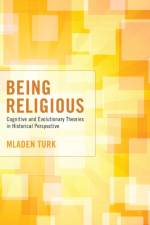
What makes us religious? What is religion? This book presents relevant research and theoretical proposals for evolutionary theories of religion and socially and ecologically adaptive theories of religion. Most attempts to study religious behaviors through evolutionary biology and related disciplines are still very fragmentary. Mladen Turk brings those theoretical approaches in dialogue with religious studies and theology through interpretation and critique that centers on revealing hidden theological assumptions and interpreting theoretical leaps of those approaches to religion. In Being Religious Turk expounds understanding of religion as a complex interplay of various capacities arising from and influencing our biological and cultural makeup. Our religious behaviors can influence our relationship towards each other and towards our environment in significant ways. He shows how some aspects of complex religious behaviors can be understood better in light of human cognition and evolutionary biology. At the same time he interprets this knowledge as being preliminary and at times inadequate in its claims of completeness and exhaustiveness because religious behaviors are niched within other religious behaviors and dependent on factors that various mono-causal theoretical approaches cannot fully conceptualize.
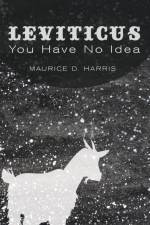
Leviticus has been called "irrelevant," "primitive," and "a backwater" of the Bible, even by scholars and people of faith who treasure Scripture. Many find it alienating, or, at minimum, confusing. In Leviticus: You Have No Idea Rabbi Maurice D. Harris offers readers surprising new ways of looking at the Bible's least popular (and least understood) book. Grounded in his progressive religious values and beliefs, Rabbi Harris approaches the various laws, rituals, and stories of Leviticus with an open-minded curiosity about what we can learn today about life, ethics, God, and higher meaning by studying this text. Taking the Bible seriously but not literally, Harris uses a plain-spoken, accessible style to explain confusing elements of Leviticus. He explores topics that matter to many of us in contemporary society, including LGBT equality, the dangers of religious fundamentalism, the impacts of childhood trauma, criminal justice reform, and more. With this book, the author invites us into an ancient text that, read with care, challenges us to be better people and help repair this broken world.
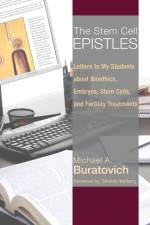
Human embryos, it has been said, ""have no muscles, nerves, digestive system, feet, hands, face, or brain; they have nothing to distinguish them as a human being, and if one of them died, no one would mourn as they would for one of us."" Consequently, early human embryos are being dismembered in laboratories around the world to produce embryonic stem cells, which, we are told, are the tools that will lead to the next quantum leap in medicine. Should Christians support such small sacrifices for something that might potentially relieve the suffering of millions, or should we vigorously oppose it?Developmental biologist and professor of biochemistry Michael Buratovich was asked such a question (among others) by his students. This book contains his measured answers and provides support from the scientific literature to substantiate his claims. He shows that embryonic stem cells are unnecessary, since the renaissance in regenerative medicine is occurring largely without them. Furthermore, he sets forth the scientific and historic case that the embryo is the youngest and most vulnerable member of humanity, and that ones such as these are precisely those whom the Christian church worked to protect in the past--and should champion in the present.
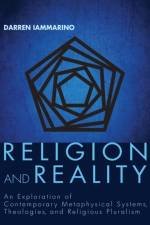
This book argues for the reality of multiple religious ultimates rather than just one. This entails that all the religions are not the same; they describe different religious objects, and they each provide unique forms of salvation. The immediate advantage of this approach is that it explains how all religions are equally valid without glossing over the real differences that define them. Put differently, each religion has correctly identified a piece of the puzzle that makes up Ultimate Reality. There is, however, a limit to the plurality, and thus five distinct religious ultimates are identified: the Forms, God, A World, Creativity, and the Receptacle. One or two of these five ultimates are found within all of the world's religions, as evidenced by religious scriptures and religious experiences. Based upon these five religious ultimates, this book puts forth a novel philosophical and religious system: cosmosyntheism, a word emphasizing the likelihood that in the beginning, there was more than just God. Quite possibly, there may have been five ultimates, each sacred in its own way, none of which could have existed without the reality of the others.
The Christ Letter is a conversation partner for pastors and students of the Bible who want to wrestle with the meaning of the biblical text for Christian living today. Scholarly commentaries perform an essential task, but they often leave today's believers on their own when it comes to making Paul's letter come alive. Doug Webster weaves together deep biblical insights, penetrating cultural perspectives, and stories of transformation into a pastoral commentary that promises to release the powerful message of Ephesians. This commentary offers lines of thought, illustrations, and applications that carry the gospel into the present situation. Webster draws out the personal and practical impact of Paul's spiritual direction for today. The Christ Letter gives pastors a fresh perspective and a better handle on how to preach Ephesians effectively. Webster inspires and guides faithful disciples in what it means to follow Jesus in a Christ-centered way.
In A Transformative Reading of the Bible Yung Suk Kim raises critical questions about human transformation in biblical studies. What is transformation? How are we transformed when we read biblical stories? Are all transformative aspects equally valid? What kind of relationships exists between self, neighbor, and God if transformation is involved in these three? Who or what is being changed, or who or what are we changing? What degree of change might be considered ""transformative""? Kim explores a dynamic, cyclical process of human transformation and argues that healthy transformation involves three kinds of transformation: psycho-theological, ontological-theological, and political-theological transformation. With insights gained from phenomenological studies, political theology, and psychotheology, Kim proposes a new model for how to read the Bible transformatively, as he dares to read Hannah, Psalm 13, the Gospel of Mark, and Paul as stories of transformation. The author invites Christian readers, theological educators, and scholars to reexamine the idea of transformation and to engage biblical stories from the perspective of holistic human transformation.
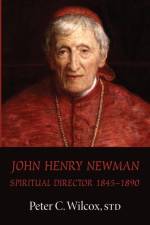
John Henry Newman (1801-1890) was a man who sought to integrate life and holiness. He believed that the spiritual life needed to be lived in an active and dynamic way, touching a person's fundamental attitudes and actions.Although Newman rejected the title of spiritual director as such, it is obvious from his correspondence that directing others through various facets of the Christian life was one of his dominant concerns. Surprisingly, comparatively little has been written about Newman's idea of spiritual direction. This book investigates Newman's understanding of spiritual direction during his life as a Roman Catholic, 1845-1890. It examines the major areas in which Newman gave spiritual direction through an analysis of the correspondence from his Catholic years. It also explicates those principles of Newman's own spiritual life that found expression in his direction of others.Newman had a mammoth ""apostolate of correspondence."" His Letters and Diaries have been edited and published in a series of thirty-two volumes, embracing more than twenty thousand letters. The first ten volumes deal with Newman's Anglican period; the remaining twenty-two volumes cover his Catholic period and are the primary source for this book. These volumes have been studied chronologically in order to determine and extract the major areas in which Newman gave spiritual direction to others, and to investigate the stages of development in his spiritual advice.
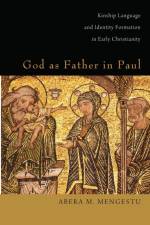
God as Father in Paul explores Paul's use of the kinship term "Father" to refer to God, along with related familial terms ("children" of God and Christ-followers as "brothers and sisters"), as part of a study of the use of kinship language in the identity formation of early Christianity. Mengestu argues that these kinship terms are shared modes of identity constructions within the wider textual and cultural settings (the Roman Empire, the Roman Stoic philosophers, the Hebrew Bible, and ancient Jewish literature) from which Paul draws on as well as contests. Employing theoretical (kinship and social identity theory) as well as interpretative approaches (imperial critical and narrative approaches to Paul), he contends that Paul uses God as Father consistently, strategically, and purposefully, in both stable and crisis situations, to develop a narrative, orienting framework(s) that images the community of Christ-followers as a family that belongs to God, who, together with the Lord Jesus Christ, bestows on them equal but diverse membership in the family. The narrative so constructed forms the foundation for referring to Christ-followers as "children of God" and "brothers and sisters" of one another. It constructs boundaries and serves as nexus of transformation and negotiation.
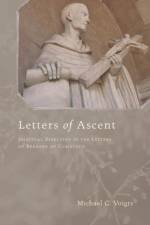
Bernard of Clairvaux is best known by many today for his mystical approach to spirituality and his eloquent sermons on the Song of Songs. In his letters, however, a different Bernard emerges--one who had fled the world for the cloister yet possessed a soaring vision for the Church on earth. By examining select letters and placing them in the larger context of the people and the world around him, we discover a man who loved the Church--but who realized that the Church is comprised of individuals who did not share his ideals and agendas. In Letters of Ascent, we travel to medieval Europe and view society through the eyes of one of history's most passionate ecclesiastical reformers.
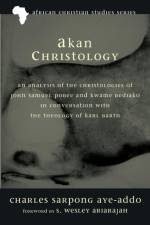
As Christianity expands and grows in Africa, there is deep new interest in African theology in general, and the way in which some African theologians are interpreting the significance of Christ within African culture, in particular. This volume explores the Christology of two of the foremost African thinkers against the background of the West African Akan culture. The result is a rare and fascinating look at some of the key cultural symbols of African culture, the struggle to reinterpret the "white, blond, blue-eyed Christ" presented by pioneering missionaries to Africa, and the pitfalls and promises that attend the exercise. The selected theologians, John Samuel Pobee and Kwame Bediako, are put into a critical conversation with Karl Barth in order to initiate a dialogue between Western theology and African theology that brings to the fore some of the pertinent issues about the particularity and universality of Christ. The volume, while seeking to make Christ relevant for Africa, moves away from romanticizing African culture and insists on being faithful to the biblical witness to Christ. The result is an attempt to present an engaging piece of work that makes a significant contribution to contemporary debates on Christology and indigenous theology.
Humor smiles and chuckles and sometimes laughs so loud in virtually every book of the Bible, so it's remarkable how readers manage to overlook it. It's also unfortunate. Humor graces biblical texts at so many levels that to miss the humor is to miss not only much of the emotional impact of the Bible, but much of its meaning. Illuminating Humor of the Bible shows how--and how much--comic elements contribute to understanding the most vital book in our culture. Biblical humor has been seriously underestimated. We have not begun to appreciate why humor winks with such unexpected frequency and understated significance from this revered text. It's time to shine a spotlight on scriptural wit to illuminate the ways humor refracts biblical meaning. Unveiled by the frank perspective of humor, Bible texts reveal implications that will surprise the most informed readers. The reader-response lamp of humor lights up dark corners of biblical significance inaccessible until now. Awareness of the irony and wit and satire and slapstick enables not just better readings, but better ways to read. Go where no Bible reader has gone before. Try eight fresh and relevant methods of reading the Bible better through the lens of its humor.
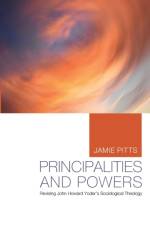
Evaluations of John Howard Yoder's legacy have proliferated since his death in 1997. Although there is much disagreement, a broad consensus is forming that his theology was, on the one hand, focused on the social and political meaning of the New Testament accounts of Jesus Christ and, on the other hand, sociologically reductive, hermeneutically tendentious, and ecclesiologically ambiguous. This book proposes a revision of Yoder's theology that maintains its broadly sociological emphasis but corrects for its apparent problems. In specific, adjustments are made to his social theory to open it to spiritual reality, to hone its analytical approach, and to clarify its political import. His preferred framework for social criticism, the theology of the principalities and powers, is examined in the context of his wider work and its critics, and then synthesized with concepts from Pierre Bourdieu's influential reflexive sociology.
This book aims to explore the meaning of salvation in Balthasar Hubmaier's theology. Previous research has tended to explain and evaluate his theology by locating his identity among contemporary Anabaptists. Moreover, Hubmaier's theology has been variously labeled as Catholic Anabaptist, Magisterial Anabaptist, or as a bridge between the Radical and Magisterial branches of the Reformation. These approaches to Hubmaier's theology essentially depend on a static and transactional perspective where the result comes from the cause. Such an approach cannot fully explain the distinctive features of Hubmaier's theology, because his theology had multiple rather than single influences. To understand Hubmaier's theology, we need to focus on his motive and purpose in writing rather than external influences. This volume attempts to explore a new understanding of Hubmaier's theology reflecting a necessary change in our paradigmatic methodologies. This fresh perspective helps us see that Hubmaier's theology was not static and transactional but dynamic and relational. As Hubmaier's main purpose was to give readers a proper understanding of soteriology, his writings were written from this perspective, concentrating on salvation. This volume aims to enable the reader to access this unique understanding of soteriology by examining his primary texts in three categories: free will, baptism, and the Lord's Supper. To understand Hubmaier's theology through a new methodology leads us to rethink the meaning of salvation.
This revised edition of The Family Metaphor in Jesus' Teaching examines the family metaphors for God (Father) and for believers ("children," "brothers") that Jesus chose to use. Jesus not only held up a child as an example of receptivity, but he defended actual children, warning against despising "one of these little ones." Using current discussions of the "equal-regard family" and of the importance of "human fathering," Stephen Finlan explores how the gospel entails a changed model of parenting and of marriage and a new approach to spiritual growth.
How can this life have meaning if at my death nothing of me remains? This is the essential question with which Miguel de Unamuno, the most accomplished Spanish man of letters of the twentieth century, struggled during his entire life. Unamuno's views have been the subject of vigorous debate: Was he a Catholic, a Protestant, or an unbeliever? Miguel de Unamuno's Quest for Faith seeks to appreciate and clarify Unamuno's faith commitments without diminishing or exaggerating them. His historical context pulled him to equate knowledge with science, but his existential angst told him humans must be something more than short-lived products of matter. He believed that his philosophy and the resulting faith that he held must have consequences for the choices he made to live out his life meaningfully. Jan E. Evans surveys what was at stake in Unamuno's desire to believe and the stance that he came to live with. That stance is contrasted with thinkers whom he read and admired: Soren Kierkegaard, Blaise Pascal, and William James. Ultimately, this book tests Unamuno's philosophy against his own criterion that demanded concrete actions that were motivated by principled passion. It draws new readers of Unamuno into his world and provides critical new perspectives for those who know Unamuno's work well.
Debate about church order has gone on for centuries within Christianity, and an end is nowhere in sight. Perhaps that is good, since the debate shows the weaknesses of many ideas that need correction. Corporate Decision-Making examines church order from a careful exegetical perspective, with particular attention to the social world of the New Testament. While most works about church government address structure and qualities of leadership, Brown deals with the interaction of the people of the church, both with their leaders and with one another, in setting policy.In brief, though all believers in the young church of the New Testament revered Christ and his Word as authoritative, not all church decisions were ""top down"" from earthly leaders. On the contrary, many were ""from the bottom up."" This should come as no surprise to those familiar with Jesus' admonition in the Gospels, ""You have one teacher, and you are all brothers.""
The integrative theme of this collection of essays is change and transformation explored in the context of diverse expressions within the context of Anglican Church history. It addresses some central themes--notably the sacraments, liturgy, biblical interpretation, theological education, the relationship of church and state, governance and authority, and Christian education. The volume traces Anglican Church history chronologically. It includes a comparative study of penance in the thought of John Wyclif and Thomas Cranmer. The book also treats the dispersal of authority evident in the development of the Book of Common Prayer and the King James Bible, consensus in eucharistic theology in the seventeenth century, and developments in biblical interpretation in the early eighteenth century. This book also discusses a vision for the Christian education of children, change in theological education in the 1830s, the metanarrative of continuity developed by High Church historians in the late nineteenth century, increasing self-government in the Church at the outset of the twentieth century, and models of governance at the outset of the twenty-first.While this collection highlights aspects of change and transformation as an integrative theme, it is not its premise that change was normative or pervasive, perpetual or constant, within Anglicanism. Nevertheless, these essays raise some new lines of inquiry, make some suggestive interpretations, or propose revision of accepted views.
The book you now hold in your hands contains nearly everything the great American puritan Jonathan Edwards (1703-58) ever wrote on the book of Romans. It is collated into a verse-by-verse Bible commentary. Pastors, theologians, historians, and Bible study leaders will find a treasure of biblical insight along with practical application, as one of the great theologians of the Christian church expounds the book that Martin Luther called the "most important piece in the New Testament." Jonathan Edwards' expository genius is clearly evident in both the depth of his biblical insight as well as his logic. Readers will be encouraged and edified as they delve deeply into the book of Romans with Jonathan Edwards by their side.
In Building a Community of Interpreters Walter Dickhaut argues that the practice of reading (and, by extension, listening) is no less creative than the practice of writing (and speaking); readers and hearers, just as much as writers and speakers, are producers of meaning. Hence, the work of biblical interpretation is the work--the calling--of a community. Focused on the experience of the reader (or hearer) of biblical texts, he explores such questions as:-What happens when the author disappears?-What happens when a reader opens a book to meet the author?-What happens when a book is read?-What happens when the reader changes spectacles?Into discussion of such issues as the reader's angle of vision, when texts open and close, the reader's expectations, the reader's meeting up with the text, and the functions of filters and lenses in the practice of reading and hearing, the author introduces mystery, surprise, and expectation as hermeneutical lenses that can enlarge what may be seen in biblical texts. In addition to some homiletical samples, the author concludes with a suggested teaching plan for building a community of interpreters.
Abonner på vårt nyhetsbrev og få rabatter og inspirasjon til din neste leseopplevelse.
Ved å abonnere godtar du vår personvernerklæring.