










Gjør som tusenvis av andre bokelskere
Abonner på vårt nyhetsbrev og få rabatter og inspirasjon til din neste leseopplevelse.
Ved å abonnere godtar du vår personvernerklæring.Du kan når som helst melde deg av våre nyhetsbrev.

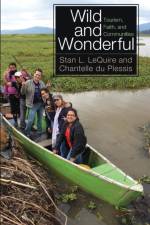
After logging thousands of miles in planes, jeeps, dugout canoes, pickup trucks, bicycles, and on foot, LeQuire and du Plessis offer insights into how Christians around the world are using tourism to develop their villages while caring for both creation and culture. Based on a multi-year research project, this book showcases innovative projects that Christian villagers and faith-based organizations are engaging to alleviate poverty through business ventures. Through a unique mix of travelogue and theological reflection, this book concludes with a challenge to the status quo of current short-term mission practice and provides thoughtful alternatives."I''ve long been a fan of Stan LeQuire and his tireless labor to bring shalom to God''s wondrous yet beleaguered creation--both people and planet. With Wild and Wonderful, he and Chantelle du Plessis continue that ministry by bringing critical analysis and insight into the growing field of ecotourism and, even better, connect it to our Christian faith."--Tom Rowley, Executive Director, A Rocha, USA"If you are looking for ways to helpfully engage the poor of the Third World that are theologically informed, culturally sensitive, and respectfully creative, you will have to give this book two thumbs up."--Tony Campolo, Professor Emeritus, Eastern University"This useful book will help you plan a trip with a purpose. Highly recommended!"--Nancy Sleeth, cofounder of Blessed Earth and author of Almost Amish"It sounds too good to be true: economic development to reduce poverty in a way that protects the environment and respects indigenous cultures--while offering stunning experiences and spectacular sights for eco-tourists. But it is happening. This delightful, carefully researched book tells encouraging stories and offers helpful analysis on how to expand and improve this exciting, important development."--Ronald J. Sider, Senior Distinguished Professor of Theology, Holistic Ministry and Public Policy, Palmer Seminary, Eastern University"FINALLY a significant, creative, respectful approach for short-term missions. Moves beyond charity and good feelings. Examples are powerful and compelling. A must for anyone who wants to make a difference locally or globally."--Jo Anne Lyon, General Superintendent, The Wesleyan ChurchStan L. LeQuire teaches sustainable development in Eastern University''s School of Leadership and Development. LeQuire is a past director of the Evangelical Environmental Network (EEN) and has published an anthology of sermons on creation care called The Best Preaching on Earth.Chantelle du Plessis is a South African who lives in Bogotá, Colombia. With Andrés Umaña, she owns and operates the tourism business Andes EcoTours. She is a graduate of Eastern University''s masters program in international development.
Saul was the first king of Israel (1029-1005 BCE). His life was full of drama and tribulations, and ended tragically. The book of Samuel portrays Saul as a colorful personality with excesses--as the classic tragic hero. Moreover, Saul''s excellent virtues qualified him for the monarchy. He had courage and military power. Saul was modest and shy. In contrast to the positive portrayal of Saul in some biblical narrative, many other passages in the Hebrew Bible portray Saul negatively--as a paranoid man who chased demons, as obsessed with the pursuit of David. Thus he struggles constantly with his own family members as well as his circle of friends. From the battle at Michmas till the last day of his life, fear is Saul''s constant companion. Readers of this volume will rediscover Saul, will have a better understanding of his achievements and failures as the first king of Israel. We trust that this study will afford a provocative and useful insight into the character of Saul. "After all the biographies of King David published during the last few years, it is refreshing to find one devoted to his predecessor and rival, King Saul. The appropriately named Shaul Bar presents us with a careful literary and historical reading of the Saul traditions, drawing not only on the biblical text, but also on the post-biblical, midrashic literature, conveying a well-rounded portrait of Israel''s tragic first king and his place in history and tradition. Bar''s book is both grounded in up-to-date scholarship and accessible to the general reader. He is to be thanked."--Carl S. Ehrlich, York UniversityShaul Bar is Professor of Judaic Studies in the Bornblum Judaic Studies program at the University of Memphis. He is the author of A Letter That Has Not Been Read (2001), as well as I Deal Death and Give Life (2010).
The first five books of the Bible contain many of its most famous stories, populated by vivid characters altogether human in their triumphs and failings--and an equally complicated deity. Many works of Western art and literature appeal to these stories, from Michelangelo''s painting of Adam and Eve to a novel like William Faulkner''s Go Down, Moses. The three great Abrahamic religions (Judaism, Christianity, and Islam) are rooted here. So is much of Western political theory and constitutional polity, for a good half of these books contains legislation (torah) of various kinds, as indicated by the ancient title: the book of the Torah. Law and narrative together render the character of the ancient covenant community known as Israel, as well as the God who rules over that community.In this revised and expanded version of his popular book of 1988, Mann engages literary criticism and theology in attending both to the composite nature of the Torah (or Pentateuch) and to its final, canonical shape. Mann''s study provides a lucid introduction to the heart of the Hebrew Bible, suitable for students and general readers, but also of interest to biblical scholars. "Mann''s study of the foundational texts of biblical faith has long been a reliable staple of pedagogy and interpretation. In it he combines a well-honed capacity for critical judgment with an acute theological sensibility, all of which is presented in an accessible format. For these reasons this new edition is a welcome offer. In it he has . . . added materials that could not have been on the horizon in the first edition. This book will evoke many grateful readers."--Walter BrueggemannColumbia Theological SeminaryPraise for the first edition:"I would find this volume extremely useful in introducing my students to this basic part of the Old Testament. I am quite excited about this project."--Patrick D. Millerauthor of Stewards of the Mysteries of God"A sound piece of work. Its holistic, final-form approach reflects the major trend in biblical criticism. It is perceptive, sensitive, thoughtful, and stimulating."--David Gunncoauthor of Narrative in the Hebrew BibleThomas W. Mann has taught at Princeton Theological Seminary, Converse College, Salem College, and Wake Forest University. For twenty-three years he was also the minister of Parkway United Church of Christ in Winston Salem, North Carolina. He is the author of The Book of the Former Prophets (Cascade Books, 2011), a sequel to this book; Deuteronomy (1995); and God of Dirt: Mary Oliver and the Other Book of God (2004).
One of the most perplexing and misunderstood books of the Bible, Ezekiel has left many scholars and exegetes scratching their heads regarding its message, coherency, and interpretation. Brian Peterson's look at the book of Ezekiel as a unified whole set within an exilic context helps explain some of the more difficult symbolic aspects in the book and makes Ezekiel as a whole more intelligible. Drawing on ancient Near Eastern concepts and motifs such as covenant and treaty curses, the various gods that made up the Babylonian pantheon, and the position that Israel held as the people of Yahweh, Peterson enlightens readers by showing that Ezekiel can only be understood in its original context. By placing the book first in its historical context, Peterson demonstrates how the original hearers of its message would have understood it, and how this message can be appreciated and applied by people today as well.
Shadows of Revenge continues the story that began with Days of Purgatory. The sequel is an adventure mystery set in and around Abilene, Kansas, in 1872. Deacon Coburn, a realist galvanized by his past, is startled when remnants of yesteryear track him down. Longing and brokenness are everywhere. A headstrong orphan girl seeks to live out her dreams; a childless widow pursues meaning; a reformed prostitute desires a return to her childhood faith; a young man makes tragic choices. It's a tale of hope and redemption. No matter how ugly our past, every individual can choose new beginnings. In the words of a stealthy drifter, ""Hope is always nearby, as sure as thunder follows lightning. Search your heart. Hope is there to lead you onward.""
Servantship is essentially about following our Lord Jesus Christ, the servant Lord, and his mission--it is a life of discipleship to him, patterned after his self-emptying, humility, sacrifice, love, values, and mission. Servantship is humbly valuing others more than yourself, and looking out for the interests and wellbeing of others. Servantship is the cultivation of the same attitude of mind Christ Jesus had: making yourself nothing, being a servant, humbling yourself, and submitting yourself to the will and purposes of the triune God. Since servantship is the imitation of Christ, it involves an unreserved participation in the missio Dei--the Trinitarian mission of God.In this pioneering work, sixteen servants describe the four movements of radical servantship. Servantship is the movement1. from leadership to radical servantship; 2. from shallowness to dynamic theological reflection; 3. from theories to courageous practices; and 4. from forgetfulness to transforming memory. Servantship recognizes, in word, thought, and deed, that "whoever wants to become great among you must be your servant, and whoever wants to be first must be your slave--just as the Son of Man did not come to be served, but to serve, and to give his life as a ransom for many.""Servantship, as a collection of essays, has a global appeal for leaders both inside and outside the walls of the church. As Robert Greenleaf unknowingly produced a movement from outside the church that proved transformational for the topic of leadership studies within the church, this new work has the potential to transform leadership studies well beyond the walls of the church by transforming the culture of leadership studies within the church's walls."--Wayne Ballard, Associate Professor of Religion, Carson-Newman University"Ever since Robert Greenleaf's pioneering work on servant leadership, there has been a need for a thorough theological exploration of the subject. Graham Hill's insightful book meets this need in a balanced and thorough way. There are many books on leadership but the servant dimension has often been overlooked. A timely contribution."--Martin Robinson, Principal of Springdale College, Birmingham"Servantship reflects a constructive effort to paint a picture of what following Christ means and what it entails. . . . The result is a sensitively drawn portrait with artfully nuanced strokes that will inspire new ventures of service in imitatio Christi. . . . This is a book thoughtful Christians will want to read."--Neville Callam, General Secretary of the Baptist World Alliance"Servantship deserves prime place among recent missional books, offering a powerful corrective to leadership-fixated churches. Combining thoughtful theology, cultural analysis, and practice, its stories and questions humble and inspire. It jolts you to see what's missing today. From the Australian context, Graham Hill has provided a challenge to the Western church that we dare not ignore."--Michael Quicke, Charles Koller Professor of Preaching and Communication, Northern Seminary"I am excited to recommend this important new work on servanthood and leadership. Graham Hill's book offers important insights and correctives to all of us and our views of leadership. Together the contributors help move us from the board room, back to the role of the bowl and the towel."--Terry Walling, Adjunct Professor, Fuller Theological SeminaryGraham Hill is Senior Lecturer in Applied and Pastoral Theology at Morling College in Sydney, Australia (a theological college affiliated with the MCD University of Divinity and the Australian College of Theology). He is the author of Salt, Light, and a City: Introducing Missional Ecclesiology (Wipf & Stock, 2012). Graham's ministry experiences include church planting, pastoring in a large growing congregation, and coaching pastors and planters of missional experiments.
Recent scholarship in a number of disciplines has explored the relationship between ontology and ethics. The essays in this collection indicate what the German theologian Dietrich Bonhoeffer (1906-1945) has to contribute to this discussion. By engaging the breadth of his academic and pastoral writings, these essays retrieve Bonhoeffer's theology for a contemporary audience. They do so by critically clarifying and extending key concepts developed by Bonhoeffer across his corpus and in dialogue with Hegel, Heidegger, Dilthey, Barth, and others. They also create dialogues between Bonhoeffer and more recent figures like Levinas, Agamben, Foucault, and Lacoste. Finally, they take up pressing, contemporary ethical issues such as globalization, managerialism, and racism.
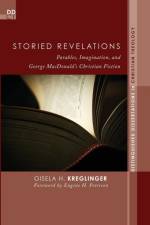
Parables--used by Jesus to reveal to us the kingdom of God, used to move us from being bystanders to active recipients of God's work of revelation--are constantly at risk of being buried as ""mummies of prose,"" as George MacDonald puts it. We become so familiar with the language of Scripture that Jesus' parables no longer work on us in this revelatory and transforming way. George MacDonald, the Victorian poet and theologian, observed this very process at work in Victorian society. It was a culture saturated with Christian jargon but often devoid of a profound understanding of the gospel for its own time and culture. The language of Scripture no longer penetrated people's hearts, imaginations, and attitudes; it no longer transformed people's lives. MacDonald, called to be a pastor, turned to story and more specifically the ""parabolic"" as a means of spiritual awakening. He created fictive worlds in which the language of Jesus would find a new home and regain its revelatory power for his particular Victorian audience.
New Brethren in Flanders is the story of the planting and remarkable growth of Brethren churches in the Dutch-speaking part of Belgium at the end of the twentieth century. The Evangelische Christengemeenten Vlaanderen (ECV) began in the early 1970s as a result of evangelistic church-planting efforts led by a group of Canadian Christian Brethren missionaries. In just under twenty years, the ECV grew from one evangelistic, home Bible study to over thirty local churches in Flanders, the Netherlands, and Germany composed almost entirely of newly converted evangelical Christians. As one of those who grew up in these churches notes, ""The Spirit of God, through the ECV's founders, built up an altogether masterly piece of work right in front of us.""
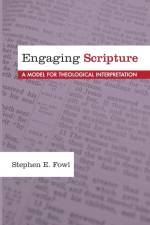
Some books give new answers to old questions. Here is the book that changes the questions themselves. We are therefore extremely fortunate to have Fowl's Engaging Scripture, for this is a book that challenges the presumptions that created the "problem" of the New Testament and its relationship to theology. Fowl's reading of Ephesians on stealing is worth the price of the book in itself. One cannot help but think this book will standout as the mark of a new beginning.' "Stanley Hauerwas, Gilbert T. Rowe Professor of Theological Ethics, Duke University, North Carolina."The Original Essay will be of interest to all those concerned with the inter-relationships between theological and the Bible. It may be used as a complement to Fowl's collection of classic and contemporary readings, "The Theological Interpretation of Scripture" (Blackwell Publishers, 1997)."Engaging Scripture" Proposes that Christians must read scripture theologically, redressing the recent domination of professional scholarship in this area by historical-criticism. Drawing on the best interpretive traditions of the past, Fowl develops, argues for and displays a new model for the theological interpretation of scripture. This interpretive framework should enable Christians, and particularly Christian theologians, to interpret scripture in a way that helps them to live and worship faithfully.Theological and theoretical questions are illustrated by reference to particular Christian convictions, practices, and concerns in the US and Britain, and by engaging scriptural passages. These serve as examples of the sort of interpretation Fowl is advocating. In summary, the book looks towards bridging the chasmthat arose between biblical studies and theological study following the rise of modernity.
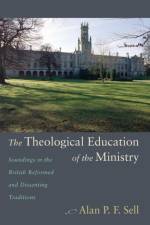
Unwilling on conscientious grounds to submit to the religious tests imposed by the Universities of Oxford and Cambridge, the English and Welsh Dissenters of the second half of the seventeenth century established academies in which their young men, many of them destined for the ministry, might receive a higher education. From the eighteenth century onwards, theological colleges devoted exclusively to ministerial education were founded, while in Scotland historically, and in England and Wales over the past 120 years, freestanding university faculties of divinity/theology have provided theological education to ordinands and others. These diverse educational contexts are all represented in this collection of papers, but the focus is upon those who taught in them: Caleb Ashworth (Daventry Academy); John Oman (Westminster [Presbyterian] College Cambridge); N. H. G. Robinson (University of St. Andrews); Geoffrey F. Nuttall (New [Congregational] College, London); T. W. Manson (University of Manchester); Owen Evans (University of Manchester and Hartley Victoria Methodist College)--the lone Methodist scholar discussed here; and W. Gordon Robinson and J. H. Eric Hull (University of Manchester and Lancashire Independent College). Between them these scholars covered the core disciplines of theological education: biblical studies, ecclesiastical history, philosophy, doctrine, and systematic theology.
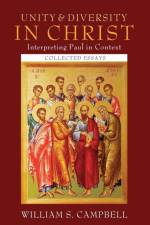
These essays represent William Campbell's ongoing challenge over the last two decades to a residual aspect of the paradigm of Paulinism, namely that of interpreting Paul in antithesis to his Jewish roots. Campbell has proposed a new approach to Paul focusing on such themes as diversity, identity, and reconciliation as the basic components of transformation in Christ. The stance from which Paul theologizes is one that recognizes and underpins social and cultural diversity and includes the correlative demand that since difference is integral to the Christ-movement, the enmity associated with difference cannot be tolerated. Thus reconciliation emerges as a fundamental value in the Christ-movement. Such reconciliation respects and does not negate the particularities of the identity of Jews and those from the nations. This paradigm transformation implies the reevaluation of all things in Christ, whether of Jewish or Gentile origin. An underlying trajectory permeates these essays. What unites them is the emphasis on continuity between Judaism and the Christ-movement, particularly as exemplified in Paul's letter to the Romans. Such continuity is vitally important not only for understanding the past and present of Christ-followers, but even more significantly for the contemporary understanding of the identity of both Judaism and Christianity.
This book provides a thorough study of the sole biblical foundation of marriage as given in the short description of Genesis 2:24: ""For this reason a man shall leave his father and his mother, and be joined to his wife; and they shall become one flesh."" All the other biblical texts dealing with marriage are traced back to this basis that was declared as the original ideal by Jesus even in the times of the New Testament and the emerging Christian church. Thoughts about crucial questions concerning marriage, divorce, remarriage, and even what we might expect of marriage in the world to come are thus presented in the light shining forth from the first pages of the Scriptures. The intriguing connections to the biblical plan of redemption, conversion, and baptism are also investigated, developing a deeper understanding of the human-divine covenant that is exemplified by this beautiful Edenic marriage pattern.
Readers of the Gospels are typically attuned to the words of Jesus while paying comparatively little attention to what other characters in the narratives say about him. This innovative study of John's Gospel looks at the text through the lens of a routinely misunderstood mode of speech, namely, gossip. Focusing on talk about Jesus in John, the author unpacks the intricate relationship between gossip and various social dynamics of Jesus' world, demonstrating how they collude to construct Jesus' identity. Ultimately, it is suggested that John presents a Jesus whose identity is elusive to both outsiders like the Pharisees and insiders like his disciples, and thus models the importance, if not the sheer necessity, of the ongoing public discourse around the question "Who is Jesus?"
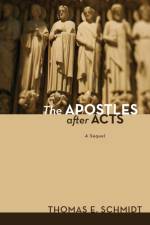
If you could add a book to the Bible, what would it contain? Here is one answer to that question: a "sequel" to Acts, showing the later careers of the Twelve, Paul's final travels before he faces Nero, the commission of the four Gospels, Jerusalem and its temple destroyed, the importance of the family of Jesus, and how close the apostles got to "the ends of the earth" in spreading the gospel. The Apostles after Acts includes a commentary that explains how the text was reconstructed from ancient sources and historical research. Here is a creative approach to the little-known but critical period when the New Testament record stops--and Christianity is just beginning.
The Artist and the Trinity aims to create a Christian theology of work based on Dorothy L. Sayers' analogy of the Trinity to the process of artistic creation. Sayers' analogy gives us an account of the person that does not collapse into the atomism of the individual of modern liberal capitalism, but is fully relational. By putting Sayers into dialogue with Alasdair MacIntyre, the book develops a fully Trinitarian theology of work that accounts for the interdependence of human beings, and for the ethical requirements of caring for the weak, the young, and the old in a way that is gender neutral.
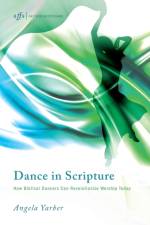
Dance in Scripture: How Biblical Dancers Can Revolutionize Worship Today examines the dances of seven biblical figures: Miriam, Jephthah's daughter, David, the Shulamite, Judith, Salome, and Jesus. Each figure offers a virtue that has the potential to revolutionize worship today. Yarber combines feminist and queer hermeneutics with dance history to highlight the nuances of the texts that often go unnoticed in biblical scholarship, while also celebrating the myriad ways the body can be affirmed in worship in creative, empowering, and subversive ways. Liberation, lamentation, abandon, passion, subversion, innocence, and community each contribute to the exciting ways embodied worship can be revolutionized. This is a book for those interested in biblical scholarship, dance, the arts, feminist and queer theory, or revolutionizing worship.
"Tikkun Olam"--To Mend the World is premised on the conviction that artists and theologians have things to learn from one another, things about the complex interrelationality of life and about a coherence of things given and sustained by God. The ten essays compiled in this volume seek to attend to the lives, burdens, and hopes that characterize human life in a world broken but unforgotten, in travail but moving towards the freedom promised by a faithful Creator. They reflect on whether the world--wounded as it is by war, by hatred, by exploitation, by neglect, by reason, and by human imagination itself--can be healed. Can there be repair? And can art and theology tell the truth of the world's woundedness and still speak of its hope?
This volume of essays centers on the theme of doing Christian theology in the present postmodern context, a consistent theme of the teaching of John D. Castelein. The work will celebrate and honor John's years of service by representing reflections of his teaching in the thought of his students and colleagues. The essays range over such topics as theological reflections on the postmodern philosophical themes, the relations between Christian theology and culture, the contributions of philosophical hermeneutics for Christian theology, and the challenges of engaging in ministry in a postmodern context. The seventeen contributors to the volume are former students and both present and former colleagues involved in various ministries, be they in a college setting or in a local church.
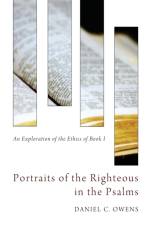
What have the Psalms to do with ethics? Readers prize the Psalter for its richly theological prayers, but into these prayers are woven a variety of ethical issues. This book explores the ethics of the Psalter by examining the four portraits of the righteous person that punctuate Book I. It begins by studying these psalms as individual compositions and then employs both the canonical approach and dialogic criticism to identify the complex relationship between the portraits' vision of the righteous life and its outcome. Does the righteous person enjoy security and the good life? The answer may be surprising, but joining the psalmist on the rocky path of the interface of faith and experience is certain to prove a formative experience.
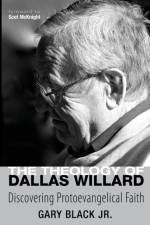
Evangelical Christianity in the United States is currently in a dramatic state of change. Yet amidst this sometimes tumultuous religious environment a rather unique blend of both ancient and contemporary Christian theology has found its way into the hearts and minds of emerging generations of Christians. The Theology of Dallas Willard both describes and conveys the essence of this increasingly popular and perhaps mediating view of the gospel of Jesus Christ. Blending both a prophetic critique with pastoral encouragement, Willard's unique understanding of the reality present within a life lived as a disciple of Jesus in the kingdom of God is attracting both new and traditional Christians to reconsider their faith.
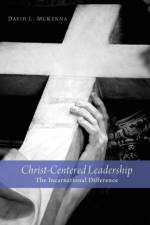
""If a leader is a Christian, what difference does it make?"" Giant strides have been made in secular leadership theory toward a Christian viewpoint. Priority is now given to character as well as competence, accountability as well as power, transformation as well as transaction, and servanthood as well as success. But these qualities apply to secular as well as to Christian leadership. So, the question remains, ""What difference does it make?""David McKenna finds the answer in the Incarnation of Jesus Christ--a divine act for him and a defining attitude for us. Philippians 2:11-15 sets the standard and gives the details. ""Your attitude should be the same as Jesus Christ"" means following his call to the cross, where we die to self and sacrifice all self-interest in position, power, and prestige in order to serve obediently, faithfully, and humbly for the good of others and the glory of God. Christ-centered leadership is not an extension of the highest and best of human leadership. Radical obedience to the call of Christ and utter dependence upon the Holy Spirit make a substantive difference. In the most practical terms, Incarnation continues in us when we live fully, lead freely, and go where he wants us to go.
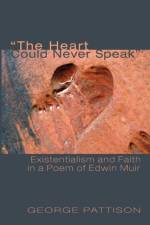
The book offers an interpretation of a posthumously published poem by Edwin Muir (1887-1959), beginning "The heart could never speak / But that the Word was spoken." The poem is read as summing up Muir's lifelong struggle with fundamental questions about the meaning of existence, questions often developed in dialogue with such figures as Nietzsche, Holderlin, and Kafka. These references allow us to bring Muir into conversation with modern existentialist philosophy and theology, and Muir's poetic thought is seen as both illuminating and as illuminated by such existentialist thinkers as Heidegger, Bultmann, Kierkegaard, and Berdyaev. Themes such as death, time, love, the nature of language, and the alienation brought about by technological mass society, and the threat of nuclear catastrophe are central to the poem's subject-matter and are dealt with by Muir in such a way as to make possible a Christian version of existentialist thought. The perennial nature of such questions in modern society makes the poem as relevant to contemporary issues in religious thought today as when it was written. For all its simplicity, it is the argument of the book that it makes an abiding contribution to human self-understanding.
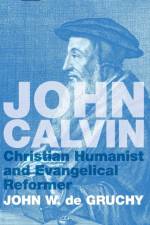
2009 is the 500th anniversary of the birth of Calvin, the Reformed theologian whose legacy has played such an important role in the shaping of modern South Africa. The popular understanding of him as grim moralist, proponent of predestination and a tyrannical God is a caricature, but one that does spring from aspects of Calvin's legacy. In this book, De Gruchy attempts to restate the Reformed tradition as a transforming force, one that opposed slavery and apartheid and that participated in the struggle for liberation and transformation in this country. De Gruchy considers Christian humanism to be an alternative to both Christian fundamentalism and secularism, as ""being a Christian is all about being truly human in common with the rest of humanity"", and has come to the conclusion that there is much to retrieve and celebrate in the Reformed tradition that is of importance for the ecumenical church and global society in the 21st century. The ""evangelical"" element in the title refers to the literal meaning of the word - ""good news"" - which is at the heart of being both Christian and human.
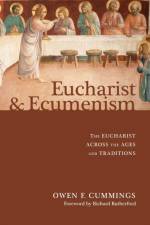
Most Christians worship on a regular basis on the Lord's Day. They have done so from the beginning, and their worship has centered on the Eucharist, following Jesus's words, "Do this in remembrance of me." Over the two millennia of the Christian tradition there have been shifts of emphasis and understanding about the Eucharist. This book attempts to point out, by providing accessible accounts of both liturgies and liturgists across the centuries and traditions, just how much different Christians have in common and how they can benefit from attending to one another's worship. The author's ultimate hope is that in its small way, the book will contribute to Christians worshiping together.
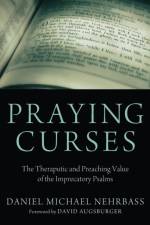
Public reading of the psalms facilitates corporate worship, but it can also create a degree of awkwardness as a number of passages in the Psalter contain curses, asking God to avenge enemies. The presence of vengeful speech seems antithetical to Jesus' Sermon on the Mount. What are these psalms really about? This book recovers the value of imprecatory speech in Scripture, arguing that such passages continue to be relevant today, both in preaching and therapy. The interpretive model Nehrbass suggests is that of dependence: these psalms transfer the burden of one's enemies to God and affirm that it is God's prerogative alone to avenge. The authors of the imprecatory psalms were victims of violence, so this book looks to contemporary victims of violence for their interpretation and application of these psalms. This study is decidedly practical. Nehrbass examines the nature of anger and hatred and highlights some of the redemptive aspects of these emotions. He concludes that the imprecatory psalms offer several positive aspects for dealing with hatred. Use of these passages fosters in believers a passion for God's reputation and can also aid us in surrendering our problems to God's control.
Biblical and Ancient Greek Linguistics (BAGL) is an international journal that exists to further the application of modern linguistics to the study of Ancient and Biblical Greek, with a particular focus on the analysis of texts, including but not restricted to the Greek New Testament. The journal is hosted by McMaster Divinity College and works in conjunction with its Centre for Biblical Linguistics, Translation and Exegesis, and the OpenText.org organization (www.opentext.org) in the sponsoring of conferences and symposia open to scholars and students working in Greek linguistics who are interested in contributing to advancing the discussion and methods of the field of research. BAGL is a refereed on-line and print journal dedicated to distributing the results of significant research in the area of linguistic theory and application to biblical and ancient Greek, and is open to all scholars, not just those connected to the Centre and the OpenText.org project.
The importance of baptism within Christian history, theology, and practice is of the first order. Rooted in Christian Scripture, baptism is initiation into Jesus Christ and the sacramental beginning of engagement with the church, the body of Christ. In recent decades, the relationship between baptismal theology and ecclesiology has changed. Rather than focusing solely on the implications of baptism for individuals, the center of theological conversation has moved increasingly to the nature of baptism as formative of the church. One of the pioneers in exploring this theological issue in the United States has been the Rev. Dr. Louis Weil, who, from the time he helped author the 1979 Book of Common Prayer, has advocated for an approach called ""baptismal ecclesiology."" In a number of essays since the 1980s, Dr. Weil has encouraged an increasingly ecumenical conversation around this particular approach to ecclesiology. This ecumenical collection of essays by a distinguished and international group of sixteen scholars continues the conversation on liturgy and ecclesiology begun by Fr. Weil.
The essays in this volume aim to contribute to the newly developing academic subject of biblical spirituality. It is prompted by the belief that, although the Christian tradition has always nurtured an emphasis on spirituality rooted in the Bible and its interpretation, few biblical scholars, until recently, have pursued their work by making connections with either this religious tradition or present-day interest in the broader phenomenon of spirituality. Spiritual interpretation has overlaps with theological interpretation but is distinctive because of its focus on the wisdom of lived experience and practice. The essays therefore attempt, from within the context of the academy, responsible readings of Scripture that have as a major focus the study of how particular texts might contribute to a spirituality in which individual and communal flourishing is a major feature.The essays began as papers produced for an international symposium on the Bible and Spirituality in May 2012, hosted by the Centre for the Study of the Bible and Spirituality in the School of Humanities at the University of Gloucestershire.
Abonner på vårt nyhetsbrev og få rabatter og inspirasjon til din neste leseopplevelse.
Ved å abonnere godtar du vår personvernerklæring.