











Gjør som tusenvis av andre bokelskere
Abonner på vårt nyhetsbrev og få rabatter og inspirasjon til din neste leseopplevelse.
Ved å abonnere godtar du vår personvernerklæring.Du kan når som helst melde deg av våre nyhetsbrev.

This is a teacher's book, written by an able teacher.... Most people are interested in literature because of a deep love for literature itself. They want to understand the reasons for that love. Ryken helps us do this, but he also helps Christians understand and validate their love for literature.... Ryken has also provided a solid means for non-Christians to understand a Christian perspective on literature.... It [Windows to the World] comes closer to defining the goal and task of the teacher of literature than any work I have read. - Christianity and Literature
Owen Barfield (1898-1997), philosopher, historian, and literary theoretician, is well known for his friendship with C. S. Lewis. What is virtually unknown is that he was also admired and promoted by T.S. Eliot, who in the 1920s became his publisher at Faber and Faber. There can scarcely be two writers at greater variance than Lewis and Eliot; that Barfield was admired by both showed that he was an independent thinker, far more subtle and complex than has so far been recognized.Diener's book about Barfield's early work is the first systematic study to trace the roots and the development of his thought. It places Barfield in the tradition of British and European cultural and social critics, including Coleridge, Arnold, Nietzsche, and Rudolf Steiner. In the light of this tradition, Barfield's work emerges as a unique and constructive contribution to twentieth-century thought.
What does Jesus mean when he says, "A disciple is not above his teacher, but each disciple, after being fully trained, will be like his teacher" (Luke 6:40)? This verse has been quoted, cited, and referenced in vast amounts of Christian education and discipleship literature. Nevertheless, the verse is nearly untouched in exegetical discussions with the exception of source-critical analyses. From this verse arises an undeveloped theme in the Gospel of Luke and the New Testament--the theme of likeness education. Using content analysis methodology, Luke 6:40--one of the keystone passages in Christian education literature--serves as the starting point for mining out the theme of likeness education in the New Testament. This study consists of three concentric areas of investigation: (1) Luke 6:40 and its immediate context, (2) Luke-Acts, and (3) the New Testament corpus.
Human beings have to ask how faith is possible, in this mixed world of trouble and joy. A safe universe with no scope for adversity would be a mechanical toy, not a creation. A glorious universe will be a place where troubles have eventually been overcome.Christians believe in one God, who is three Persons. God the heavenly Father took the risk of making a real world, full of living people capable of happiness. Jesus Christ, God the Son, came as a human being to take responsibility for creation. He suffered and died; and he rose from death to vindicate the whole enterprise and show that creation can and will be made good. People are not left to work out their own faith but are invited to belong to the church, in order to keep in touch with God the Spirit. They are to behave as God's children, not by rule-bound conformity but by grateful response to the glory of God the Holy Trinity.
Mainline Christianity in the West is dying. Addiction to hierarchical and bureaucratic power is killing it. A management-god and a mission-god have usurped the Way of Christ. In the midst of decline the missional movement is attempting to reboot the church. Its goal is to remake a New Christian West through mission, leadership, mapping, and planning. Yet it is trapped in the language and methods of modernity. Its final solution is a polarizing vision of cultural domination by one social group, the Christians. The Way of Life and Truth has been forgotten. Christ is not a conquering King, a written Word, or an absolute Idea, but a divine Human Being. Social wholeness can only be realized through a rediscovery of Conversation, Reconciliation, and Empowerment. These reflect Christ's practices of eternal dialogue and reciprocal giving in small communities. Through this mutual Way of Life people of all faiths (and none) can discover deep within themselves Our Un/Known G-d. A gentle voice is whispering in the heart of all humanity, "I am . . . the Way."
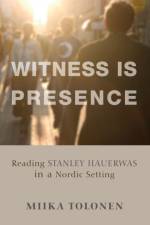
In a postsecular cultural situation the conditions for understanding and communicating a Christian tradition have changed. None of the established religions can any longer claim monopoly in the "marketplace of religions." A claim of this study is that a postsecular situation characterized, among other things, by dwindling memberships in established churches as well as a new visibility of alternative religious expressions, opens up a need to reflect on alternative ways of understanding Christianity in its context. This study focuses on the question, how can a Christian tradition be communicated understandably in a postsecular context? In traditional terms: how can Christian witness be understood in our situation? It is to this need, according to this study, that the ecclesiology of Stanley Hauerwas provides a meaningful perspective. This perspective becomes relevant because in a postsecular context a Christian church, even a folk church, cannot assume to be in a position of majority or power. There is, therefore, a need to ask how to understand Christianity as a community of witness that is neither in power nor a majority. The study suggests that embodiment of Christian convictions becomes a central factor in a meaningful postsecular notion of witness.
"Living abroad involves experiencing new cultures, making new acquaintances, and coming to a deeper insight about life and the world in which we live. Personally I will never regret our years in foreign countries even if it means living far away from our family and friends." -Monica Rabe in Culture Shock! - Living and Working Abroad Whether for the career opportunities, the chance to experience a new culture, or a combination of the two, living and working in a foreign country can be a rewarding experience for the expatriate family. But for the unwary and unprepared, it can be an unpleasant experience, as it strains relationships and tests the tolerance of the new foreigner. Culture Shock! - Living and Working Abroad will give anyone contemplating a move to another country a head start in avoiding and absorbing the effects of culture shock in their new home. From finding accommodation to operating effectively in the workplace, Monica Rabe identifies the problems commonly encountered by the expatriate and offers ways of overcoming and avoiding them.
How did the earliest Christians come to see Jesus as a divine and preexistent being alongside God? Aquila Lee proposes that the root of preexistent Son Christology is to be found in early Christian exegesis of the two messianic psalms (the catalyst) in the light of Jesus''s self-consciousness of divine sonship and divine mission (the foundation).Dr Lee has made a significant contribution to research on one of the central topics of New Testament study, the origin of the early church''s understanding of the divinity and pre-existence of Jesus Christ. Its great merit is to show how christology may have developed under the twofold influences of the self-consciousness of Jesus and the early church''s understanding of its Scriptures, and it deserves to be placed alongside the works of R. Bauckham and L. Hurtado in helping to establish a case for the early development of a high christology. The publishers deserve our gratitude for making Dr. Lee''s work more widely accessible to New Testament students. -- I. Howard Marshall, Emeritus Professor of New Testament Exegesis, University of Aberdeen In From Messiah to Preexistent Son Aquila Lee asks how early Christians came to see Jesus as a divine and preexistent being, alongside God. This important question goes right to the heart of Christology and the historic Christian faith. Lee convincingly shows that the belief in the divinity of Jesus originates in the teaching and ministry of Jesus himself. This is a provocative and engaging study that repays careful reading. It is a pleasure for me to recommend it.-- Craig A. Evans, Payzant Distinguished Professor of New Testament, Acadia Divinity College, Nova Scotia, Canada  Dr. Lee presents an impressive Christological thesis concisely and with many important exegetical insights. Its carefully developed argument deserves to be listened to attentively. -- Martin Karrer, Professor für Neues Testament und seine Umwelt, Kirchliche Hochschule Wuppertal/Bethel  Dr. Lee''s contribution may be compared to that of Seyoon Kim''s The Origin of Paul''s Gospel on Pauline studies. If Lee''s work fails to exert the influence it deserves, I believe it is not because his thesis lacks compelling force, but because paradigm shifts in scholarship such as the one necessitated by Lee''s work (if accurate) are not always a function of superior evidence but can be expected to be resisted by those who have invested a significant amount of scholarly capital in the currently-reigning paradigm. In any case, this is highly recommended reading on an extremely important subject.-- Andreas J. Köstenberger, Professor of New Testament and Biblical Theology and Director of PhD Studies, Southeastern Baptist Theological SeminaryAquila Hyung Il Lee (PhD, University of Aberdeen) was born in Seoul, Korea. He is Lecturer in New Testament and Greek at Biblical Graduate School of Theology in Singapore.
The standing of the Danish philosopher and religious thinker Soren Kierkegaard has gone up in recent years. Yet because he regarded communication as being as much about self-concealment as about self-revelation, he can still seem a forbidding and difficult figure. The deliberate ambiguity of Kierkegaard, in which he set out to repel as much as to attract his readers, is here explored by George Pattison, who gives full attention to the scandalous element of the philosopher's work, and does not shy away from his ambivalent attitudes towards sexuality, the body, marriage, and the family.This book is unlike other nontechnical introductions to Kierkegaard in that it does not seek to promote one part of Kierkegaard's writings over others, but offers, rather, a perspective on his life and output as a whole. That Kierkegaard grappled in his own age with many of the problems which beset our own, and frequently offered fascinating responses to those problems, is a major incentive to examine his thought today. By placing Kierkegaard in the context of a ""crisis of faith"" and making valuable connections between events in the philosopher's life and the development of his thinking, the author of this timely, readable, and attractively written study has produced a book which should be of interest to a wide nonspecialist readership.
Mission in the Gospels considers the gospels through a twin lens: first, the nature of Jesus' own mission (as understood by the evangelists), and secondly, the desire of the gospel writers and their churches to gain some understanding of their own mission by interpreting Jesus' attitudes and actions (especially with regard to the Gentiles). The principles for mission that arise out of this investigation shed a good deal of new light on the gospels and the motives for their writing and on their theological insights.
Karl Barth was an eminently conversational theologian, and with the Internet revolution, we live today in an eminently conversational age. Being the proceedings of the 2010 Karl Barth Blog Conference, Karl Barth in Conversation brings these two factors together in order to advance the dialogue about Barth's theology and extend the online conversation to new audiences. With conversation partners ranging from Wesley to ¿i¿ek, from Schleiermacher to Jenson, from Hauerwas to the Coen brothers, this volume opens up exciting new horizons for exploring Barth's immense contribution to church and world. The contributors, who represent a young new generation of academic theologians, bring a fresh perspective to a topic--the theology of Karl Barth--that often seems to have exhausted its range of possibilities. This book proves that there is still a great deal of uncharted territory in the field of Barth studies. Today, more than forty years since the Swiss theologian's death, the conversation is as lively as ever.
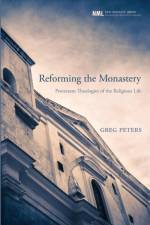
Richard Froude wrote in 1833 to John Henry Newman that "the present state of things in England makes an opening for reviving the monastic system." Seemingly original words at the time. Yet, monasticism is one of the most ancient and enduring institutions of the Christian church, reaching its zenith during the High Middle Ages. Although medieval monasteries were regularly suppressed during the Reformation and the magisterial Reformers rejected monastic vows, the existence of monasticism has remained within the Reformation churches, both as an institution and in its theology. This volume is an examination of Protestant theologies of monasticism, examining the thought of select Protestant authors who have argued for the existence of monasticism in the Reformation churches, beginning with Martin Luther and John Calvin and including Conrad Hoyer, John Henry Newman, Karl Barth, and Donald Bloesch. Looking at the contemporary church, the current movement known as the "New Monasticism" is discussed and evaluated in light of Protestant monastic history.
Beginning in medieval times, the author takes the reader on a fascinating journey examining key events that have shaped religious life in Ireland, with special emphasis on the Puritan era and the leadership of the church exercised by Archbishop James Ussher.Richard Baxter once said, ""If all the Episcopalians had been like Archbishop Ussher, all the Presbyterians like Mr. Stephen Marshall, and all the Independents like Jeremiah Burroughs, the breaches of the church would soon have healed.""
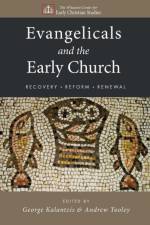
In this volume noted Evangelical historians and theologians examine the charge of the supposed ""ahistorical nature of Evangelicalism"" and provide a critical, historical examination of the relationship between the Protestant evangelical heritage and the early church. In doing so, the contributors show the long and deeply historical rootedness of the Protestant Reformation and its Evangelical descendants, as well as underscoring some inherent difficulties such as the Mercersburg and Oxford movements. In the second part of the volume, the discussion moves forward, as evangelicals rediscover the early church-its writings, liturgy, catechesis, and worship-following the ""temporary amnesia"" of the earlier part of the twentieth century.Most essays are accompanied by a substantial response prompting discussion or offering challenges and alternative readings of the issue at hand, thus allowing the reader to enter a conversation already in progress and engage the topic more fully. This bidirectional look-understanding the historical background on the one hand and looking forward to the future with concrete suggestions on the other-forms a more full-orbed argument for readers who want to understand the rich and deep relationship between Evangelicalism and the early church.
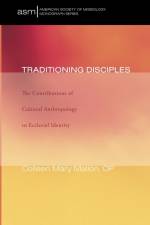
In a globalized world and an ""age that cannot name itself,"" how do Christian communities sustain a recognizable gospel identity? How might examining tradition and identity formation from both theology and cultural anthropology help churches approach the challenges of being a follower of Jesus today? With these questions in focus, Colleen Mallon studies symbol systems in the works of anthropologists Mary Douglas, Victor Turner, and Clifford Geertz and places her findings in dialogue with a ""thick description"" of discipleship gleaned from the great Roman Catholic ecclesiologist Yves Congar, OP. The result is a reflection on gospel identity that will be invaluable to Christian ministers, missioners, and students of theology interested in the social and theological processes of disciple formation.
About the Contributor(s):Steven Darsey has served Atlanta''s Glenn Memorial United Methodist Church as director of music since 1986. Holding the Doctor of Musical Arts from the Yale School of Music and Institute of Sacred Music, he has served several churches of different denominations and Emory''s Candler School of Theology. He articulates his commitment to worship through writing, conducting, composing, and serving as founding artistic director of the worship arts organization Meridian Herald.
What is grace? And more important, what difference do the "comfortable words" of grace make in the lives of everyday people? These are the questions to which Paul F. M. Zahl has devoted his life, and this book is a collection of essays written in honor of him that seeks to answer these great questions. From literary theory to exegesis to systematic theology, these essays are representative of the breadth and depth of the influence Dr. Zahl has had on a variety of scholars, and reflect his emphasis on the relationship between theology as an academic discipline and the pastoral impact of "one-way love" on everyday people. Contributors include: C. FitzSimons Allison, Todd Brewer, George Carey, James D. G. Dunn, Susan G. Eastman, Mark Mattes, Geiko Müller-Farenholz, Justin S. Holcomb, John D. Koch Jr., Lauren Larkin, Jonathan A. Linebaugh, Jürgen Moltmann, Heinz-Dieter Neef, J. Ashley Null, Raymond C. Ortlund Jr., Dylan D. Potter, Justyn Terry, Tullian Tchividjian, Jonathan K. M. Wong, Paul F. M. Zahl, and Simeon Zahl."If there is no greater blessing than the forgiveness of sins, then there is no greater ministry than that to which Paul Zahl has dedicated his life. This collection of remarkable essays is a fitting tribute to a great friend and an indefatigable evangelist, in the best sense of that word."--Michael Horton, Westminster Seminary California"Paul Zahl has grown a community around him whose appreciation is poured out in these remarkable essays, which not only describe but give words of comfort for troubled souls. Theology can still be a living fountain, so behold in these words what surprises God gives to the unexpecting and undeserving."--Steven D. Paulson, Luther Seminary"Is there anything more destabilizing, threatening, and dangerous than grace and all the doctrines that surround it? So beware, gentle reader: you are about to enter into a minefield; step too far left or right and you''ll be blown up by one heresy or another. Walk the straight and narrow path of law and gospel and you will find great comfort in these essays, which honor a man who has helped so many of us remember the dangerous comfort of grace."--Mark Galli, editor, Christianity TodayTodd Brewer is a doctoral candidate in New Testament at Durham University in Durham, England.John D Koch Jr. is a doctoral candidate in Systematic theology at Humboldt Universität zu Berlin.
The flashy poets and the poets with a schtick get the big audience, but it is the quiet poets whose individual poems more often linger with me. I'd trade all of Ginsberg, say, for William Bronk's six-line poem ""After Bach,"" which derives from the cello suites the lesson that sadness ""can be in part /to accept the absence of One to say it to."" And it is Bronk whose work is called to mind for me by Yahia Lababidi's Barely There, in which ""in embracing, we let go.""'-- H. L. Hix, Author of First Fire, Then Birds
Description:Journal for the Evangelical Study of the Old Testament (JESOT) is a peer-reviewed journal devoted to the academic and evangelical study of the Old Testament. The journal seeks to fill a need in academia by providing a venue for high-level scholarship on the Old Testament from an evangelical standpoint. The journal is not affiliated with any particular academic institution, and with an international editorial board, open access format, and multi-language submissions, JESOT cultivates and promotes Old Testament scholarship in the evangelical global community. The journal differs from many evangelical journals in that it seeks to publish current academic research in the areas of ancient Near Eastern backgrounds, Dead Sea Scrolls, Rabbinics, Linguistics, Septuagint, Research Methodology, Literary Analysis, Exegesis, Text Criticism, and Theology as they pertain only to the Old Testament. JESOT also includes up-to-date book reviews on various academic studies of the Old Testament.
Cordell Strug served as a Lutheran pastor for almost twenty-eight years in rural Minnesota. In these stories and reflections, he gives a picture of a pastor's life from the inside. He writes of sitting with the dying and meeting with the angry, of visiting shut-ins and writing sermons, of lonely drives over frozen roads, of work he can't finish and wounds he can't heal. He is candid about what surprised or bothered him, about his misjudgments and failures, about the ever-growing weight of stress and sorrow. He tells who inspired him and who drove him nuts, which advice he found priceless and which he found useless. He shows the ideals of faith colliding with the realities of life in the struggling congregations he served.
A Time to Live and a Time to Die will inspire its readers through a greater understanding of God's seasons for humanity as revealed by Solomon in the book of Ecclesiastes. It describes in poetry and rhyme the ever-changing nature of the seasons yet their harmony and purpose.
Ants are diligent when they undertake a task. In order to understand and follow the Scripture for better living, follow their example. God Likes Ants: Every Week features Andrea Gilson's thoughts, perspectives, and interpretations in a weekly reader format. Scripture verses from the Authorized King James Bible are featured and discussed with both the brand new and the lifelong Christian in mind. The stress is on salvation through faith, the sovereignty of God, Jesus as the Savior of the world, God's relationship to Israel, and the nurturing of an intimate relationship to our Creator through prayer. Use this Bible supplement for personal study or in groups to promote learning, fellowship, and worship.
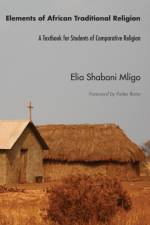
African Traditional religion (ATR) is one of the world religions with a great people and a great past. It is embraced by Africans within and outside the continent despite the various ethnic religious practices and beliefs. This book highlights and discusses the common elements which introduce African Traditional Religion as one unified religion and not a collection of religions. The major focus of the book is discussing the need for studying ATR in twenty-first-century Africa whereby globalization and multi-culture are prominent phenomena. Why should we study the religion of indigenous Africans in this age? In response to this question, the book argues that since ATR is part of the African people's culture, there is a need to understand this cultural background in order to contextualize Christian theology. Using some illustrations from Nyumbanitu worship shrine located at Njombe in Tanzania, the book purports that there is a need to understand African people's worldview, their understanding of God, their religious values, symbols and rituals in order to enhance meaningful dialogue between Christianity and African people's current worldview. In this case, the book is important for students of comparative religion in universities and colleges who strive to understand the various religions and their practices.
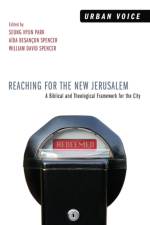
The task of this book is to examine the biblical and theological meaning of the city and our mission within it. It starts with the premise that the garden is lost, and we are headed toward the New Jerusalem, the city of God. In the meanwhile, we dwell in earthly cities that need to be adjusted to God's city: ""[T]he fall has conditioned us to fear the city . . . though, historically, God intended it to provide safety, even refuge. . . . We have to band together and act to take back our communities if we are to help God in the divine task of reconciling the world to Godself by assisting God in adjusting our communities to God's New Jerusalem, rebuilding our own cities of Enoch on the blueprints of Christ . . . to go into all the world and share his good news, building the Christian community along the lines of the New Jerusalem, a city of light in which God is revealed."" (from the Introduction by William David Spencer)Toward achieving this goal, this single, accessible volume brings together the biblical, the systematic, and the practical aspects of urban ministry by various contributors who are urban practitioners and theologians themselves, and have taught at Gordon-Conwell Theological Seminary, Boston Campus.
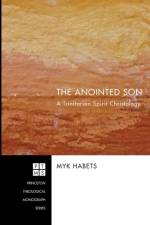
Spirit Christology complements Logos Christology in the same way in which Christ and the Spirit are mutually constitutive. Or at least this should be the case. The history of Christian thought shows that Logos Christology has dominated, resulting in both an eclipse of Trinitarian doctrine and a diminution of pneumatology. Recently there have been calls to reclaim a theology of the Third Article in order to present a Trinitarian theology that is faithful to Scripture, the Great Tradition, and one that is existentially viable. While studies examine various aspects of Spirit Christology there has yet to appear a work that introduces the doctrine, examines the various mutually exclusive proposals, and offers a constructive trinitarian proposal. The present work does just this, introducing the constituent features of a Spirit Christology that is Trinitarian, orthodox, and contemporary. The current work proposes a model of Spirit Christology that complements rather than replaces Logos Christology and does so in a robustly Trinitarian framework. Within contemporary theology a pneumatically oriented approach to Christology is being advanced across denominational and traditional lines. Those wanting to navigate their way through the many competing proposals for a Third Article theology will find a comprehensive map here.
Abonner på vårt nyhetsbrev og få rabatter og inspirasjon til din neste leseopplevelse.
Ved å abonnere godtar du vår personvernerklæring.