











Gjør som tusenvis av andre bokelskere
Abonner på vårt nyhetsbrev og få rabatter og inspirasjon til din neste leseopplevelse.
Ved å abonnere godtar du vår personvernerklæring.Du kan når som helst melde deg av våre nyhetsbrev.

About the Contributor(s):William Chauncey Emhardt, K.S.S (Greece), K.S.H.S. (Jerusalem), was Secretary for Europe and Near East of the National Council of the Episcopal Church.George M. Lamsa was a native of Kurdistan (Assyria) and Field Representative of the American Branch of the Archbishop of Canterbury''s Assyrian Mission.
Description:This study continues the effort to map out an early career for Jeremiah. There exists an abundance of background material: chronological notices, historical and biographical reports, and a collection of oracles and prophetic utterances of other descriptions, as well as a wealth of relevant non-biblical texts. This book describes both the traditional and nontraditional views of Jeremiah, and then presents the view that Jeremiah''s career begins not before, nor after, but at the height of the Josianic reform, that is, in 622 BC.About the Contributor(s):Jack Lundbom is currently Distinguished Visiting Scholar at Garrett-Evangelical Theological Seminary, Evanston, Illinois. He is author of Jeremiah: A Study in Ancient Hebrew Rhetoric (1975; 1997), the three-volume Jeremiah in the Anchor Bible Commentary series (1999; 2004), and Jeremiah among the Prophets (Cascade Books, forthcoming).
Description:In November 2010, Republican Scott Walker was elected Governor of Wisconsin. In something of a Tea Party sweep, the iconic Russ Feingold lost his seat in the U.S. Senate and the Wisconsin legislature became Republican in both chambers. In early 2011, Governor Walker announced a ""budget repair bill"" that, among other things, gutted collective bargaining rights for most public sector unions. Outraged citizens occupied the state capitol for weeks in an outpouring of opposition, the likes of which had not been seen in Wisconsin since the protests against the war in Vietnam in the 1960s.Various recall elections were held in the summer of 2011 (all in regard to the state senate), with another set of elections in June 2012; among them the governor''s recall was paramount. Democrats regained control of the senate, but Scott Walker defeated Milwaukee mayor Tom Barrett and kept the governor''s mansion. Many Democrats were stunned by the failed recall.These essays probe that failure. Every contributor has a unique perspective, but lurking near the core of that probing are two key issues: the extent to which corporations have taken over government and whether ecological crises are revealing conventional politics as complicit in disaster.About the Contributor(s):Paul Gilk grew up on a small farm. He lives in the woods of northern Wisconsin with his wife, Susanna. He has several published books and also writes under the pseudonym Seedy Buckberry. David Kast is a retired mathematics teacher living with his wife in Wausau, Wisconsin. He was active in organizing protests against the Gulf Wars and has invited numerous speakers to northern Wisconsin.
Description:The reality of the secular has come to obsess modern religious thinkers, notes Martin E. Marty. This volume analyzes from the first time the complex story of THE MODERN SCHISM, an episode in the cultural and spiritual history of the West which has had fateful consequences for contemporary society.Dr. Marty argues that during the previous century, there occurred a cluster of events more devastating to--and potentially more hopeful for--Christianity than anything that happened during such similar periods as the Renaissance and the Enlightenment. He traces three different types of secularization which together make up the ""modern schism,"" shows how they have developed in the West, and where they are leading man today.By contrasting the ways in which the old Christian order was attacked in Europe, ignored in England, and transformed in America, the author points to present alternatives to that order and what they mean for society.About the Contributor(s):Martin E. Marty is the Fairfax M. Cone Distinguished Service Professor Emeritus at the University of Chicago, where for 35 years he taught religious history in three faculties. Since 1956 he has been on the masthead of the Christian Century and is editor of Context. He specializes in American religious history and headed the six-year ""Fundamentalism Project"" of the American Academy of Arts and Sciences. He holds the National Medal of Humanities and the medal of the American Academy of Arts and Sciences. He was honored with the National Book Award for Righteous Empire in 1971. An ordained Lutheran minister, he frequently also writes on theological themes.
Description:This is the first book to discern and spell out the fascinating coalescence of churches in America today. Drawing on mainline Protestantism, the newer evangelicalism, and Roman Catholicism, this new community, or ""community of communities,"" may be called a ""public church"" because it is particularly sensitive to the public order and to the interplay of its members as citizens and church people. In a world of increasing interreligious tensions and in an America growing weary of pluralism and freedom, the public church both fills a void and counters trends at home and abroad.Grounded in an historical understanding of the Christian churches in America, The Public Church draws on biblical, theological, and political motifs to offer a model for self-understanding and mission in the years ahead. It discusses the nature of the public church, its relation to the individual traditions from which it springs, its continuing reliance on the local congregation, its relation to the New Christian Right, and the political balance between left and right that must be maintained if the public church is to grow even more effective as a religious force and as a humane venture. In short, the book is an analysis of American Christianity in its newest and most exciting phase.About the Contributor(s):Martin E. Marty is the Fairfax M. Cone Distinguished Service Professor Emeritus at the University of Chicago, where for thirty-five years he taught religious history in three faculties. Since 1956 he has been on the masthead of the Christian Century and is editor of Context. He specializes in American religious history and headed the six-year ""Fundamentalism Project"" of the American Academy of Arts and Sciences. He holds the National Medal of Humanities and the medal of the American Academy of Arts and Sciences. He was honored with the National Book Award for Righteous Empire in 1971. An ordained Lutheran minister, he frequently also writes on theological themes.
Description:Ze Lo Nora was designed with two different readerships in mind--newcomers and old pros. Beginning and intermediate Hebrew language students will find in Ze Lo Nora clear, reliable explanations and memorable examples of all points of Hebrew grammar. It is an indispensable supplement to any Hebrew textbook. Rules and comments on style and use are presented in a simple, informative, and non-dogmatic manner, with examples from the language as it is actually spoken. In addition to the usual staple of verbs, nouns, and adjectives, the book covers ""little items"" such as pronouns, prepositions, prefixes, and discourse ties and ""big ones"" such as clauses, and sentences. It also touches upon a variety of ""how to"" questions of use.Students and readers more conversant with Hebrew will find interspersed in the text, in clearly demarcated sections, more complex structures and structural explanations, more nuanced discussions of linguistic issues, instructive historical notes and sample texts of diverse genres.Each unit in the book is self-contained, making it possible for the user or reader to pick and choose a topic independent of place and sequence of the book. All simple examples are voweled and translated whereas the more advanced ones are not. About the Contributor(s):Rutie Adler is Lecturer and Coordinator of the Hebrew Language Program at the University of California at Berkeley. She has a MA in Linguistics from UC Berkeley, and an MA in TESOL from San Francisco State University. She has taught biblical, post-biblical, and modern Israeli Hebrew including Israeli literature and poetry at all proficiency levels. She has extensive experience in training Hebrew instructors and has also developed numerous teaching materials and software; her most recent creation is the UC Berkeley Hebrew site: ivrit.berkeley.edu.
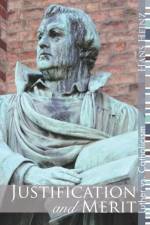
About the Contributor(s):Hans (Johann) Heinz, ThD, born 1930 in Vienna, is Professor Emeritus of Systematic Theology and Church History, currently residing in Braunau, Austria. He has served as a pastor-evangelist and academic teacher for more than forty years in his home country and in Germany, being one of the leading Seventh-Day Adventist scholars in the fields of Reformation History and Luther Studies. While teaching at the seminaries in Bogenhofen, Marienhohe, and Friedendsau, his influence guided the theological reflection of numerous students and pastors. The present volume represents his doctoral dissertation, which was originally published by Andrews University Press (1984). The theological issues addressed in this book are still of vital importance for the modern ecumenical and interchurch dialogue.
Description:Shekhinah/Spirit is a daring rediscovery of the role of the Spirit of God that runs through both Judaism and Christianity. It explores the rich and diverse history of Jewish interpretations of the divine presence and shows how many profound Jewish insights impact or relate to Christian understanding of the Holy Spirit. The author argues for the viability of a ""Spirit Christology"" that can be understood from within the covenant relationship and points to the exciting implications such directions will have for the doctrine of the Trinity among Christians. At the same time it links Judaism and Christianity in dialogue to a common ground in the saving activity of the God of Israel.Shekhinah/Spirit is a provocative attempt to deepen the grounds of discussion in the Jewish-Christian dialogue. It moves beyond the sticking point of Christological disputes to consider broader aspects of the questions of God''s plan. It explores three important areas in depth: the question of exclusivism in election, evil, and eschatology. The author works with a series of major problem areas in order to help bridge misunderstandings and roadblocks by using a process of relational theology.This book is full of rich insights into the spirituality of both God''s presence and God''s spirit in the Judeo-Christian tradition.About the Contributor(s):Michael Lodahl is Professor of Theology and World Religions at Point Loma Nazarene University in San Diego, California. He earned a PhD in Theological Studies from Emory University in 1988, focusing on issues of Jewish-Christian dialogue and relations. He is the author of seven books, including Claiming Abraham: Reading the Bible and the Qur''an Side-by-Side.
Description:How might women in the Bible tell their stories if they were prompted to do so by Eve Ensler''s controversial play, The Vagina Monologues? This collection imagines some answers to that question. The monologues herein are written by a variety of authors, including scholars, undergraduates, clergy, and laywomen; the content of the narratives reflects this variety, being at times faithful or irreverent, tragic or even funny. All seek to give twenty-first-century voices to women in canonical texts--including the Hebrew Bible, Deuterocanonical books, and New Testament--who are often speechless, nameless, or otherwise marginalized. Not for the faint of heart, these monologues not only end the silences but also add flesh and bone to characters whose experiences have too easily been justified, metaphorized, or altogether ignored. By naming the torn places in these women''s stories, this volume invites readers to encounter both the biblical characters and their contemporary interpreters with an attitude of compassionate listening. Our hope is that such compassionate listening may contribute not only to more just readings of sacred texts, but also to the mission of Eve Ensler and V-Day to end global violence against women and girls.Endorsements:""Roaring off the page and whispering through the cracks, authentic struggles with God are laid bare in these midrashic monologues. Through the fourfold feminist hermeneutic of suspicion, resistance, remembrance, and reconstruction, the Word is made flesh again and again by women with the courage to bring real-world concerns to their readings of Scripture. May their witness contribute to an end to violence against women and girls!""--Darryl W. Stephens, Assistant General Secretary for Advocacy and Sexual Ethics, General Commission on the Status and Role of Women, United Methodist Church""In this exciting collection of monologues, the authors expand the voices of biblical women and, in so doing, find a way to speak things that are regularly deemed unspeakable in Judeo-Christian tradition: they graphically describe their experiences of sexuality, embodiment, and trauma; they remember and resist religion''s collusion with women''s submission, suffering, and silencing; and they express their religiosity comingled with anger, longing, and fraught relationships. This is certainly a book that would make Eve Ensler proud.""--Kristi Upson-Saia, Associate Professor of Religious Studies, Occidental College""If truth be told, many women in biblical stories are often depicted simply as vaginas--mute and willing vessels of the Lord or husbands. The sometimes graphic retellings in this book take this portrayal seriously, but give voice to the silenced site of suffering and delight. Lady Parts issues an eloquent and poignant denunciation of sexual violence, challenging and engaging both the imagination and the heart.""--Melody D. Knowles, Associate Professor of Old Testament, McCormick Theological Seminary""Female sexual bodies and reproductive organs are, literally, a basic requirement for societal survival. And yet, and especially so in patriarchal societies such as the Bible''s and also (regrettably still) ours in the West, those bodies, those organs, are not directly spoken about and are kept silent by and in the normative culture. In this book such body parts and their biblical owners are endowed with voices, dignity, and agency. The stories ''they tell are imaginative and at times fanciful, but always poignant and touching. Thus hidden, silent female body parts become whole, living women. Read, laugh, and cry in equal measure. Be empowered; enjoy.""--Athalya Brenner, Professor Emerita of Hebrew Bible/Old Testament, Universiteit van AmsterdamAbout the Contributor(s):Kathryn D. Blanchard is Associate Professor of Religious Studies at Alma College in Michigan. She is the author of The Protestant Ethic or the Spirit of Capitalism (Cascade, 2010).Jane S. Webster is Professor of R
The world is urban at its core--over half the world's population live in cities and most of the global poverty resides there too. Urbanization affects all of us, whether we love in cities or not, and this impact will increase in the coming decades. For fifteen years Urban Expression has been motivating people to get up and move into inter-city neighborhoods to see what they can learn and what difference they can make. This book gets into the heads and hearts of our teams and unpacks the values that have inspired these missionaries to be urban to the core. Grass-roots honest reflections from some of our one hundred current and former team members and mission partners, capture the essence of what has shaped the thinking and activity of this experimental urban mission agency.If you are concerned about cities, those on the margins of society, cross-cultural mission or new forms of church, this book will inspire and challenge your core convictions about mission priorities in an urban world.
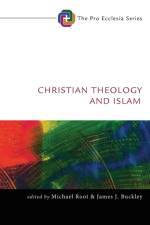
About the Contributor(s):Michael Root is Professor of Systematic Theology at The Catholic University of America and Executive Director of the Center for Catholic and Evangelical Theology. He was formerly the Director of the Institute for Ecumenical Research, Strasbourg, France.James J. Buckley is Professor of Theology at Loyola University Maryland. He has recently contributed to and edited (with Frederick Bauerschmidt and Trent Pomplun) The Blackwell Companion to Catholicism (2007). He is associate director of the Center for Catholic and Evangelical Theology.
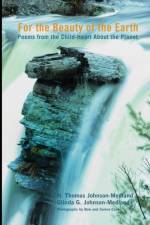
About the Contributor(s):N. Thomas Johnson-Medland is the CEO of Lighthouse Hospice, Inc., of Cherry Hill, New Jersey. He is the author of Bridges, Paths, and Waters; Dirt, Sky, and Mountains, Cairn-Space, Entering the Stream, Along the Road, From the Belly of the Whale, Dance Macabre, Windows and Doors, as well as Turning Within and Duende.Glinda G. Johnson-Medland is a poet, therapist, and writer who lives in the Pocono Mountains with Tom, Zachary and Josiah. She loves gardening, the outdoors, and finding a quiet spot in the sun to read from time to time.Bob and Sarina Cook are the proprietors of Cook Family Photography (www.cookfamilyphotography.net), and live in Mount Pocono, PA. They are friends of Tom and Glinda''s.
About the Contributor(s):Todd C. Ream (PhD, The Pennsylvania State University) is Professor of Higher Education at Taylor University and a research fellow with Baylor University''s Institute for Studies of Religion.Perry L. Glanzer (PhD, University of Southern California) is Professor of Educational Foundations and a faculty fellow with the Institute for Studies of Religion at Baylor University. Together, they serve as the book review editors for Christian Scholar''s Review and are the authors of Christian Faith and Scholarship: An Exploration of Contemporary Developments and Christianity and Moral Identity in Higher Education.
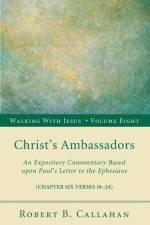
About the Contributor(s):Robert B. Callahan Sr. founded Callahan & Associates, Inc., in 1976, a telecommunications consulting firm. He is the author of The Triune God Speaks to the Saints, Volume 1 in an eight volume expository commentary on the Apostle Paul''s epistle to the Ephesians.
Description:Holiness is a topic that is rarely discussed in Christian colleges and seminaries, yet the rationale for the existence of these institutions is that they provide environments where people can grow into the image of Christ. In other words, these places exist so that Christians can grow in holiness. The essays collected in this volume treat the theme of holiness from a variety of theological disciplines, all with the purpose of disabusing Christians from mischaracterizations of the theme as well as offering a vision for what the Christian life could look like. In both simple and profound ways, holiness is a liberal art; it is the Christian way and shape of life.Endorsements:""Castelo and his colleagues at Seattle Pacific University show us resources . . . for reconsidering long-standing, evangelical discussions regarding faith-learning integration. Holiness as a Liberal Art is a catalyst for that task.""--Amos Yong, Regent University""When asked to justify their existence, many Christian liberal arts colleges and universities resort to empty platitudes about student-teacher ratios and the general safety of their campuses. Comparatively rare is the school that can articulate a compelling, theological vision for higher education. In Holiness as a Liberal Art, several leading faculty from Seattle Pacific University have done just that. Here is a challenge for us all to rethink how and why we learn."" --Jason Vickers, United Theological SeminaryAbout the Contributor(s):Daniel Castelo is Associate Professor of Theology at Seattle Pacific University. He is the author of The Apathetic God (2009).
Endorsements:""In a world--and a church--where education (at all levels) is devolving toward basic technological skills training, random encounters with disconnected factoids on the internet, and subjectively preferred propaganda, Matthew Etherington''s fine collection of essays on the foundations of education is most timely and welcome. Educational administrators, teachers, homeschoolers, pastors, parents--and thoughtful adults wishing to redress the weaknesses in their own education--are well-advised to reflect deeply on the ideas in this volume.""--David W. Gill, Gordon-Conwell Theological Seminary, South Hamilton, MA""Etherington has put together a wide-ranging, engaging, and interesting collection of essays that deal with the interface between Christianity and education . . . Christianity has a necessary and fundamental role in education, from the lofty meanings of the field to the mundane exercises of the classroom. A valuable book, probably for different reasons, to both the Christian and non-Christian educator.""--Douglas W. Allen, Simon Fraser University, British Columbia, Canada""This book is a thoughtful and inspiring collection of essays exploring the rich tradition of Christian understandings of education. Each chapter offers a unique perspective on relevant and important issues in education and encourages ongoing reflection and exploration in light of key Christian thinkers. It is a collection that lifts our eyes to horizons of what is good, true, and beautiful in education and reveals a timeless and timely vision that is hopeful and worthwhile. Beginning and experienced educators alike will be affirmed and reconnected to their own deeply held convictions arising from a desire to wholeheartedly serve God, their students, and communities through their practice.""--Kimberly Franklin, Trinity Western University, Langley, British Columbia, Canada""Authors wrestle with the challenge of presenting a clear picture of Christian education that is embedded in a coherent historical and philosophical context, is cognizant of contemporary cultural trends, and emanates from a biblically faithful understanding of the world and our place and task in it. This is a worthy struggle in which all Christian educators are called to engage, and the foundations of education are a strategic tool in providing the understanding, training, and equipment necessary for such a task.""--Richard J. Edlin, President, Edserv International, Warrawong, Australia
Not only an indispensable reference resource, "Grammar of Septuagint Greek" is also an ideal reader for anyone wishing to study the Septuagint in the original language. A reprint of the standard Septuagint grammar originally titled "Selections from the Septuagint," this invaluable volume includes: an extensive introduction to the origin, inspiration, date, supremacy, and Greek of the Septuagint; the grammar proper with major sections covering accidence and syntax; and extensive selected readings with in-depth introductions and full textual and grammatical notes" especially helpful for the student of New Testament Greek wishing to develop language skills through reading less familiar texts. Helpful improvements to this new edition include: new, updated indexes of ancient sources and significant Greek words from the readings; a convenient and complete vocabulary with definitions; and an alphabetical list of proper nouns from the readings, with translations.
Reprint. Originally published: Oxford: The Clarendon Press, 1878.
"Ted Peterson, son of former missionaries to Guatemala, returns to that country to solve the mystery of his father's disappearance. Caught up in a culture of violence and deadly secrets, what he learns is as much about himself as his father.""A fantastic book. It perfectly conveys the shifting shadows of the time and place, of knowing and not knowing, of who is a friend and who is not, of realities that come and go, that may or may not be true."" --Virginia Garrard-Burnett, author of Terror in the Land of the Holy Spirit: Guatemala Under General Efrain Rios Montt. ""The real thing, a portrait of a country at war that rings true: murky terror, long silence, intensity, hope."" --Dennis Smith, PCUSA Regional Liaison, Brazil and Southern Cone. ""A luminous, richly layered and beautifully written story about memory and resistance.""--Gary Dorrien, Reinhold Niebuhr Professor of Social Ethics, Union Theological Seminary. ""Full of stir and unfolding, the evocations of place--the landscapes and streetscapes and interiors and even the weathers never mere backdrop but an expansion of the paradoxes of beauty and terror."" --Eugene Garber, author of O Amazonas Escuro. ""A remarkably haunting novel. I love the characters, especially the narrator, a reluctant and complex guy. With him we sift through dangerous half-truths, decode sleight of hand, and weigh the fidelity of the people around him."" --Jeanne Murray Walker, author of Geography of Memory: A Pilgrimage through Alzheimer's. ""The Nelsons have written a gripping narrative that explores the tragedy and heroism of existing within Guatemala's religious communities."" --Robert Brenneman, author of Homies and Hermanos: God and Gangs in Central America. ""With this story, the authors remind us of the power of literature to combat political and moral amnesia. It deserves a place next to the very finest political novels."" --Chris Robinson, Associate Professor of Political Science, Clarkson University; co-host of Readers and Writers, NCPR Book Show.Shirley and Rudy Nelson have survived over sixty years of marriage and collaboration. Between them theyhave published four books, produced a documentary,and contributed to a variety of periodicals and anthol-ogies. They have a really neat family and a lot of great friends. They are also very old."
This volume presents the narrative of the author's personal spiritual journey, which is marked by numerous constructive life-changing paranormal experiences that can only be accounted for as special initiates of the divine spirit providing intimations and illuminations. These events are set in the context of the rich literature available, which reports similar events in the lives of many other persons, under both normal and extreme circumstances. The author, a clinical psychologist and pastoral theologian, interprets this broad panoply of psycho-spiritual data in terms of psychological science and biblical perspectives. He concludes that the divine spirit is pervasive throughout the universe and present in all the dynamics of life forms, constantly endeavoring to communicate with humans. Thus, the paranormal may well be more normal than the normal human experience and the veil between time and eternity, between the mundane and transcendent worlds, and between life and the life to come is apparently more permeable in both directions than we suppose.
This volume is a biblical theological critique of the Apostles' Creed and a development of the role of the Holy Spirit in the church, the world, and the personal experience of Christian faith. It addresses the creed as a historic document, an artifact of early Christian theological development, and a long-standing guide for the form and content of that faith tradition. This book is an appreciation of the Apostles' Creed in terms of its persistent pastoral effect in the church. It is also a criticism of aspects of the creed that are unbiblical and crafted for political or extraneous theological reasons by the bishops of the ancient ecumenical councils.
"This book deals with Paul''s practice rather than his theology. It especially traces the way in which Paul established a church in the important city of Thessalonica, the capital city of the Roman province of Macedonia, maintained contact with it in order to ensure its continuing nurture, and instructed its members on how to care for one another. Rather than simply organize a church, Paul founded, shaped, and nurtured a community. In so doing, he was sensitive to the needs of individuals within the community who had committed themselves to new beliefs and a new way of life. Paul was, in fact, engaged in pastoral care, although he does not describe the enterprise in that manner."--from the IntroductionAbraham J. Malherbe is Buckingham Professor Emeritus of New Testament Criticism and Interpretation at Yale University. Malherbe has written extensively on the literary and social dimensions of ancient literature and Greco-Roman philosophy. Some of his many books include Moral Exhortation: A Greco-Roman Sourcebook, Paul and the Popular Philosophers, Ancient Epistolary Theorists, and The Letters to the Thessalonians.
Abonner på vårt nyhetsbrev og få rabatter og inspirasjon til din neste leseopplevelse.
Ved å abonnere godtar du vår personvernerklæring.