










Gjør som tusenvis av andre bokelskere
Abonner på vårt nyhetsbrev og få rabatter og inspirasjon til din neste leseopplevelse.
Ved å abonnere godtar du vår personvernerklæring.Du kan når som helst melde deg av våre nyhetsbrev.

Description:Far from being carbon copies of one another, the Gospels represent four individual approaches to God, to the world, to humankind, and above all to the one they call Jesus the Christ. The purpose of the book is to examine how each Gospel writer, heeding the patterns and rhythms of his own mind, portrays Jesus in the setting of his own world. The five chapters of the book are titled: ""The New Approach""; ""The Gospel of Mark: A Religious-Existential Approach""; ""The Gospel of Matthew: An Ethical-Apocalyptic Approach""; ""The Gospel of Luke: An Aesthetic-Historical Approach""; and ""The Gospel of John: A Paradoxical-Mystical Approach.""The diversity of the Gospels and their Christology is, Rollins believes, an asset to faith''s understanding. The Christ event becomes available through four perspectives rather than one, each capturing an edge of the reality. Moreover, in their diversity the Gospel portraits exemplify the New Testament injunction that new wine must be put into new wineskins, and they provide models for the continuing attempts at christological portraiture undertaken by novelists, poets, playwrights, and theologians who find themselves moved by and drawn to the one the Gospels portray.
Description:Out of the life and thought of a noted psychologist, Carl Jung, comes a captivating approach to reading and interpreting the Bible. The book opens with the question, ""Why is it that the images, characters, and stories of Scripture have the power to catalyze the imagination of the human psyche, not only among religious people, but also among artists, moviemakers, playwrights, and songwriters, some of whom are disenchanted with church, clergy, and established religion?"" The answer to the question begins with Jung''s statement that the Bible is an ""utterance of the soul."" Jung sees the Bible as a treasury of the soul (psyche), that is, the testimony of our spiritual ancestors proclaiming in history and law, prophecy and psalm, gospel and epistle, genealogy and apocalypse, their experience of the holy, and drawing us and others through us into that experience.The Bible is no stranger to Carl Jung. No document is cited by Jung more often, and no cast of characters from any tradition is summoned to the stage of Jung''s discourse with greater regularity than are the Adams and Abrahams, the Melchizedeks and Moseses, the Peters and Pauls of Judaeo-Christian Scripture--185 biblical figures in all.Beyond that, the realities and experiences that concern Jung most are also those that occupy prime attention in the writings of biblical authors: a sense of soul, of personal destiny and call; an openness to the wisdom of dreams, revelations, and visions; the power of symbols and archetypal images; the riddle of evil within God''s world; and above all, the sense of God--the numinous, the Holy, at the center of things.
What has Star Trek to do with eternal life? It provides the perfect metaphor for understanding the main Christian views concerning what happens to us when we die. In this book, Silas Langley uses the Star Trek transporter beam to explain five main Christian views about life after death.Each of us lives with some personal answer to the universal question of what comes after death. Even among Christians, views differ as to what exactly happens when we die. Meanwhile, the modern secular world increasingly challenges the possibility of life after death. How can we live again after we die if much of science and philosophy suggests that all that we are dies with our bodies? This book shows how each of these views responds to these challenges.Death, Resurrection, and Transporter Beams sorts out these disagreements and their biblical grounding. These differences matter, since they bear on who we are and how we are to live our lives. Readers will come away with a clearer understanding of their own beliefs on this topic, and with tools to enter into dialogue with people whose beliefs differ.""Christians affirm life after death, but what does that mean? How does it happen? What of me will live on or resurrect? Some have clear answers but ignore ways they contradict Scripture or logic. Others have vague ideas and say the answers are not of vital importance. Langley disagrees; he shows that how we answer matters because it affects how we live today. With a great mix of helpful illustrations, deep thinking, and clear logic, Langley guides readers through an evaluation of answers to these questions.""--Mark Baker, Professor of Mission and Theology, Fresno Pacific University Biblical Seminary, Fresno, CASilas Langley is Adjunct Professor Philosophy at Fresno Pacific University in Fresno, CA. He holds a doctorate in philosophy from Fordham University and a master''s degree in theological studies from Duke Divinity School.
About the Contributor(s):Jason Cusick is a pastor at Journey of Faith in Manhattan Beach, CA, and a Board Certified Chaplain with the Association of Professional Chaplains. He holds degrees in Behavioral Science as well as Christian Ministry and Leadership, and received his Doctor of Ministry in Preaching, Counseling, and Leadership from Talbot School of Theology. His previous books include 5 Things Any Congregation Can Do to Care for Others and Love3: Three Essentials to Making Love Last.
Description:Christmas Eve, 1919After fighting on the battlefields of France in the First World War, Prescott Freeman returns home to the family farm in Kingston, Georgia, only to find another war - a bitter conflict between families - a conflict fueled by greed and revenge.Deeply rooted in time and place, Walton Young''s ''A Gathering of Eagles'' is a novel about family and about the land. A memorable cast of characters deliver a fast-moving story, propelled by loss and the redemptive power of love.Endorsements:""A Gathering of Eagles is a well-written story about love and war and the influence both have on one man''s life.""--Jackie K. Cooper, The Huffington Post""Walton Young''s A Gathering of Eagles presents a vivid picture of the war [World War I] and resembles, in some ways, The Red Badge of Courage. His writing is crisp. His dialogue is appropriate for the time and place. . . . The novel is a short and fast afternoon''s read that is enlightening and entertaining.""--Jennie Herold, review in White County NewsAbout the Contributor(s):Born in Rome in north Georgia, where his family roots run deep, Walton Young received his PhD in English with a concentration in creative writing from the University of Georgia. He teaches writing and southern literature at Truett-McConnell College. He and his wife split their time between their homes in Sauter-Nacoochee in the northern Georgia mountains and in Duluth, north of Atlanta.
About the Contributor(s):Nancy T. Foltz is owner and principal of Nancy T. Foltz, PhD and Associates. She is a management consultant to religious organizations and large corporations. Foltz has completed strategic plans with major judicatories and worked with high performance teams in organizations such as Bayer Corporation, University of Pittsburgh Medical Center, USX, Magee Women''s Hospital, The McCune Foundation, Princeton Theological Seminary, United Methodist General Board of Higher Education and Ministry, The Rabbinical Assembly, General Motors, Sisters of Mercy, and Whirlpool. She taught as adjunct professor at Pittsburgh Theological Seminary in Pittsburgh, Pennsylvania, for over twenty years. Foltz has numerous published books, articles and videos and has lectured across the country for the past twenty years on the Myers Briggs Personality Inventory.
Description:THEY''RE BRIGHT. THEY CAN BE BRUTALLY HONEST. THEY CAN BE CYNICAL. THEY''RE SPIRITUALLY HUNGRY. HOW WILL YOU TELL THEM ABOUT JESUS?There is a new, ""postmodern"" generation with a vast, unmet spiritual hunger. They don''t know Jesus. In fact, they don''t know much ""about"" Jesus. They need someone who can relate the truth of the gospel to them in terms they understand. But how does one communicate this transforming truth to a generation increasingly suspicious of religious words and cynical about religious claims?Robert Henderson invites you to look over his shoulder as he addresses the brutally honest questions of faith posed by a young postmodern man named Chip. Chip''s questions echo those of a spiritually hungry generation uncertain of where to look for answers--and totally unimpressed with what they see as powerless religion that offers no hope for change. Discover how to introduce the next generation of seekers to the radical grace of Jesus--grace that will make a difference in their lives.Endorsements:""Henderson gives substance to words often ignored or trivialized by contemporary Christianity: radical obedience, costly discipleship, repentance, idolatry, dominion of God, servanthood, and holiness. Henderson''s commitment to a holistic agenda is timeless--an important read for disciples of any generation.""--Ron Sider, president of Evangelicals for Social Action, professor of theology and culture at Eastern Baptist College""In a narrative style, Henderson supplies an undercover systematic theology that challenges, confronts, and confounds the postmodern mindset. This youthful veteran pastor and theologian leaps the generation gap and sets forth a rigorous evangelistic agenda for a new millennium.""--Reverend Phil Olson, vice president of church relations for Evangelicals for Social Action, director of Netword 9:35About the Contributor(s):Robert Thornton Henderson has had a long career as a pastor-teacher in the church (Presbyterian Church, USA). He is the author of several books including A Door of Hope (2001), Enchanted Community (2006), and Refounding the Church from the Underside (2010).
Description:This groundbreaking and provocative book charts the recent history and impact of Christian youth work. It argues that the extraordinary growth of the evangelical movement in the UK can be attributed to its work among young people, and demonstrates how the youth work of one generation shapes the adult church of a later one. Peter Ward opens up vital areas of debate - has youth work become primarily defensive, rather than evangelical? Are we afraid to engage creatively with modern culture? What hope is there for the church of the future?Endorsements:""Pete Ward argues that the evangelical subculture is essentially shaped by what goes on in the youth fellowship. So evangelicalism is essentially adolescent? It''s a provocative idea, not to be dismissed lightly, and means that we all need to pay attention to what we are doing in youth work and consider seriously what this book claims.""--Derek Tidball, London Bible College""A challenging and controversial book which deserves the closest attention and response.""--Graham Cray, Ridley Hall""This book opens up a wider debate on issues familiar to those in frontier youth work about the roots and influence of Christian youth culture in general and the nature of evangelicalism in particular.""--Michael Eastman, Frontier Youth Trust""This book is a must for anyone concerned either with youth work or the future of the church. Whether you agree with him or not, Pete Ward shows what a rich heritage of youth work evangelicals have, and how important for the future are realism, vision, and courage.""--David McInnes, St. Aldate''s ChurchAbout the Contributor(s):Peter Ward teaches at King''s College, London, where he is involved in research into popular theology and culture. He is the author of a number of books, including Liquid Church, God at the Mall, Youthwork and the Mission of God, and Youth Culture and the Gospel.
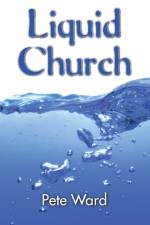
Description:A visionary book for the emergent church.The church must be like water--flexible, fluid, changeable. This book is a vision for how the church can embrace the liquid nature of culture rather than just scrambling to keep afloat while sailing over it. Ward urges us to move away from the traditional notion of church as a gathering of people meeting in one place at one time to the dynamic notion of the emergent church as a series of relationships and communications. In the Liquid Church, membership is determined by participation and involvement. Liquid Church is continually on the move, flowing in response to the Spirit and the gospel of Jesus, the imagination and creativity of its leaders, and the choices and experiences of it worshippers. In this provocative, insightful, and challenging book, Pete Ward presents his vision of a Liquid Church that addresses the needs of the isolated consumer-Christian by providing connection and community, located in common cause and similar desire for God.Endorsements:""Pete Ward''s ideas on rethinking our perception of ''ministry'' and ''church'' will leave some storming the castle with torches and others standing at the precipice of all that they''ve been, ready to take a first step into a very new idea of what we call ''church.''""--YouthworkerAbout the Contributor(s):Pete Ward teaches at King''s College, London, where he is involved in research into popular theology and culture. He is the author of a number of books, including God at the Mall, Youthwork and the Mission of God, Growing Up Evangelical, and Youth Culture and the Gospel.
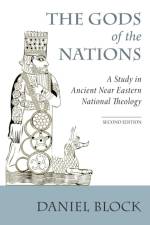
About the Contributor(s):Daniel I. Block is the Gunther H. Knoedler Professor of Old Testament at Wheaton College, Wheaton, Illinois. He is the author of The Book of Ezekiel Chapters 1-24 (1997); The Book of Ezekiel Chapters 25-48 (1998); Judges and Ruth (1999); and Deuteronomy (NIVAC, forthcoming).
Description:In today''s world the challenge of care is how to respond to people''s emotional as well as their economic circumstances. How can we be respectful of the individual and the community in ways that affirm both? How are we to live respectfully with difference and ambiguity? Where shall we find our models of life and care from--the dominant Western or else some kind of global perspective that includes indigenous knowledge? In our theologies do we continue to privilege the study of abstract, conceptual theory or do we give place to pragmatic, aesthetic, and nonverbal forms? In the face of increasing extremism, terrorism, and violence, is it possible to make a sensible choice between radical relativism and absolute essentialism? Are we to be drawn towards the various expressions of religion or to the opportunities and ambiguities of spirituality as it is called upon in many societies today? With the scarce resources available or allocated to health care in many national budgets across the world, shall we give greater attention to the eradication of disease through increasingly advanced technologies and therapeutic strategies or to the promotion of health through primary health care and public health education? Pastoral Theology in an Intercultural World presents practical theological resources for the broad vision, deep passion, and thoughtful action needed for pastoral care in the twenty-first century.Endorsements:""Grounded in deep pastoral wisdom and theological integrity, Pastoral Theology in an Intercultural World is essential reading for anyone wanting to understand the heart of pastoral theology. Lartey provides an important analysis of the relationship between theology and pastoral care, and offers an inviting vision of theology in our timeof globalization.""--Dr. Gordon Lynch, Senior Lecturer in Religion and Culture, Department of Theology and Religion, University of BirminghamAbout the Contributor(s):Emmanuel Y. Lartey is Professor of Pastoral Theology, Care and Counseling at Candler School of Theology, Emory University, Atlanta.
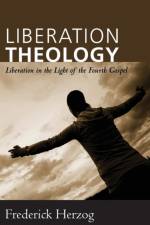
Description:Liberation Theology is the first serious acknowledgment by a white theologian of the challenge of Black Theology. It invites American theology to reconsider radically its foundations and to reorder its priorities.At a time when theology is often presented piecemeal, Frederick Herzog undertakes to ground Liberation Theology in the originating events of the Christian faith as a whole - in this instance, in the life, death, and resurrection of Christ as given in the Fourth Gospel. The systematic readings in the Gospel which he makes and from which emerge the principles of Liberation Theology are the heart of this book. Throughout, the author asks: How do we understand Christ as Liberator? The answer to this question, he maintains, determines whether or not we are still able to contemplate the Word as power and action.Written with contemporary directness and free of vague abstractions, the book casts theology into a new form to meet today''s needs. The method of this new theology is confrontation, not correlation; its goal is liberation, not reformation; and it strives for a new space of freedom among people captive to the dehumanizing structures of modern theology.Endorsements:""This is a new way of doing theology. Dr. Herzog''s book is biblically oriented and is speaking a liberation language in the concrete trouble spots of our society at the same time. It may be the trailblazer of a relevant Christian lifestyle.""-J├╝rgen Moltmann""A radical, risky, and powerful interpretation of the Fourth Gospel for our time as the call to liberation. In Herzog''s passionate hermeneutic, St. John is understood in the light of the new politics, black consciousness, and the need for a corporate self and so for a new social and personal world. Less dogmatic and one-sided than the futurist eschatologies, this creative wedding of biblical interpretation and radical politics makes a real contribution, from which I have learned a great deal, to our barren American theological and churchly scene.""-Langdon Gilkey""In a time like ours, when theologians are on the hunt for meaningful language about God and when many people are unclear and confused about God language, what Herzog has to say deserves very much to be in the center of theological discussion. This would not be the first time that the Bible has revitalized theology, faith, and the life of the church.""-Paul L. LehmanAbout the Contributor(s):Frederick Herzog (1925-1995) was born in Ashley, North Dakota, from German parents. He studiedtheology in Germany and Switzerland, got his doctorate from Princeton Theological Seminary, taughtat Mission House Seminary in Sheboygan, Wisconsin, and was the last thirty-five years of his life professor ofsystematic theology at Duke University, where he initiated intensive academic exchanges with Bonn,Germany, and Lima, Peru. In the spring of 1970 he wrote the first North American article on LiberationTheology. In 1972 his Liberation Theology: Liberation in the Light of the Fourth Gospel forged a newway of writing theology by letting it grow out of biblical thoughts and images as well as the wrenchingexperiences of the civil rights struggle in the U.S. South. It was a daring challenge to traditional whitetheology, asking it to ""become black"" in solidarity with ""the wretched of the earth.""
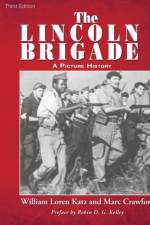
Description:THE LINCOLN BRIGADEThe day after Christmas in 1936, a group of ninety-six Americans sailed from New York to help Spain defend its democratic government against fascism. Ultimately, twenty-eight hundred United States volunteers reached Spain to become the Abraham Lincoln Brigade. Few Lincolns had any military training. More than half were seriously wounded or died in battle. Most Lincolns were activists and idealists who had worked with and demonstrated for the homeless and unemployed during the Great Depression. They were poets and blue-collar workers, professors and students, seamen and journalists, lawyers and painters, Christians and Jews, blacks and whites. The Brigade was the first fully integrated United States army, and Oliver Law, an African American from Texas, was an early Lincoln commander. William Loren Katz and the late Marc Crawford twice traveled with the Brigade to Spain in the 1980s, interviewed surviving Lincolns on old battlefields, and obtained never-before-published documents and photographs for this book.Endorsements:"" ... A first hand, first rate work of non-fiction ... ""Publishers Weekly""handsome ... substantial text. .. many photos never before ... published.""NY Times Book Review "" ... a vivid panorama of a memorable time.""Kirkus ""These unsung heroes will have a special appeal for young people ... deprived of so much of our history.""Studs Terkel "" ... [An] important book on an often overlooked period of history that affected many Americans.""School Library Journal ""Text and photographs will draw young people interested in the period and in those who fought for the democratic ideal.""BooklistAbout the Contributor(s):William Loren Katz is the award-winning author of forty books. He is a World War II veteran.Marc Crawford won journalism awards for Life Magazine, and served as an Ebony associate editor.Robin D. G. Kelley is a professor of history at New York University and the author of Race Rebels: Culture, Politics and the Black Working Class, and Yo'' Mama''s Disfunctional: Fighting the Culture Wars in Urban America.
Description:This fresh and stimulating work is the first book entirely given to the subject of Moses and Mosaic allusions in the Gospel of Matthew. Also included are the history of the discussion of the subject from Bacon to the present as well as a comprehensive analysis of the depiction of ancient Jewish and Christian persons in Mosaic categories.Endorsements:""An outstanding piece of research that combines the sharpest of intelligent observations with imaginative flair.""-Calum M. Carmichael, Cornell Univesity""The learning displayed [here] is stupendous... This book will be a triumphal ending of the century in the field.""-David Daube, Univesity of California, BerkeleyAbout the Contributor(s):Dr. Dale C. Allison Jr., Errett M. Grable Professor of New Testament and Early Christianity, has been on the faculty of Pittsburgh Theological Seminary since 1997. Before then, he served on the faculties of Texas Christian University (Fort Worth, Texas) and Friends University (Wichita, Kansas). His areas of expertise include Second Temple Judaism, and he is the author of books on early Christian eschatology, the Gospel of Matthew, the so-called Sayings Source or Q, and the historical Jesus. He has also written The Luminous Dusk, a book on religious experience in the modern world, and a full-length commentary on the Testament of Abraham. His most recently published works are The Love There That''s Sleeping: The Art and Spirituality of George Harrison, The Historical Christ and the Theological Jesus, and Constructing Jesus: Memory, History, and Imagination. He has recently completed a full-length commentary on the Epistle of James (to be published in 2013) and is currently working on a commentary on 4 Baruch (Paraleipomena Jeremiou) as well as on a book of reflections on death. He is married to Kristine Allison and they have three children.
About the Contributor(s):John Fuellenbach is a Divine Word Missionary. A teacher at the Beda College in Rome, Fuellenbach has also taught at the Gregorian University and Divine Word Seminary School of Theology in Tagaytay, Philippines. His other books include ''Ecclesiastical Office and the Primacy of Rome'', ''Proclaiming His Kingdom'', ''Throw Fire'', and ''Church: Community for the Kingdom''.
Endorsements:""Robert Stamps offers us a compelling case for the significance of the theology of Thomas Torrance to current discussions about Trinitarian doctrine and worship. He shows that Torrance''s Christology and Eucharistic thought validates the Reformedconfession of a profound, real spiritual presence in the Eucharist. This book serves as a helpful introduction to Torrance, especially his framing of revelation. Moreover, it invigorates our understanding of the theological meaning of sacramental devotion. Its readers will be stimulated, provoked, and, dare I say, inspired by its insights into--and critiques of--one of the most important and recent Reformed thinkers. Insum, this is a timely and exciting book. It will well serve pastors, theologians, and thoughtful Christians of many theological perspectives.""MARK VALERI, E. T. Thompson Professor of Church History, Union TheologicalSeminary, Virginia""One of the values of this work is that it has deliberately sought not so much to discuss a particular problem or a collection of issues as to identify Torrance as an example of an archetypal Reformed theology of the Eucharist. To say that Dr. Stamps has been industrious is patently an understatement: the truth is that he has been indefatigable in his search for the least morsel that Torrance offers. Yet it is notso much as a study of Torrance that this book is to be commended: its great value is that it offers a contextualization of Torrance''s thinking on the Eucharist--in ecclesiology, the more general dimension of an incarnational theology--as well as hisunderstanding of cosmology and epistemology. . . . I hope that Dr. Stamps'' book will not only find grateful readers but will be repaid by profound reflection on this symbol of the heart of faith.""JOHN HEYWOOD THOMAS, Emeritus Professor of Theology, University of Nottingham
Description:How the issues of the past affect the future of ""Deep Church""--a concept conceived by C. S. Lewis.Orthodox, Catholic, and Protestant traditions drink from the well of a common tradition rooted in the early church. Many Evangelicals are now reengaging with the practice of the early church as they seek to live as disciples today. Remembering the past is essential for facing the future. In Remembering Our Future leaders and theologians reflect on a range of issues for which a vibrant contemporary faith requires a careful listening to the past. What is the place of tradition in the church''s life? How should we interpret the Bible? How should we worship? What, in other words, might ""Deep Church"" look like?About the Contributor(s):Andrew Walker is Canon Professor of Culture, Theology, and Education at King''s College, London.Luke Bretherton is Lecturer in Theology and Ministry, and DMin Programme Director at King''s College, London.
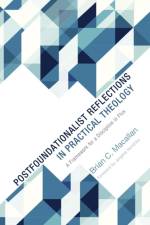
Description:Postfoundationalist Reflections in Practical Theology seeks to explore the implications of a Postfoundationalist theology for the discipline of Practical Theology. While moving beyond the modernist and postmodernist debates, it charts a way forward for a theology that is bound by neither relativism nor certainty. It believes that Practical Theology is well suited to this task by its very nature and methodology.
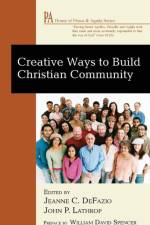
Description:Creative Ways to Build Christian Community is exactly what its title says it is: a very personal, practical response to the present and future prospect of isolation, a treasure trove of examples and suggestions about how to accomplish the Great Commission from community builders telling how, over the years and the ministries, they have implemented creative ways to build up churches and organizations to develop more intensive Christian fellowship and, thereby, create community. --Dr. William David SpencerEndorsements:""Creative Ways to Build Christian Community invites the reader to remember and act on the foundational need of the church to build community. Such a need may seem obvious, but too many of us today do not give community-building the attention and recognition it deserves. This is a delightful, homey, practical, and personal presentation of how community is encouraged through special meetings, meals, the arts, and prayer in the church and outside it. . . . This book is a banquet of approaches to foster the church as a nourishing, active Christian community; Christ himself invites us to the Supper.""--Aída Besançon Spencer, Professor of New Testament, Gordon-Conwell Theological SeminaryAbout the Contributor(s):Jeanne C. DeFazio holds a MA in Religion from Gordon-Conwell Theological Seminary. She is currently an Athanasian Teaching Scholar at Gordon-Conwell''s Center for Urban Ministerial Education, in Boston and a coauthor, with Teresa Flowers, of How to Have an Attitude of Gratitude on the Night Shift (2011).John P. Lathrop holds a MA in Urban Ministry from Gordon-Conwell Theological Seminary. He is an ordained minister with the International Fellowship of Christian Assemblies and author of four books: Apostles, Prophets, Evangelists, Pastors, and Teachers Then and Now (2008); The Power and Practice of the Church: God, Discipleship, and Ministry (2010); Answer the Prayer of Jesus: A Call for Biblical Unity (2011); and Dreams & Visions: Divine Interventions in Human Experience (2012).
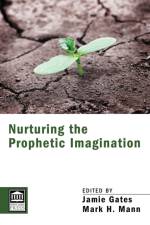
Description:Nurturing the Prophetic Imagination searches through biblical scholarship, theology, economics, sociology, politics, ecology, and history to discern the strands of God''s justice and reconciliation at work in the contemporary world. Nurturing the Prophetic Imagination challenges Christians to engage the most troubling social problems of our time by first drinking deeply from the well of the historic prophetic traditions. Nurturing the Prophetic Imagination witnesses to a God that raises up prophets to speak at critical moments in every time, and to what it might look like for the Church to nurture the soil from which such prophetic voices spring. Rarely do such a wide variety of authors from such different backgrounds and vocations get together to name what the prophetic work of God looks like in our midst. The radical justice and reconciliation of God can be found in every corner of life, if we know where to look for it; Nurturing the Prophetic Imagination provides some guidance in this direction.Nurturing the Prophetic Imagination celebrates and seeks to build upon the legacy of eminent biblical scholar Walter Brueggemann''s seminal work The Prophetic Imagination, first published in 1978, by assessing the core insights and themes he develops through a number of different lenses. These include contemporary biblical scholarship, theology, economics, sociology, politics, ecology, and church history. Nurturing the Prophetic Imagination also discusses the extent to which the Christian prophetic tradition continues to speak meaningfully within the contemporary world and thereby seeks to be a source for inspiring future generations of Christian prophets to do likewise.Endorsements:""The juxtaposition of ''prophetic'' and ''imagination'' refigures both terms. ''Prophetic'' ensures that imagination is not facile fantasy, but concerns bodily reality that pushes toward justice. ''Imagination'' ensures that prophetic is not one-dimensional social advocacy, but opens up the unutterable that must be spoken and acted. This collection of essays exhibits a wondrously generative perspective that links biblical faith to contemporary social reality. It is a welcome exposition of an urgent accent point in contemporary faith.""--Walter Brueggemann, Columbia Theological SeminaryAbout the Contributor(s):Jamie Gates is Professor of cultural anthropology and Director of the Center for Justice and Reconciliation at Point Loma Nazarene University. He is coauthor of Living Justice: Revolutionary Compassion in a Broken World. Mark H. Mann is Associate Professor of Theology and Director of the Wesleyan Center at Point Loma Nazarene University. He is author of Perfecting Grace: Holiness and the Human Sciences.
Description:War Time Preaching and Teaching explores the hermeneutics (science of interpretation) and homiletics (art of preaching) of both Rudolf Bultmann and Dietrich Bonhoeffer. The book explores the thought and impact of these two theologians primarily within the American debate. Both Bultmann and Bonhoeffer are somewhat misunderstood, and it seems that they are either totally accepted or rejected, depending in many instances on one''s personal understanding of their method of biblical interpretation. The book attempts to objectively view their methods of biblical interpretation and how they expressed their research in their writings, preaching, and teaching. Both concluded that the presenting of the Gospel in a relevant manner is the ultimate need for humankind today. Both lived during a most challenging period of world history, but were able to communicate in a captivating manner. Certainly the times in which we live today call fro those who possess a similar commitment.About the Contributor(s):Jeffrey Jon Richards, Th.M. Dallas, Ph.D., Drew, Dr.theol., Marburg, has served on the faculties of several seminaries and universities and is president of Global Teaching and Preaching, an international ministry focusing on ministry in the Yucatan, Eastern Europe and several African countries.
Description:San Fernando Cathedral is the inspiring story of how a church built nearly two and a half centuries ago remains a wellspring of life an renewal today. Know for its public rituals that attract thousands to down town San Antonio - particularly during Holy Week and the Feast of Our Lady of Guadalupe - San Fernando Cathedral nurtures and nourishes a diverse and dynamic population; it is indeed the soul of the city.Endorsements:""No one visits San Fernando Cathedral without being profoundly uplifted and spiritually touched...""John A. Coleman, S. J""This book is a must for anyone concerned about the face of Christianity in the third millenium.""Dr. Maria Pilar Aquino""A treasure for Catholics and Protestants alike... shines with the faith of a people who are rich with God''s generous and creative Spirit.""Carol JohnsonAbout the Contributor(s):Virgillio P. Elizondo, a native of San Antonio and former rector of San Fernando Cathedral, is director of Archdiocesan Television Ministry of San Antonio. He is also a board member of Concillium, the international Catholic journal, and the author of many books, including Guadalupe: Mother of the New Creation, and Galilean Journey: The Mexican - American Promise.Timothy M. Matovina is assistant professor of theology at Loyola Marymount University in Los Angeles. The book review editor or the Journal of Hispainc/Latino Theology, he is author of numerous articles and five books, including Tejano Religion and Ethnicity: San Antonio, 1821 - 1860, and The Alamo Remembered: Tejano Accounts and Perspectives.
Description:In these pages, laymen will find themselves and their condition of life the center of attention at all times. Consequently they will not find a specifically spiritual vocabulary or an alien pious rhetoric. They will not find a long list of prayers, practices and penances. They will not find a list of things to be given up.Patiently and gently, these souls will open up to God. They will see that true peace comes from true love, and that love means an entire giving, and that giving means some changes. Such transitions are sometimes easy, sometimes not. But in the end what was once unwisely loved is now put aside, and what was once foolishly despised is now embraced with gratitude. Every man who has gone even a part of the way knows this. The purpose of the book, then, is to open the soul to the grace of God and to show some practical consequences of the love of God in a life that wants to find love and peace.--from the Introduction
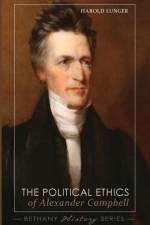
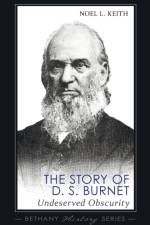
The Bethany History Series are books previously published by The Bethany Press Bethany Fellowship was founded by five families in 1945. The name Bethany was chosen because it was a place Jesus would retreat with his disciples for rest, prayer and reflection.
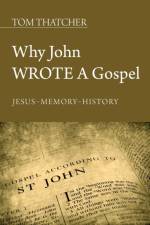
Description:Nineteen hundred years ago, someone called the Beloved Disciple told stories about Jesus and his days on earth, including reports of what Jesus did and said. These stories had been todl for decades, but then someone took the stories and wrote them down, turning them from oral tradition into the book we know as the Gospel of John. Scholars have long concentrated on the content of this Fourth Gospel, analyzing how it differs from the Gospels of Matthew, Mark, and Luke and wondering how the different Gospels relate to the Jesus of history.Thatcher builds on all this previous scholarship to as new and exciting questions: Why was this Gospel written? Why would these followers of Jesus turn the oral stories into written Gospel? In exploring the reason for writing the Fourth Gospel, Thatcher focuses on how stories and written texts operate to reflect and to create memory with in groups of people. He uncovers how early Christians strove to remember Jesus in the decades after his ministry and how Christians came into conflict with one another about which memories were best.With this interest in the social memory of early Christians, Thatcher provides original insights into the Gospel of John and shows new answers to old questions. Writing in an engaging and accessible style, Thatcher uses numerous diagrams and modern parallels to show how Gospel texts shape the memory and identity of Christian communities, not only in the ancient world bu today as well.Endorsements:""Tom Thatcher effectively rewrites the agenda for the study of the Gospel of John for the next decade. Dotted with diagrams, drawings, and numerous contemporary examples, Thatcher carefully leads readers into new and unexplored territory. He works with contemporary ideas of social memory and builds on the thesis that we discover the fourth evangelist''s message in oral rather than written form. He presents us with new understandings of history and of the purpose of the Gospel of John.""--Robert Kysar, Bandy Professor Emeritus of Preaching and New Testament, Emory University""This may be the first treatment of the fourth gospel that takes into account its predominantly oral communication environment. In a carefully crafted argument, Thatcher uses Maurice Halbwach''s suggestive reflections on social memory to develop a series of provocative speculations about what lead from Johannine tradition to a written gospel. This book is sure to stir up some rethinking of the relation between the composition of John''s Gospel and the social memory of the Johannine community in which it was embedded.""--Richard A. Horsley, Distinguished Professor of Liberal Arts and the Study of Religion, University of Massachusetts, Boston""Rejecting a lengthy developmental composition history, Thatcher confronts the text - and us - with the fundamental question: why did John write, and write this kind of gospel? Unsettling in the best possible sense, this book offers a new point of departure for Johannine studies. It is my hope that the new perspectives Thatcher has introduced will initiate a genuine reevaluation of our thinking about one of the most intriguing texts in early Christianity.""--Werner H. Kelber, Isla Carroll and Percy E. Turner Professor Emeritus of Biblical Studies, Rice UniversityAbout the Contributor(s):Tom Thatcher is Professor of Biblical Studies at Cincinnati Christian University. He is a founding member of the John, Jesus, and History project and the author/editor of numerous books and articles on the Gospel of John, including What We Have Heard from the Beginning and John, Jesus, and the Renewal of Israel.
Abonner på vårt nyhetsbrev og få rabatter og inspirasjon til din neste leseopplevelse.
Ved å abonnere godtar du vår personvernerklæring.