









Gjør som tusenvis av andre bokelskere
Abonner på vårt nyhetsbrev og få rabatter og inspirasjon til din neste leseopplevelse.
Ved å abonnere godtar du vår personvernerklæring.Du kan når som helst melde deg av våre nyhetsbrev.

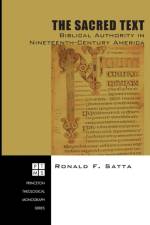
Description:The advances of geologic science, Darwinism, theological liberalism, and higher textual criticism converged in the nineteenth century to present an imposing challenge to biblical authority. The meteoric rise in secular knowledge exerted tremendous pressure on the Protestant theological elite of the time. Their ruminations, conversations, quarrels, and convictions offer penetrating insight into their world--into their perspective on Scripture and authority and how their outlook was challenged, defended, and sometimes changed across time. Moreover, the nineteenth-century imbroglios greatly illuminate a recent controversy over biblical authority. Some influential modern scholars of American religion contend that the doctrine of the inerrancy of the original autographs is a recently contrived theory, a theological aberration decidedly out of concert with mainline orthodoxy since the Reformation. They argue that pressure from biblical critics incited late nineteenth-century Princeton theologians to fabricate the notion as a way to quell criticism against Scripture. American fundamentalists, they insist, unwittingly adopted inerrancy as orthodoxy, being deceived by this innovation. This story has become standard scholarly currency in many quarters. However, The Sacred Text indicates that fundamentalists and conservative Protestants more generally are the standard-bearers of the ascendant theory of biblical authority commonly endorsed among many of the leading Protestant elite in nineteenth-century America.Endorsements:""This is an outstanding work and a great contribution. It is wide in its research, concise in its expression, and extremely helpful.""--John MacArthur, Pastor-Teacher, Grace Community Church and President, The Master''s College and The Master''s Seminary""Learned, deeply researched, and forcefully argued, Sacred Text affords a powerful and sharply focused revisionist interpretation that, to my mind, effectively establishes the hegemony of literalism and inerrancy among most Protestant theologians and scholars. In a brilliant concluding chapter on the famous heresy trial of Charles Briggs, Satta makes a most plausible argument that the misinterpretations of Ernest Sandeen and other historians of American religion can be traced to Briggs''s defense. The book is sure to stir up fruitful debate among scholars of American Protestantism.""--Robert Westbrook, Professor of History, University of Rochester""The Sacred Text is an excellent historical study of biblical authority in the nineteenth century. Satta argues that the Princeton defense of biblical inerrancy was anchored in careful scholarship and historic Protestant doctrine. His account of the Briggs controversy and the resultant anti-Princeton historiography is first-rate.""--Roger Schultz, Dean, College of Arts and Sciences, Liberty University""Ronald Satta provides a careful and lucid defense of a position I had thought to be mistaken until his research persuaded me otherwise: he argues that the doctrine of biblical inerrancy in the original manuscripts is not an invention of late-nineteenth-century Protestantism but was in fact widely held throughout the eighteenth and nineteenth centuries by a range of American theologians and scholars.""--Edward Wierenga, Department of Religion and Classics, University of RochesterAbout the Contributor(s):Ronald F. Satta is an American historian at Finger Lakes Community College. He earned his research doctorate in American history from the University of Rochester and his professional doctorate in homiletics from Trinity Evangelical Divinity School. He is the author of three books and many scholarly articles.
Description:The Ten Commandments belong to the ""classics"" of Western culture. They are an authoritative part of the Hebrew and the Christian Scriptures. Since they come to us from an ancient past, it is both necessary and worthwhile to inquire what they may mean for us today. Thorwald Lorenzen contends it is important to hear God''s invitation to an alternative lifestyle: ""you shall not kill,"" ""you shall not commit adultery,"" ""you shall not covet."" His thoughtful reflections on the commandments for today''s tumultuous world begin with the God who ""speaks"" ten word to liberate God''s people from oppression. Grounded in God''s liberating ""yes,"" the ""ten words"" are neither laws nor rules. They are elements for a culture of freedom in which people are invited to celebrate life.Endorsements:""Thorwald Lorenzen presents an inspiring call to embrace freedom as a matter of spiritual inheritance and destiny. Pastors and prophets alike will use this text to sharpen their vision, and every reader will find in it a guide to break free from those chains that bind them.""--David Batstone, author, Professor of Ethics, University of San Francisco, and President, NOT For Sale""Combining exegetical acumen with sharp theological insight, Lorenzen has produced a fresh and deeply profound meditation on the Ten Words of the Torah. Filled with historical and contemporary illustrations, Lorenzen proves that the Decalogue is as relevant, practical, challenging, and disturbing today as ever. Highly readable yet informed by a lifetime of scholarly study, Lorenzen''s book will be immensely valuable to both pastors and laypersons and would make an excellent supplemental classroom text. The appendices on interpreting the Ten Commandments and on making ethical decisions make a book that is already well worth the price a bargain indeed.""--Kent Blevins, Professor, Department of Religious Studies and Philosophy, Gardner-Webb University""Here is the most careful and relevant study of the Ten Commandments now available. Biblically grounded, theologically astute, Lorenzen''s penetrating treatment of each of the commandments results in constructing a mature, global ethic for Christians. Far from a legalistic list of commands, Lorenzen shows how ''the Ten Words'' function as a blueprint for connecting the dots between a private and social ethic in a pluralistic world.""--D. Dixon Sutherland, Professor of Religious Studies, Director, Christian Ethics Institute, Stetson University""Toward a Culture of Freedom is a superb ethical treatise based on the Ten Commandments. Deeply grounded in scriptures and equipped with an expansive and compassionate experience of today''s world, Professor Lorenzen will help you to discern some solid rocks to stand on in an era when all human foundations seem to be quivering. Though writing from a Christian perspective, he speaks to persons of all faiths and even no faith. Would that every American, nay, every human being, would glean the wisdom she or he will find here.""--E. Glenn Hinson, Professor Emeritus, Baptist Theological Seminary at RichmondAbout the Contributor(s):Thorwald Lorenzen is Professor of Theology at Charles Sturt University; a guest lecturer at St. Mark''s Theological Center and Whitley College, University of Melbourne; and a Principal Researcher within the Public and Contextual Theology Strategic Research Centre (PACT), Charles Sturt University, in Canberra, Australia. He is author of Resurrection and Discipleship: Interpretive Models, Biblical Reflections, Theological Consequences (1995 and 2003) and Resurrection--Discipleship--Justice: Affirming the Resurrection of Jesus Christ Today (2003).
Description:Agency, Culture and Human Personhood"" uses feminist theories, process and liberation theologies, psychodynamics and the problem of intimate partner violence to develop a pastoral theology of human agency. The turn to cultural context for understanding what makes human beings who they are and do the things they do, raises significant questions about human agency. To what extent is agency, the human capacity to act, self-determined, and to what extent is it determined by external factors? If we conceive of persons with too little agency we negate the possibility for change but too much agency negates the necessity for resistance movements. Hoeft argues that agency arises ambiguously from and is constituted of culture. She suggests that such a conception of agency enables the church to foster in victims, perpetrators, and congregations more resistance to violence and proposes practices of ministry that can do just that. The book will challenge deeply ingrained notions of personal responsibility and one''s capacity to choose change, yet offers concrete proposals for a creating a less violent world.Endorsements:""Jeanne Hoeft is one of the best of a new generation of brilliant pastoral theologians. In Agency, Culture, and Human Personhood she has made an original and much needed contribution to the ministry of the churches in society by focusing on the question of human agency and freedom. Instead of victims and perpetrators, God has created complex human beings with various layers of freedom and responsibility. Every church leader who is serious about understanding human personhood from a Christian perspective must read this book."" --James Newton PolingProfessor of Pastoral Care, Counseling, and TheologyGarrett Evangelical Seminary""In this tightly woven and complex text, Jean Hoeft has constructed a rich theological anthropology through which she explores the cultural dynamics of both victimhood and resistance in intimate partner violence. Hoeft grounds her proposal in process and liberation theologies, object-relations psychology, and a post-structuralist understanding of embodied agency. She concludes the book with a helpful framework for a pastoral care of resistance. I think this text breaks new ground in understanding the dynamics of intimate violence and the potential for a pastoral care of empowerment, agency, and resistance. I recommend it highly.""--Christie Cozad NeugerProfessor of Pastoral Theology and Pastoral CareBrite Divinity School""I did not expect to feel more hopeful after reading this book-but that was its effect on me. To arguments that show how we become victims or perpetrators of violence through complex cultural processes, Hoeft adds a much-needed constructive dimension: culture constricts our agency, yes, but also enables us to embody the capacity to resist violence. --Kathleen J. GreiderProfessor of Pastoral Care and CounselingClaremont School of TheologyAbout the Contributor(s):Jeanne Hoeft is Assistant Professor of Pastoral Care at Saint Paul School of Theology in Kansas City. She is a United Methodist clergywoman, former parish pastor, and has worked in the area of domestic violence for almost 20 years.
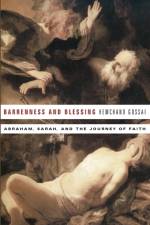
Description:The themes of these stories are profoundly human themes, capturing the persistent interaction between God and humankind. These narratives invite us to witness the manner in which God enters human community in all of its complexities, struggles, challenges, fears, and ultimately hope. As the narratives unfold, not only is it clear that God will not be restricted by societal and cultural conventions, but the human journey will be generated by faith and doubt, fear and hope, promise and fulfillment. Hemchand Gossai not only explores the various themes within a variety of texts, but maintains a constant eye on the implications for the church and contemporary readers. In this regard, some of the literal and particular experiences such as barrenness, wilderness, and wrestling with God are examined as metaphors for our experiences. The richness and texture of metaphors allow us to embrace these stories in a way that makes them our stories. Endorsements:""Hemchand Gossai has long been working on the stories of Abraham and Sarah with great clarity, literary sensitivity, and theological savvy. In this volume, he expands upon that journey with new studies regarding God, the human characters, and their interrelationships. Gathering the major themes from these narratives, Gossai presents them in such a way that Israel''s stories can speak once again into the complexities of our interreligious world. Students and scholars alike will benefit from his many insights.""--Terence E. Fretheim, Elva B. Lovell Professor of Old Testament, Luther Theological Seminary; author of Abraham: Trials of Family and FaithAbout the Contributor(s):Hemchand Gossai is Director of Religious Studies at Georgia Southern University. He is also the author of Social Critique by Israel''s Eighth-Century Prophets and River Crossings: Memories of a Journey--A Memoir.
Description:Enigmas and Powers is a celebration and engagement of the work of the noted author, biblical scholar, peace activist, pastor, speaker, and workshop leader, Walter Wink. Among Wink''s numerous influential works are The Human Being: Jesus and the Enigma of the Son of the Man, The Bible in Human Transformation, Homosexuality and Christian Faith, Jesus and Nonviolence: A Third Way, and The Powers trilogy (Naming the Powers, Unmasking the Powers, and Engaging the Powers). This is the only volume devoted to responses by Walter''s colleagues and students to the entire range of his work and its vast impact across disciplines, from biblical studies to peace studies, from theology to psychology. ""You hold in your hands an unusual book. In it you will find essays, letters, speeches, prayers, toasts, reminiscences, arguments, footnotes, and open-ended conversation. You will find addressed--and by addressed, I mean that the authors are variously talking to these persons/entities--God; the Spirit; Psyche; Walter Wink the person; Walter Wink the essay, book, theory, method, and/or argument(s); and finally, and throughout, you, the reader. Most of all, you will find, I hope, truth. Or, at least, meaningful, productive, and enticing approaches toward truth itself, and toward the world in light of truth.""--from the introductionEndorsements:Contributors: Marcus Borg, Balfour Brickner, Tansy Chapman, Hal Childs, Bruce Chilton, Richard Deats, J. Harold Ellens, Robert (Bob) Evans, Ray Gingerich, Ted Grimsrud, Joseph C. Hough, Bill Wylie-Kellerman, Amy-Jill Levine, Alastair McIntosh, Jack Miles, Henry Mottu,Robert Raines, Sharon H. Ringe, Wayne G. Rollins, Bonnie Rosborough, D. Seiple, Frederick W. Weidmann, and Barbara WheelerAbout the Contributor(s): Frederick W. Weidmann is the Director of the Center for Church Life and Professor of Biblical Studies at Auburn Theological Seminary in New York. He is the author of Polycarp and John: The Harris Fragments and their Challenge to the Literary Traditions and The Shorter Epistles of Paul. He is an ordained minister in the Evangelical Lutheran Church in America. D. Seiple is a postdoctoral researcher and is coeditor (with Casey Haskins) of Dewey Reconfigured. He is a licensed minister at Broadway United Church of Christ (New York City).
Description:How do our current notions of the workings of the universe fit with our deepest convictions about its meaning and value? From religion, we grasp the world as created, given, gift. From science, we apprehend it as evolving, in process, changing. How do we bring these apprehensions together? Or can we? Is our impulse to find the two complementary: creation and evolution? Or is it to find them contradictory: creation or evolution? The way in which we answer these questions carries personal and intellectual consequences. It will constitute the first piece in a worldview within which we order our religious beliefs and scientific judgments."" --from the PrefaceEndorsements:""The scientific failures of ''Intelligent Design'' and other forms of creationism have been detailed in dozens of books, scores of articles, and in a handful of spectacular court cases. What Tatha Wiley adds to this mix is a provocative and highly readable analysis of the theological failings of today''s creationist movement. It will surprise those who assume that creationism is rooted in Christian tradition, and it will challenge those who believe that the biblical narrative is hopelessly at odds with modern science.""--Kenneth R. MillerProfessor of Biology, Brown Universityauthor of Finding Darwin''s God and Only a Theory About the Contributor(s):Tatha Wiley is the author of Original Sin: Origins, Developments, Contemporary Meaning and Paul and the Gentile Women: Reframing Galatians. She is editor of Thinking of Christ: Proclamation, Explanation, Meaning and the series Engaging Theology: Catholic Perspectives. She teaches theology at the University of St. Thomas and the College of St. Catherine in St. Paul, Minnesota.
Description:This commentary is the first major work on the book of Revelation in many years that expounds the historicist interpretation. The historicist school of interpretation was the dominant approach from Reformation times through most of the nineteenth century. The reasons for the current disaffection are too complex to address in a few words, but it is the author''s conviction that from the standpoint of sound principles of biblical hermeneutics, the historicist inerpretation is still the most creditable approach for an accurate understanding of this, the last book of the Bible and the final prophecy of Jesus.Endorsements:Professor Collins has crafted a masterful yet readable contribution to New Testament scholarship. His faithful historicist view resonates with that of the original reformation theologians and specifies events in unfolding world history for corroboration. As the ideal introduction for the uninitiated or an exhaustive compendium for the defender of the historicist perspective, this volume is the definitive reference on the historicist interpretation of the Revelation of Jesus Christ. --Sidney T. Bradley, Executive and Academic Dean, Professor of Pastoral Counseling and Psychology, Gordon-Conwell Theological SeminaryYou''ve been waiting for this thorough, interesting and readable book! For Christians confused by the popular blending of prophecy with clever fiction, Professor Collins offers a better way. In dialogue with the most knowledgeable commentators on the book of Revelation, he clarifies the book''s message and points to its fulfilment in the actual events of world history. In the process he demonstrates the continuing value of the Protestant Reformer''s approach to the Bible''s predictions. This long overdue book will take its place as the best contemporary presentation of the historicist approach to interpreting the prophecy of Scripture. And I commend it to you for its exciting and informative challenge. --David A. Dean, Professor Emeritus, Gordon-Conwell Theological Seminary""Dr. Collins has done well in writing a commentary on Revelation from the historicist perspective. The historical approach was well represented in the 19th century, but not now. Therefore, this commentary is a welcome and necessary addition in the 21st century. Personally I have learned much from reading this work and I am thankful for the labors the author devoted to this project."" --Simon Kistemaker, ThD, Professor of New Testament Emeritus, Reformed Theological Seminary, Orlando. ""The Historicist School of interpretation once dominated the realm of Revelation scholarship. Eclipsed now by the Preterist and Futurist models, historicism has become nearly forgotten, a turn of events much to be regretted. ""Professor Collins has brought to fruition a work that ends the long drought of scholarly literature from this perspective. The Final Prophecy of Jesus represents the very finest historical, exegetical, and interpretive method in addressing the message of the Apocalypse. Whether or not one agrees with his conclusions, there can be no doubt that his exhaustive treatment is destined to become the standard work on the subject within the historicist tradition."" --Eugene H. Merrill, PhD, Distinguished Professor of Old Testament Studies, Dallas Theological Seminary. ""Oral Collins draws from decades of study, reflection and teaching to produce the first major commentary on Revelation in nearly a century from the time-honored historicist position. In arguing his case, he combines careful analysis of the relevant intertestamental and Roman sources, insightful exegesis of the biblical texts, broad examination of the history of scholarship, and pastoral sensitivity to application for life today. By restating the historical approach, Collins compels a new generation of students to look again at Revelation and at Jesus Christ, who is revealed in it. --Daniel J. Estes, Ph. D., Distinquished Professo
Description:From the very beginning there have been Christians who wanted to go all the way--who, rather than asking, ""What must I do to be a Christian?"" asked instead, ""What can I do to be more Christian?"" These highly intentional Christians have had an impact on the development of both Christianity and western civilization that has been completely out of proportion to their numbers. The greatest impact of these Christian has come through the communities of like-minded believers--some of lay evangelicals and others of celibate monastics--formed based upon their common desire to live more intentional Christian lives. Throughout the past twenty centuries, hundreds of groups of both kinds have formed.This probing work tells the story of these communities, both monastic and lay. It is a story that, though often overlooked, is both inspiring and instructive. Above all it is a story that opens the way for greater understanding between two groups of Christians who have long been estranged--Protestant evangelicals and Catholic monastics.Endorsements:""Evangelicals are often accused of being ahistorical because we jump from Paul to Martin Luther without a pause to consider what the Spirit did in between. But every Christian tradition finds some way to draw the line from Jesus to the present. How we tell that story shapes who we are. ''Follow Me'' tells the Christian story in a way that sparks my imagination and gets me excited about who the church is becoming in our post-Christian era. I hope every community of disciples will read it and ask, ''How is God calling us to live the next chapter?''"" --Jonathan Wilson-Hartgroveauthor of To Baghdad and Beyond: How I Got Born Again in Babylon""Kauffman offers us a first installment on the kind of scholarship becoming possible thanks to the stereoscopic perspective of those who are learning to live on both sides of a great river that has long divided Christianity. . . . Unexpected though the news may be, it is the very burden of Kauffman''s book to show us why we should not have been surprised, and would not be surprised, if we read the history of Christianity looking for its broadest unifying patterns rather than for the basis of our separate identities. . . . He has done a service to historian, ecumenist, and renewal-minded Christian alike by looking for the forest not just the trees, surveying the lay of the land, and marking the river that gives it life.""--Gerald W. Schlabachauthor of Just Policing, Not War: An Alternative Response to World ViolenceAbout the Contributor(s):Ivan J. Kauffman grew up in one of the oldest surviving lay evangelical communities, the Amish Mennonites. Educated as both a Mennonite and a Catholic he has been active in Mennonite Catholic dialogues from their beginnings in the 1980s, and was a founder of the North American grassroots Mennonite Catholic dialogue, Bridgefolk, which meets regularly at Saint John''s Abbey, Collegeville, Minnesota. He identifies himself as a Mennonite Catholic.
Description:Christians have been interpreting Scripture with an aim of deepening their life with God and each other from the very beginning of the church. The past twenty years or so have witnessed an explosion of scholarly writing devoted to the theological interpretation of Scripture. Stephen Fowl, as an active participant in and contributor to the burgeoning literature, has written an ideal companion for guests at the ""large and somewhat chaotic party,"" introducing them to important people, texts, and issues. The companion explores some of the connections between the long-running and essential Christian practice of theological interpretation and the more recent body of scholarly literature. Ultimately, the companion hopes to encourage readers to join the party in their own right.Endorsements:""Steve Fowl has been both a pioneer and a leader in the return to theological interpretation. In this concise book, he offers us a truly theological and ecclesial account of theological interpretation. It is an inspiring, liberating, and practical work, encouraging all Christians to interpret Scripture so as to find our proper end in ever-deeper communion with God and one another in anticipation of the fullness of God''s reign.""--Michael J. Gorman, author of Reading Paul (Cascade Books) and Inhabiting the Cruciform God ""In this brief companion we find a focused, clear account of major themes in Steve Fowl''s approach as well as gracious interaction with the work of others and numerous illustrative appeals to Scripture itself. This is definitely a case in which less is more: attention to this little book will prove very fruitful for engagement in biblical interpretation as a theological practice.""--Daniel J. Treier, author of Introducing Theological Interpretation of Scripture: Recovering a Christian Practice""Fowl here plays the role not only of companion but guide and host in this clear and compelling introduction to the most important turn-of-the-twentieth-century development in biblical interpretation. He argues that Christian readers should interpret the Bible with an overriding interest in God''s interest in using the Bible to promote communion. He practices what he preaches: he is generous towards those with whom he disagrees and gives fair descriptions of other approaches to theological interpretation.""--Kevin J. Vanhoozer, general editor of the Dictionary for Theological Interpretation of the Bible""Stephen E. Fowl''s latest, Theological Interpretation of Scripture, displays gems in the treasure trove of the new-yet-venerable task: reading the Bible as Scripture of the Church. Fowl helps us to think theologically about reading Christian Scripture as the living voice of God. Fowl invites us into a ''cocktail party'' with his conversation partners in this renewal of reading sacra scriptura for the Church''s life and witness. Entirely accessible, thoroughly convincing, with a sense of adventure and hope. May his tribe increase!--Rev. Kathryn Greene-McCreight, author of Galatians in the Brazos Theological Commentary Series (forthcoming).About the Contributor(s):Stephen E. Fowl is the Chair of the Department of Theology at Loyola College in Maryland. He is the author of several books, including Engaging Scripture: A Model for Theological Interpretation (Wipf & Stock, 2008); Reading in Communion: Scripture and Ethics in Christian Life (with L. Gregory Jones; Wipf & Stock, 1998); and the Two Horizons commentary on Philippians.
Description:Dorothee Soelle once wrote, ""Dietrich Bonhoeffer is the one German theologian who will lead us into the third millennium."" As we near the end of the first decade of this third millennium, Bonhoeffer continues to inspire new generations as a spiritual guide for their actions on behalf of peace and social justice. This book by Geffrey Kelly provides a critical analysis and reading guide to two of the spiritual classics that are now available in new translations through Fortress Press. Reading Bonhoeffer offers a running commentary of each segment of these popular texts along with discussion questions suitable for the university and seminary classroom as well as parish adult education programs. In a final section of the book, Kelly excerpts and analyzes three significant texts by Bonhoeffer on the need for world peace against the rising militarism and continued glorification of war in Germany and other European nations.Endorsements:Geffrey Kelly fuses personal characteristics that define him--deep sensitivity for spirituality, ecumenical openness and knowledge, the discipline of individual and communal practice of devotion, a sharp eye for contextuality, and his unmistakable Irish passion--and mingles them into this study of two widely acclaimed works by Bonhoeffer. The combination of those elements, and his intimate knowledge of the literature by and on Bonhoeffer, make for a fresh, well-written, and compelling introduction . . . and highlight Dietrich Bonhoeffer''s relevance for living in today''s context as followers of Christ.--H. Martin RumscheidtAtlantic School of TheologyHalifax, Nova ScotiaReading Bonhoeffer--both vintage Kelly and vintage Bonhoeffer--will serve to introduce yet another generation to this important voice from the church''s immediate past. Specialists and those looking for an introduction to Bonhoeffer''s faith and witness, as well as the average Christian seeking to grow in faith, will benefit from this text. In this presentation, both Bonhoeffer''s and Kelly''s passion for Christian discipleship comes through.--H. Gaylon BarkerV. P., International Bonhoeffer Society, English Language SectionEditor, Theological Education at Finkenwalde, 1935-1937Geffrey Kelley, a prolific writer in the field of theology and religion, has now provided what I think is his best and most helpful work in spirituality--a work useful for ordinary readers as well as scholars in living their own daily lives.""--Charles W. Sensel United Methodist MinisterEmeritus Board Member, International Bonhoeffer Society,English Language SectionAbout the Contributor(s):Geffrey B. Kelly is Professor of Systematic Theology at La Salle University, Philadelphia, Pennsylvania. Best known for his research and publications on the theology and spirituality of Dietrich Bonhoeffer, Kelly is past president of the International Bonhoeffer Society, English Language Section. The present book is the offshoot of his editorial work for the Dietrich Bonhoeffer Works English Edition--the new translations and critical editions of the collected writings of Bonhoeffer, which are being published by Fortress Press. Among his recent works on Bonhoeffer are Liberating Faith (2002), The Cost of Moral Leadership (2002), and A Testament to Freedom: (1995).
Endorsements:"Affirming that 1 Peter represents from beginning to end a coherent and integrated line of thought, Prof. Elliott seeks to show in these two essays how this pastoral letter, forged to respond to the alienated situation of its readers, employs the conceptuality of the moral discourse and pivotal values of honor and shame that reigned in its contemporary world. The book is an excellent introduction to Prof. Elliott''s seminal work in applying social-scientific analysis of this New Testament writing, and will richly reward its careful reader.""--Paul J. Achtemeierauthor of 1 Peter (Hermeneia)"[This volume] reveals the letter in its own context, in such a way that we can appropriate its message and values into our own."--Carolyn Osiek coauthor of A Woman''s Place: House Churches in Earliest Christianity ""Here, as elsewhere, Elliott expertly joins the findings of social-scientific research with the insights of literary and theological analysis to clarify the ''good news'' that is proclaimed in this often-overlooked New Testament writing.""--Victor Paul Furnishauthor of The Moral Teaching of PaulAbout the Contributor(s):John H. Elliott is Professor of New Testament Emeritus at the University of San Francisco. Among his numerous publications are A Home for the Homeless, The Elect and Holy, What Is Social-Scientific Criticism?, and 1 Peter (Anchor Bible).
Description:""As the crucifixes drenched with Jewish blood drop from our hands, we stand impotent and wordless before this tragedy of Israel and Palestine ... In the name of the crucified Messiah, we must struggle against the conditions which make history a trail of crucifixions. Only then, in solidarity with Jews and Palestinians, can we dream of Messianic times, of a shalom without victims."" With these words, theologian Rosemary Radford Reuther laid out the pitfalls for Christians entering the arena of the Palestinian-Israeli conflict. Nevertheless, in 1995, a small cohort of pacifist Christians decided to paddle against the currents of history, against the crusades, pogroms, and colonial enterprises of their co-religionists, toward that goal of ""a shalom without victims."" Setting up a project in the West Bank city of Hebron, over the next ten years Christian Peacemaker Teams forged relationships with Palestinians, Israelis, and internationals who were resisting the Israeli military occupation of Palestine. As ""resident aliens"" (See Exodus 23:9) they have sojourned in the Holy Land to support Palestinians and Israelis who reject violence as a means of solving the conflict, who think that one nation has no right to subjugate and exploit another, and who believe all the residents of the region are entitled to the same, exactly the same, human rights. This book charts the growth of CPT in Palestine, how it adapted to changing political conditions, spread to locations outside of Hebron, and developed networks with activists throughout Palestine and Israel.Endorsements:""In these pages, Kathleen Kern pens a fascinating and important account of the founding and history of the Christian Peacemaker Teams in the Israeli-Palestinian conflict . . . Enlisting dissenting Jews and Palestinians in a struggle for human and political rights, Kern stands as a dramatic Christian witness of the possibility of justice and reconciliation between and among peoples of different faiths. This book narrates the difficulties and sacrifices involved in such a task, a revolutionary task if you will, that continues today.""--Marc Ellis, University Professor of Jewish Studies and Director of the Center of Jewish Studies at Baylor University.""As Resident Aliens is a gripping narrative of Christian Peacemaker Teams'' attempts to transform prayer into practice as they stand with both Palestinians and Israelis in their struggles for peace. Kern''s skill as a writer, a truth-seeker, and a Christian activist shine throughout this troubled history of CPT''s mission in Palestine. This book is a significant addition to our understanding of both the crisis in the Middle-East as well as the need for international accompaniment."" --Ramzi Kysia, Arab-American essayist and pacifist.""A meticulous, painful, and trustworthy account, written with faith, love, and concern, of ten years of peacemaking efforts under unbelievably difficult conditions-when every person who opens this book makes an effort to get it into the hands of those perpetrating this mess and the (American!) politicians who not only close their eyes to it but actually fund and defend it, we''ll be a lot closer to peace.""--Rabbi Jeremy Milgrom, Palestinians and Israelis for NonviolenceAbout the Contributor(s):Kathleen Kern has worked with Christian Peacemaker Teams (CPT) since 1993, serving on assignments in Haiti, Washington, D.C., Hebron, Chiapas, South Dakota, Colombia, and the Democratic Republic of Congo. She is the author of, ""The Human Cost of Cheap Cellphones"" and In Harm''s Way: A History of Christian Peacemaker Teams (Cascade Books, 2008).
Description:Ethical discourse about the institution of voting rarely includes the option of abstaining for principled reasons. This collection of nine articles widens the discussion in that direction by giving readers a new question: At what point and on what grounds might one choose not to vote as an act of conscience? Contributors offer both ethical and faith-based reasons for not voting. For some, it is a matter of candidates not measuring up to high standards; for others it is a matter of reserving political identity and allegiance for the church rather than the nation-state. These writers--representing a wide range of Christian traditions--cite texts from diverse sources: Mennonites, Pentecostals, and pre-Civil Rights African Americans. Some contributors reference the positions of Catholic bishops, Karl Barth, or John Howard Yoder. New Testament texts also figure strongly in these cases for ""conscientious abstention"" from voting. In addition to cultivating the ethical discussion around abstention from voting, the contributors suggest alternative ways beneficially to engage society. This volume creates a new freedom for readers within any faith tradition to enter into a dialogue that has not yet been welcomed in North America.Endorsements:People often forget that voting can be a coercive practice, just to the extent it justifies a majority''s silencing of minorities. We should therefore be grateful that these essays raise an issue that too often goes undiscussed.--Stanley Hauerwas, Duke Divinity School, Duke UniversityIf the definition of a good book is that it challenges long-held and cherished opinions while inspiring readers to think new thoughts and imagine new possibilities, then this is a great book--and one that all American Christians (in particular) need to read! This diverse collection of excellent essays serves as a prophetic call for American Christians to wake up from our political slumber and realize how we''ve been seduced by the idols of nationalism and political power.--Greg Boyd, author of The Myth of a Christian Nation: How the Quest for Political Power is Destroying the Church (2006)Half the electorate typically stays home on election day, and not an eyebrow is raised. But if one suggests that people shouldn''t vote for religious reasons, be prepared to run for cover--you''re guaranteed a firestorm of outrage and indignation. The ""sacred right to vote"" still generates powerful emotions, even among those who don''t make it to the shrine on a regular basis. And that''s why the Christian community owes a debt to Ted Lewis and his contributors for raising the uncomfortable question of whether voting may be incompatible with the practice of Christian discipleship. Electing Not to Vote is a provocative but respectful collection that deserves serious attention from Christians of all sorts.""--Michael L. Budde, Department of Political Science, DePaul UniversityAbout the Contributor(s):Ted Lewis works as an acquisitions editor at Wipf and Stock Publishers and writes articles and book reviews for Mennonite periodicals. He also manages the Restorative Justice Program at Community Mediation Services in Eugene, Oregon, and provides mediation services and conflict transformation workshops for faith-based communities.
Description:How is God sovereign with respect to creation? Does creation affect God? Does God suffer or change because of creation? If so, how is this related to Christology? Why have these questions been so controversial in evangelical theology, even costing some people their jobs?This book is a collection of lectures given to the Forum for Evangelical Theology at Garrett-Evangelical Theological Seminary. Six theologians answer the questions above from a variety of perspectives. They draw on resources including the church fathers, Thomas Aquinas, John Calvin, J├╝rgen Moltmann, process theology, and open theism. In the process of answering the question, does God suffer? each theologian also illustrates how responding to this subject requires an examination of other crucial evangelical issues, such as how we read Scripture and what it means to proclaim that God is love. Although the writers answer these questions in a variety of ways, the hope is that engaging in this conversation together can help evangelicals and all Christians to speak more faithfully of our sovereign God.Endorsements:""Dante may have located the debate between divine sovereignty and human freedom in one of the circles of hell, but reading these sprightly and well-argued essays was, by contrast, a real pleasure. In an age where divine suffering is considered the ''new orthodoxy,'' it is most refreshing to hear what six theologians have to say about divine sovereignty. The main theistic positions--classical, open, process--all have able representatives as their champions, and the inclusion of responses allows the authors to do more than talk past one another. This book lives up to its title.""--Kevin J. VanhoozerResearch Professor of Systematic TheologyTrinity Evangelical Divinity SchoolAbout the Contributor(s):D. Stephen Long is Professor of Systematic Theology at Marquette University. His most recent publications include Theology and Culture (Cascade, 2007), Calculated Futures, John Wesley''s Moral Theology: The Quest for God and Goodness, and Speaking of God: Theology, Language and Truth (forthcoming).George Kalantzis is Associate Professor of Theology at Wheaton College. His work has appeared in a number of theological and ecclesial journals, including Ephemerides Theologicae Lovanienses, Augustinianum, Studia Patristica, and St. Vladimir''s Theological Quarterly. His recent books include Theodore of Mopsuestia: Commentary on the Gospel of John (Early Christian Studies 7) and the forthcoming coedited volume, If These Stones Could Speak: Texts and Contexts.
Description:Augustine of Hippo is arguably the most influential author in the history of Christian thought and institutions. Yet he has been revered by some reviewers and vilified by others. Contemporary critical approaches to historical authors can illuminate features of Augustine''s thought and activities that are not noticed when reviewers'' attention is either exclusively sympathetic or intransigently critical. Anyone who seeks to present an Augustine who has relevance for the twenty-first century must somehow hold together delight in the beauty of his prose and the profundity of his thought with dismay over some of the intentions and effects of his teachings. The essays in this book endeavor to read Augustine simultaneously critically and appreciatively. Miles places his thought in the context of his classical heritage and notices how pervasive in later Christian authors are the themes that informed Augustine''s thought. Understanding his writings as a passionate effort to describe a metaphysical universe that accounts for the endlessly fascinating mystery of embodied life makes many of Augustine''s proposals accessible, useful, and delightful in the context of contemporary quandaries and issues. His conclusions are less important than his method: In Augustine, knowledge and life mutually illuminate, energize, and critique each other, exemplifying the practice of a fully human life. Exploring some of his most persistent themes, these essays seek to show how Augustine''s theology works.Endorsements:""For years Margaret Miles has been patiently honoring the question of the body in historical theology. In this collection of sixteen of her best essays, she tracks the ambivalences in Augustine''s love of the flesh, finds a Platonism with an earthly pull, sustains her sense of an antique social location, and finishes with a flourish of mystics and reformers--all successors to an Augustinian passion. An historian of great cultural sensitivity, Miles is not afraid to meet the past under the skin of contemporary life (where it, in fact, has always been). In the art of critical sympathy, she has no peer.""--James Wetzel, Villanova University""Margaret Miles has long been one of the most imaginative and suggestive readers of Augustine and his thought. Combining the highest standards of critical historical scholarship with an extraordinary ability to penetrate to the heart of Augustine''s thought, Miles is always worth reading and reading over. These essays should be required reading for all interested in Augustine and--equally importantly--in his legacy in the Christian tradition.""--Lewis Ayres, Candler School of Theology, Emory University""This book does what few academic books attempt--a real engagement and conversation with an ancient author, letting our thoughts and views interact with his. As Miles touches on diverse topics of interest to any modern person, others are also brought into the conversation--not just Augustine, but also Plato, Aristotle, Calvin, and Luther. Whether one wishes to discredit or to appropriate Augustine''s views, one will find here much material that challenges and leads to further discussion."" --Kim Paffenroth, Iona College""Reading Miles reading Augustine is a delight and a window on the development of modern critical theory applied to historical theology.  Miles is simply brilliant and her Augustine shines with a brilliance borne of Miles''s careful and close reading, important new theories, and her love of Augustine that brings the ancient theologian to life.  This is a significant collection of essays that no serious historian of theology should miss."" --Richard Valantasis, Candler School of Theology, Emory University""In these sixteen essays, Miles claims--against an ''escapist transcendence''--that bodies are central to theological knowledge. She explores themes of desire, beauty, and happiness in their relation to the body in the writings of Augustine''s philosophical predecessors,
Description:The Founding of the Roman Catholic Church in Melanesia and Micronesia, 1850 to 1875 is the result of Father Ralph Wiltgen''s years of archival work in Rome and at the headquarters of religious orders who worked in Micronesia and Melanesia. It follows his first historical book on the subject, The Founding of the Roman Catholic Church in Oceania: 1825 to 1850, but narrows the focus. The first book dealt with the whole of Oceania and emphasized developments in Polynesia. This book concentrates on Melanesia and Micronesia from 1850 to 1875, the period immediately before the work of large numbers of Missionaries of the Sacred Heart, Marists, and Divine Word Missionaries assumed great momentum in the period between 1875 and 1914. Micronesia is a huge area of the world, made up of numerous culturally and politically distinct groups of atolls ranging over about 1,400 miles from the northwest to the southeast. Its peoples speak scores of mutually unintelligible though related languages on such island groups as the Marshalls, the Gilberts, Nauru, and Kiribati. Far more heavily populated is Melanesia, another huge area of the Pacific where as many as one thousand distinct languages are spoken in an arc of islands extending from just below the equator in a boomerang shape from today''s Indonesian controlled Papua and independent Papua New Guinea on the island of New Guinea in the northwest all the way along the Solomon Island chain to 25┬░ south latitude to the southeast. In this book, Wiltgen shows himself the undisputed master of the archives of the Propaganda Fide, the Vatican''s chief mission agency and the religious orders that provided missionaries, all of which is supplemented by his attention to the lives of key people of the period. He shows the Propaganda now prodding missionary orders to take on the difficult work of evangelizing these areas and on other occasions struggling to keep up with and understand fast-moving events and the colorful characters--both ecclesiastical and among colonial administrators, rogue sea captains, and indigenous leaders. Wiltgen lets the contemporary records speak for themselves, though one can imagine his arched brow and mischievous grin as he selects exactly the right quote to describe now an act of missionary heroism and now an act of self-promotion. It is a masterful book, making available the early history of one of Catholicism''s greatest missionary successes, helping the reader understand both the idealism of the vision and the way in which concrete events and people affected the outcome.Endorsements:""Drawing upon years of archival research, Ralph Wiltgen provides a unique resource of previously unpublished and unknown detail on the origins of Catholicism in Micronesia and Melanesia from 1850 to 1875. This fine work fills a gap in the broader history of Christianity in Oceania and is essential reading for everyone interested in that history.""--Roger Schroeder, SVDProfessor of Cross-Cultural MinistryCatholic Theological Union at Chicago""This monumental volume occupies a special place alongside scholarly histories of Pacific missions. Wiltgen presents the story with a level of detail and thoroughness that no other Pacific historian has attempted to match. As year proceeds to year and sometimes month to month, the reader follows the course of mission life in a way that is not possible in the other, more cursory histories. We see how concrete people make an impact on the Catholic missions and how unexpected actors change the course of events. Nowhere else in Pacific mission history can one get this wealth of insight into the people behind the missions as well as into the minds of the missionaries themselves.""--Charles W. FormanProfessor Emeritus of MissionsYale University (from the preface)About the Contributor(s):Ralph M. Wiltgen, SVD, was a Divine Word Missionary and Roman Catholic priest for over fifty-seven years. Born in 1921, he died in Dece
Description:Work is one of the most dominant and unavoidable realities of life. Though experiences of work vary tremendously, many Christians share a common struggle of having to live in seemingly bifurcated spheres of work and faith. Beginning with the conviction that Christian faith permeates all aspects of life, Joshua Sweeden explores Christian understandings of ""good work"" in relationship to ethics, community practice, and ecclesial witness. In The Church and Work, Sweeden provides a substantial contribution to the theological conversation about work by proposing an ecclesiological grounding for good work. He argues that many of the prominent theological proposals for good work are too abstract from context and demonstrates how the church can be understood as generative for both the theology and practice of good work. This needed ecclesiological development takes seriously the role of context in the ongoing discernment of good work and specifically explores how ecclesial life and practice shape and inform good work. Christian understandings of good work are inconceivable without the church. Accordingly, the church is not simply the recipient and a dispenser of a theology of work, but the locus of its development.
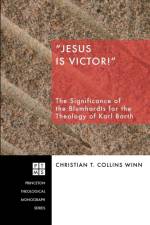
Description:IN THIS INNOVATIVE WORK, Christian T. Collins Winn examines the role played by the Pietist pastors Johann Christoph Blumhardt (1805-1880) and Christoph Friedrich Blumhardt (1842-1919) in the development of Karl Barth''s theology. The disparate theological themes and dynamics of the two Blumhardts were crystallized in their eschatology, and Collins Winn argues that as early as 1916 Barth had appropriated this ""Blumhardtian eschatological deposit"" in ways fundamental to his own theological development. Against the grain of current Barth scholarship, this book establishes how the theology of the Blumhardts, though critically reconstructed, was not merely an episodic influence on Barth''s work. Instead, the Blumhardts had a complex and enduring impact on Barth, such that their imprint can be detected even in the mature theology of his Church Dogmatics. In treading new ground into Barth''s theological formation, Jesus Is Victor! represents an important contribution to the field of Barth studies.Endorsements:""Christian T. Collins Winn shows how the Easter message was the main issue in the whole theology of Karl Barth. The author makes it clear that Barth learned it in a free manner especially from both Blumhardts. And this book invites us to learn the same from those three prophetic theologians.""--EBERHARD BUSCHauthor of Karl Barth: His Life from Letters and Autobiographical Texts ""Interpreters of Barth have often acknowledged the influence of the Blumhardts (father and son) on the theology of Barth, but they have not very often taken this suggestion seriously enough to expound the nature and development of his theology from this perspective. Collins Winn does this in Jesus Is Victor!, and in so doing opens a new chapter in Barth studies. His mastery of the secondary literature is outstanding, and he shows the profound influence of the Blumhardts at both the beginnings of Barth''s struggle to find a new path for theology and at the end, as his theology found mature expression in the latter volumes of the Church Dogmatics.""--DONALD W. DAYTONauthor of Theological Roots of Pentecostalism ""Little attention has been paid to the influence of the Blumhardts on Karl Barth''s theology. Collins Winn convincingly shows, however, that these Pietists have influenced Barth''s theology at key points in its development. Displaying a masterful grasp of his subjects, Winn paints for us a portrait of both Barth and Pietism that upsets some long-held stereotypes. Those interested in Barth''s theology or Pietism cannot afford to ignore this book."" --FRANK D. MACCHIAauthor of Spirituality and Social Liberation:The Message of the Blumhardts in the Light of Wuerttemberg Pietism""A North American theologian has here ventured, not only to study the numerous works of Barth translated into English, but rather has even engaged with the mostly untranslated primary and secondary literature of the Blumhardts. The result is impressive. Collins Winn has focused his argument while keeping his horizons wide, has carefully studied the primary sources and secondary literature, and has provided subtly differentiated conclusions. And he has done this with a diction and idiom that makes the reading a delight.""--DIETER ISINGauthor of Johann Christoph Blumhardt, Life and WorkAbout the Contributor(s):Christian T. Collins Winn is Assistant Professor of Historical and Systematic Theology at Bethel University in St. Paul, MN. He is the editor of From the Margins: A Celebration of the Theological Work of Donald W. Dayton (2007).
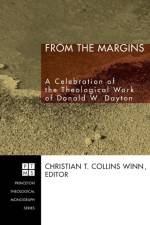
Description:Recognized as a leading interpreter of major movements in American Christianity such as Evangelicalism, Pentecostalism, and the Holiness movement, Donald W. Dayton has produced a body of work spanning four decades and diverse areas of inquiry. In From the Margins, friends and colleagues respond to major essays by Dayton (several published here for the first time) so as to celebrate and reflect on this diverse and rich body of work. The essays highlight the breadth of Dayton''s contribution while also revealing a methodological core. The latter could be described as Dayton''s deconstructive reading of standard scholarly narratives in order to short-circuit their domesticating effects on the more radical aspects of American Christianity. Dayton''s work has challenged long-held assumptions about the ""conservative"" nature of American Christianity by showing that both in their history and in their deeper theological substructures, traditions such as Evangelicalism and Pentecostalism are far more radical and productive of social change than was previously imagined.Endorsements:""Donald Dayton''s writings on the history of American evangelicalism combine impressive learning with a passion for the relevance of scholarship. His challenging interpretations have helped many others of us to rethink things from fresh perspectives.""--George Marsden, author of many books including Fundamentalism and American Culture, The Outrageous Idea of Christian Scholarship, and Jonathan EdwardsAbout the Contributor(s):Christian T. Collins Winn is Assistant Professor of Historical and Systematic Theology at Bethel University in St. Paul, MN.
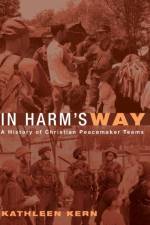
Description:In 1984 Evangelicals for Social Action founder Ron Sider posed the questions, ""What would happen if we in the Christian church developed a new nonviolent peacekeeping force ready to move into violent conflicts and stand peacefully between warring parties? . . . Everyone assumes that for the sake of peace it is moral and just for soldiers to get killed by the hundreds of thousands, even millions. Do we not have as much courage and faith as soldiers?"" Christian Peacemaker Teams (CPT) has been trying to answer those questions since 1986. CPT has responded to invitations from grassroots organizers on five continents who are using nonviolent strategies to confront systemic oppression. This book provides a glimpse into the mistakes and successes, the triumphs and tragedies, that teams have shared in with local co-workers in various nations. It also continues to pose the question, What would happen if CPT''s efforts were multiplied by millions of Christians with a radical commitment to Jesus''s nonviolent gospel?Endorsements:""In Harm''s Way is the remarkable story of Christian Peacemaker Teams: courageous groups of Christians willing to risk their own lives in non-violent actions that aim to advance peace and justice. Even those of us who are not pacifists will find this moving and honest story of work in such places as the Middle East, Haiti, and Central America compelling. It is a story that will push all Christians to serious thought about the cost of following Jesus in today''s world.""- C. Stephen Evans, University Professor of Philosophy and Humanities, Baylor University, and Jan E. Evans, Associate Professor of Spanish, Baylor UniversityAbout the Contributor(s):Kathleen Kern has worked for Christian Peacemaker Teams since 1993, serving on assignments in Haiti; in Washington DC; in the West Bank city of Hebron; in Chiapas, Mexico; in South Dakota; in Colombia; and in the Democratic Republic of Congo. Kern''s articles and essays have appeared in Tikkun magazine and in the Baltimore Sun. Her chapter describing the work of CPT, ""From Haiti to Hebron with a Brief Stop in Washington, D.C.: The CPT Experiment,"" appeared in From the Ground Up: Mennonite Contributions to International Peacebuilding (Oxford University Press, 2000).
Description:This collection of primary documents from Christian history spans the second to eighteenth centuries (Irenaeus to George Whitefield). Severson has chosen writings that all deal with the interpretation of the Parable of the Sheep and Goats (Matthew 25:31-46).Endorsements:""Severson''s The Least of These is a unique and brilliant contribution to theological pedagogy. Taking a central biblical text, it illustrates the development, twists, and turns of Christian theology from the beginning up to the eighteenth century with commentaries on that text from a host of extremely diverse theologians. Although intended for beginners, this volume is even more helpful to students (and professors!) with enough background to say, ''Aha! Wesley''s sermon on this one text expresses his entire sanctification theology.''""--Robert Cummings Neville, Boston Universityauthor of Behind the Masks of God""In compiling and editing this collection Severson exhibits the rare talent of being able to combine intellectual imagination, biblical scholarship, and sheer human compassion in these illuminating readings of a crucial scriptural passage.""--Richard Kearney, Boston Collegeauthor of States of Mind: Dialogues with Contemporary Thinkers ""In search of a better way of teaching theology, Severson brings a fresh eye not only to the fields of Christian history and theology, but to biblical studies and homiletics. This stunningly concise and pedagogically useful text engages students in the best of theological work--the pursuit of bringing scripture to life. Reading the canonical figures in this way, Severson gathers all readers around Matthew 25, extending the same challenge: How do we interpret this parable for our times? Envisioning the teaching of theology after the era of systematics, Severson presents biblical theology in a new key.""--Shelly Rambo, Boston UniversityAbout the Contributor(s):Eric R. Severson is Assistant Professor of Religion at Eastern Nazarene College, Quincy, Massachusetts.
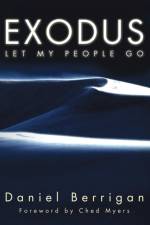
Description:The prophets exhort us to defend the poor; but we lionize the rich. They assure us that chariots and missiles cannot save us; yet we seek refuge under their cold shadow. They urge us to forgo idolatry; but we compulsively fetishize the work of our hands. Above all, the prophetic Word warns us that the way to liberation in a world locked down by the spiral of violence, the way to redemption in a world of enslaving addictions, the way to genuine transformation in a world of deadened conscience and numbing conformity, is the way of nonviolent, sacrificial, creative love. But neither polite religion nor society is remotely interested in this--which is why Jesus had to "translate" and "midwife" the prophetic insights for his companions in their historical moment. Dan has done the same for us in ours. As this reading of Exodus attests, he has a keen eye for both text and context, and exegetes both with his life. Thus does he help us shed our denial, connect the dots, and move from our pews to the streets.--from the foreword by Ched MyersEndorsements:"Dan Berrigan has given us a prophetic interpretation of the story of a people''s liberation from slavery, contagious violence, and the shocking actions of an ambiguous god. Berrigan has lived out a nonviolent exodus from our own pharaohs. His vision parts the waters of empires past and present. This prophet, like Isaiah, sees a divinely given way from the divisive exodus of our spiritual ancestors to the hope of a promised land for everyone."--James Douglass, Catholic Worker, Founder of Mary''s House and Ground Zero Center for Nonviolent Action "The retrieval of the prophetic in Christian faith and practice is an underlying theme of the renewal and revisioning in today''s grassroots Catholicism. Perhaps the prophetic voice of our time is that of Daniel Berrigan, SJ, whose insightful writing and courageous vision has now become the blending of activism and mystic wisdom. Berrigan on Exodus--a profound journey back to the very roots of our tradition and a clarion call to let ourselves be freed and chosen for God''s work today."--Robert A. Ludwig, Director of the Institute of Pastoral Studies at Loyola University Chicago"In this lyrical, powerful, and dangerous reading of the second book of Moses, Daniel Berrigan does more than explicate or comment upon the text. Instead, heinvites us to fulfill the text through our own questions, reverence and, as Berrigan says, indignation. To read Exodus is to truly participate in the mystery of Scripture. A beautiful, challenging, and invigorating work by one of our most fearless and tenacious contemporary prophets."--Karin Holsinger Sherman, author of A Question ofBeing: The Integration of Resistance and Contemplation in James Douglass''s Theology of NonviolenceAbout the Contributor(s):Daniel Berrigan is an internationally known voice for peace and disarmament. A Jesuit priest, an award-winning poet, and the author of over fifty books, he has spoken for peace, justice, and nuclear disarmament for nearly fifty years. He spent several years in prison for his part in the 1968 Catonsville Nine antiwar action and later acted with the Plowshares Eight. Nominated many times for the Nobel Peace Prize, he lives and works in New York City.
Description:New Testament scholarship lacks an overall interpretive framework to understand Judean identity. This lack of interpretive framework is quite acute in scholarship on the historical Jesus, where the issue of Judeanness ("Jewishness") is most strongly debated. A socio-cultural model of Judean ethnicity is developed, being a synthesis of (1) Sanders'' notion of covenantal nomism, (2) Berger and Luckmann''s theories on the sociology of knowledge, (3) Dunn''s "four pillars of Second Temple Judaism" and his "new perspective" on Paul, (4) cultural or social anthropology in the form of modern ethnicity theory, and, lastly, (5) Duling''s Socio-Cultural Model of Ethnicity. The proposed model is termed Covenantal Nomism. It is a pictorial representation of the Judean "symbolic universe," which as an ethnic identity, is proposed to be essentially primordialist. The model is given appropriate content by investigating what would have been typical of first-century Judean ethnic identity. It is also argued that there existed a fundamental continuity between Judea and Galilee, as Galileans were ethnic Judeans themselves and they lived on the ancestral land of Israel. Attention is lastly focused on the matter of ethnic identity in Q. The Q people were given an eschatological Judean identity based on their commitment to Jesus and the requirements of the kingdom/reign of God.[K.C. edited this down for the back cover. Leave the longer synopsis for the website.]Endorsements:"Cromhout''s book takes on a key question in the study of the Sayings Gospel Q, that of the kind of Judaism that the document presupposes. He shows convincingly how Q both manifests a Judaism that is both in significant continuity with other forms of Judaism, but also departs from traditional convenantal nomism. Jesus and Identity is splendidly conceived, sophisticated in its argument, and important in its conclusions."--John S. Kloppenborg, University of Toronto"In this study, Cromhout takes up current research on the historical Jesus, Galilee, and Q and sifts the evidence through the sieve of contemporary social-scientific models of ethnicity. The result is a theory about the ethnic identity of a ''Judean'' (Jewish) Messianist group represented by Q. His study engages modern scholarship, is well organized, and eminently readable. Both advanced scholars and discerning students will benefit greatly from Cromhout''s synthesis." --Dennis C. Duling, Canisius CollegeAbout the Contributor(s):Markus Cromhout is a research associate in the Department of New Testament Studies, University of Pretoria.
Description:This volumes explores the shape pneumatology takes when we develop the theology of the Holy Spirit within an eschatological framework that has a universal scope and an unlimited history. When we do so, we find that pneumatology deriving from questions about what the Spirit does for us needs to give way to pneumatology that derives from questions about how the Spirit can draw us into the saving history of the triune God.Endorsements:""Beck gives us two books for the price of one. He builds on a detailed study of the Apostle''s eschatological framework in pneumatology and allows it to absorb through interaction the numerous and rich flavours of Moltmann''s own treatment of that very subject, which (I can say) results in something truly impressive.""--Clark H. PinnockMcMaster Divinity College, Emeritus""[This volume] provides an excellent point of entry into the contemporary discussion of some of the most vital themes of the doctrine of the Holy Spirit. It both clearly and accurately identifies the role that Pneumatology has played in the Protestant tradition and the character of its development, as well as demonstrates why eschatology is now widely recognized as constituting the essential horizon of the doctrine. The author then goes on to develop a very insightful account of that connection between eschatology and Spirit in conversation with the Apostle Paul in the first century and J├╝rgen Moltmann in our own. A very impressive achievement for what began life as a doctoral dissertation! I recommend it highly.""--D. Lyle Dabney, Marquette University""We have long needed an account of the relation between eschatology and pneumatology, between the dawning of the kingdom of God and the work of the Holy Spirit. David Beck has given us a splendid volume devoted to this desideratum. Newcomers will find here an accessible introduction; veterans will find a host of insights worthy of further reflection; all will be illuminated and edified.""--William J. Abraham, Perkins School of TheologyAbout the Contributor(s):T. David Beck is Pastor of Christian Formation at King''s Harbor Church, Redondo Beach, California. He completed his doctorate at Southern Methodist University, Dallas, Texas.
Description:For decades, post-independence Africa has been marked by conflicts, violence, and civil wars leading to a displacement of civilian populations and numerous humanitarian crises. For example, the Somali war, the 1994 Rwandan genocide, and the Darfur conflict in Western Sudan illustrate this phenomenon. In these situations, protecting the basic human rights of security, subsistence, the liberties of social participation, and the physical movement of refugees and internally displaced persons (IDPs)--particularly women, children, and young people--has been seen as inadequate. This book offers the following: a systematic presentation of the nature and scope of the crises; an evaluative description of the achievements and failures of governments, organizations, and the international community in responding to the crises; a critical analysis of the rationale for such an inadequate response; and a philosophical and theological study of basic human rights that seeks to redress these failures by envisioning an appropriate response and a lasting solution to the conflicts, displacement, and humanitarian crises in Sub-Saharan Africa.Endorsements:""Humanitarian crises in the Great Lakes Region of Africa have resulted in massive suffering and displacement. In Basic Human Rights and the Humanitarian Crises in Sub-Saharan Africa, Gabriel Msoka offers a rich and incisive account of the legal and moral claim-rights of refugees and IDPs (Internally Displaced Persons). Msoka explores the scope and limits of modern ""rights talk"" and draws upon theological resources in proposing a constructive account of the human rights of the forcibly displaced. This is an important and all too timely book.""--William O''Neill, SJ, Assistant Professor of Social Ethics, Jesuit School of Theology at Berkeley""Msoka''s book honors the memory of those promoting the basic human rights of refugees and internally displaced persons (IDPs) in the Great Lakes region of Sub-Saharan Africa. Msoka brings first-hand knowledge and insight to the plight and anguish of these displaced persons. His treatment of the biblically inspired social teaching of the Roman Catholic Church as a basis for implementing these basic human rights is especially compelling. Msoka''s powerful final thought--that victims and persecutors are called upon to make a change of heart and embrace each other as children of God, redeemed by Christ the proto-ancestor--is valid not only for the tragedy of the displaced persons of Sub Saharan Africa, but for the well being of all humanity.--Sylvan Capitani, Pastor, St. John the Baptist Catholic Church, New Freedom, PAAbout the Contributor(s):Gabriel Andrew Msoka was born and raised in Kilimanjaro Region, Tanzania, Africa. He is a Catholic priest and a member of the Religious and Missionary Order of the Apostles of Jesus. Msoka has received two Pontifical degrees: In 1998 he graduated with a Licentiate Degree in Sacred Theology with a specialization in Moral Theology (STL) from the Catholic University of Eastern Africa, Nairobi, Kenya. In 2005 he graduated with a Doctorate in Sacred Theology with a specialization in social ethics (STD) from the Jesuit School of Theology in Berkeley, California. Msoka is the associate pastor at St. John the Baptist Catholic Church in New Freedom, Pennsylvania.
Description:For about the last fifteen years of his life, Thomas A. Langford pondered how grace is central to Christian theology. This book records his reflections and provides numerous gems of mature Christian insight. From beginning to end, the book is christologically focused. Grace is not something that God gives us; rather, it is the way God gives us himself. Grace is a person--God present to human beings. Grace is not a gift but rather a giver. Grace is Jesus Christ. The central contribution of this work is its personalization of grace, its sharp focus on God present in Jesus Christ. Because its focus on grace gives the reader such a clear and thematically developed entry point, this work is a great introduction to theology and the life of the church, the kind that pastors and parishioners would certainly benefit from confronting.Endorsements:""Who better to teach us grace than one who so genially embodied, personified, and incarnated grace? . . . [Langford] taught Christian grace in the manner of the great classical philosophers whom he so admired by embodying in his life that which he professed in his books, in the classroom, and in the pulpit. How appropriate that this manuscript was lying upon his desk when he died. What grace that we have it now. Grace, pure grace.""--from the foreword by William H. Willimon""Reflections on Grace looks at grace from every facet of systematic theology. Methodists and Wesleyans will want to read and ponder these pages carefully, but the work reaches out to all Christian communions--Catholic, Orthodox, and evangelical. This grace-filled book can help any faithful and thoughtful Christian think deeper about and live more boldly in the constant grace of the Triune God.""--Alan G. Padgett, Methodist minister and Professor of Systematic Theology, Luther Seminary""Tommy Langford exemplified what Methodism at its best should be. We can celebrate the publication of these last thoughts, as they demonstrate that Tommy was unafraid to change. May we learn from his example.""--Stanley Hauerwas, Gilbert T. Rowe Professor of Theological Ethics, Duke Divinity SchoolAbout the Contributor(s):Thomas A. Langford (1929-2000) served the United Methodist Church and Duke University throughout his adult life. Langford was ordained a Methodist minister in 1952. He was the primary author of the United Methodist Church''s ""Our Theological Task"" (1988) and a member of the World Methodist Council bilateral theological discussions with the Roman Catholic Church, the World Lutheran Federation, and the World Reformed Alliance. He was the author or editor of fourteen books including Intellect and Hope (on the thought of Michael Polanyi), In Search of Foundations (on English theology and culture), and the widely read Practical Divinity (theology in the Wesleyan tradition). This current book, Reflections on Grace, is the work that he had been writing during the last years of his life.Philip A. Rolnick is Professor of Theology at the University of St. Thomas in St. Paul, MN. He is the author of Analogical Possibilities: How Words Refer to God and Person, Grace, and God (2007)Jonathan R. Wilson is Pioneer McDonald Professor of Theology at Carey Theological College. He completed his PhD at Duke in 1989 under the supervision of Thomas Langford.
Description:How can we speak about God without assuming that God is nothing but our own speaking, nothing but our culture''s effort to name what cannot be named? How can we deny that our speaking of God is always culturally located? To answer these questions, we need to pay close attention to what we mean by culture, and how we use this very complex term both in our everyday language and especially in the language of faith. Culture is an exceedingly complex term that nearly everyone uses, but no one is sure what it means. This work examines various uses of the term culture in theology today.Endorsements:""Modernity, Steve Long tells us with his patented acerbity, is a broken record that never stops repeating its supposed novelty. If broken records require sharp, swift smacks to be knocked out of their tiresome grooves, Long''s palm-sized book delivers a salutary slap that gets us back on track--and out of confused modern conceptualities that pit theology against culture. An excellent, masterly introduction to its topic.""--Rodney Clapp, author of A Peculiar People and Border Crossings""Too many ''guides'' pretend to a kind of theological neutrality that leads us nowhere. Steve Long''s wonderful little book is a noted exception: here is a guide to the theological terrain that doesn''t apologize for working with a compass. Providing a helpful survey of various schools of thought, the book also constitutes an argument for a particular theological understanding of culture. Long not only charts the territory, he also shows students how to plot a path through it. I''ve already been commending it to my students."" --James K. A. Smith, Associate Professor of Philosophy, Calvin College ""Long''s book is filled with deep insight and strategic provocation, both of which ought to push the theology and culture conversation beyond its unexamined truisms and self-satisfied dogmas. This is a book for people who take their theology without cream or sugar.""--Brent Laytham, Associate Professor of Theology and Ethics, North Park Theological Seminary""This work, as the title suggests, offers a bird''s eye view of the state of play between theology and culture. It provides a valuable summary of the contribution of Richard Niebuhr to the subject, but also suggests there is a need to revise Niebuhr''s classifications in the wake of the rising influence of the theology of Henri de Lubac common to both the Radical Orthodoxy and Communio Catholic scholars. From de Lubac''s perspective, Christ transforms cultures, rather than standing aloof outside them. The dynamics of this transformation is now a pressing theological concern which flows over confessional boundaries.""--Tracey Rowland, author of Culture and the Thomist Tradition: After Vatican II (Radical Orthodoxy)About the Contributor(s):D. Stephen Long is professor of theology at Marquette University. He has published a number of works, including Divine Economy: Theology and the Market (2000), The Goodness of God: Theology, Church, and the Social Order (2001), John Wesley''s Moral Theology: The Quest for God and Goodness (2005), and Calculated Future: Theology, Ethics, and Economics (2007).
M.F. Sadler was an Anglican priest. He served as rector of Honiton, England, and wrote several other commentaries, including volumes on each of the four Gospels. SADLER, MICHAEL FERREBEE (1819-1895), theologian, eldest son of Michael Thomas Sadler [q. v.], was born at Leeds in 1819. Educated at Sherborne school, he entered St. John's College, Cambridge, after a short interval of business life. He was elected Tyrwhitt's Hebrew scholar in 1846, and graduated B.A. 1847. He was vicar of Bridgwater from 1857 to 1864 (during which time he was appointed to the prebend of Combe, 13th in Wells Cathedral), and of St. Paul's, Bedford, from 1864 to 1869; he was rector of Honiton from 1869 till his death. In 1869 he received an offer of the bishopric of Montreal, carrying with it the dignity of metropolitan of Canada, but refused it on medical advice. He was a voluminous writer on theological subjects, and a strong high churchman. His works, which had a large circulation, did much to popularise the tractarian doctrines.
Sometime around the age of fifty--or as early as forty and as late as sixty--most of us come to terms with our age. We recognize that we have lived out at least half of the time allotted to us, and that the second half may be shorter than the first! Coming to terms with our age is a process, one that usually involves denial, anger, bargaining, depression, and acceptance. As we progresses through these stages, a spirituality of aging emerges. In this book, the reader is led on a quest to explore his or her own personal spirituality of aging. All the equipment--words of wisdom from the literature of the world''s religions--has been gathered here. Each of the book''s thirty-two exercises invites readers to reflect on a passage taken from the sacred literature of a world religion, then explore each passage for its meanings and applications through a meditative journaling question and a short prayer. While delving into the universal process of aging, the reader will be guided to discover his or her personal spirituality of aging.In this somber and yet hope-filled book, Boyer takes the reader on a personal journey to examine the ups and downs of every aspect of aging. Only as we face our own mortality can we truly realize the gift of each moment we are given. This is a great resource that I will recommend to patients and families in my clinic who struggle, endure, and ultimately choose their own perspective about aging.--Janna D. Ver Miller, MD, Internal Medicine and Geriatric Physician, Senior Health First, Lakewood, COMark G. Boyer, a Roman Catholic priest of the Diocese of Springfield-Cape Girardeau, MO, teaches Bible and film courses in the Religious Studies Department of Missouri State University. He is the author of thirty-six books on biblical and liturgical spirituality, including Wipf & Stock''s Nature Spirituality: Praying with Wind, Water, Earth, Fire (2013).
Description:This notebook--a spiritual journal by noted evangelical theologian Donald Bloesch--covers a range of subjects, including sin and sainthood, heresy and orthodoxy, the church and the sacraments, marriage and celibacy, failure and success, despair and hope.Bloesch''s lucid, concise writing style polishes and illuminates the gems of his thought. The result is a scintillating collection of precision and depth--a treasury of theological reflection.About the Contributor(s):Donald G. Bloesch is Professor Emeritus at Dubuque Theological Seminary in Dubuque, Iowa. His other books include Essentials of Evangelical Theology, Is the Bible Sexist?, and The Future of Evangelical Christianity.
Abonner på vårt nyhetsbrev og få rabatter og inspirasjon til din neste leseopplevelse.
Ved å abonnere godtar du vår personvernerklæring.